
805 Marine Diesel Mechanic installs custom marine engine freshwater flushing systems for inboard diesel boats and yachts throughout Ventura, Channel Islands Harbor, Oxnard, and Santa Barbara.
This freshwater flushing system was created by 805 Marine Diesel Mechanic about five years ago after seeing how many diesel cooling problems were caused by saltwater left sitting inside raw-water circuits. Since then, this system has been successfully installed on many boats and yachts to make flushing faster, cleaner, safer, and more consistent after every trip.
Saltwater is one of the hardest environments for a marine diesel cooling system. Every time the engine runs, seawater moves through the raw-water pump, heat exchanger, transmission oil cooler, fuel cooler, lube oil cooler, aftercooler, exhaust mixing elbow, exhaust hose, and overboard outlet. When that saltwater remains in the system after shutdown, it leaves behind salt, minerals, corrosion, and scale.
If your engine is already running warm, losing seawater flow, or showing signs of restriction, start with the Master Marine Diesel Troubleshooting Guide. Freshwater flushing is preventive maintenance, but overheating still needs proper diagnosis before expensive parts are damaged.
Schedule Freshwater Flush System Installation
Why This Freshwater Flushing System Was Created
Many boat owners understand that flushing helps protect the cooling system, but the process is often inconvenient. If flushing requires climbing into the engine room, moving hoses, opening strainers, removing caps, or cleaning up water afterward, it usually does not happen after every trip.
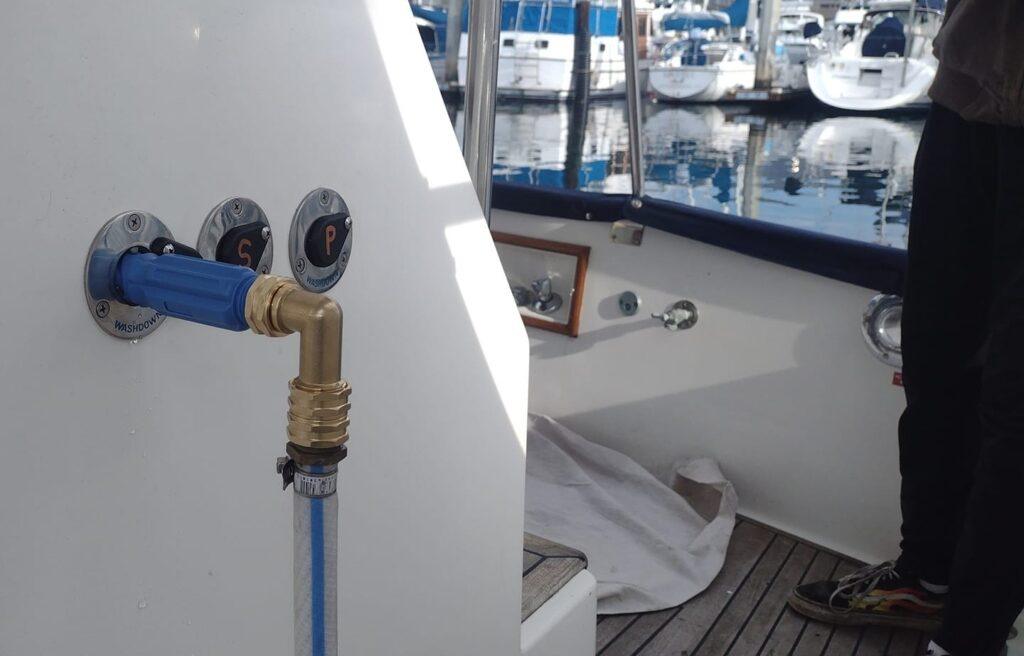
This system was designed to solve that problem. The exterior quick-connect fitting allows the owner to pull up to the dock, leave the engine idling, connect a freshwater hose outside the engine room, and flush the raw-water side without tearing the boat apart after a long day on the water.
The goal is simple: make freshwater flushing easy enough that owners actually use it. A flush system only protects the engine when it becomes part of the normal shutdown routine.
How the 805 Marine Diesel Mechanic Freshwater Flushing System Works
Step 1 – Connect Freshwater Supply
Pull up to the dock and leave the engine or engines running at idle. Connect a freshwater hose to the boat’s exterior freshwater quick-connect fitting.
Step 2 – Activate the Flushing System
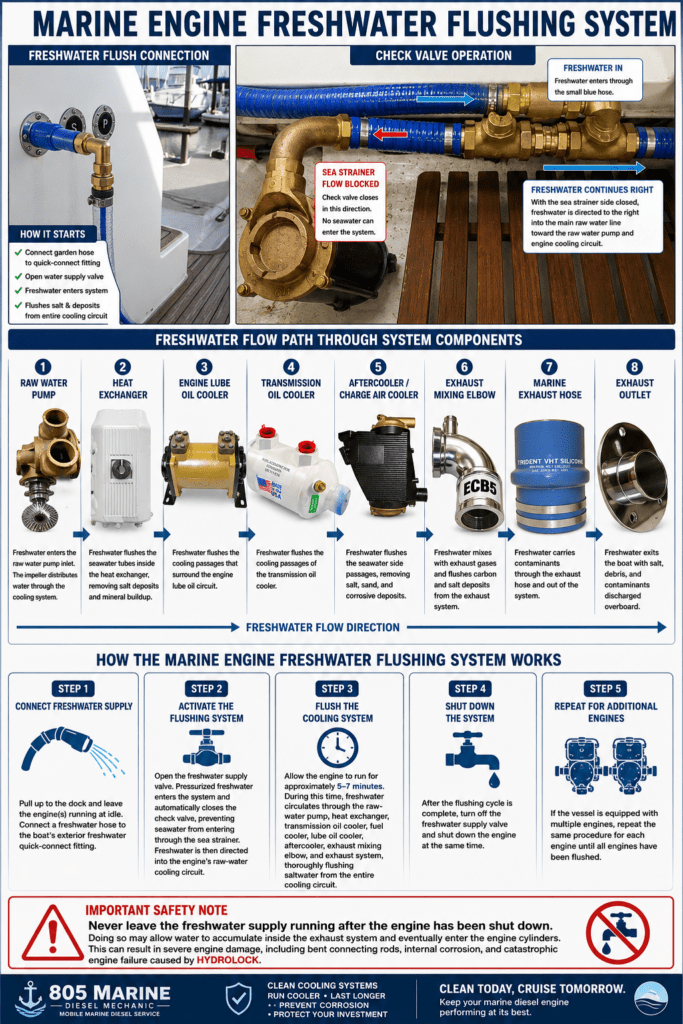
Open the freshwater supply valve. Pressurized freshwater enters the system and automatically closes the check valve, preventing seawater from entering through the sea strainer. Freshwater is then directed into the engine’s raw-water cooling circuit.
Step 3 – Flush the Cooling System
Allow the engine to run for approximately 5–7 minutes. During this time, freshwater circulates through the raw-water pump, heat exchanger, transmission oil cooler, fuel cooler, lube oil cooler, aftercooler, exhaust mixing elbow, and exhaust system, thoroughly flushing saltwater from the entire cooling circuit.
Step 4 – Shut Down the System
After the flushing cycle is complete, turn off the freshwater supply valve and shut down the engine at the same time.
Step 5 – Repeat for Additional Engines
If the vessel is equipped with multiple engines, repeat the same procedure for each engine until all engines have been flushed.
Freshwater Flow Path Through the Marine Cooling System
Once the system is activated, freshwater enters the raw-water side and follows the same route seawater normally takes while the engine is running. That is what makes the system effective. It does not just rinse one hose or one strainer. It pushes freshwater through the entire raw-water cooling path.
- Raw-water pump
- Heat exchanger
- Engine lube oil cooler
- Transmission oil cooler
- Fuel cooler
- Aftercooler or charge-air cooler
- Exhaust mixing elbow
- Marine exhaust hose
- Exhaust outlet
This is especially important on diesel yachts that operate in saltwater around Ventura Harbor, Channel Islands Harbor, Oxnard, and Santa Barbara. These boats often run long enough to build heat, then sit with saltwater trapped inside the cooling system after shutdown.
Why the Check Valve Matters
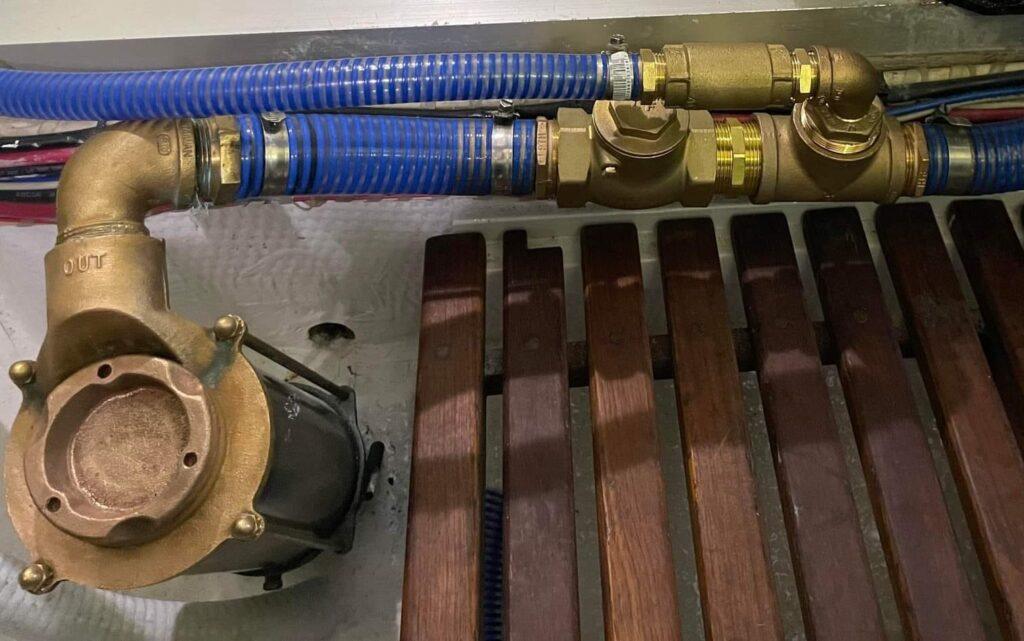
The check valve is one of the most important parts of the system. When pressurized freshwater enters through the small supply line, the valve closes the sea-strainer side of the circuit. This prevents seawater from continuing to enter the system while freshwater is flushing the engine.
With the sea-strainer side blocked, freshwater is directed toward the raw-water pump and through the engine cooling circuit. The result is a controlled freshwater flush that clears saltwater from the components that need protection most.
This design is different from simply spraying water into a strainer or hoping the engine pulls in enough freshwater. The flushing path is intentional, controlled, and built around how the raw-water system actually flows.
Cooling Components This System Helps Protect
Marine diesel cooling components are expensive, and many failures begin quietly. A heat exchanger may not clog all at once. An aftercooler may slowly collect salt and mineral deposits. A transmission oil cooler may lose flow gradually. By the time the engine shows high temperature under load, the restriction may already be advanced.
Freshwater flushing helps reduce salt exposure inside these parts before deposits harden. It supports the same system-based maintenance thinking used in marine diesel overheating diagnosis and marine diesel overheating under load.
Routine flushing is especially valuable for engines with aftercoolers, charge-air coolers, multi-stage oil coolers, or tight heat-exchanger passages. These components depend on clean seawater flow, and salt restriction can reduce cooling performance long before a complete blockage occurs.
Exterior Quick Connect Convenience
The exterior quick-connect fitting is what makes the system practical. Boat owners are far more likely to flush after every trip when they do not need to enter the engine room, open strainers, move hoses, or deal with bilge cleanup.
That convenience matters. Preventive maintenance fails when it is too difficult to perform consistently. A simple dockside connection turns flushing into a quick shutdown habit instead of a separate engine-room project.
805 Marine Diesel Mechanic customizes each installation around the vessel layout, engine-room access, dockside water pressure, engine size, and number of engines. Twin-engine yachts, sportfishers, trawlers, and generator-equipped vessels may each require a different routing approach.
Freshwater Flushing for Boats and Yachts in the 805
Boats moored in Ventura, Oxnard, Channel Islands Harbor, and Santa Barbara face continuous salt exposure. Even when the engine is not running, the raw-water side can remain wet with saltwater. Over time, that exposure contributes to corrosion, restricted passages, shortened impeller life, cooler fouling, and higher operating temperatures.
805 Marine Diesel Mechanic provides dockside freshwater flushing system installation as part of broader inboard diesel cooling-system service. For local support, review mobile marine services in Ventura, mobile marine services in Channel Islands Harbor, and mobile marine services in Santa Barbara.
Best Time to Install a Freshwater Flushing System
The best time to install a freshwater flushing system is before cooling problems begin. Once a heat exchanger is already restricted or an aftercooler is already fouled, flushing may help slow future buildup, but it will not replace proper cleaning, inspection, or repair.
This system is a strong upgrade for boats that are used frequently in saltwater, vessels stored in the water full time, yachts with expensive aftercoolers, engines that work under heavy load, and boats where engine-room access makes routine flushing difficult.
It also pairs well with brand-specific preventive maintenance planning for Caterpillar marine engines, Cummins marine engines, Perkins marine engines, John Deere marine engines, and Lugger marine engines.
Dockside Installation by 805 Marine Diesel Mechanic
Every installation is built around real vessel access. Hose routing, valve placement, check-valve orientation, quick-connect location, raw-water hose size, and serviceability all matter. A flushing system should be easy to use, but it also needs to be installed correctly so it does not restrict normal seawater flow or create an unsafe operating condition.
805 Marine Diesel Mechanic specializes in inboard marine diesel systems only. The system is designed, installed, and tested dockside with the goal of making freshwater flushing a normal part of protecting your diesel engine investment.
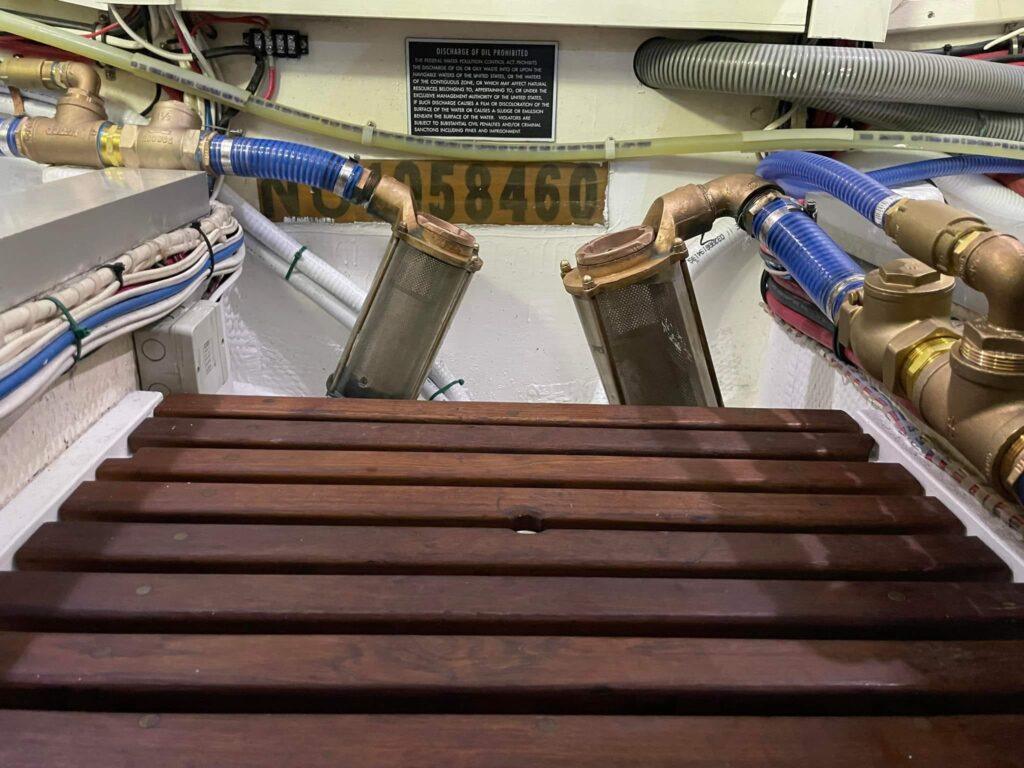
For related marine strainer and raw-water component information, review GROCO marine strainers and raw-water components.
Book Dockside Freshwater Flush Installation
Marine Engine Freshwater Flushing System FAQ
What is a marine engine freshwater flushing system?
A marine engine freshwater flushing system allows dockside freshwater to flush saltwater from the raw-water cooling circuit. This helps reduce salt buildup, corrosion, and cooling restriction.
Who created this freshwater flushing system?
This system was created by 805 Marine Diesel Mechanic about five years ago. It has been successfully installed on many boats and yachts since then.
How does the exterior quick-connect fitting help?
The exterior quick connect lets the owner attach a dock hose without entering the engine room. That makes flushing faster and more likely to happen after every trip.
Does the engine stay running during flushing?
Yes, the engine should remain running at idle while the freshwater supply is connected and activated. The engine’s raw-water pump helps move freshwater through the cooling circuit.
How long should the engine be flushed?
Most engines should be flushed for approximately 5–7 minutes. Larger systems may vary depending on cooling layout and water flow.
What does the check valve do?
The check valve closes the sea-strainer side when pressurized freshwater enters the system. This prevents seawater from entering while freshwater is directed through the engine cooling circuit.
What components are flushed?
Freshwater moves through the raw-water pump, heat exchanger, oil coolers, aftercooler, exhaust mixing elbow, exhaust hose, and outlet. This helps remove saltwater from the full raw-water path.
Can this help prevent overheating?
Yes, routine flushing can reduce salt and scale buildup that contributes to overheating. Existing overheating should still be diagnosed with the Master Marine Diesel Troubleshooting Guide.
Can freshwater flushing clean a badly clogged heat exchanger?
No, a badly restricted heat exchanger may still need removal, cleaning, or replacement. Flushing is best used as preventive maintenance before heavy buildup develops.
Is this system good for diesel yachts?
Yes, it is especially useful on diesel yachts with large cooling systems, aftercoolers, oil coolers, and generators. It helps protect expensive components exposed to saltwater after shutdown.
Can one system flush multiple engines?
Each engine usually needs its own controlled flushing path. Multi-engine vessels can be set up so each engine is flushed safely and consistently.
Can I leave the freshwater hose running after shutdown?
No, the freshwater supply must not be left running after the engine shuts down. Doing so can allow water accumulation and possible hydrolock.
What is hydrolock?
Hydrolock happens when water enters a cylinder and the piston cannot compress it. This can cause severe internal engine damage.
Does freshwater flushing protect aftercoolers?
Yes, flushing helps reduce salt deposits inside the seawater side of aftercoolers and charge-air coolers. These parts are expensive and should be protected from corrosion and restriction.
Does flushing help transmission oil coolers?
Yes, the system flushes freshwater through the raw-water side of the transmission oil cooler. That helps reduce salt exposure and mineral buildup.
Should I still inspect my sea strainer?
Yes, sea strainers still need routine inspection and cleaning. Flushing supports maintenance but does not replace visual inspection.
Does 805 Marine Diesel Mechanic service outboards?
No, 805 Marine Diesel Mechanic specializes in inboard marine diesel systems only. The flushing system is designed for inboard diesel raw-water cooling circuits.
Where does 805 Marine Diesel Mechanic install these systems?
Service areas include Ventura, Channel Islands Harbor, Oxnard, and Santa Barbara. Installation is performed dockside when vessel access allows.
Is this system custom-built for each boat?
Yes, every installation is adapted to engine size, hose routing, dockside access, water pressure, and engine-room layout. Correct installation is important for safety and reliability.
How do I schedule installation?
Use the contact page to request dockside freshwater flushing system installation. 805 Marine Diesel Mechanic can inspect the vessel layout and recommend the safest setup.
Request Freshwater Flushing System Installation
“`
“`html
“`
40 Responses