
Marine hose clamp upgrades are one of the most overlooked reliability improvements on diesel-powered boats. A failed hose clamp can quickly lead to coolant loss, seawater leaks, overheating, flooding, fuel leaks, or even complete engine shutdowns offshore.
805 Marine Diesel Mechanic provides marine hose clamp upgrades, cooling-system inspections, fuel-system inspections, raw-water hose replacement, and preventative diesel maintenance throughout Ventura, Channel Islands Harbor, Oxnard, and Santa Barbara.
Salt exposure, vibration, heat cycles, and hose expansion place constant stress on marine hose clamps. Upgrading weak or corroded clamps before they fail helps reduce the risk of major offshore breakdowns. If your engine is already showing overheating, coolant leaks, or raw-water flow issues, begin with the Master Marine Diesel Troubleshooting Guide before major damage develops.
Why Marine Hose Clamp Upgrades Matter
Marine hose clamps secure critical systems throughout the vessel including:
- Raw-water cooling systems
- Coolant hoses
- Fuel-system hoses
- Exhaust water systems
- Generator cooling systems
- Aftercooler plumbing
- Bilge and drain systems
In harsh saltwater environments, lower-quality clamps often fail because of corrosion, thread stripping, vibration fatigue, or loss of clamping force. Small leaks may begin slowly before becoming major offshore failures.
Upgrading to stronger marine-grade clamp systems helps improve long-term reliability and reduce maintenance problems.
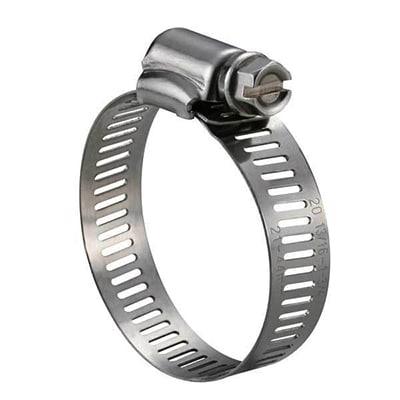
Perforated 316 Stainless Hose Clamps
Traditional perforated stainless hose clamps remain widely used because they are inexpensive and easy to install. However, perforated designs remove material from the band to form the screw threads, which weakens the clamp structure.
Common problems with perforated clamps include:
- Band stretching
- Thread stripping
- Micro-cracking
- Crevice corrosion
- Uneven clamping pressure
- Reduced long-term tension
These clamps may still perform adequately in light-duty applications, but critical marine systems often benefit from stronger clamp designs.
Constant Torque Hose Clamps
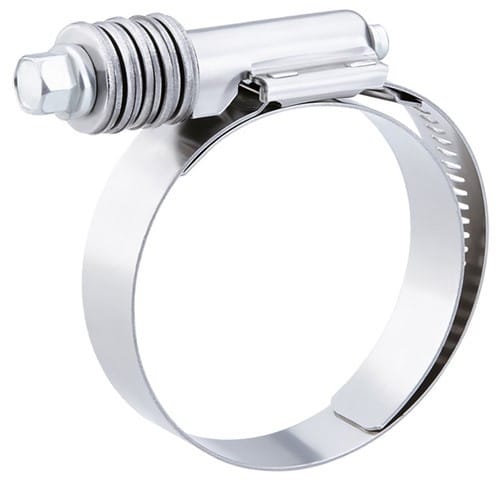
Constant torque hose clamps are one of the best upgrades for marine diesel applications. Rubber hoses naturally expand, contract, and cold-flow after installation, which causes traditional clamp tension to decrease over time.
Constant torque clamps use spring-loaded mechanisms that automatically compensate for thermal expansion and contraction.
Benefits of constant torque hose clamps include:
- Improved sealing consistency
- Reduced re-tightening requirements
- Better vibration resistance
- Improved long-term clamp tension
- Reduced leak risk
- Improved cooling-system reliability
These clamps are especially valuable for raw-water systems, coolant systems, and exhaust-water hoses operating under repeated heat cycles.
For related cooling-system support, review Scania marine engine maintenance and marine engine fresh water flushing systems.
T-Bolt Marine Hose Clamps
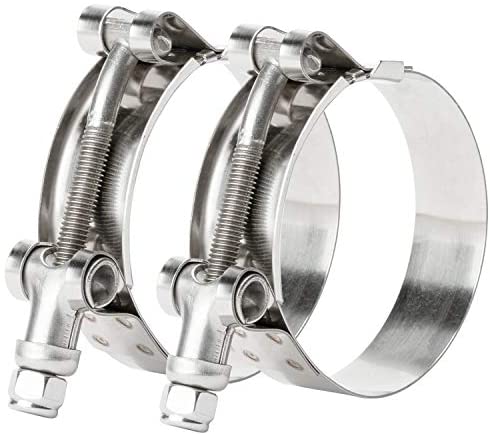
T-bolt hose clamps provide significantly higher clamping force than traditional worm-gear clamps. These are commonly used for larger hoses, boosted-air systems, and high-pressure marine applications.
Because T-bolt clamps generate substantial force, correct installation and even pressure distribution become extremely important. Uneven loading can sometimes damage softer hose materials if improperly installed.
T-bolt clamps are commonly used for:
- Turbocharger plumbing
- Large cooling hoses
- Charge-air systems
- High-pressure applications
- Heavy-duty marine diesel systems
Double-Bolt Hose Clamps
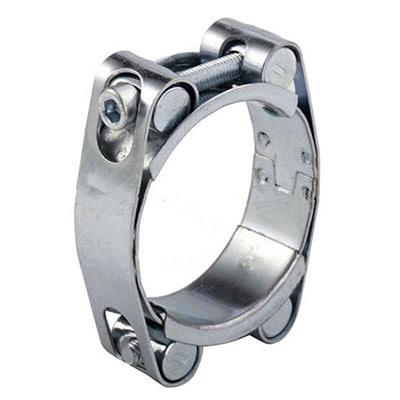
Double-bolt hose clamps are among the strongest marine clamp designs available. These clamps use two tightening points that help distribute pressure more evenly around the hose circumference.
Benefits of double-bolt clamps include:
- Very high clamping strength
- Improved pressure distribution
- Reduced hose distortion
- Improved heavy-duty sealing
- Better durability under load
Although more expensive, double-bolt clamps are commonly selected for critical marine cooling and exhaust-water applications where maximum reliability is required.
Cooling-System Reliability and Hose Clamp Failure
Cooling-system leaks are one of the most common causes of marine diesel overheating. Weak clamps, loose fittings, deteriorated hoses, and corrosion often contribute to raw-water or coolant loss under load.
Common warning signs include:
- Coolant residue
- Salt buildup
- Water drips
- Soft hose connections
- Steam
- Overheating
- Low coolant alarms
Helpful troubleshooting resources include marine diesel overheating diagnosis and marine engine power loss under load.
Fuel-System Hose Clamp Upgrades
Fuel-system leaks are not only reliability problems—they are also serious safety hazards. Old clamps and deteriorated hoses may eventually allow fuel seepage or air intrusion into the diesel fuel system.
Fuel-system inspections may include:
- Fuel-line inspection
- Clamp inspection
- Hose condition checks
- Separator inspection
- Vacuum testing
- Leak inspection
Reliable hose clamps help protect injectors, pumps, and fuel-system reliability while reducing shutdown risks offshore.
For broader diesel fuel support, review FPT marine engine maintenance and Universal marine engine maintenance.
Mobile Marine Hose Clamp Service Throughout Ventura and Channel Islands Harbor
Mobile hose-clamp and cooling-system service allows technicians to inspect the vessel directly at the dock while evaluating the actual operating condition of the engine room.
805 Marine Diesel Mechanic supports vessels throughout Ventura Harbor, Channel Islands Harbor, Oxnard, and Santa Barbara with marine hose replacement, hose clamp upgrades, cooling-system inspections, and preventative diesel maintenance.
For additional hose and clamp engineering information, review Gates hose clamp engineering resources and Aboard Marine.
When to Replace Marine Hose Clamps
Marine hose clamps should be inspected regularly and replaced when corrosion, stripped threads, cracking, deformation, or loss of clamping force becomes visible.
Clamp upgrades are especially important before offshore trips, after overheating events, during cooling-system service, or anytime raw-water hoses are replaced.
Reliable hose clamps help protect marine diesel engines from coolant loss, seawater leaks, fuel leaks, and expensive offshore failures.
Marine Hose Clamp Upgrade FAQ
Why are marine hose clamp upgrades important?
Marine hose clamp upgrades improve sealing reliability while reducing the risk of coolant leaks, fuel leaks, and offshore breakdowns.
What causes marine hose clamps to fail?
Common causes include corrosion, vibration, over-tightening, stripped threads, metal fatigue, and loss of clamp tension.
What are constant torque hose clamps?
Constant torque clamps automatically compensate for hose expansion and contraction using spring-loaded tension mechanisms.
Are T-bolt clamps stronger than worm-gear clamps?
Yes, T-bolt clamps provide significantly higher clamping force for larger or high-pressure hose applications.
What are double-bolt hose clamps used for?
Double-bolt clamps are commonly used for heavy-duty cooling and exhaust-water hose applications requiring maximum sealing strength.
Can bad hose clamps cause engine overheating?
Yes, loose or failing hose clamps can allow coolant or seawater leaks that eventually contribute to overheating.
How often should marine hose clamps be inspected?
Marine hose clamps should be inspected during routine maintenance and anytime hoses or cooling systems are serviced.
Do you provide dockside hose clamp replacement?
Yes, 805 Marine Diesel Mechanic provides mobile dockside hose-clamp replacement and cooling-system service.
What areas do you service?
Service areas include Ventura, Channel Islands Harbor, Oxnard, and Santa Barbara.
Does 805 Marine Diesel Mechanic service outboards?
No, 805 Marine Diesel Mechanic specializes in inboard marine diesel systems only.