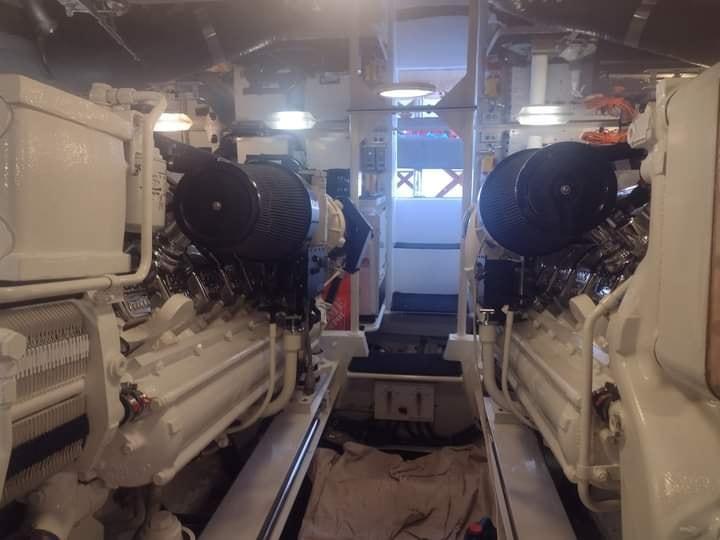
Yacht Engine Losing Power Under Load – Marine Diesel Diagnosis Guide
If your yacht engine is losing power under load, struggling to hold cruise speed, or feels weak when you throttle up, it is a strong sign that the engine is not getting the fuel, air, boost, or cooling efficiency it needs to perform correctly. Power loss under load is one of the most important symptoms on a marine diesel because it usually means the problem only shows up when the engine is being asked to work the way it was designed to work.
For yacht owners in Ventura, Oxnard, Channel Islands Harbor, and Santa Barbara, this complaint commonly appears as slow acceleration, inability to stay on plane, heavy smoke, rising temperatures, or one engine falling behind the other on a twin-engine setup. Some boats feel normal at idle and low speed, then become noticeably weak once the yacht is pushed into real cruising conditions.
At 805 Marine Diesel Mechanic, we have over 30 years of hands-on experience diagnosing inboard marine diesel power-loss complaints across Caterpillar, Cummins, Detroit Diesel, Volvo Penta, Yanmar, Perkins, and other major yacht engine platforms throughout the Central Coast.
What Does Losing Power Under Load Mean on a Yacht Engine?
Losing power under load means the engine cannot produce the performance it should once the yacht is underway and demand increases. In other words, the engine may idle and rev in neutral, but when real propeller load, hull drag, and cruise demand are added, the powertrain cannot deliver normal output. That usually points to a restriction, imbalance, or inefficiency that only becomes obvious when the engine is asked to work hard.
This page works alongside the Master Marine Diesel Troubleshooting Guide to help isolate whether the power loss is fuel-related, turbo-related, air-related, exhaust-related, cooling-related, or a true overload condition caused by the hull or running gear.
That distinction matters because “low power” is a symptom, not a diagnosis. A dirty hull will not be fixed with injector work, and a fuel-starvation problem will not be fixed by changing a propeller. The right diagnosis comes from following the system in the correct order.
Common Symptoms of Yacht Engine Power Loss Under Load
- Slow acceleration when throttling up
- Yacht struggles to hold normal cruise speed
- One engine falls behind the other on twin-engine yachts
- Engine will not reach rated RPM under load
- Heavy black smoke or visible exhaust haze
- Higher fuel burn for less speed
- Power fades after running for a period of time
- Engine temperature rises when trying to maintain cruise
Top Causes of Yacht Engine Losing Power Under Load
- Fuel restriction or partial fuel starvation
- Contaminated diesel fuel
- Air in the fuel system
- Turbocharger or boost-related problems
- Restricted air intake
- Exhaust restriction or high backpressure
- Cooling-system inefficiency under load
- Hull fouling, propeller fouling, or overloading
Most real-world power-loss complaints on yachts begin with fuel delivery, air/boost supply, or overload. That is why those systems should be checked first before jumping to more expensive conclusions.
Step-by-Step Marine Diesel Power Loss Under Load Diagnosis
1. Start With the Fuel System
Fuel restriction is one of the most common causes of power loss under load. A marine diesel can sometimes idle and run lightly even with a partially restricted fuel system, but once the engine is asked for real output, the restriction becomes obvious and power falls off.
- Inspect primary and secondary fuel filters
- Check for plugged Racor elements
- Look for restricted fuel lines or pickup issues
- Compare fuel delivery condition between both engines where applicable
Related internal pages:
- Master Marine Diesel Troubleshooting Guide
- Boat Engine Fuel Contamination
- Boat Engine Air in Fuel System
2. Rule Out Fuel Contamination and Prime Issues
Dirty fuel, water contamination, microbial growth, or unstable fuel delivery can create under-load power loss even if the engine still starts and idles. A yacht may leave the dock normally, then begin losing power as demand increases and the restricted or contaminated system can no longer keep up.
- Inspect bowls and filters for water or debris
- Check whether filters have been plugging repeatedly
- Look for signs of prime loss after sitting
- Confirm the fuel system was bled correctly after recent service
If the yacht has also been hard starting or shutting down, compare symptoms with Yacht Engine Hard Starting When Cold and Boat Engine Shutting Down While Running.
3. Inspect Turbocharger and Boost Performance
A turbocharger problem will reduce air supply and make the engine feel weak under load. If the turbo is not producing proper boost, the engine cannot burn fuel efficiently and performance drops. This often comes with black smoke, low top-end RPM, and sluggish response.
- Check for low-boost symptoms
- Inspect for shaft play, corrosion, or oil leakage
- Look for slow spool-up or poor throttle response
- Compare one engine to the other on twin-engine setups
Related internal pages:
4. Check Air Intake and Exhaust Restriction
An engine also loses power if it cannot breathe. Restricted air filters, collapsed intake plumbing, blocked air supply, or exhaust restriction can all reduce performance under load. On a yacht, these problems may not be obvious at idle but become severe once the engine is asked for sustained output.
- Inspect intake filters and hose condition
- Check for engine-room air supply limitations
- Look for exhaust restriction or mixing component blockage
- Compare exhaust-water flow and smoke pattern underway
If the engine is also running hotter than normal, compare with Yacht Engine Overheating at Cruise RPM and Boat Engine Overheating.
5. Evaluate Cooling-System and Temperature Effects
Some engines lose power because they are running too hot under load. Even before a full overheating alarm happens, rising temperatures can reduce efficiency, create protective derate behavior on some engines, or overlap with exhaust and turbo-side problems that make the engine feel weak.
- Check temperature trend at cruise RPM
- Inspect seawater flow and pump performance
- Consider heat exchanger and aftercooler efficiency
- Look for temperature-related power fade after running for a while
Power loss that worsens as the run goes on often points toward a heat-related or restriction-related problem rather than a simple idle issue.
6. Rule Out Hull, Propeller, and Load Problems
Sometimes the engine is making normal power, but the yacht is overloaded by hull fouling, propeller fouling, prop damage, or an incorrect propeller setup. In that case, the symptom still feels like power loss because the yacht is not performing correctly, but the root cause is in the running gear or load demand.
- Inspect hull bottom and running gear for fouling
- Check propellers for damage or improper pitch
- Consider whether the yacht is over-propped
- Compare RPM, temperature, and smoke to actual vessel speed
If vibration is also present, compare with Yacht Engine Excessive Vibration.
Why Power Loss Under Load Should Not Be Ignored
Power loss under load is one of the most serious marine diesel warning signs because it affects reliability when the yacht actually needs propulsion. What begins as a minor performance drop can turn into shutdown, severe smoke, overheating, or inability to maintain safe speed offshore or in rough conditions.
- Low power often gets worse over time
- Fuel and turbo problems can damage related components
- Operating inefficiently increases carbon and soot buildup
- Overload conditions can overheat and stress the engine
- It can become a safety issue offshore or in harbor approaches
Preventing Yacht Engine Power Loss Under Load
Most power-loss issues can be reduced or avoided with consistent maintenance and early response to small performance changes.
- Keep fuel clean and change filters on schedule
- Inspect turbo and air-intake systems before symptoms worsen
- Monitor RPM, temperature, and smoke trends over time
- Keep hull and propellers clean
- Do not ignore gradual loss of speed or throttle response
- Address startup, smoke, and rough-idle issues early
Recommended reading:
When to Call a Marine Diesel Mechanic
If your yacht engine is losing power under load, falling off at cruise, or failing to reach normal speed, it is time for a proper marine diesel diagnosis. Guessing at low-power problems often leads to unnecessary parts replacement while the real issue stays unresolved.
805 Marine Diesel Mechanic provides expert mobile marine diesel diagnosis throughout Ventura, Oxnard, Santa Barbara, and Channel Islands Harbor. We determine whether the problem is fuel-related, boost-related, air-related, cooling-related, or a true load issue affecting real-world yacht performance.
Additional Diagnostic Resources
- Master Marine Diesel Troubleshooting Guide
- Boat Engine Losing Power
- Boat Engine Won’t Reach Full RPM
- Boat Engine Fuel Contamination
- Boat Engine Air in Fuel System
- Yacht Engine Turbo Failure
- Yacht Engine Black Smoke Under Load
- Yacht Engine Overheating at Cruise RPM
Frequently Asked Questions
What causes a yacht engine to lose power under load?
The most common causes are fuel restriction, contaminated fuel, air in the fuel system, turbocharger problems, restricted airflow, exhaust restriction, or an overload condition from hull or propeller issues.
Can dirty fuel make my yacht lose power at cruise?
Yes. Dirty fuel or water contamination can restrict flow, reduce combustion quality, and cause the engine to fall off under load.
Can a bad turbo cause loss of power under load?
Yes. A weak or failing turbo reduces boost and airflow, which directly lowers engine performance at cruise and higher RPM.
Why does my yacht feel fine at idle but weak underway?
Because some restrictions or performance problems only show up when the engine is under real propeller load and higher fuel and air demand.
Can hull fouling or propeller damage feel like engine power loss?
Yes. A dirty hull, fouled prop, damaged propeller, or overload condition can make the yacht feel underpowered even if the engine is otherwise healthy.
Is under-load power loss dangerous on a marine diesel yacht?
Yes. It can reduce reliability offshore, worsen smoke and heat issues, and lead to shutdown or inability to maintain safe speed.
Should I keep running if the yacht is losing power under load?
Not for long without diagnosis. Continued operation can worsen the underlying problem and increase the chance of smoke, overheating, or shutdown.
When should I call a marine diesel mechanic for under-load power loss?
You should call when the yacht no longer reaches normal speed, one engine is lagging, smoke appears, or performance drops noticeably during real-world operation.
