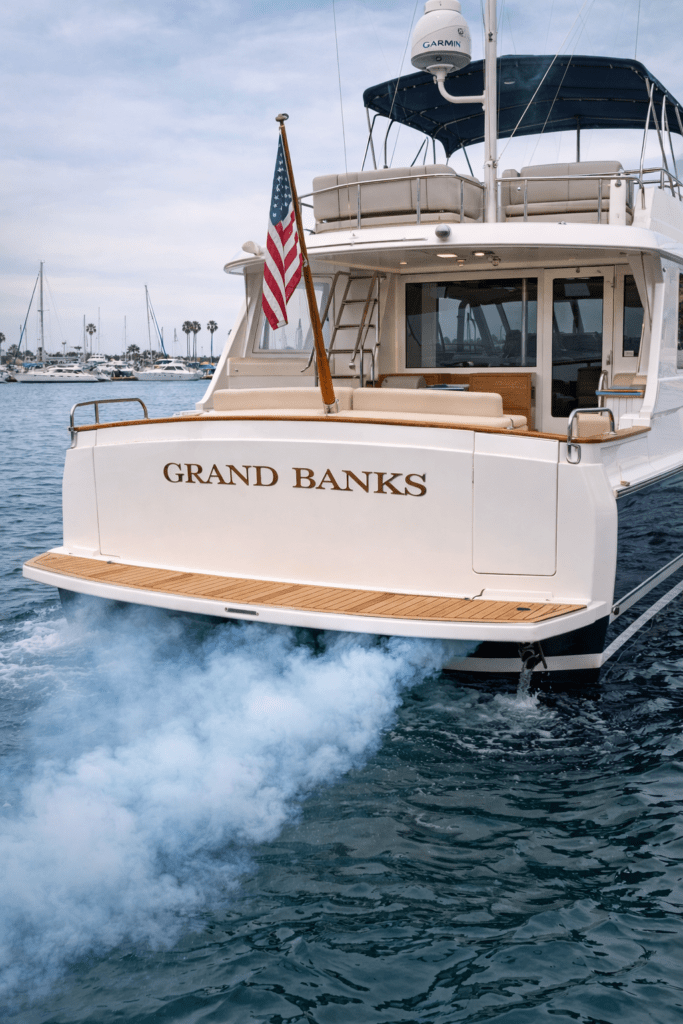
Grand Banks yacht producing blue smoke while running during marine diesel diagnosis by 805 Marine Diesel Mechanic in Ventura California

Yacht Engine Blue Smoke While Running – Marine Diesel Diagnosis Guide

If your yacht engine is blowing blue smoke while running, it usually means the engine is burning oil. Unlike black smoke, which points more toward excess fuel or low air, blue smoke is typically tied to oil entering the combustion process through worn internal components, failing turbo seals, excessive crankcase pressure, or oil-control problems. On a marine diesel yacht, this is a symptom that should never be ignored because it often points to wear that will continue to worsen over time.

For yacht owners in Ventura, Oxnard, Channel Islands Harbor, and Santa Barbara, blue smoke complaints often show up as an oily haze during acceleration, a steady blue trail at cruise, increased oil consumption, or smoke that gets worse after warm-up. In some cases, the engine still starts and runs fairly well, which is why owners sometimes delay diagnosis. But blue smoke is usually telling you that oil is going somewhere it should not.

At 805 Marine Diesel Mechanic, we have over 30 years of hands-on experience diagnosing inboard marine diesel smoke conditions, oil-consumption problems, turbocharger failures, and internal engine wear across major yacht engine platforms throughout the Central Coast.

Schedule Blue Smoke Diagnosis

What Does Blue Smoke While Running Mean on a Yacht Engine?

Blue smoke while running means engine oil is being burned during combustion or is being pushed into the intake or exhaust stream. On a marine diesel, this often points toward worn rings, cylinder wear, valve-guide wear, turbocharger oil-seal failure, overfilled crankcase oil, or excessive crankcase pressure that is pushing oil where it does not belong.

This page works alongside the Master Marine Diesel Troubleshooting Guide to help isolate whether your yacht’s blue smoke is coming from internal engine wear, turbocharger issues, crankcase ventilation problems, or oil-system conditions that are affecting combustion quality.

The key difference with blue smoke is that it is usually oil-related, not fuel-related. That does not mean fuel and combustion conditions do not matter, but if the smoke has a blue tint and the engine is using oil, the diagnosis needs to focus on oil control and where that oil is entering the system.

Common Symptoms That Accompany Blue Smoke While Running

Top Causes of Yacht Engine Blue Smoke While Running

On many marine diesel yachts, blue smoke while running is most often narrowed down to two main areas: turbocharger oil leakage or internal engine wear. The rest of the diagnosis is about determining which of those is more likely and whether one problem has contributed to the other.

Step-by-Step Marine Diesel Blue Smoke While Running Diagnosis

1. Confirm That the Smoke is Truly Blue and Oil-Related

The first step is making sure the smoke is actually blue and not black under certain light, white startup haze, or steam being mistaken for smoke. Blue smoke usually has an oily character, tends to linger differently than steam, and often comes with increased oil use over time.

If the smoke appears more white than blue or only at startup, compare symptoms with Yacht Engine White Smoke at Startup. If the smoke is black under heavy load, compare it with Yacht Engine Black Smoke Under Load.

2. Inspect the Turbocharger for Oil-Seal Failure

Turbocharger oil-seal problems are one of the most common causes of blue smoke while running, especially when the smoke increases under load or after the engine has warmed up. If the turbo bearings and seals are worn, engine oil can pass into the intake or exhaust side and be burned during operation.

Related internal pages:

3. Check Oil Level, Oil Condition, and Breather System Function

An overfilled crankcase or poor crankcase ventilation can push oil into places it should not go. On some marine diesel engines, excessive crankcase pressure will force oil mist into the intake system and make the engine smoke blue even when the underlying wear problem is only moderate.

This step is important because a simple oil-level or breather issue can sometimes look like a major internal failure.

4. Evaluate Internal Engine Wear

If turbo and breather issues are ruled out, internal wear becomes more likely. Worn piston rings, cylinder wear, and valve-guide wear can all allow oil to enter the combustion chamber and burn while the engine is running. This is especially common on older engines with higher hours or engines that have been operated for long periods with poor combustion, low load, or incomplete maintenance history.

If the yacht also has rough idle, compare symptoms with Boat Engine Rough Idle. If starting performance is also declining, compare with Boat Engine Hard Starting.

5. Check for Fuel and Combustion Problems That Make the Condition Worse

Blue smoke is oil-related, but fuel-system and combustion problems can make it more visible and more severe. Poor atomization, contaminated fuel, or unstable fuel delivery can worsen overall combustion and make an oil-burning condition much easier to see.

Related internal pages:

6. Compare the Smoke Pattern to Load and Temperature

Blue smoke that is worst during cold operation may point one direction, while smoke that worsens after the engine is fully warm may point another. Some oil-control issues become more obvious once clearances change with heat and the engine is under sustained load. That is why the pattern matters so much.

If the engine also cannot reach normal RPM or has developed vibration or shutdown symptoms, compare with Boat Engine Won’t Reach Full RPM and Yacht Engine Excessive Vibration.

Why Blue Smoke While Running Should Not Be Ignored

Blue smoke is a sign that the engine is burning oil, and oil-burning conditions almost always get worse if the root cause is not addressed. What begins as light smoke may turn into increased oil consumption, fouled exhaust components, turbo contamination, lower combustion quality, and more noticeable performance loss over time.

Preventing Blue Smoke Problems on Marine Diesel Yachts

Blue smoke is not always preventable on older engines with high hours, but good maintenance and early diagnosis can dramatically reduce how severe it becomes.

Recommended reading:

When to Call a Marine Diesel Mechanic

If your yacht engine is leaving a blue smoke trail, using more oil, or smoking under cruise load, it is time for a real diagnosis. Blue smoke is one of those symptoms that owners often live with too long, but it usually points toward a condition that is more expensive later than it is now.

805 Marine Diesel Mechanic provides expert mobile marine diesel diagnosis throughout Ventura, Oxnard, Santa Barbara, and Channel Islands Harbor. We determine whether the blue smoke is coming from the turbocharger, internal engine wear, crankcase pressure, or another oil-related fault that needs correction.

Request Blue Smoke Inspection

Additional Diagnostic Resources

Frequently Asked Questions

What causes blue smoke while a yacht engine is running?

The most common causes are turbocharger oil-seal failure, worn piston rings, cylinder wear, valve-guide wear, excessive crankcase pressure, or too much oil entering the intake or combustion process.

Can a bad turbo cause blue smoke on a marine diesel yacht?

Yes. Worn turbo seals or bearing damage can allow engine oil to enter the intake or exhaust side and create blue smoke while the engine is running.

Does blue smoke mean my yacht engine is burning oil?

In most cases, yes. Blue smoke is usually a sign that engine oil is being burned during operation.

Can overfilled oil cause blue smoke?

Yes. An overfilled crankcase can increase oil carryover and contribute to blue smoke, especially if the breather system is also involved.

Can worn rings cause blue smoke under load?

Yes. Worn rings and cylinder wear can allow more oil into the combustion chamber, especially when the engine is working harder.

Is blue smoke serious on a marine diesel yacht?

Yes. It often points to turbocharger problems or internal engine wear and should be diagnosed before oil consumption and damage become worse.

Should I keep running my yacht engine if it is blowing blue smoke?

Not without diagnosis. Continued operation can worsen oil consumption, contaminate turbo and exhaust components, and allow the root problem to progress.

When should I call a marine diesel mechanic for blue smoke while running?

You should call when the smoke is persistent, getting worse, accompanied by oil use or power loss, or clearly visible during normal running conditions.