
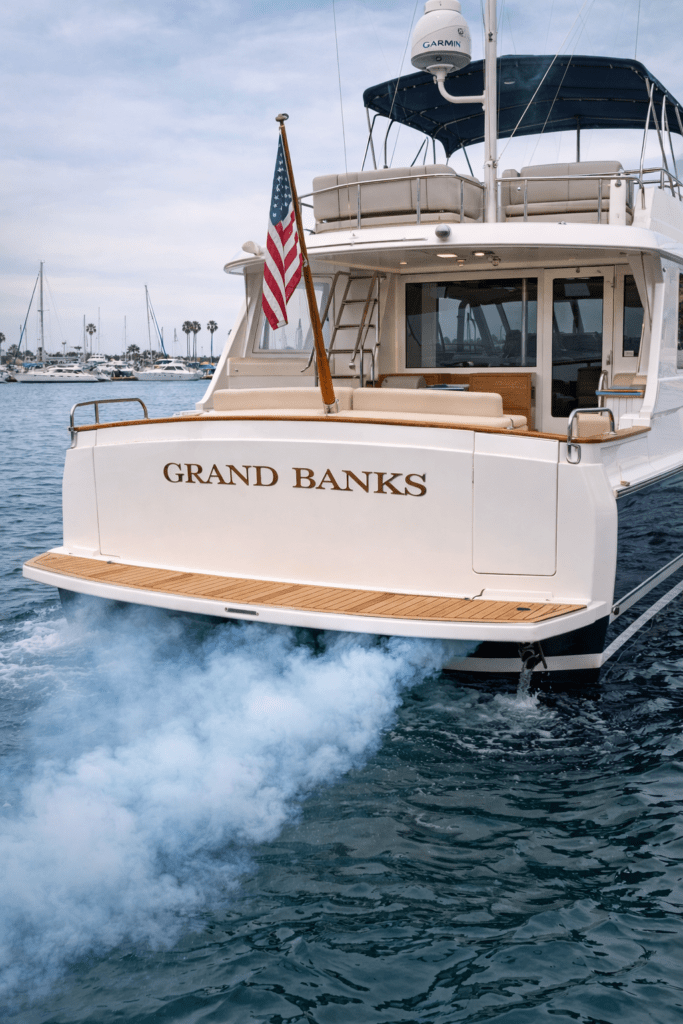
Boat engine blowing blue smoke usually means your marine diesel engine is burning oil, and that is never a symptom to ignore. This guide explains what blue smoke really means, how to separate minor causes from major internal engine wear, and how to diagnose the problem using the same system-based process used by 805 Marine Diesel Mechanic throughout Ventura, Oxnard, Channel Islands Harbor, and Santa Barbara.
Boat Engine Blowing Blue Smoke – Marine Diesel Diagnosis Guide
If your boat engine is blowing blue or bluish-gray smoke, the engine is almost always burning oil somewhere in the combustion process. That can happen because oil is getting past piston rings, valve guides, turbocharger seals, or crankcase ventilation paths. In some cases, the root cause is still manageable if caught early. In other cases, blue smoke is an early warning of significant engine wear.
This is a critical issue on older inboard marine diesel engines, high-hour yachts, and boats that have sat unused for extended periods. Blue smoke can appear at startup only, under acceleration, only under load, or continuously. Each pattern matters. It tells you where the oil is entering the engine and how severe the problem may be.
This page expands from your Master Marine Diesel Troubleshooting Guide and fits directly into your smoke and combustion diagnostic silo so boat owners can move from symptom recognition to real troubleshooting without guessing.
What Blue Smoke Means in a Marine Diesel Engine
Blue smoke means engine oil is being burned with the air-fuel charge. Unlike black smoke, which is usually tied to excess fuel or not enough air, and unlike white smoke, which is often linked to unburned fuel, cold combustion, or coolant-related issues, blue smoke is strongly associated with oil entering places it should not be.
That is why blue smoke deserves a different diagnostic path. A diesel can still start, idle, and even produce acceptable power while burning oil. That tricks many owners into thinking the problem is minor. But oil burning leaves carbon deposits, contaminates the intake and exhaust path, damages turbochargers over time, and can shorten engine life dramatically if ignored.
The real job is not just identifying that the smoke is blue. The real job is figuring out how the oil is entering the combustion stream:
- Past piston rings from cylinder wear
- Down valve guides or past worn valve stem seals
- Through failed turbocharger oil seals
- From excessive crankcase pressure
- From overfilled oil or oil aeration
Common Symptoms That Go With Blue Smoke
- Blue or bluish-gray exhaust smoke
- Increased oil consumption between services
- Oily residue near the exhaust outlet
- Smoke that gets worse under load
- Carbon buildup around the transom or stern area
- Reduced efficiency and poor long-range reliability
- Dirty charge-air path on turbocharged engines
Blue smoke is often seen alongside related performance complaints such as boat engine losing power, boat engine won’t reach full RPM, engine surging at cruise RPM, and unexpected engine shutdown symptoms. Those crossover symptoms matter because a worn or oil-fouled engine often develops multiple problems at once.
Top Causes of Boat Engine Blowing Blue Smoke
1. Turbocharger Oil Seal Failure
On many marine diesel engines, especially turbocharged inboards, the turbocharger is one of the first places to inspect. A failed or failing turbo seal can leak oil into the intake side or exhaust side of the turbo. When that happens, the engine starts burning oil even though the internal rotating assembly may still be in decent condition.
This is why turbo diagnosis is so important before assuming the engine needs a rebuild. A turbo problem can mimic major internal wear. Look for oily compressor housings, excessive shaft play, wet residue in charge pipes, and smoke that increases with boost and load. Related pages already on your site include the Turbo System Diagnosis Center and Marine Diesel Turbo Failure.
2. Worn Piston Rings or Cylinder Wear
This is one of the classic causes of persistent blue smoke. If piston rings are worn or the cylinder walls have excessive wear, oil from the crankcase can move upward into the combustion chamber. Blue smoke from ring wear often gets worse under load because cylinder pressure rises and oil control drops off. It may also be accompanied by crankcase blow-by, reduced compression, hard starting, oil consumption, and loss of full rated RPM.
On high-hour marine diesels, ring wear usually does not appear alone. It often comes with reduced compression quality, poor combustion efficiency, and a gradual drop in overall engine performance.
3. Valve Guide or Valve Seal Wear
Valve guide wear allows oil from the top end of the engine to seep into the combustion chamber. This can create blue smoke that is especially noticeable at startup, after extended idle, or during throttle transitions. While many marine diesel engines do not use valve stem seals in the same way as automotive gasoline engines, the top-end path still matters and can absolutely contribute to oil burning.
4. Overfilled Engine Oil
Sometimes the simplest cause is overlooked. If the crankcase is overfilled, the engine can aerate or push oil where it should not go. That can produce blue smoke, especially at higher RPM or under sustained load. Always verify the oil level correctly with the boat floating as intended and the engine checked by the manufacturer’s procedure.
5. Crankcase Ventilation Problems
Restricted crankcase ventilation raises crankcase pressure. Once crankcase pressure climbs, oil starts getting pushed into intake paths, breather systems, or weak seals. That can create intermittent or steady blue smoke, especially on worn engines or engines with blow-by already present.
6. Poor Combustion Making Oil Burning Look Worse
Blue smoke is mainly an oil-burning issue, but weak combustion can intensify the visible symptom. If fuel atomization is poor, compression is marginal, or the engine is not reaching proper combustion temperature, a modest oil problem may produce much more visible smoke. This is where the smoke diagnosis path overlaps with the Fuel System Diagnosis Center and Fuel Contamination pages.
How to Diagnose Blue Smoke the Right Way
Good diagnosis means not jumping straight to the worst conclusion. Many owners hear “blue smoke” and assume full engine rebuild. Sometimes that is true. Sometimes it is only a turbo seal, crankcase ventilation issue, or oil level mistake. The correct process is to move from external and non-invasive checks toward deeper internal confirmation.
Step 1: Verify the Smoke Is Actually Blue
Lighting, humidity, background color, and exhaust water can distort smoke color. What looks blue in one condition may look gray-white in another. Confirm whether the smoke is:
- Blue only at startup
- Blue at idle and clear at load
- Blue under throttle and boost
- Blue continuously in all conditions
The pattern narrows the search dramatically.
Step 2: Check Oil Level and Oil Condition
Before anything else, inspect the oil level and the actual oil condition. Overfull oil, fuel dilution, and badly degraded oil can all make the problem worse. If the oil smells strongly of fuel, looks thin, or has risen unexpectedly on the dipstick, that becomes part of the diagnosis immediately.
Step 3: Inspect the Turbocharger and Intake Path
Remove the intake hose as appropriate and inspect for wet oil residue. Check shaft play, compressor housing cleanliness, and signs of oil pooling where it should not be. A turbo problem often creates a very different repair path than worn rings, so this is a high-priority step.
Step 4: Evaluate Crankcase Pressure and Blow-By
Excessive blow-by is a major clue that ring sealing is compromised. If the engine is pushing vapor heavily from the breather or oil fill, internal wear moves higher on the suspect list. Crankcase pressure testing can be more informative than guessing based on smoke alone.
Step 5: Compression or Cylinder Condition Testing
If the basic checks do not isolate the problem, the next level is compression testing or equivalent cylinder condition testing depending on the engine design. Low compression by itself does not always prove oil burning, but when combined with blue smoke, blow-by, and oil consumption, it strongly suggests ring or cylinder wear.
Step 6: Look at the Full Performance Picture
Does the engine also have weak acceleration, reduced top RPM, hard cold starting, rough idle, or heavy crankcase fumes? A real marine diesel diagnosis never looks at smoke in isolation. It looks at smoke as one signal inside the entire engine system.
Blue Smoke at Startup vs Blue Smoke Under Load
Blue Smoke Only at Startup
If the engine smokes blue briefly at startup and then mostly clears, that can point toward oil draining into the combustion path while the engine sits. Valve guide wear, top-end seepage, or minor turbo seepage can all behave this way. It still needs attention, but it is not always the same as severe ring wear.
Blue Smoke Under Acceleration or Heavy Load
This pattern often suggests a more serious issue. Heavy load raises cylinder pressure, oil temperature, turbo demand, and crankcase stress. If the smoke gets stronger only when the engine works hard, focus on turbo seals, ring sealing, blow-by, and oil control problems.
Blue Smoke All the Time
Continuous blue smoke is much more serious. That usually means the engine is burning oil steadily and the root cause is unlikely to be a one-time condition. This is where professional diagnostics matter most because long-term operation can turn a repairable problem into major damage.
Why Blue Smoke Should Never Be Ignored
Blue smoke is not just a cosmetic problem. Burning oil creates deposits and contamination throughout the engine system. Over time it can lead to:
- Accelerated carbon buildup
- Turbocharger contamination and shortened turbo life
- Sticking rings and reduced compression
- Dirty intake system and charge-air path
- Increased oil usage and lower reliability offshore
- Higher chance of major engine repair later
For many boat owners, the bigger issue is trust. Once an engine starts burning visible oil, long trips become stressful. You start watching the exhaust instead of enjoying the boat. That is why early diagnosis has real value even before the repair gets large.
Preventing Blue Smoke on Marine Diesel Engines
- Maintain the correct oil level, not “a little extra for safety”
- Use the proper oil grade and change it on schedule
- Inspect turbo condition before it becomes a bigger failure
- Address crankcase breathing problems early
- Do not ignore rising oil consumption
- Investigate startup smoke before it becomes all-condition smoke
- Keep related systems in good shape so combustion stays efficient
Recommended authority reading includes Boats.com Diesel Smoke Guide and Marine Insight on Marine Diesel Exhaust Smoke.
Related Diagnosis Pages on Your Site
Blue smoke should be connected to adjacent symptoms because owners often search by multiple complaints, not just one. Related pages include:
- Boat Engine Losing Power
- Boat Engine Won’t Reach Full RPM
- Marine Engine Surging at Cruise RPM
- Marine Diesel Engine Shutdown Causes
- Turbo System Diagnosis Center
- Fuel System Diagnosis Center
- Fuel Contamination
- Contact 805 Marine Diesel Mechanic
For boat owners planning a purchase, documented smoke behavior also matters during condition evaluation, so this page can naturally support your service pages. And because you asked to connect the orphaned page, this post now includes a contextual link to your Privacy Policy where form submission and contact information handling are covered.
When to Call a Marine Diesel Mechanic
If the engine is consistently blowing blue smoke, using more oil than normal, leaving oily residue, or producing smoke under load, it is time for professional diagnosis. The key question is whether the cause is external and repairable without major engine disassembly, or whether the smoke is a sign of broader internal wear.
805 Marine Diesel Mechanic provides mobile diagnostics and marine diesel troubleshooting throughout Ventura, Oxnard, Channel Islands Harbor, and Santa Barbara. With over 30 years of marine engine experience, the goal is to identify the real cause before parts are replaced unnecessarily.
Blue Smoke FAQ
1. What does blue smoke mean on a marine diesel engine?
Blue smoke usually means the engine is burning oil. That oil may be getting into the combustion process through worn rings, valve guide wear, turbocharger seal problems, or crankcase ventilation issues. For the larger diagnostic path, see the Master Marine Diesel Troubleshooting Guide.
2. Is blue smoke serious?
Yes. Sometimes the repair is limited, but blue smoke always deserves diagnosis because it points to oil entering the combustion stream. Left alone, it can lead to carbon buildup, turbo contamination, and long-term engine wear.
3. Can a turbocharger cause blue smoke?
Yes. Failed turbocharger oil seals are one of the most common causes of blue smoke on turbocharged marine diesels. A leaking turbo can mimic deeper engine problems, which is why the Turbo System Diagnosis Center is such an important companion page.
4. Can worn piston rings cause blue smoke?
Yes. Worn piston rings can allow oil to pass into the combustion chamber, especially under load. This is often accompanied by blow-by, oil consumption, and reduced performance.
5. Can overfilled engine oil make a boat smoke blue?
Yes. Overfilled oil can cause aeration or force oil into places it should not go, especially during higher RPM operation. Always verify oil level before assuming the engine has internal wear.
6. Does blue smoke always mean the engine needs a rebuild?
No. That is a common fear, but not always true. Turbo seal failure, oil level issues, and crankcase ventilation problems can all create blue smoke without requiring a full rebuild. Proper testing matters.
7. Why is my engine only smoking blue at startup?
Blue smoke at startup can point to oil draining into the combustion path while the engine sits. Valve guide wear, minor turbo seepage, or top-end oil migration are common possibilities.
8. Why does my marine diesel only blow blue smoke under load?
Under load, cylinder pressure, crankcase stress, and turbo demand all rise. That often exposes worn rings, turbo seal issues, or poor oil control that may not be obvious at idle.
9. Can bad fuel cause blue smoke?
Blue smoke is mainly an oil-burning symptom, but poor combustion from fuel problems can make the condition look worse. That is why fuel quality and combustion health still matter. Related reading: Fuel Contamination.
10. Can blue smoke cause loss of power?
Yes. The same wear or turbo issue causing blue smoke can also reduce performance. That is why this symptom often overlaps with boat engine losing power and boat engine won’t reach full RPM.
11. What is the first thing to check when a boat engine blows blue smoke?
Start with oil level, oil condition, and the turbocharger. Those checks often reveal whether the problem is simple, external, or likely tied to deeper engine wear.
12. Can crankcase pressure create blue smoke?
Yes. Excess crankcase pressure can push oil into intake and breather paths. On worn engines, this can be a major contributor to visible blue smoke.
13. Does blue smoke mean the engine is unsafe to run?
It depends on severity, but it should not be ignored. Running an oil-burning engine can worsen deposits, accelerate wear, and make the eventual repair larger and more expensive.
14. Can injectors cause blue smoke?
Injectors do not usually cause blue smoke directly because blue smoke is oil-related, but poor injector performance can weaken combustion and make smoke more visible.
15. Is blue smoke different from white smoke and black smoke?
Yes. Black smoke usually points toward excess fuel or restricted air, white smoke often points toward unburned fuel or cold combustion, and blue smoke most often indicates oil burning.
16. Can a boat still run well while blowing blue smoke?
Yes, at first. That is what makes blue smoke deceptive. Some engines still start and run fairly well while oil burning slowly worsens in the background.
17. Should I document blue smoke before buying a boat?
Absolutely. Blue smoke is one of the most important pre-purchase warning signs because it can point to expensive internal issues or turbocharger problems.
18. Can blue smoke be connected to engine surging or shutdown issues?
Yes. A worn or oil-fouled engine can develop multiple crossover symptoms. Related pages include engine surging and shutdown causes.
19. When should I call a mechanic for blue smoke?
If the smoke is persistent, worsening, accompanied by oil consumption, or appears under load, it is time for professional diagnosis. Mobile service is available through 805 Marine Diesel Mechanic.
20. Where can I read how my information is handled when I contact you?
You can review that on the site’s Privacy Policy page. That also helps connect this formerly orphaned page into the live site structure in a natural way.
3 Responses