
If your boat engine is overheating, shut it down and diagnose the cause before serious engine damage occurs. This guide explains how to troubleshoot marine diesel overheating using real cooling-system logic so you can separate raw water flow problems, heat exchanger blockage, mixing elbow restriction, and closed-loop cooling failures before they turn into warped heads, gasket failure, or complete engine loss.
Boat Engine Overheating – Marine Diesel Cooling System Diagnosis Guide
Boat engine overheating is one of the most serious marine diesel warning signs because temperature damage happens fast. A diesel engine can tolerate only so much heat before metal expansion, oil breakdown, gasket failure, and component distortion begin. That is why overheating is never a symptom to “watch for a while.” It is a symptom to diagnose immediately.
Marine diesels do not cool like cars. Instead of a simple automotive-style radiator system, most inboard marine diesel engines use a combination of raw water flow, heat exchangers, closed-loop coolant circulation, and exhaust water injection. That means overheating can start on the raw water side, the closed-loop side, or at the exhaust discharge side where cooling water and exhaust gases meet. Good diagnosis means understanding which side is failing and in what order.
With over 30 years of marine diesel experience, 805 Marine Diesel Mechanic provides mobile cooling system diagnosis and repair throughout Ventura, Oxnard, Santa Barbara, and Channel Islands Harbor. This page expands on the Master Marine Diesel Troubleshooting Guide and builds a full symptom path for real marine diesel overheating diagnosis.
Why Marine Diesel Engines Overheat
Marine diesel engines overheat when cooling capacity falls below heat production. That sounds simple, but in practice it can happen for many different reasons. The engine may not be receiving enough raw water. The raw water pump may be weak. The heat exchanger may be restricted. The mixing elbow may be clogged. The thermostat may be stuck. The coolant level may be low. The circulation pump may be slipping or failing. Even small restrictions can stack together until the system finally crosses the line and temperature climbs.
That is why overheating diagnosis should always be done as a system, not as a one-part guess. Replacing an impeller may help, but if broken impeller pieces are still lodged in the heat exchanger or the mixing elbow is heavily restricted, the engine may continue overheating. The real goal is to identify the actual bottleneck in the cooling chain.
Common Overheating Symptoms
- High temperature gauge readings
- Steam or weak water flow from the exhaust
- Loss of power under load
- Alarm activation or warning lights
- Coolant overflow, coolant loss, or pressure in the expansion tank
- Temperature rises at idle, cruise, or both
Overheating often crosses over into other complaint pages such as Boat Engine Losing Power, Turbo System Diagnosis, Fuel Contamination, and Engine Surging. That matters because a hot engine often loses power, smokes differently, and begins showing multiple system symptoms at once.
Top Causes of Marine Diesel Overheating
1. Clogged Raw Water Intake or Sea Strainer
Always start with the basics. Marine growth, grass, plastic, shells, debris, or internal hose collapse can restrict intake flow and immediately reduce cooling capacity. A partially blocked sea strainer or intake may still pass some water, which is why the engine can sometimes run for a while before overheating becomes obvious.
This is the first place to check because it is one of the easiest failures to confirm and one of the most common. Related page: Cooling System Diagnosis Center.
2. Raw Water Pump or Impeller Failure
The impeller is one of the most common marine diesel cooling failure points. Missing blades, hardened vanes, poor installation, worn cover plates, and raw water pump housing wear all reduce water flow. Some pumps continue moving water even when badly worn, which tricks owners into thinking the pump is good. In reality, flow may already be too weak to support the engine under load.
This is also why you should never stop at “the impeller looks damaged.” If blades are missing, those pieces must be found downstream. Related page: Overheating at Idle.
3. Heat Exchanger Blockage
Salt deposits, zinc fragments, marine debris, and internal scale can restrict the heat exchanger over time. Once enough passages are blocked, heat transfer drops and the engine begins running hotter under load. Heat exchanger problems often build gradually, which is why many overheating complaints start as “it just runs a little hotter than it used to” before becoming a full alarm condition.
Related reading: Heat Exchanger Cleaning.
4. Mixing Elbow Restriction
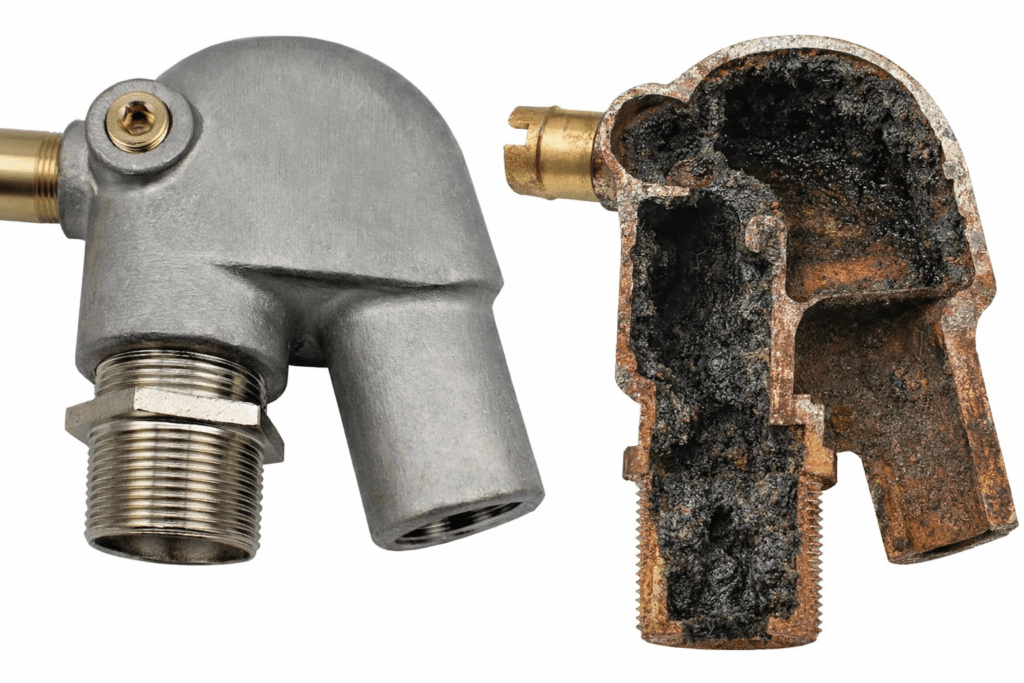
The mixing elbow is one of the most overlooked overheating causes in marine diesels. Carbon, rust, salt, and exhaust deposits slowly choke the elbow until exhaust flow and water discharge are restricted. The result can be temperature rise, steam, weak exhaust water flow, loss of power, and eventually repeated overheating.
The elbow comparison image above shows exactly why this matters. Externally the part may not look catastrophic, but internally it can be heavily reduced. Related reading: Mixing Elbow Replacement.
5. Closed-Loop Coolant System Problems
Not all overheating comes from the raw water side. Low coolant, thermostat failure, circulation pump problems, trapped air, or internal coolant restriction can all drive engine temperature up. If the raw water side looks acceptable, the closed-loop side becomes the next major suspect.
- Low coolant levels
- Thermostat failure
- Circulation pump wear or leakage
- Internal blockage or poor coolant flow
6. Air Leaks in the Raw Water Side
Air leaks reduce pump efficiency and are often missed because they do not always leave an obvious puddle. A loose clamp, cracked suction hose, worn pump seal, or poor gasket can reduce the pump’s ability to pull water consistently, especially at idle or heavy load.
Step-by-Step Cooling System Diagnosis
Step 1: Confirm Where and When It Overheats
Does the engine overheat at idle, only under load, or in all conditions? Does the gauge rise gradually or spike quickly? Does the exhaust lose water flow as temperature rises? The overheating pattern helps narrow whether the issue is raw water, closed-loop, or load-related.
Step 2: Start With Raw Water Intake and Sea Strainer
Check the intake and strainer first because restrictions here affect everything downstream. If the engine cannot get water into the system, nothing farther down the line can compensate.
Step 3: Inspect the Raw Water Pump and Impeller
Check impeller condition, cover wear, pump housing clearance, and any missing blades. If blades are missing, inspect downstream passages and coolers immediately.
Step 4: Evaluate Water Flow at the Exhaust
Weak discharge, intermittent spurting, or steam-heavy exhaust is a major clue that raw water flow is compromised. It does not tell you exactly where the blockage is, but it confirms the cooling side needs deeper inspection.
Step 5: Check the Heat Exchanger and Oil/Transmission Coolers
Heat exchangers and small coolers often trap zinc pieces, scale, and impeller debris. These restrictions may not be visible until components are opened and cleaned properly.
Step 6: Inspect the Mixing Elbow
If raw water flow seems present but the engine is still overheating or steaming, the mixing elbow becomes a prime suspect. Internal restriction here can create both cooling and exhaust problems at the same time.
Step 7: Move to the Closed-Loop Side
Check coolant level, thermostat function, circulation pump condition, and any sign of trapped air or internal coolant flow problems. If the raw water side is acceptable, the closed-loop system must be tested next.
Why Overheating Should Never Be Ignored
Heat is destructive. When an engine overheats, oil breaks down faster, metal expands beyond normal range, and gasket surfaces get stressed. If severe overheating continues, the result can include:
- Warped cylinder heads
- Failed head gaskets
- Damaged pistons or rings
- Turbocharger stress and bearing damage
- Coolant loss and internal engine damage
This is why the correct response to overheating is to shut the engine down and diagnose the cause, not keep running in hope that it clears itself up.
Preventing Marine Diesel Overheating
Overheating prevention is mostly maintenance discipline. In saltwater environments like Ventura and Channel Islands Harbor, raw water components are constantly exposed to corrosion, salt deposits, growth, and debris. That means cooling system service should never be treated as optional.
- Replace impellers on schedule
- Inspect raw water pump wear before it becomes severe
- Clean and service heat exchangers regularly
- Inspect mixing elbows before they become heavily restricted
- Keep coolant at the correct level and condition
- Check strainers and intake flow often
Authority references include BoatUS technical how-to resources and Yachting Magazine marine diesel maintenance guidance.
Additional Diagnostic Resources
- Master Marine Diesel Troubleshooting Guide
- Cooling System Diagnosis Center
- Overheating at Idle
- Heat Exchanger Cleaning
- Mixing Elbow Replacement
- Boat Engine Losing Power
- Turbo System Diagnosis
- Contact 805 Marine Diesel Mechanic
When to Call a Professional
If your engine is overheating, if exhaust water flow is weak, or if temperature continues rising after basic checks, professional diagnosis is the safest next move. The goal is to isolate the exact restriction or failed component before overheating causes much larger internal damage.
805 Marine Diesel Mechanic provides fast mobile marine diesel cooling system diagnostics and repair throughout Ventura, Oxnard, Santa Barbara, and Channel Islands Harbor. With over 30 years of experience, the focus is always on finding the real overheating cause rather than replacing random parts.
Overheating FAQ
1. What is the most common cause of marine diesel overheating?
The most common causes are raw water flow restriction, impeller failure, pump wear, heat exchanger blockage, and mixing elbow restriction. Start with the Master Marine Diesel Troubleshooting Guide for the full system path.
2. Can a clogged mixing elbow cause overheating?
Yes. It is one of the most common and most overlooked causes because internal carbon and salt buildup can restrict both exhaust flow and cooling water discharge.
3. Should I shut the engine down immediately if it overheats?
Yes. Continuing to run an overheating engine risks severe internal damage including warped heads, gasket failure, and major cooling-system damage.
4. How often should I replace the impeller?
Usually every one to two years depending on use, environment, and engine schedule, but heavy use or saltwater conditions may justify more frequent inspection and replacement.
5. Can overheating damage the engine quickly?
Yes. Marine diesels can suffer major damage fast once temperature climbs high enough, which is why overheating is never a symptom to ignore.
6. Can salt buildup cause overheating?
Yes. Salt and mineral buildup inside heat exchangers, coolers, and mixing elbows is one of the most common long-term causes of marine diesel overheating.
7. Why is water flow weak from the exhaust?
Weak exhaust flow usually indicates a restriction or pump-efficiency problem somewhere in the raw water side. Related reading: Cooling System Diagnosis Center.
8. When should I call a mechanic?
If overheating persists after basic checks, if the alarm sounds, or if the engine continues running hot under load, it is time for professional diagnosis through the contact page.
9. Can a bad raw water pump cause overheating even if some water is still coming out?
Yes. A worn pump may still move some water but not enough to keep the engine cool under real operating conditions.
10. Can missing impeller blades still cause overheating after I install a new impeller?
Yes. If broken blades are lodged downstream, the engine may continue overheating even after a new impeller is installed.
11. Can low coolant cause overheating on a marine diesel?
Yes. Closed-loop coolant problems such as low coolant, thermostat failure, or circulation pump issues can absolutely cause overheating.
12. Can overheating also cause power loss?
Yes. Rising temperature often reduces performance and may overlap with Boat Engine Losing Power.
13. Why does my engine overheat more under load than at idle?
Because heat production rises under load, and marginal cooling systems often cannot keep up once the engine is asked to work harder.
14. Can a sea strainer that looks only partly dirty still be the problem?
Yes. Even partial restriction can reduce enough flow to create overheating, especially on engines already operating near the edge of cooling capacity.
15. Can an air leak in the suction side cause overheating?
Yes. Air leaks reduce raw water pump efficiency and can create weak, inconsistent cooling water flow.
16. Is steam from the exhaust always the same as overheating?
Not always, but steam combined with reduced water flow, rising temperature, or alarms strongly suggests a cooling problem that needs attention.
17. Can a blocked heat exchanger make the engine run only a little hot at first?
Yes. Heat exchanger restriction often begins as a gradual temperature increase before becoming a full overheating event.
18. Does maintenance really prevent most overheating problems?
Yes. Many overheating complaints come from neglected impellers, restricted strainers, fouled exchangers, worn pumps, and clogged elbows that could have been addressed earlier.
19. Can overheating turn into shutdown or broader engine trouble?
It can. Continued overheating can lead to loss of power, shutdown events, and major engine damage if left unresolved.
20. Where should I start if I want the full cooling-system path?
Start with the Master Marine Diesel Troubleshooting Guide, then follow the linked cooling, exchanger, elbow, and idle-overheating pages from there.
14 Responses