
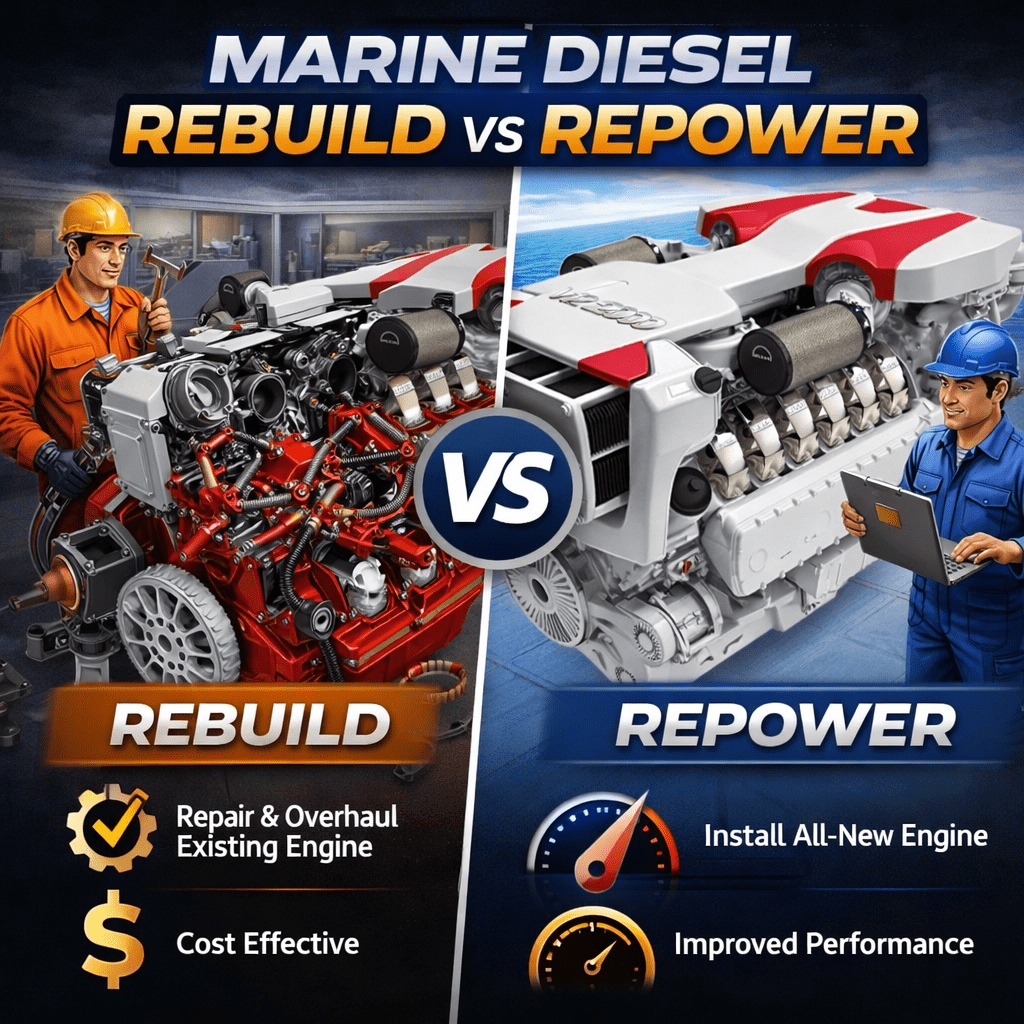
 Rebuild vs Repower Marine Diesel: Which Is the Smarter Long-Term Decision? At some point, every boat owner faces the big question: Should I rebuild my marine diesel engine or repower with a new one? The right answer depends on engine condition, operating hours, budget, and long-term goals.
Before making a major investment decision, start by properly diagnosing the root cause of your engine issues using our Master Marine Diesel Troubleshooting Guide. Many engines that appear “worn out” are actually suffering from solvable fuel, air, or cooling problems.
When a Marine Diesel Rebuild Makes Sense
A rebuild is often the right choice when the core engine structure is still sound.
- Good block and crankshaft condition
- Acceptable compression across cylinders
- No major corrosion damage
- Parts availability remains strong
- Vessel layout makes engine removal difficult
Common symptoms leading to rebuild consideration include blue smoke caused by oil consumption, blow-by, and reduced compression.
If overheating history is minimal and cooling systems have been properly maintained, rebuilding can restore another 5,000–10,000 service hours.
When Repowering Is the Better Investment
Repowering becomes the smarter option when underlying engine wear or obsolescence outweighs rebuild value.
- Cracked block or severe internal corrosion
- Repeated overheating problems
- High total operating hours (8,000+ on many platforms)
- Hard-to-source parts
- Chronic performance issues
Before assuming an engine is finished, rule out fuel restriction using our Racor filter troubleshooting guide. A restricted fuel system can mimic catastrophic engine failure symptoms.
Cost Comparison: Rebuild vs Repower
Rebuild:
- Lower upfront cost
- Shorter downtime
- Retains existing mounts and drivetrain
Repower:
- Higher upfront investment
- Improved fuel efficiency
- Modern emissions compliance
- Increased resale value
In many cases, a properly executed repower increases vessel market value significantly — especially when upgrading from older mechanical platforms to modern electronic common-rail engines.
Performance & Efficiency Considerations
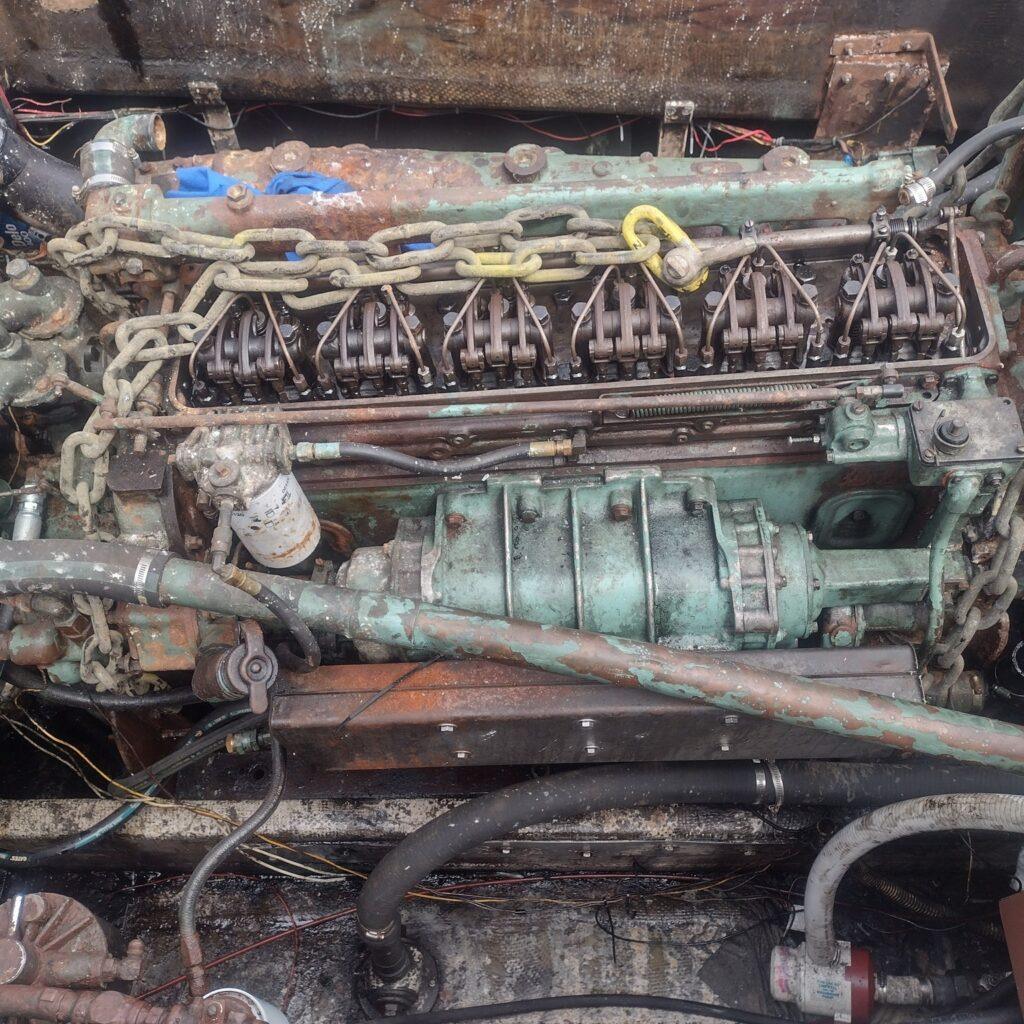
Older engines often suffer from:
- Power loss under load
- Excessive black smoke
- Declining fuel efficiency
- Hard starting
If symptoms like fuel restriction vs air restriction problems are ruled out and mechanical wear is confirmed, repowering may provide a more reliable long-term solution.
Downtime & Installation Factors
Rebuilds typically allow you to retain:
- Transmission
- Mounting footprint
- Exhaust configuration
Repowers may require:
- New mounts and alignment
- Cooling system modifications
- Exhaust redesign
- Updated fuel filtration systems
However, modern installations often improve service accessibility and reliability.
Long-Term Strategy: What Are Your Boating Plans?
If you plan to keep the vessel 2–3 more seasons, a rebuild may make financial sense.
If you plan to keep the boat long term or improve resale value, repowering often delivers better reliability and operating efficiency.
Every decision should begin with a full mechanical evaluation and diagnostic review using our Master Marine Diesel Troubleshooting Guide.
Final Thoughts
Rebuild vs repower isn’t a one-size-fits-all answer. The correct path depends on engine condition, vessel value, and your long-term ownership goals.
Start with accurate diagnosis. Confirm cooling, fuel, and combustion health. Then make the investment decision based on facts — not frustration.
2 Responses