
Boat Engine Air in Fuel System – Marine Diesel Diagnosis Guide
If your boat engine has air in the fuel system, it can cause hard starting, rough idle, power loss, intermittent shutdown, and frustrating no-start conditions that seem to come and go without warning. Air intrusion is one of the most common marine diesel problems we diagnose, especially after filter service, fuel hose repairs, long layups, or when an older fuel system begins developing small suction-side leaks.
For boat owners in Ventura, Oxnard, Channel Islands Harbor, and Santa Barbara, this problem often shows up as an engine that starts hard in the morning, loses prime after sitting, surges slightly underway, or shuts down unexpectedly even though there is fuel in the tank. Because marine diesel engines depend on a solid, air-free fuel supply, even a very small leak can create major running problems.
At 805 Marine Diesel Mechanic, we have over 30 years of hands-on experience diagnosing inboard marine diesel fuel supply issues on Cummins, Caterpillar, Detroit Diesel, Volvo Penta, Yanmar, Perkins, and other major marine diesel engines throughout the Central Coast.
What Does Air in the Fuel System Mean?
Air in the fuel system means the engine is receiving fuel mixed with air bubbles instead of a solid, uninterrupted column of diesel fuel. A marine diesel injection system is designed to move and meter fuel precisely. When air enters the system, fuel pressure and delivery become unstable, which leads to poor combustion and unreliable engine operation.
This page works alongside the Master Marine Diesel Troubleshooting Guide and helps isolate whether your symptoms are being caused by leaking fittings, filter seals, fuel hose issues, poor bleeding, or contamination-related restriction that is allowing the system to lose prime.
Air intrusion is especially common on the suction side of the fuel system because those leaks may not drip visible fuel. Instead, they pull air in when the engine is running or after the engine has been sitting. That is why this issue is often missed until hard starting, shutdown, or rough running symptoms become frequent.
Common Symptoms of Boat Engine Air in Fuel System
- Hard starting after sitting
- Boat engine starts and then stalls
- Engine loses prime overnight
- Rough idle or uneven idle quality
- Engine surging or RPM instability
- Shutdown while running under load
- Loss of power or hesitation
- Bubbles visible in diagnostic or clear fuel lines where fitted
Top Causes of Air in a Marine Diesel Fuel System
- Loose fuel fittings or clamps
- Damaged Racor seals or improperly installed filters
- Cracked suction-side hoses
- Leaking banjo washers or fittings
- Poor bleeding after service
- Fuel selector or manifold valve sealing problems
- Lift pump or primer pump leaks
- Contaminated filters causing unstable flow and prime loss
Many air intrusion problems begin right after routine maintenance. A filter change, hose replacement, or fuel polishing service may disturb an aging fitting or introduce a sealing problem that does not show itself until the next startup or offshore run.
Step-by-Step Marine Diesel Air in Fuel System Diagnosis
1. Start at the Primary Filters and Racor Manifold
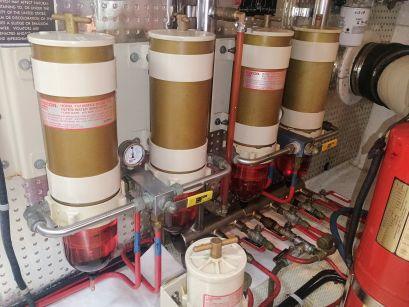
Your Racor setup is one of the first places to inspect because it contains multiple seals, valves, bowls, and fittings that can allow air into the fuel stream. The image above is a perfect example of a fuel system layout where a small sealing issue can affect starting, idle quality, and fuel delivery to the engine.
- Inspect T-handle seals and lid O-rings
- Check bowl seals and drain fittings
- Verify selector valves are fully seated
- Confirm recent filter changes were installed and tightened correctly
Related internal pages:
2. Inspect the Suction Side for Hidden Air Leaks
The suction side of the system is where many air leaks live. Because this section is under vacuum when the engine is running, it may pull in air without leaking diesel outward. That means the system can look dry and still have a serious intrusion problem.
- Inspect hoses from the tank to the primary filters
- Check hose ends for cracks or looseness
- Inspect banjo fittings, flare fittings, and clamps
- Look for hardened hoses on older installations
This often overlaps with symptoms covered in Boat Engine Won’t Start and Boat Engine Shutting Down While Running.
3. Check for Prime Loss After Sitting
If the engine starts poorly after sitting overnight, loses fuel pressure after being shut down, or needs repeated priming, that is a strong sign the system is leaking air or draining back. A healthy fuel system should hold prime and provide consistent startup performance.
- Monitor whether the symptom is worse after long sitting periods
- Note whether manual priming improves starting temporarily
- Check whether one engine is affected more than the other on twin installations
- Compare cold-start behavior to warm restart behavior
These symptoms also tie closely into Boat Engine Hard Starting and Boat Engine Won’t Start.
4. Confirm the System Was Bled Correctly
After filter service or fuel work, improper bleeding can leave trapped air in the system. This is especially common when multiple filters, manifolds, transfer pumps, and long fuel runs are involved. A poorly bled system may start, run roughly, and then stall or surge as air pockets move through the injection supply.
- Bleed at the correct points in the proper sequence
- Confirm solid fuel flow without bubbles
- Check manufacturer-specific bleeding procedures
- Verify no secondary air entry occurred during the process
5. Evaluate Running Symptoms Under Load
Air in the system does not only affect starting. It can also create rough idle, surging, loss of power, and intermittent shutdown under load. At cruise RPM, the engine is far less tolerant of unstable fuel delivery, which is why some boats run at idle but fail when throttled up.
- Surging can indicate inconsistent fuel supply
- Power loss can happen when the system cannot maintain solid flow
- Shutdown can occur if air reaches the injection side in sufficient volume
- Repeated symptoms after filter changes suggest an unresolved leak
Related internal pages:
- Boat Engine Losing Power
- Boat Engine Won’t Reach Full RPM
- Boat Engine Rough Idle
- Marine Engine Surging at Cruise RPM
6. Rule Out Fuel Contamination and Restriction at the Same Time
Air intrusion and fuel contamination often appear together. A dirty filter, contaminated tank, or sludge-filled Racor can make the system behave like it has an air leak, while an actual air leak may be made worse by filter restriction and poor flow. That is why the diagnosis should look at both contamination and sealing issues together.
- Inspect filter condition closely
- Check for water or sludge in bowls
- Rule out blocked pickup tubes or tank contamination
- Do not assume a new filter alone solved the root problem
If the filters are dirty or plugging repeatedly, compare this page with Boat Engine Fuel Contamination.
Why Air in the Fuel System Should Not Be Ignored
Air intrusion creates unstable fuel delivery and can turn a minor maintenance issue into a serious reliability problem. What begins as a hard start in the slip can quickly become a stall in the harbor entrance or a shutdown offshore. It also leads to wasted time, repeated filter changes, and unnecessary parts replacement when the actual leak has not been found.
- Air causes hard starting and no-start conditions
- It can trigger shutdowns under load
- It creates rough idle and poor fuel delivery stability
- It can mislead owners into replacing good parts unnecessarily
- It often points to a leak that will only worsen over time
Preventing Boat Engine Air in Fuel System Problems
Most air intrusion problems can be prevented with careful service practices and regular fuel system inspection.
- Replace filter seals carefully and correctly
- Inspect hoses and clamps during routine service
- Bleed the system properly after maintenance
- Replace aging suction-side hoses before they crack
- Check Racor manifolds and valves for sealing issues
- Investigate hard starting early instead of waiting for shutdown symptoms
Recommended reading:
When to Call a Marine Diesel Mechanic
If your engine keeps losing prime, is hard to start after sitting, shuts down under load, or runs rough after recent fuel system service, it is time for a proper marine diesel diagnosis. Air-in-fuel problems are extremely common, but the exact leak point can take experience to find quickly and correctly.
805 Marine Diesel Mechanic provides expert mobile marine diesel fuel system diagnosis throughout Ventura, Oxnard, Santa Barbara, and Channel Islands Harbor. We identify whether the issue is a filter seal, hose, manifold fitting, suction leak, or bleeding problem so the repair actually solves the root cause.
Additional Diagnostic Resources
- Master Marine Diesel Troubleshooting Guide
- Boat Engine Fuel Contamination
- Boat Engine Hard Starting
- Boat Engine Won’t Start
- Boat Engine Shutting Down While Running
- Boat Engine Losing Power
- Boat Engine Won’t Reach Full RPM
- Boat Engine Rough Idle
Frequently Asked Questions
What causes air in a boat engine fuel system?
The most common causes are loose fittings, damaged filter seals, cracked suction-side hoses, improper bleeding after service, or leaking fuel manifold components.
Can air in the fuel system cause hard starting?
Yes. Air intrusion is one of the most common causes of hard starting, especially after the engine has been sitting and the fuel system has lost prime.
Can air in fuel make my boat engine shut down?
Yes. If enough air reaches the fuel supply side, the engine can stumble, lose power, and shut down while running.
Why does my engine run rough after changing fuel filters?
That usually means the system was not fully bled or a filter seal, bowl seal, or fitting is allowing air into the system.
Can a Racor filter cause air intrusion?
Yes. A damaged O-ring, loose T-handle, bowl seal problem, or manifold valve issue can all allow air into the fuel supply.
How do I know if my engine is losing prime overnight?
Common signs include hard starting after sitting, needing manual priming, or an engine that starts and then quickly stalls before fuel flow stabilizes.
Is air in the fuel system serious on a marine diesel?
Yes. It can lead to unreliable starting, shutdown under load, poor performance, and difficult troubleshooting if the real leak source is not found.
When should I call a marine diesel mechanic for air in fuel?
You should call when the engine repeatedly loses prime, starts hard, stalls after service, runs rough, or shuts down under load despite recent filter changes.