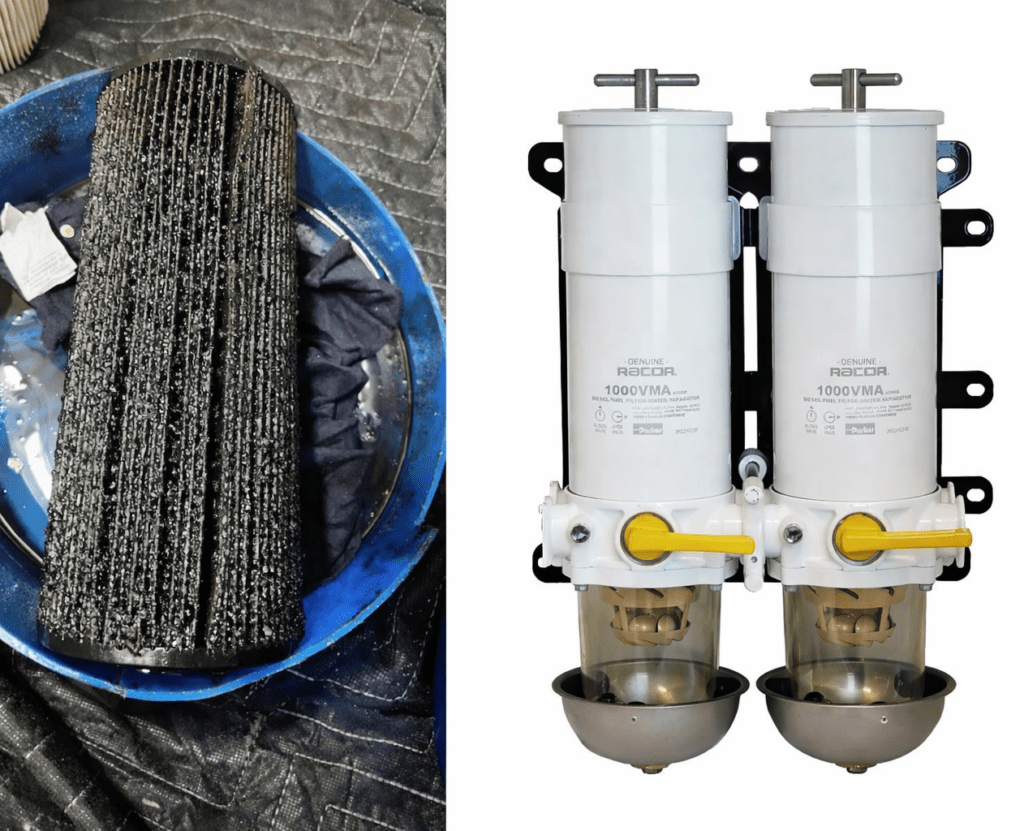
Boat Engine Fuel Contamination – Marine Diesel Diagnosis Guide
If your boat engine has fuel contamination, you can expect hard starting, shutdowns, power loss, rough running, and expensive fuel system repairs if the problem is ignored. Dirty diesel fuel is one of the most common marine engine issues we see in Ventura, Oxnard, Channel Islands Harbor, and Santa Barbara, especially on boats that sit for long periods, carry older fuel, or have taken on water through vents, deck fills, or tank condensation.
Fuel contamination is not just a filter problem. Once debris, water, sludge, microbial growth, or rust begins moving through the system, it can affect Racor filters, transfer pumps, injection components, injectors, and overall engine reliability. In many cases, the engine symptoms begin gradually, then turn into a shutdown or no-start situation offshore or leaving the harbor.
At 805 Marine Diesel Mechanic, we have over 30 years of experience diagnosing and correcting marine diesel fuel contamination issues on inboard engines throughout Ventura County and the Central Coast. From clogged Racor elements to full fuel polishing and system cleanup, proper diagnosis is the key to preventing repeat failures.
What is Boat Engine Fuel Contamination?
Fuel contamination means the diesel fuel reaching your engine is no longer clean, dry, and stable. Contamination can include water, sludge, tank debris, biological growth, rust particles, deteriorated hoses, or old fuel breakdown products. Marine diesel engines depend on clean fuel for reliable starting, smooth combustion, correct injector operation, and full power under load.
This page works alongside the Master Marine Diesel Troubleshooting Guide and helps isolate whether your symptoms are being caused by water contamination, clogged filtration, restricted flow, air intrusion, or damage already spreading downstream into the injection system.
In real-world marine service, contaminated fuel often shows up first as a nuisance problem, then turns into a serious reliability issue. A boat may begin with occasional hesitation or slow acceleration, then develop hard starting, shutdown while running, or chronic low-RPM performance problems as filters plug and flow becomes restricted.
Common Symptoms of Boat Engine Fuel Contamination
- Engine hard starting after sitting
- Boat engine shutting down while running
- Loss of power under load
- Engine will not reach full RPM
- Rough idle or surging
- Frequent Racor filter plugging
- Visible water or debris in fuel bowls
- Black smoke or unstable combustion under throttle
Top Causes of Marine Diesel Fuel Contamination
- Water intrusion through tank vents or deck fills
- Condensation from long storage periods
- Microbial growth in diesel fuel
- Rust or sediment from aging fuel tanks
- Fuel degradation from sitting too long
- Insufficient filtration or overdue filter service
- Contaminated fuel from marina or transfer source
On many boats, the biggest mistake is assuming the problem ends when the filter is changed. If the tank is contaminated, a new element may plug again quickly and the engine symptoms will return until the actual source is cleaned up.
Step-by-Step Marine Diesel Fuel Contamination Diagnosis
1. Inspect the Primary Fuel Filters First
The first and most obvious place to start is the primary filtration system. Your image is a perfect example of why this matters. A badly contaminated filter element tells the story immediately: the fuel system is catching major debris, sludge, and contamination before it reaches more expensive engine components.
- Inspect Racor or primary filters for dark sludge and debris
- Check clear bowls for water separation
- Look for repeated filter plugging after recent service
- Compare port and starboard system condition if twin engines are installed
Related internal pages:
- Master Marine Diesel Troubleshooting Guide
- Boat Engine Hard Starting
- Boat Engine Shutting Down While Running
2. Check for Water in the Fuel
Water is one of the most destructive forms of fuel contamination in a marine environment. It promotes corrosion, encourages biological growth, and causes unstable combustion. If water makes it past the primary separator, it can damage downstream components and create widespread running issues.
- Drain sample fuel from separator bowls
- Look for separated water at the bottom of collected samples
- Inspect tanks and venting for likely water entry points
- Check whether the contamination is recent or ongoing
Water contamination often overlaps with symptoms covered in Boat Engine Won’t Start and Boat Engine Rough Idle, especially when combustion becomes unstable.
3. Determine Whether the Problem is Tank-Side or Engine-Side
This is where professional diagnosis saves time and money. Some boats have tank contamination that repeatedly plugs filters. Others have downstream restrictions, hose breakdown, or secondary filter problems closer to the engine. The fix depends on identifying where the contamination is coming from and how far through the system it has traveled.
- Tank-side contamination points to polishing, cleaning, or tank remediation
- Engine-side contamination may involve secondary filters or supply restrictions
- Hose deterioration can shed material into the system
- Repeat failures after filter changes usually mean the root problem remains upstream
4. Check for Air Intrusion Along With Contamination
Fuel contamination and air intrusion often appear together. A dirty system may also have loose fittings, poor seals, or recently serviced components allowing air into the suction side. That combination can create hard starting, rough idle, surging, and shutdown complaints that seem unrelated until the system is tested correctly.
- Inspect filter seals and T-handles
- Check hose clamps and suction-side fittings
- Look for bubbles where diagnostic observation is possible
- Confirm the system is properly bled after filter replacement
Compare these symptoms with Boat Engine Hard Starting, Boat Engine Losing Power, and Boat Engine Surging.
5. Protect the Injection System Before Damage Spreads
One of the biggest risks with contaminated diesel fuel is what happens after the primary filters. If contamination reaches pumps or injectors, repairs become more expensive and performance problems become more severe. Poor injector spray pattern, sticking components, and incomplete combustion can follow prolonged contaminated-fuel operation.
- Restricted fuel flow can mimic injector or pump failure
- Contamination that bypasses filtration can damage injection components
- Combustion quality may decline even before full failure occurs
- Repeated operation through dirty fuel accelerates wear
If fuel contamination has already affected combustion, it may overlap with symptoms like Marine Engine Black Smoke Under Load or poor performance under throttle.
6. Evaluate the Need for Fuel Polishing or Tank Cleaning
If the contamination is widespread, changing filters alone is only a temporary fix. Fuel polishing, tank cleaning, sludge removal, and system flushing may be necessary to restore reliability. This is especially true on boats with older fuel tanks, long-term storage, or obvious biological growth and sludge accumulation.
- Fuel polishing removes suspended contamination and water
- Tank cleaning addresses settled sludge and debris
- System flushing helps protect downstream components
- Filter upgrades may be appropriate on higher-risk installations
Why Fuel Contamination Should Not Be Ignored
Fuel contamination is one of those problems that can seem minor right up until the moment the engine shuts down. It can begin with a small drop in performance, an occasional stumble, or a dirty filter bowl, then turn into a dangerous reliability issue offshore or while maneuvering in the harbor.
- Clogged filters can stop the engine under load
- Water contamination can corrode system components
- Microbial growth can keep returning if the source is not removed
- Injector and pump damage can follow prolonged contaminated-fuel operation
- Repeated breakdowns waste time and create avoidable service costs
Preventing Boat Engine Fuel Contamination
Consistent maintenance and fuel system inspection are the best protection against contamination-related failures.
- Drain separator bowls regularly
- Replace primary and secondary filters on schedule
- Keep deck fills and vent systems in good condition
- Avoid letting diesel sit too long without monitoring condition
- Inspect tanks and filtration systems before offshore runs
- Address dirty fuel immediately before it reaches injection components
Recommended reading:
When to Call a Marine Diesel Mechanic
If your Racor elements are plugging repeatedly, the engine is losing power, hard starting, shutting down, or showing water and sludge in the filtration system, it’s time for proper diagnosis. Fuel contamination problems rarely solve themselves, and guessing can lead to unnecessary parts replacement while the root cause remains in the tank.
805 Marine Diesel Mechanic provides expert mobile marine diesel fuel system diagnosis throughout Ventura, Oxnard, Santa Barbara, and Channel Islands Harbor. We identify whether the problem is filter-related, tank-related, contamination-related, or already affecting the engine’s performance systems.
Additional Diagnostic Resources
- Master Marine Diesel Troubleshooting Guide
- Boat Engine Hard Starting
- Boat Engine Won’t Start
- Boat Engine Shutting Down While Running
- Boat Engine Losing Power
- Boat Engine Won’t Reach Full RPM
- Boat Engine Rough Idle
- Marine Engine Black Smoke Under Load
Frequently Asked Questions
What causes fuel contamination in a boat engine?
The most common causes are water intrusion, microbial growth, tank sediment, rust, and old degraded diesel fuel that has been sitting too long.
Can contaminated fuel make my boat engine shut down?
Yes. Contaminated fuel can clog filters, reduce fuel flow, and cause the engine to lose power or shut down while running.
How do I know if my Racor filter is clogged from bad fuel?
Signs include dark or slimy filter media, repeated filter plugging, water in the bowl, loss of RPM, hard starting, and fuel starvation symptoms under load.
Can water in diesel fuel cause hard starting?
Yes. Water contamination can disrupt combustion, reduce fuel quality, and make the engine hard to start or run unevenly.
Will changing the filter fix fuel contamination?
Sometimes temporarily, but not always. If the tank is contaminated, the new filter may clog again quickly until the source problem is corrected.
Can dirty fuel cause loss of power?
Yes. Restricted fuel flow from clogged filters or contaminated fuel can prevent the engine from producing full power and reaching proper RPM.
Is fuel polishing worth it for a contaminated marine diesel system?
Yes, when contamination is widespread. Fuel polishing can remove water, sludge, and suspended debris and help restore reliable fuel quality.
When should I call a marine diesel mechanic for fuel contamination?
You should call when filters plug repeatedly, the engine begins shutting down, hard starting develops, or water and sludge are visible in the filtration system.

2 Responses