
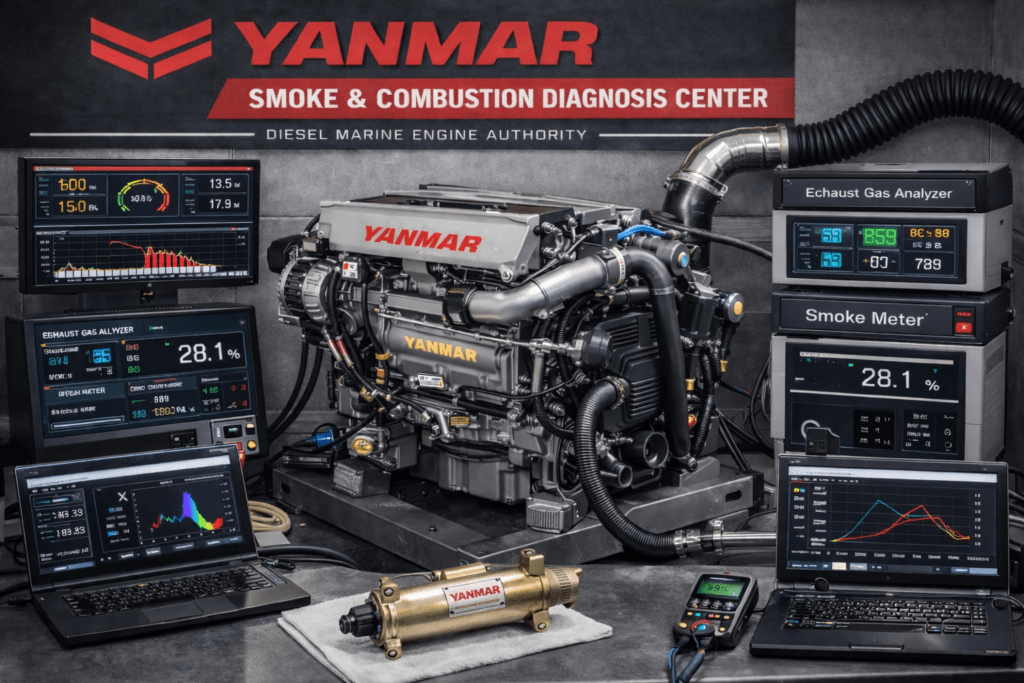
Yanmar Marine Diesel Smoke Problems: Complete Smoke & Combustion Diagnosis Guide
Excessive exhaust smoke is one of the most important warning signs that a Yanmar marine diesel engine may be experiencing combustion problems. Diesel engines rely on precise fuel delivery, correct airflow, and proper compression to achieve efficient combustion.
When combustion becomes unbalanced, the engine may produce visible smoke from the exhaust. Different smoke colors often indicate different underlying mechanical or fuel system issues.
At 805 Marine Diesel Mechanic, we diagnose combustion and exhaust smoke problems throughout Ventura, Oxnard, Channel Islands Harbor, and Santa Barbara. With over 30 years of marine diesel experience, we analyze exhaust gas readings, fuel injection performance, and airflow conditions to determine the cause of smoke production.
This guide is part of our full troubleshooting hub:
Master Marine Diesel Troubleshooting Guide
Understanding Marine Diesel Combustion
Diesel combustion occurs when atomized fuel is injected into compressed air inside the cylinder. Proper combustion requires the correct balance of:
- Fuel injection timing
- Airflow and turbo boost
- Engine compression
- Proper fuel atomization
If any of these conditions become unbalanced, incomplete combustion can occur, producing visible smoke from the exhaust system.
Black Smoke
Black smoke is typically caused by incomplete combustion due to excess fuel or insufficient airflow.
Common causes include:
- Clogged air filters
- Turbocharger boost problems
- Over-fueling injectors
- Restricted exhaust systems
Airflow and turbocharger problems are explored here:
Marine Diesel Turbo Diagnosis Center
White Smoke
White smoke usually indicates unburned fuel leaving the combustion chamber.
Common causes include:
- Cold engine startup
- Injector malfunction
- Low cylinder compression
- Incorrect injection timing
Persistent white smoke may indicate mechanical engine issues.
Blue Smoke
Blue smoke generally indicates engine oil entering the combustion chamber and burning during operation.
Possible causes include:
- Worn piston rings
- Valve guide wear
- Turbocharger oil seal failure
Blue smoke should always be investigated early to prevent more serious internal engine damage.
Fuel System Influence on Combustion
Fuel system problems frequently contribute to smoke production. If injectors fail to properly atomize fuel, combustion efficiency drops.
Fuel delivery issues can be explored here:
Fuel contamination may also affect combustion quality:
Fuel Contamination & Filtration Issues Center
Cooling System Interaction with Combustion
Engine temperature also affects combustion efficiency. Overheating engines may produce abnormal exhaust smoke due to combustion imbalance.
Cooling-related issues can be investigated here:
Cooling System Diagnosis Center
Professional Combustion Diagnosis
Diagnosing smoke problems requires evaluating multiple engine systems simultaneously.
Our diagnostic procedure typically includes:
- Exhaust gas analysis
- Injector performance testing
- Turbo boost pressure testing
- Fuel pressure testing
- Compression analysis
Advanced engine diagnostics are available here:
Computerized Marine Engine Survey Diagnostics Center
Request Combustion System Inspection
Yanmar Marine Diesel Service in Ventura & Channel Islands Harbor
805 Marine Diesel Mechanic provides Yanmar combustion system diagnostics throughout:
- Ventura Harbor
- Channel Islands Harbor
- Oxnard
- Santa Barbara
If your Yanmar marine diesel engine is producing black smoke, white smoke, or blue smoke, professional diagnostics can quickly identify the underlying cause.
Contact 805 Marine Diesel Mechanic
Marine Diesel Smoke FAQ
Black smoke is usually caused by excess fuel or insufficient airflow, often related to turbocharger or air filter problems.
White smoke typically indicates unburned fuel caused by injector problems, low compression, or incorrect injection timing.
Blue smoke usually means engine oil is entering the combustion chamber due to worn piston rings, valve guides, or turbo seals.
Technicians analyze exhaust gas composition, inspect injectors, measure turbo boost pressure, and evaluate engine compression.
One Response