
Yacht Engine Turbo Failure – Marine Diesel Diagnosis Guide
If your yacht engine has turbo failure, the symptoms usually show up fast: loss of power, heavy smoke, slow spool-up, inability to reach full RPM, or a noticeable drop in performance under load. On an inboard marine diesel engine, the turbocharger is a major part of the air and combustion system, and when it starts failing, the engine can go from normal performance to severe power loss in a short amount of time.
For yacht owners in Ventura, Oxnard, Channel Islands Harbor, and Santa Barbara, turbo-related problems are especially important because they often appear during cruise load, offshore runs, or long periods of sustained operation. A failing turbocharger may first feel like the boat is just sluggish, but if the root cause is ignored, it can lead to smoke complaints, overheating, carbon buildup, oil leakage, and more expensive secondary damage.
At 805 Marine Diesel Mechanic, we have over 30 years of hands-on experience diagnosing inboard marine diesel turbocharger problems across major engine platforms including Caterpillar, Cummins, Detroit Diesel, Volvo Penta, Yanmar, Perkins, MAN, and other marine diesel applications throughout the Central Coast.
What Does Yacht Engine Turbo Failure Mean?
Turbo failure means the turbocharger is no longer compressing intake air correctly, is leaking oil, is restricted by carbon or corrosion, has damaged internal components, or is no longer operating within its intended boost range. Marine diesel engines depend on the turbocharger to supply the air needed for efficient combustion and full power output. When boost falls off, combustion quality drops and engine performance follows quickly.
This page works alongside the Master Marine Diesel Troubleshooting Guide and helps isolate whether your yacht’s symptoms are coming from the turbocharger itself, restricted air flow, oil-seal failure, exhaust-side restriction, or another fuel and performance issue that is making the turbo look like the problem.
That distinction matters because not every low-power complaint is caused by a failed turbo. Fuel restriction, clogged air filters, exhaust backpressure, or contaminated fuel can create similar symptoms. The right diagnosis is what separates a real turbo repair from unnecessary parts replacement.
Common Symptoms of Yacht Engine Turbo Failure
- Loss of power under load
- Yacht engine will not reach full RPM
- Heavy black smoke during throttle-up
- Blue smoke from oil leakage through the turbo
- Slow turbo spool or poor acceleration
- Whining, scraping, or unusual turbo noise
- Excessive exhaust temperature
- Oil residue in intake or exhaust-side components
Top Causes of Marine Diesel Turbo Failure
- Oil starvation or poor lubrication
- Carbon buildup and restricted exhaust flow
- Corrosion from marine environment exposure
- Excess shaft play and bearing wear
- Foreign object damage
- Air filter restriction or intake contamination
- Exhaust restriction upstream or downstream
- Prolonged operation with fuel or combustion problems
Marine turbochargers live in a harsh environment. Heat, salt exposure, long idle periods, incomplete combustion, and poor shutdown habits can all shorten turbo life. A turbocharger often fails because of another system problem first, which is why the surrounding systems should always be inspected at the same time.
Step-by-Step Marine Diesel Turbo Failure Diagnosis
1. Confirm the Performance Complaint First
Start with the actual symptom. Is the yacht losing power? Not reaching full RPM? Smoking under load? Running hot? A turbo complaint usually begins with a broader performance problem, so the first step is confirming how the issue shows up in real operation.
- Loss of boost usually shows as low power and slow acceleration
- Oil-seal failure may show as blue smoke
- Air and exhaust restriction often show as black smoke and low RPM
- Noise complaints may point toward internal bearing or wheel damage
Related internal pages:
- Master Marine Diesel Troubleshooting Guide
- Boat Engine Losing Power
- Boat Engine Won’t Reach Full RPM
2. Inspect for Shaft Play, Wheel Damage, and Internal Corrosion
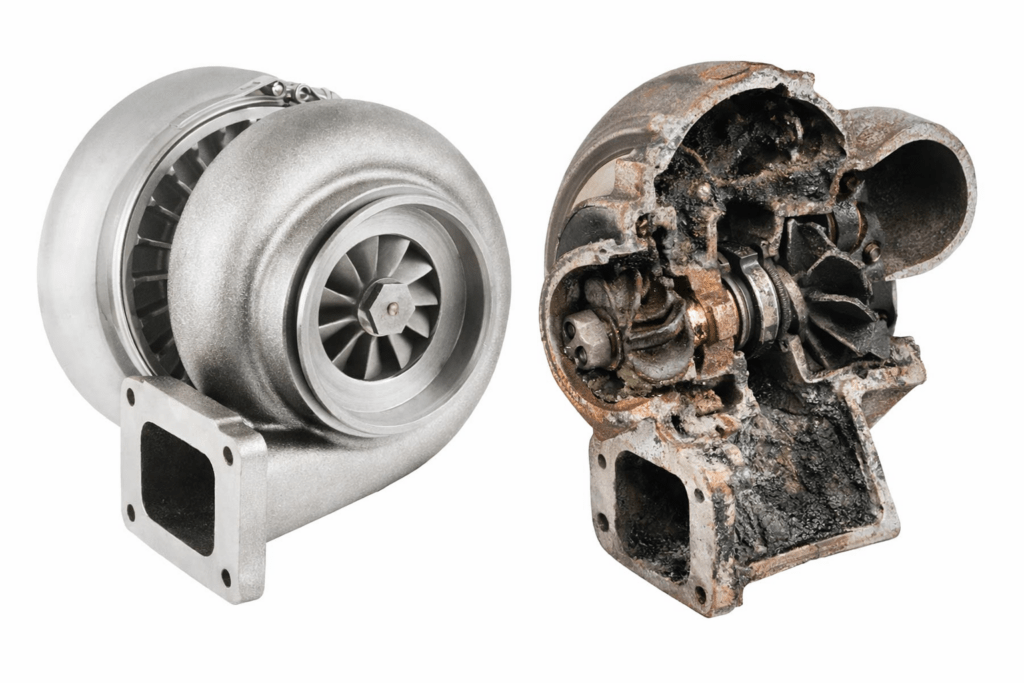
Your image is perfect for this page because it shows exactly how dramatic the difference can be between a healthy turbocharger and one that has suffered internal failure, corrosion, and heavy contamination. A damaged turbo may have shaft play, worn bearings, damaged compressor or turbine wheels, or severe internal buildup that limits function long before total failure occurs.
- Check for excessive radial or axial shaft movement
- Inspect compressor and turbine wheels for damage
- Look for corrosion, carbon accumulation, or housing deterioration
- Check whether the wheel has contacted the housing
If the turbocharger has internal damage, the fix is usually not just cleaning. The underlying cause also needs to be addressed.
3. Check for Oil Leakage Through the Turbocharger
Turbochargers depend on proper lubrication, but when seals fail or bearings wear, engine oil can move into the intake or exhaust side. That can create blue smoke, oil residue, and eventually severe performance problems. Oil leakage is especially important because it can make the turbo failure look like a deeper engine problem if the diagnosis is rushed.
- Inspect intake tract for oil residue
- Check compressor housing and discharge piping
- Inspect exhaust side for oil-burning symptoms
- Look for unusual oil consumption trends
If the yacht is also smoking, compare symptoms with Boat Engine Blowing Blue Smoke and Marine Engine Black Smoke Under Load.
4. Rule Out Fuel System Problems That Mimic Turbo Failure
Many engines are diagnosed as having “bad turbos” when the real problem is fuel restriction or air in the fuel system. A fuel-starved engine can feel weak, smoke under throttle, and fail to reach full RPM, which is why the fuel system should always be checked alongside the turbocharger.
- Inspect primary and secondary fuel filters
- Check for contamination or water in the fuel system
- Rule out air intrusion and prime loss
- Confirm the engine is receiving consistent fuel under load
Related internal pages:
5. Check Air Intake and Exhaust Restriction
A turbocharger can only work properly if it has clean intake air and free-flowing exhaust. A clogged air filter, collapsed intake hose, blocked mixing elbow, or exhaust restriction can make a good turbocharger perform badly. In those cases, the turbo is not the root cause even though the symptoms point in that direction.
- Inspect air filters and intake tract
- Look for intake leaks or restriction
- Inspect exhaust components for backpressure issues
- Consider mixing elbow restriction on engines with marine wet exhaust systems
If the yacht is also overheating or producing heavy smoke, compare this symptom with Boat Engine Overheating and your smoke-related content.
6. Evaluate Engine Operation at Idle and Under Load
Turbo problems often show up most clearly under load, but a complete diagnosis should also compare idle behavior, throttle response, smoke level, and boost behavior through the RPM range. If the engine also has rough idle, surging, or intermittent shutdown, more than one problem may be present.
- Poor low-end response may point to airflow or fuel issues
- Black smoke under load often suggests low air or poor boost
- Blue smoke may indicate oil leakage
- Rough operation may suggest fuel or injector issues in addition to turbo trouble
Compare related symptoms with:
Why Turbo Failure Should Not Be Ignored
A turbocharger problem rarely stays isolated. When boost drops, combustion quality declines. When oil seals fail, smoke and contamination increase. When internal wear worsens, hard-parts damage can follow. Continued operation with a failing turbo can accelerate carbon buildup, increase exhaust temperatures, reduce fuel efficiency, and in some cases create much more expensive secondary damage.
- Loss of power can become unsafe offshore
- Smoke complaints usually worsen over time
- Fuel economy and engine efficiency drop
- Secondary engine and exhaust-side damage may follow
- What starts as sluggish performance can turn into a major repair
Preventing Yacht Engine Turbo Failure
Turbochargers last longer when the surrounding systems are healthy and the engine is run and maintained correctly.
- Maintain clean oil and proper oil-change intervals
- Keep intake and exhaust systems free of restriction
- Address smoke and fuel-system problems early
- Inspect for salt-related corrosion in the engine room
- Avoid repeated operation with low power or overheating symptoms
- Catch boost and performance changes early before hard failure occurs
Recommended reading:
When to Call a Marine Diesel Mechanic
If your yacht engine is losing power, smoking heavily, making unusual turbo noise, or failing to reach full RPM, it is time for a real marine diesel diagnosis. Turbocharger complaints are often connected to fuel, intake, exhaust, and oil-system conditions, so the best repair starts with identifying the full cause, not just replacing the visible damaged part.
805 Marine Diesel Mechanic provides expert mobile marine diesel diagnosis throughout Ventura, Oxnard, Santa Barbara, and Channel Islands Harbor. We determine whether the issue is true turbo failure, restricted air flow, exhaust backpressure, fuel delivery problems, or a combination of systems affecting performance.
Additional Diagnostic Resources
- Master Marine Diesel Troubleshooting Guide
- Boat Engine Losing Power
- Boat Engine Won’t Reach Full RPM
- Boat Engine Air in Fuel System
- Boat Engine Fuel Contamination
- Boat Engine Rough Idle
- Boat Engine Overheating
- Marine Engine Black Smoke Under Load
Frequently Asked Questions
What are the signs of yacht engine turbo failure?
Common signs include loss of power, inability to reach full RPM, black or blue smoke, unusual turbo noise, slow spool-up, and poor performance under load.
Can a bad turbo cause a yacht engine to lose power?
Yes. A failing turbocharger reduces intake air and boost pressure, which directly lowers combustion efficiency and engine output.
Can turbo failure cause black smoke?
Yes. When the turbo cannot supply enough air, the engine may run rich under load and produce heavy black smoke from incomplete combustion.
Can turbo seals cause blue smoke on a marine diesel?
Yes. Failed turbo seals or bearing wear can allow engine oil to enter the intake or exhaust side and create blue smoke.
Can a fuel problem feel like turbo failure?
Yes. Fuel restriction, air in the fuel system, or contaminated diesel can create power-loss symptoms that closely resemble turbocharger failure.
Why won’t my yacht engine reach full RPM with a bad turbo?
Because the engine is not receiving the boosted air it needs for full combustion and power, so it cannot develop rated performance under load.
Is turbo failure serious on a marine diesel yacht?
Yes. Continued operation can worsen smoke, reduce reliability, increase heat and carbon buildup, and contribute to more expensive secondary damage.
When should I call a marine diesel mechanic for turbo failure?
You should call when the engine develops new power loss, smoke, turbo noise, slow spool-up, or cannot reach normal RPM under load.
2 Responses