
Yacht Engine Excessive Vibration – Marine Diesel Diagnosis Guide
If your yacht engine has excessive vibration, shakes the boat more than normal, or creates a harsh rumble through the deck and salon, it is a sign that something in the engine, mounts, shaft alignment, propeller, or driveline is no longer working correctly. Excessive vibration is more than a comfort issue. It can damage mounts, couplers, bearings, exhaust systems, and surrounding engine room components if left unresolved.
For yacht owners in Ventura, Oxnard, Channel Islands Harbor, and Santa Barbara, vibration complaints are common after repowers, shaft work, propeller damage, engine mount wear, or when a developing engine problem starts showing up under load. Some vibration is only noticeable at idle. Other problems appear at cruise RPM or at a very specific speed range. That pattern is important because it helps narrow the diagnosis.
At 805 Marine Diesel Mechanic, we have over 30 years of hands-on experience diagnosing inboard marine diesel vibration problems, driveline issues, and alignment-related failures throughout the Central Coast. The key is determining whether the vibration is coming from the engine itself, the fuel and combustion side, or the mechanical connection between the engine and the propeller shaft.
What Causes Excessive Vibration in a Yacht Engine?
Yacht engine vibration can come from two main areas: combustion imbalance inside the engine or mechanical imbalance in the driveline. Rough-running cylinders, injector issues, low compression, and idle instability can all create vibration. But just as often, the problem is outside the engine itself, such as worn mounts, poor alignment, damaged couplers, bent shafts, cutless bearing wear, or a propeller issue.
This page works alongside the Master Marine Diesel Troubleshooting Guide to help isolate whether the vibration is engine-related, fuel-related, or driveline-related.
That distinction matters. Replacing engine parts will not fix a bent shaft, and chasing alignment will not solve a cylinder contribution problem. Proper diagnosis saves a lot of wasted time and expense.
Common Symptoms of Yacht Engine Excessive Vibration
- Noticeable shaking at idle or low RPM
- Vibration that increases under load
- Harsh rumble through deck, salon, or helm
- A specific RPM range where vibration becomes much worse
- Rattling engine room components or exhaust parts
- Unusual noise from shaft, coupling, or transmission area
- Boat feels rough even though engine is still producing power
- Vibration after recent shaft, prop, or engine mount work
Top Causes of Yacht Engine Excessive Vibration
- Worn or collapsed engine mounts
- Improper shaft alignment
- Damaged or fouled propeller
- Bent shaft or coupling issues
- Cutless bearing wear
- Rough idle or cylinder imbalance
- Injector problems or uneven combustion
- Misfire, low compression, or mechanical engine wear
On many yachts, excessive vibration is caused by a combination of small problems rather than a single catastrophic failure. A slightly rough-running engine combined with worn mounts or marginal alignment can create a much bigger vibration complaint than either issue alone.
Step-by-Step Marine Diesel Vibration Diagnosis
1. Determine When the Vibration Happens
The first step is understanding the pattern. Does the vibration happen only at idle, only in gear, only under load, or only in a narrow RPM range? That tells you whether to focus on combustion quality, mount and alignment issues, or rotating driveline components.
- Idle-only vibration often points toward engine balance or mounts
- In-gear vibration may suggest shaft or propeller load issues
- A narrow RPM-range vibration often points to resonance or alignment
- Vibration after recent work may point to installation-related causes
If the engine also idles unevenly, compare this symptom with Boat Engine Rough Idle and Boat Engine Hard Starting.
2. Inspect Engine Mounts
Worn, collapsed, oil-soaked, or loose engine mounts are one of the most common causes of excessive vibration in yachts. Mount problems allow normal engine movement to turn into harsh vibration felt throughout the boat. They also affect shaft alignment, so mount problems often create secondary driveline issues.
- Check for collapsed rubber or separation
- Inspect for loose mount hardware
- Look for oil saturation or deterioration
- Compare mount height and condition across all corners
Even good engines will vibrate badly if the mounts are no longer supporting the powertrain correctly.
3. Check Shaft Alignment and Coupling Condition
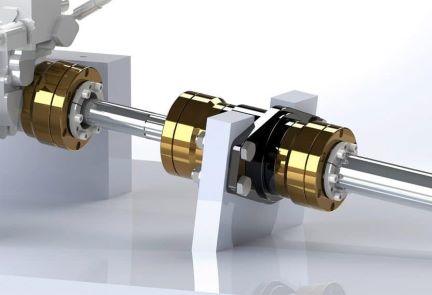
Your image is ideal for this page because coupling and shaft alignment are central to vibration diagnosis. If the engine and shaft are not aligned correctly, the driveline loads the bearings, transmission output, and mounts in ways they were never designed to handle. That creates vibration, wear, and expensive long-term damage.
- Inspect coupling faces and fastener condition
- Check for visible misalignment or offset
- Confirm alignment is correct under real installed load conditions
- Look for signs of fretting, wear, or movement at the coupling
Alignment should never be guessed. Even a small error can cause major vibration in a yacht driveline.
4. Inspect the Propeller, Shaft, and Running Gear
A damaged, fouled, or out-of-balance propeller can create vibration that feels like an engine problem. So can a bent shaft, worn cutless bearing, or running gear damage from impact or corrosion. If vibration gets worse with speed and load, running gear moves much higher on the list.
- Check for fouling, missing prop material, or blade damage
- Inspect shaft straightness and condition
- Check cutless bearing wear and shaft support
- Look for signs of previous impact or bottom contact
If the engine also struggles under load, compare symptoms with Boat Engine Losing Power and Boat Engine Won’t Reach Full RPM.
5. Rule Out Rough Combustion and Cylinder Imbalance
Not all vibration is driveline-related. A marine diesel with uneven injector performance, air in the fuel system, compression loss, or combustion imbalance may shake noticeably, especially at idle and lower RPM. In those cases, the vibration is a symptom of rough engine operation rather than alignment or shaft problems.
- Check for smoke at idle or under load
- Evaluate injector performance and cylinder contribution
- Inspect fuel delivery quality
- Consider compression or valve-related issues if mechanical wear is suspected
Related internal pages:
6. Evaluate Transmission and Driveline Load Transfer
Sometimes vibration is coming from the way load is transferred through the transmission, coupling, shaft, and prop. A failing damper plate, worn coupling component, transmission output issue, or alignment change after mount settlement can all create a vibration complaint that does not show up clearly until the boat is in gear.
- Compare neutral vs in-gear vibration
- Listen for mechanical noise at the coupling area
- Inspect for unusual heat, wear, or movement
- Check whether the symptom worsens after the boat warms up
Why Excessive Vibration Should Not Be Ignored
Excessive vibration is not just uncomfortable. It accelerates wear across the entire propulsion system. A vibration problem that is tolerated for too long can damage mounts, loosen fasteners, fatigue exhaust connections, wear cutless bearings, stress transmissions, and contribute to shaft and coupling damage.
- Mounts wear faster under vibration
- Alignment problems get worse over time
- Bearings and couplings suffer accelerated wear
- Loose engine room hardware and exhaust connections become more common
- A small issue can become a much larger driveline repair
Preventing Yacht Engine Vibration Problems
Most vibration issues are easier to correct when caught early, especially after repowers, mount replacement, shaft work, or propeller service.
- Inspect mounts during routine service
- Check shaft alignment after major engine or driveline work
- Inspect propellers and shafts after grounding or debris strikes
- Address rough idle and combustion problems early
- Watch for changes in vibration pattern instead of adapting to them
Recommended reading:
When to Call a Marine Diesel Mechanic
If your yacht engine shakes more than normal, vibration changes suddenly, or the boat develops a new rumble under load, it is time for a real diagnosis. Vibration complaints are often misdiagnosed because the engine and driveline are so closely connected. Finding the true source takes experience.
805 Marine Diesel Mechanic provides expert mobile marine diesel and driveline diagnosis throughout Ventura, Oxnard, Santa Barbara, and Channel Islands Harbor. We help determine whether the problem is mounts, alignment, shafting, propeller condition, or rough engine operation so the repair is focused and correct.
Additional Diagnostic Resources
- Master Marine Diesel Troubleshooting Guide
- Boat Engine Rough Idle
- Boat Engine Losing Power
- Boat Engine Won’t Reach Full RPM
- Boat Engine Shutting Down While Running
- Boat Engine Air in Fuel System
- Boat Engine Fuel Contamination
- Marine Engine Surging at Cruise RPM
Frequently Asked Questions
What causes excessive vibration in a yacht engine?
The most common causes are worn engine mounts, improper shaft alignment, damaged propellers, bent shafts, cutless bearing wear, or rough engine operation from fuel or injector problems.
Can bad engine mounts cause vibration on a yacht?
Yes. Worn or collapsed mounts are one of the most common causes of excessive vibration and can also affect shaft alignment.
Can shaft misalignment make my yacht vibrate?
Yes. Even a small misalignment between the engine and shaft can create noticeable vibration and accelerate wear on couplings, mounts, and bearings.
Can a propeller problem feel like engine vibration?
Yes. A damaged, fouled, or unbalanced propeller can create vibration that feels like an engine problem, especially under load.
Why does my yacht vibrate more at a certain RPM?
That often points to resonance, alignment issues, or a driveline problem that becomes most noticeable at a specific speed range.
Can rough idle cause excessive vibration?
Yes. Uneven combustion, injector imbalance, air in the fuel system, or low compression can make the engine shake noticeably, especially at idle.
Is excessive vibration dangerous for a marine diesel yacht?
Yes. Excessive vibration can damage mounts, couplings, shaft components, exhaust systems, and other engine room hardware over time.
When should I call a marine diesel mechanic for vibration?
You should call when vibration is new, getting worse, tied to a certain RPM range, or accompanied by rough idle, driveline noise, or reduced performance.