
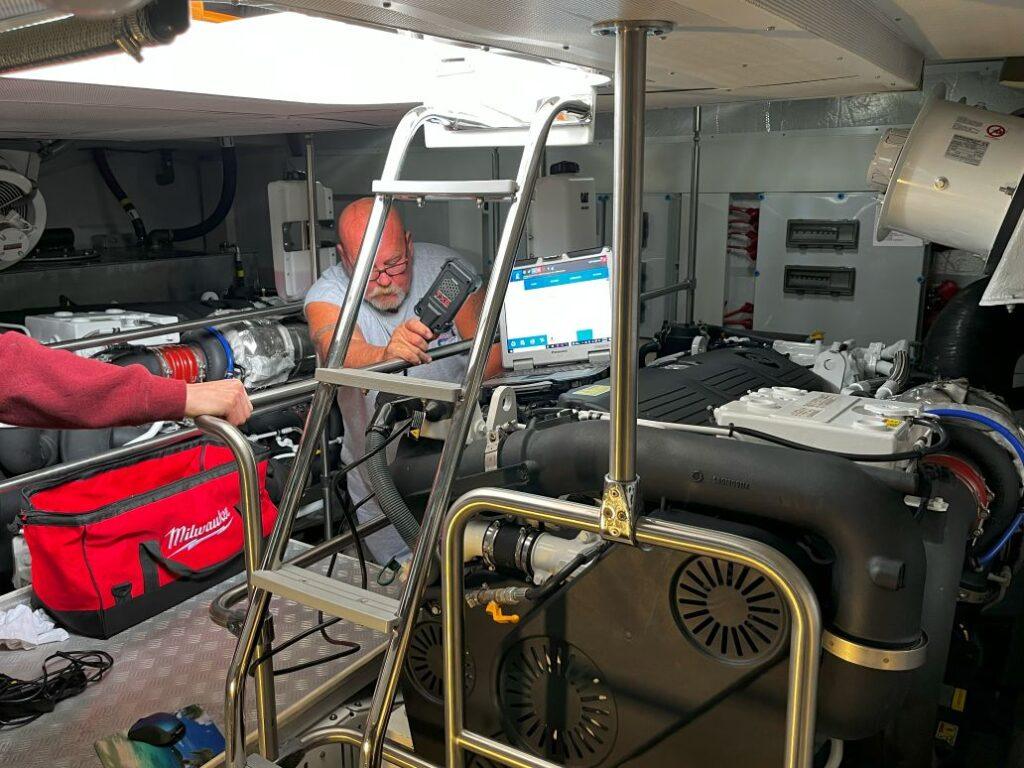
Professional Marine Diesel Engine Survey & Pre-Purchase Inspection
Advanced mechanical surveys, computerized diagnostics, and performance evaluation for yachts and commercial vessels — Ventura, Channel Islands Harbor, Oxnard, and Santa Barbara.
Protect your investment with a clear, data-driven survey performed by a trained technician focused on real operating performance, reliability, and risk reduction.
Request an Engine Survey
Call Now
Ideal for pre-purchase decisions, insurance documentation, performance complaints, and repower vs rebuild planning.
What You Get With Our Marine Diesel Engine Survey
- Structured inspection + operational verification (not guesswork)
- Computerized diagnostics on supported electronic engines
- Sea-trial performance verification when available
- Clear findings with repair and maintenance recommendations
What Is a Marine Diesel Engine Survey?
A marine diesel engine survey is a focused mechanical and diagnostic evaluation designed to measure engine health, reliability, performance capability, and potential financial risk before purchase or continued operation.
Unlike a general vessel survey, this inspection centers on propulsion systems and the diesel engine’s real-world condition.
Why Diesel Engine Surveys Matter Before You Buy
Many engines “start and run” but still hide expensive problems that only show up during structured inspection and under-load operation. A professional survey helps prevent costly surprises such as:
- Fuel restriction, air intrusion, or fuel contamination
- Cooling system inefficiency (heat exchanger fouling / raw water flow issues)
- Turbocharger wear, boost leaks, or aftercooler/intercooler restriction
- Combustion issues (injector imbalance, smoke under load)
- Exhaust restrictions / elbow corrosion
- Starting/charging weaknesses and wiring concerns
Our Professional Marine Diesel Engine Survey Process
Step 1 — Visual Mechanical Inspection
Installation quality, mounts, leaks, corrosion, belt/hoses, exhaust routing, and safety-critical condition checks.
Step 2 — Fuel System Analysis
Primary/secondary filtration condition, contamination indicators, restriction clues, and common air-intrusion points.
Step 3 — Cooling System Evaluation
Heat exchanger condition indicators, raw water flow integrity, impeller status, and temperature stability checks.
Step 4 — Turbocharger & Air System Evaluation
Intake/charge-air integrity, aftercooler/intercooler restriction symptoms, and boost/air-delivery behavior (as applicable).
Step 5 — Electrical & Starting System Check
Battery health, cranking behavior, alternator output, cabling condition, and common failure points.
Step 6 — Computer Diagnostics (When Applicable)
Diagnostic scan on supported electronic engines to identify stored faults, sensor irregularities, and system-level issues.
Step 7 — Sea Trial Performance Verification (When Available)
RPM verification, temperature tracking, smoke evaluation, and under-load performance validation.
Step 8 — Findings Summary & Recommendations
Clear results, risk assessment, and practical next steps (repair priorities, negotiation leverage, maintenance plan, or repower evaluation).
Types of Marine Diesel Engine Surveys We Perform
- Pre-Purchase Diesel Engine Surveys (buyer decision support)
- Insurance / Condition Surveys (engine-focused documentation)
- Performance Loss Investigations (low power, smoke, overheating)
- Repower vs Rebuild Evaluations (cost/benefit planning)
- Baseline Health Documentation (trend + maintenance planning)
- Commercial Vessel Mechanical Surveys (workboat / charter support)
Common Problems Found During Marine Diesel Surveys
- Fuel restriction or contamination reducing power
- Heat exchanger fouling causing elevated operating temperature
- Aftercooler/intercooler restriction contributing to smoke
- Turbo wear or charge-air leaks
- Exhaust elbow corrosion and restriction
- Charging/starting system weaknesses
- Alignment or installation issues affecting driveline load
Related Diagnostic Guides
Want to understand symptoms before your survey or sea trial? Use these quick diagnosis hubs:
- Master Marine Diesel Troubleshooting Guide
- Fuel System Diagnosis Center
- Cooling System Diagnosis Center
- Turbo System Diagnosis Center
- Smoke & Combustion Diagnosis Center
- Low Power / Loss of RPM Diagnostics Center
Helpful Service Pages
Mobile Marine Diesel Engine Surveys in Ventura & Santa Barbara
We provide mobile marine diesel engine surveys and inspections across:
- Ventura Harbor
- Channel Islands Harbor
- Oxnard
- Santa Barbara
Mobile service means you can coordinate dockside inspection and, when available, a sea-trial performance evaluation.
Advanced Testing & Diagnostic Capability
- Computer diagnostics on supported electronic engines
- Operational verification and sea-trial performance analysis
- Cooling and fuel system condition evaluation
- Optional oil analysis coordination (upon request)
Helpful References
- BoatUS — Boating Safety & Ownership Resources
- Yachting Magazine — Maintenance & Offshore Articles
- ABYC — Marine Standards & Safety
Marine Diesel Engine Survey FAQ
Do I need a diesel engine survey before buying a boat?
Yes. A diesel engine survey helps identify hidden problems that can change the purchase decision, renegotiation leverage, or immediate repair budget.
Can you perform a survey dockside, or do I need a sea trial?
Many checks can be completed dockside, but sea-trial performance under load provides the most accurate evaluation when available.
How long does a marine diesel engine survey take?
Most inspections take several hours depending on engine access, vessel layout, and whether a sea trial is included.
What engine brands do you inspect?
We commonly evaluate Cummins, Caterpillar, Volvo Penta, MAN, MTU, Yanmar, Perkins, Detroit Diesel, Lugger, and more.
Can an engine survey help with low power, smoke, or overheating?
Yes. The survey can include symptom-based diagnostics to identify likely root causes and recommend the next steps.
Schedule Your Marine Diesel Engine Survey
Get clear answers before you buy — or before you invest in repairs. We’ll help you understand engine condition, risk level, and the smartest path forward.