
Marine Diesel Cooling System Failures: Complete Overheating Diagnosis Guide
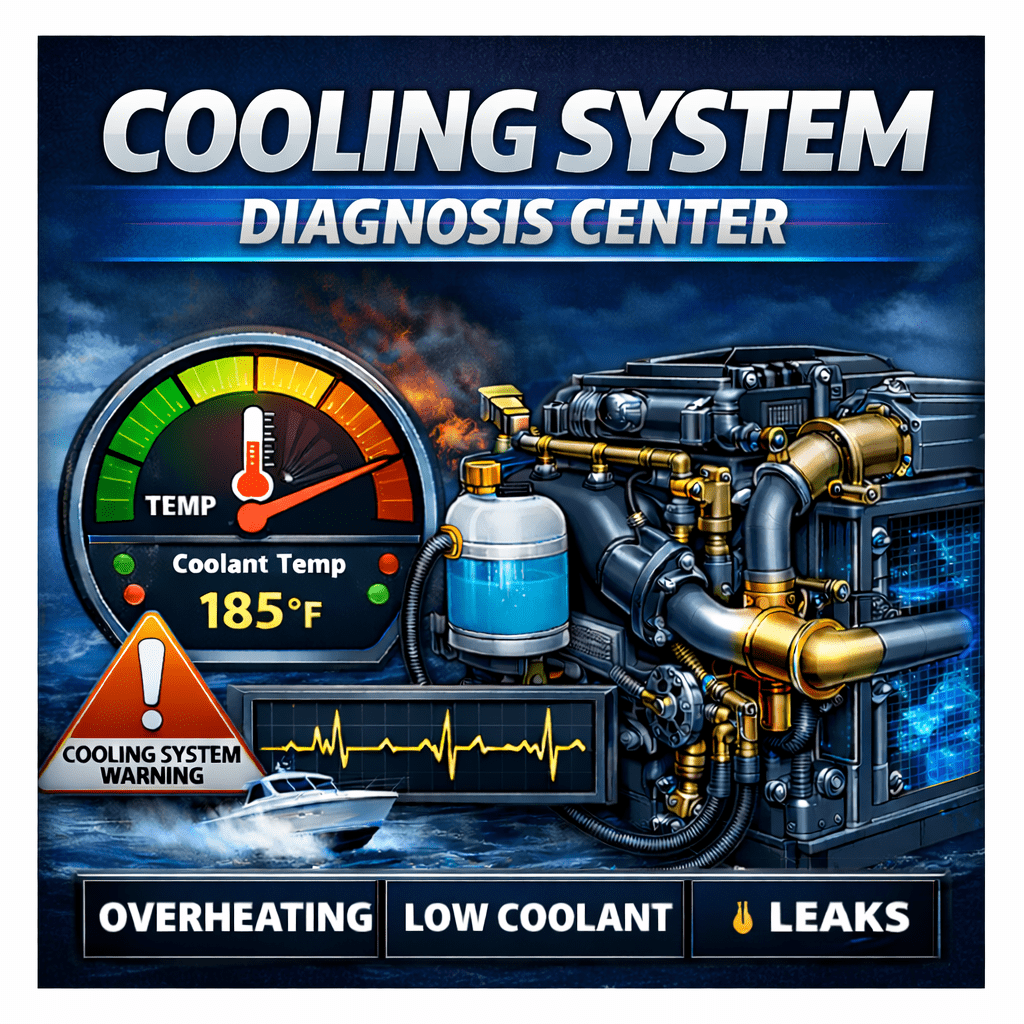
Marine diesel overheating is one of the fastest ways to turn a normal day on the water into catastrophic engine damage. If your temperature gauge climbs or alarms sound, immediate diagnosis is critical.
With over 30 years of marine diesel engine experience, we’ve seen minor cooling restrictions turn into full rebuilds. This guide expands on our Master Marine Diesel Troubleshooting Guide and provides a step-by-step diagnostic roadmap.
How Marine Diesel Cooling Systems Actually Work
Unlike automotive engines, marine diesels use a heat exchanger system — not a radiator. Seawater removes engine heat through a closed-loop coolant circuit.
If you’re diagnosing multiple symptoms, start with our full Marine Diesel Diagnostic Decision Tree before narrowing down to cooling.
- Raw water intake & sea strainer
- Raw water pump (impeller)
- Heat exchanger core
- Thermostat
- Aftercooler / charge air cooler
- Exhaust mixing elbow
Common Overheating Symptoms
- Temperature rising under load
- Steam from exhaust outlet
- Coolant loss
- Loss of power at cruise RPM
- Black smoke due to elevated intake temps
If smoke is also present, review our Smoke & Combustion Diagnosis Center.
Step-By-Step Cooling Diagnosis
1️⃣ Raw Water Flow Verification
Ventura and Channel Islands Harbor commonly see kelp and debris restricting intake flow.
- Inspect sea strainer
- Check intake through-hull
- Inspect impeller vanes
- Check hoses for internal collapse
Impeller failures often overlap with issues covered in our Fuel System Diagnosis Center when engines stall after overheating.
2️⃣ Heat Exchanger Restriction
After 30+ years servicing Cummins, Yanmar, Perkins, Volvo Penta and Caterpillar engines, restricted heat exchangers remain one of the most common cruise-speed overheating causes.
If you operate a Yanmar marine diesel engine, exchanger cleaning intervals are especially critical.
- Salt buildup
- Zinc debris
- Marine growth
- Scale accumulation
3️⃣ Thermostat & Coolant Flow Testing
A stuck thermostat causes unstable operating temperatures and rapid spikes.
For engines that won’t maintain temperature consistency, also inspect electrical sensor input in our Electrical & Starting System Diagnosis Center.
4️⃣ Aftercooler & Turbo Heat Contribution
Restricted aftercoolers raise intake air temperature and exhaust gas temperature.
See our full Marine Diesel Turbo System Diagnosis Center for turbo-related overheating conditions.
5️⃣ Exhaust Mixing Elbow Blockage
Carbon and salt restriction increase backpressure and reduce cooling efficiency — common in coastal Southern California vessels.
Why Overheating Gets Expensive Fast
In three decades of marine diesel service, we’ve seen continued overheating cause:
- Head gasket failure
- Warped cylinder heads
- Piston scoring
- Turbocharger failure
- Injector damage
Preventative flushing reduces salt buildup. Learn more about proper Fresh Water Flushing for Marine Diesel Engines.
Professional Cooling System Survey – Ventura, Oxnard & Santa Barbara
805 Marine Diesel Mechanic provides comprehensive cooling diagnostics including:
- Pressure testing
- Infrared temperature mapping
- Heat exchanger removal & cleaning
- Aftercooler inspection
- Raw water flow verification
We service vessels in Ventura Harbor, Oxnard, Channel Islands Harbor, and Santa Barbara.
Frequently Asked Questions
What causes overheating only at cruise RPM?
Heat exchanger restriction or raw water flow reduction are most common.
Can overheating damage my marine diesel engine?
Yes. Continued overheating can cause severe internal damage.
How much experience does 805 Marine Diesel Mechanic have?
We bring over 30 years of hands-on marine diesel engine experience serving Ventura County boat owners.