
The Master Marine Diesel Troubleshooting Guide is one of the best tools for identifying overheating, smoke, vibration, low boost, power-loss, electronic alarm, and cooling-system problems before they become catastrophic failures. High-horsepower marine diesel engines like the Caterpillar C18 depend on cooling efficiency, fuel quality, air delivery, ECM monitoring, drivetrain alignment, and proper maintenance intervals to operate reliably under heavy load.
At 805 Marine Diesel Mechanic, we specialize in inboard marine diesel systems throughout Ventura Harbor, Oxnard, Channel Islands Harbor, Santa Barbara Harbor, Port Hueneme, and nearby Central Coast marinas. Our mobile dockside service helps reduce downtime while providing detailed inspections, diagnostics, and preventative maintenance directly at the vessel.
CAT C18 Marine Diesel Overview
High-Horsepower Performance for Demanding Applications
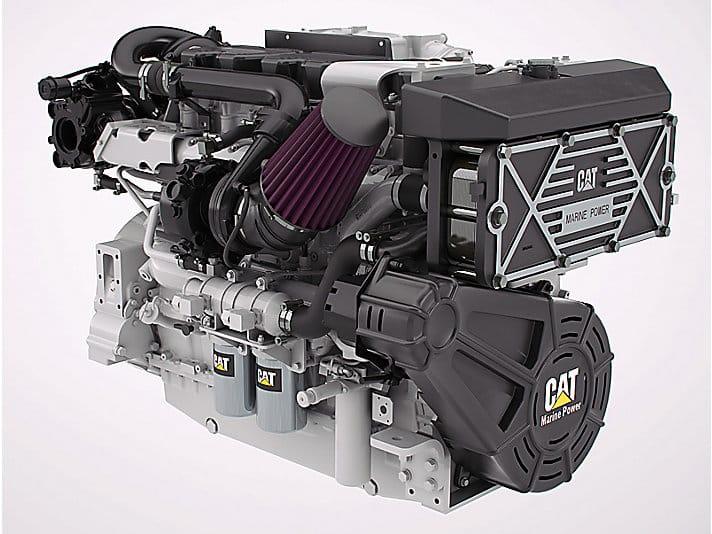
The Caterpillar C18 is designed for vessels that require serious horsepower, dependable torque, long-term durability, and advanced propulsion integration. These engines are commonly installed in sportfishing boats, luxury yachts, patrol craft, commercial vessels, crew boats, and repower projects where performance and reliability are critical.
Modern C18 systems combine turbocharging, aftercooling, electronic fuel management, ECM protection systems, and high-capacity cooling circuits to deliver strong acceleration and continuous-duty performance under demanding conditions.
Because these engines often operate under heavy propeller load, cooling-system efficiency and drivetrain condition become extremely important. Small cooling restrictions or alignment problems can create high exhaust temperature, smoke, elevated coolant temperature, vibration, or power-loss issues long before a catastrophic failure occurs.
Integrated Propulsion and Maneuvering Systems
The CAT C18 is often paired with advanced marine controls, electronic throttles, trolling systems, hydraulic systems, and high-capacity transmissions. Proper integration between the engine, ECM, controls, transmission, and shaft system is essential for smooth maneuvering and predictable throttle response.
Large high-horsepower marine diesel engines place tremendous stress on shafts, couplers, engine mounts, and driveline components. Misalignment, damaged couplers, worn mounts, or excessive vibration should always be corrected before they create transmission or shaft damage.
CAT C18 Technical Highlights
- Inline 6-cylinder turbocharged and aftercooled marine diesel
- High-horsepower recreational and commercial ratings
- Electronically controlled fuel and engine-management system
- Water-cooled turbocharger and exhaust components
- Titanium plate heat exchanger and advanced cooling systems
- Heavy-duty marine propulsion compatibility
- Advanced monitoring and fault-protection systems
Although Caterpillar engines are known for durability, the C18 still depends heavily on disciplined maintenance and cooling-system health. Saltwater corrosion, restricted raw-water flow, contaminated fuel, poor electrical connections, and overloaded drivetrains can all shorten engine life if ignored.
CAT C18 Maintenance and Diagnostic Service
Routine Preventive Maintenance
Routine maintenance includes oil and filter service, primary and secondary fuel-filter replacement, coolant inspection, raw-water system inspection, aftercooler service, belt inspection, hose inspection, zinc replacement, and ECM fault monitoring.
Large marine diesels should not be maintained only by hour interval. Trend monitoring is equally important. Tracking operating temperature, boost pressure, oil pressure, exhaust temperature, and wide-open-throttle RPM can help identify problems before alarms appear.
Related drivetrain support includes marine flexible shaft couplings
Cooling-System Service
Cooling-system performance is one of the most important reliability factors on a high-horsepower CAT C18. Heat exchangers, aftercoolers, seawater pumps, raw-water strainers, zincs, mixing elbows, coolant condition, and circulation pumps all need periodic inspection and cleaning.
In Ventura and Santa Barbara saltwater conditions, scale buildup and corrosion can slowly reduce cooling efficiency over time. The engine may still idle normally at the dock while gradually running hotter at cruise speed or heavy load.
Common cooling-related symptoms include:
- Higher coolant temperature at the same RPM
- Loss of top-end RPM
- Reduced boost performance
- Weak raw-water discharge
- High exhaust temperature
- Steam at the exhaust outlet
- Intermittent ECM derate conditions
Related support includes marine engine raw-water flow problems and marine engine fresh-water flushing systems.
Electronic Diagnostics and ECM Monitoring
The CAT C18 relies heavily on electronic engine management. ECM monitoring, sensor accuracy, boost pressure, fuel pressure, voltage stability, injector balance, and alarm history all play a role in diagnosis.
Professional diagnostics help identify:
- Sensor faults
- Boost-pressure abnormalities
- Fuel-pressure instability
- Overheat derate conditions
- Low-voltage issues
- Throttle-control faults
- Injector performance imbalance
- Protection-mode activation
Electronic fault codes are important, but codes alone rarely explain the entire problem. Accurate diagnosis requires understanding how the fuel, air, cooling, exhaust, and drivetrain systems interact under real load.
Turbocharger and Air-System Inspection
The turbocharger system is critical for proper combustion and power production on the C18. Restricted airflow, dirty air filters, boost leaks, carbon buildup, cooling inefficiency, or exhaust restrictions can reduce performance and increase smoke output.
Black smoke under acceleration may indicate restricted airflow, overloaded propellers, injector imbalance, boost issues, or excessive engine load. White smoke, excessive crankcase pressure, or poor throttle response should also be investigated promptly.
Drivetrain and Shaft-System Inspection
Because the CAT C18 is frequently paired with large shaft systems and heavy-duty marine transmissions, driveline inspection is extremely important. Flexible couplers, shaft alignment, engine mounts, bearings, and vibration should all be evaluated during major maintenance intervals.
Ignoring vibration can eventually damage transmissions, couplers, shafts, bearings, seals, and engine mounts. Changes in vibration level, unusual noises, or visible shaft movement should never be ignored.
Dockside Diagnostics and Sea Trials
Most CAT C18 inspections can be performed dockside without hauling the vessel. Mobile service may include cooling-system evaluation, ECM diagnostics, fuel-system inspection, electrical testing, temperature analysis, and vibration inspection.
Sea trials are still important after cooling-system repairs, propeller changes, repowers, turbocharger service, or drivetrain work. Real load testing helps confirm wide-open-throttle RPM, operating temperature, boost behavior, smoke output, and drivetrain stability.
Related Caterpillar and Marine Diesel Services
805 Marine Diesel Mechanic also supports related marine diesel service pages including high-performance propulsion CAT C18, Santa Barbara boat mechanic, marine diesel engine services, and marine flexible shaft couplings.
Local Dockside Service Areas
We provide mobile dockside CAT C18 service throughout Ventura Harbor, Channel Islands Harbor, Oxnard, Santa Barbara Harbor, Port Hueneme, and surrounding Central Coast boating facilities. Most inspections and preventative maintenance can be completed directly at the slip.
Helpful Caterpillar Technical Resources
CAT C18 Marine Diesel FAQ
What types of vessels commonly use the CAT C18?
The CAT C18 is commonly installed in sportfishing boats, luxury yachts, patrol vessels, crew boats, commercial craft, and high-performance repower projects. These engines are designed for demanding propulsion applications requiring strong torque and continuous-duty reliability.
How often should a CAT C18 be serviced?
Service intervals depend on duty cycle, load, operating hours, and vessel use. Most operators follow daily checks plus major inspection intervals at approximately 250, 500, 1000, 2000, and 4000 hours depending on application.
What causes overheating on a CAT C18?
Common causes include restricted raw-water flow, scaled heat exchangers, clogged strainers, weak seawater pumps, deteriorated aftercoolers, low coolant level, or exhaust restrictions. Overheating often first appears under heavy cruise load instead of at idle.
Can electronic diagnostics identify CAT C18 problems?
Yes, ECM diagnostics can help identify sensor faults, fuel-pressure problems, boost issues, low-voltage conditions, protection-mode activation, and injector imbalance. Proper diagnosis still requires evaluating how the engine behaves under real operating conditions.
Why is boost pressure important on a CAT C18?
Boost pressure directly affects combustion efficiency, power production, smoke output, and exhaust temperature. Restricted airflow, turbocharger issues, charge-air leaks, or cooling problems can all affect boost performance.
What are warning signs of driveline problems?
Common signs include vibration, unusual noise, shaft movement, hot bearings, transmission temperature increase, damaged couplers, or changes in throttle response. Driveline issues should be corrected early before major damage occurs.
Can CAT C18 maintenance be performed dockside?
Yes, many inspections, diagnostics, preventative maintenance services, and cooling-system evaluations can be completed dockside without hauling the vessel. Some repairs and sea-trial verification procedures may still require additional testing.
What causes black smoke on a CAT C18?
Black smoke may result from restricted airflow, overloaded propellers, injector imbalance, boost leaks, turbocharger inefficiency, cooling problems, or excessive engine load. Proper diagnosis requires evaluating the complete combustion system.
Should aftercoolers and heat exchangers be cleaned regularly?
Yes, aftercoolers and heat exchangers should be inspected and serviced regularly because saltwater scale and corrosion can slowly reduce cooling efficiency. Restricted cooling circuits can eventually create overheating and engine derate conditions.
Do you provide mobile CAT C18 service in Ventura and Santa Barbara?
Yes, 805 Marine Diesel Mechanic provides mobile dockside CAT C18 service throughout Ventura Harbor, Oxnard, Channel Islands Harbor, Santa Barbara Harbor, and nearby Central Coast marinas.
Need CAT C18 Marine Diesel Service?
Get mobile dockside Caterpillar C18 diagnostics, preventative maintenance, ECM troubleshooting, and cooling-system service throughout Ventura, Oxnard, Channel Islands Harbor, and Santa Barbara.