
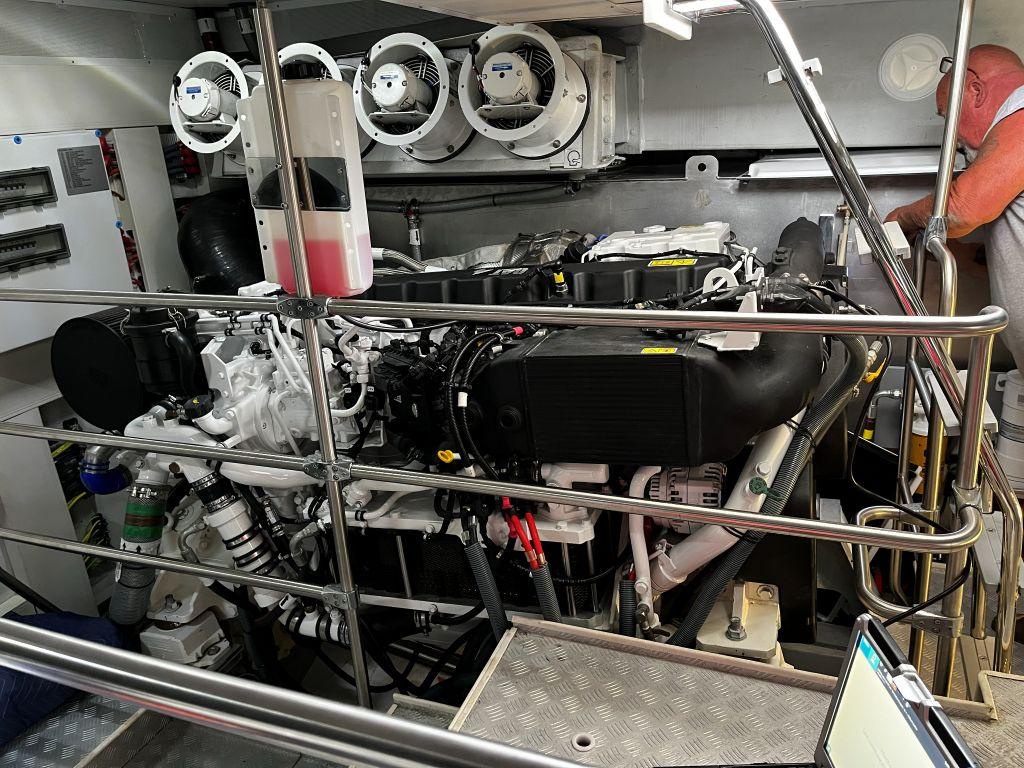
Caterpillar Marine Diesel Smoke Problems: Complete Combustion Diagnosis Authority Guide
Exhaust smoke from a marine diesel engine is one of the clearest indicators that something is wrong with the combustion process. Caterpillar engines such as the CAT 3116, 3126, C7, C9, C12, C18, and C32 are designed to burn diesel fuel efficiently with minimal visible exhaust.
When combustion becomes inefficient, the engine begins producing excessive smoke. The color of the smoke—black, white, or blue—can help identify the root cause.
At 805 Marine Diesel Mechanic, we diagnose Caterpillar combustion and exhaust smoke problems throughout Ventura, Oxnard, Channel Islands Harbor, and Santa Barbara. With more than 30 years of marine diesel experience, we use systematic diagnostic procedures to determine whether smoke is caused by fuel delivery problems, airflow restrictions, or mechanical engine issues.
This guide is part of our complete diagnostic authority hub:
Master Marine Diesel Troubleshooting Guide
Schedule Caterpillar Combustion Diagnosis
Understanding Marine Diesel Combustion
Marine diesel engines operate by compressing air inside the cylinders until diesel fuel injected into the chamber ignites automatically. Proper combustion requires the correct balance of:
- Fuel delivery
- Airflow
- Compression
- Injection timing
If any of these factors becomes unbalanced, combustion efficiency decreases and exhaust smoke appears.
Fuel system issues contributing to combustion problems can also be explored here:
Black Smoke from Caterpillar Marine Engines
Black smoke is the most common exhaust issue seen in Caterpillar marine diesel engines. It typically indicates that the engine is receiving more fuel than available air can burn.
Common causes of black smoke include:
- Restricted air filters
- Turbocharger failure
- Aftercooler restriction
- Overfueling injectors
When airflow becomes restricted, the engine cannot burn all injected fuel efficiently, resulting in soot and black exhaust.
Airflow-related issues are discussed here:
Turbo & Air System Problems Center
White Smoke Diagnosis
White exhaust smoke typically indicates incomplete fuel combustion. This may occur when fuel fails to ignite properly inside the cylinders.
Common causes include:
- Cold engine conditions
- Low compression
- Injector spray pattern problems
- Air in the fuel system
White smoke often appears during startup but should disappear once the engine reaches operating temperature.
Blue Smoke Causes
Blue exhaust smoke indicates that engine oil is entering the combustion chamber.
This can occur due to:
- Worn piston rings
- Valve guide wear
- Turbocharger oil seal failure
Oil entering the combustion chamber burns partially, creating a blue or gray exhaust appearance.
Turbocharger Influence on Combustion
Turbochargers play a major role in combustion efficiency by increasing the volume of air entering the cylinders.
If turbo boost pressure drops, the engine receives less air while fuel delivery remains constant. This imbalance frequently produces black smoke.
Turbo-related problems can be diagnosed here:
Marine Diesel Turbo Diagnosis Center
Low Power and Smoke
Combustion problems often occur alongside power loss symptoms.
Engines experiencing poor combustion may exhibit:
- Reduced RPM
- Slow acceleration
- Increased fuel consumption
Performance-related diagnostics are discussed here:
Low Power Loss of RPM Diagnosis Center
Cooling System Influence on Combustion
Proper combustion also depends on maintaining correct engine temperature.
If the engine runs too cold or too hot, fuel may not burn efficiently.
Cooling system issues affecting combustion can be diagnosed here:
Cooling System Diagnosis Center
Professional Caterpillar Combustion Diagnosis
Diagnosing marine diesel smoke problems requires a structured inspection of multiple systems.
Our combustion diagnostic process typically includes:
- Injector inspection
- Turbo boost pressure testing
- Fuel system analysis
- Airflow inspection
- Compression testing
Advanced inspections are available through:
Computerized Marine Engine Survey Diagnostics Center
Caterpillar Marine Diesel Service in Ventura & Channel Islands Harbor
805 Marine Diesel Mechanic provides Caterpillar combustion and smoke diagnostics throughout:
- Ventura Harbor
- Channel Islands Harbor
- Oxnard
- Santa Barbara
If your Caterpillar marine diesel engine is producing excessive smoke, professional diagnosis can quickly identify the cause.
Contact 805 Marine Diesel Mechanic
Caterpillar Combustion Diagnosis FAQ
Black smoke is typically caused by restricted airflow, turbocharger problems, or excessive fuel delivery.
White smoke usually indicates incomplete combustion caused by cold engines, injector issues, or air in the fuel system.
Blue smoke occurs when engine oil enters the combustion chamber and burns during operation.
Yes. A failing turbocharger reduces airflow and often leads to black smoke and loss of engine power.
One Response