
Marine Diesel Engine Oil Type & Capacity Charts
Explore marine diesel oil specifications, standard oil capacities, oil-filter references and maintenance recommendations for 11 major engine manufacturers.
Choosing the correct oil for your marine diesel engine starts with knowing the engine model, its lubrication-system requirements and the oil capacity of the installed configuration. Our Marine Diesel Troubleshooting Guide explains how lubrication problems, abnormal oil pressure, contamination and overheating can contribute to more serious engine trouble.
This marine diesel oil reference hub brings together our individual manufacturer guides in one location. Whether you operate a Cummins-powered sportfishing boat, a Caterpillar-powered yacht, a Volvo Penta cruiser, a Yanmar sailboat auxiliary or a Detroit Diesel-powered Hatteras, you can quickly find the corresponding oil type and capacity chart.
Each manufacturer page provides more detailed model-specific information, including oil viscosity guidance, commonly used oil-filter references and capacity figures where available. The charts are intended as maintenance references rather than substitutes for the engine manufacturer’s serial-number-specific service instructions.
805 Marine Diesel Mechanic provides mobile diesel engine maintenance, diagnostics and mechanical repair throughout Ventura, Oxnard, Channel Islands Harbor and Santa Barbara. For professional oil and filter service, see our Marine Oil Change & Filters page.
Marine Diesel Oil Charts by Manufacturer
Select your engine manufacturer below to open its complete oil type, capacity and filter reference guide. All images shown are from our marine engine maintenance collection.
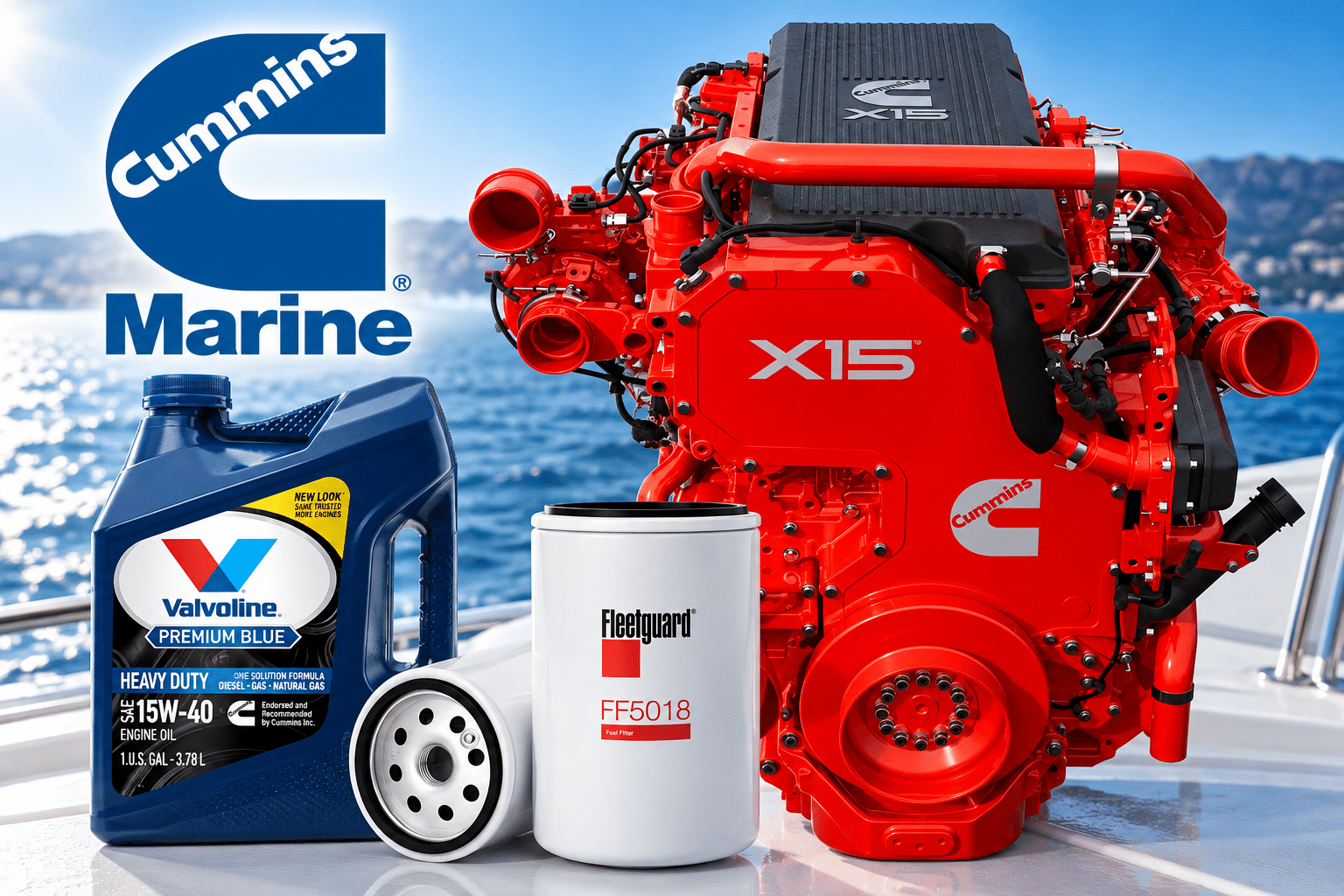
Cummins Marine Diesel
Oil specifications and capacities for Cummins mechanical and electronically controlled marine engines, including popular B-series, C-series and Quantum platforms.
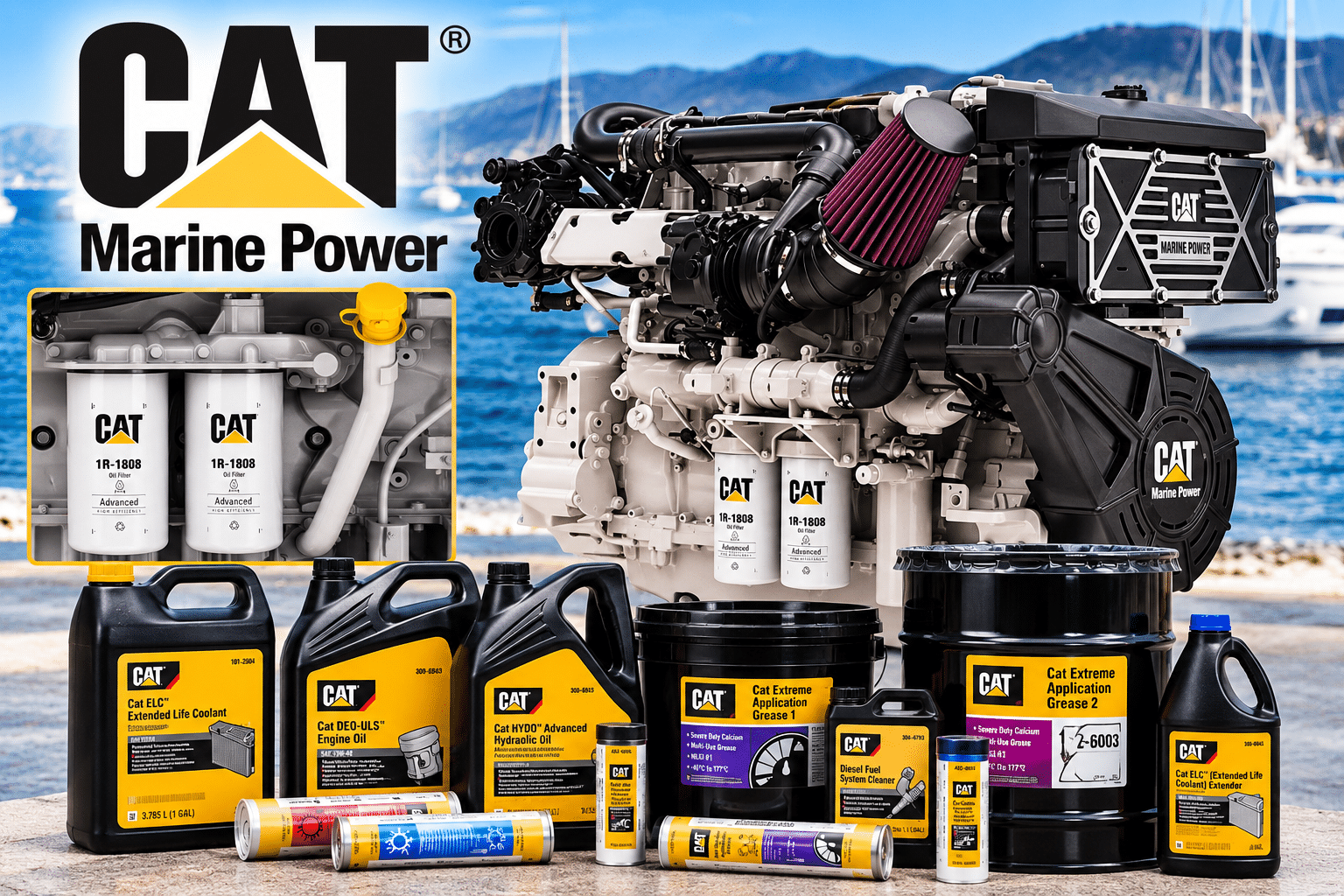
Caterpillar Marine Diesel
Find oil capacity references, lubrication recommendations and oil-filter information for popular Caterpillar marine diesel engine families.
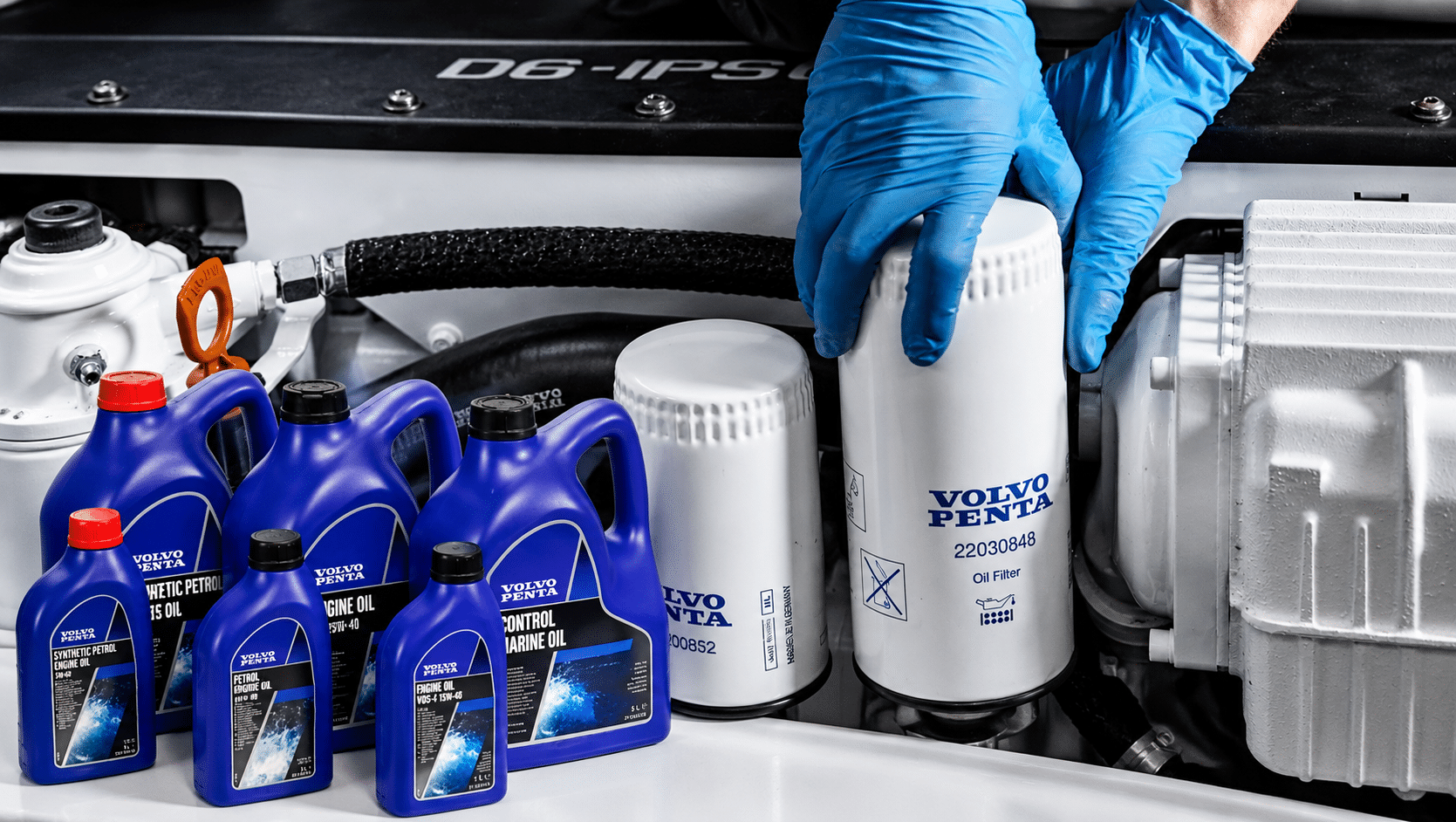
Volvo Penta Marine Diesel
Explore lubrication guidance for Volvo Penta marine diesel engines, including traditional TAMD models and electronically controlled D-series engines.
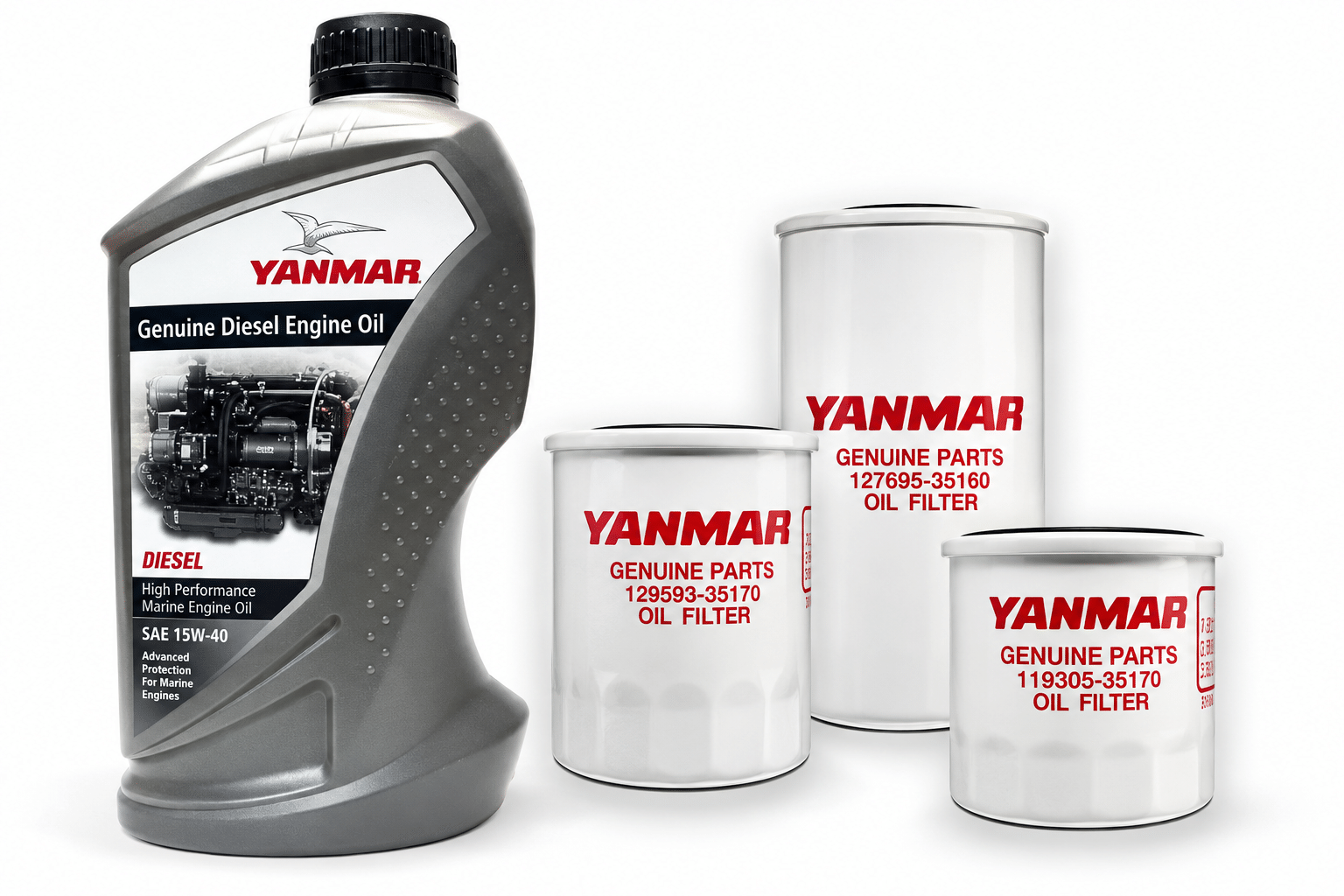
Yanmar Marine Diesel
Oil type and capacity references for Yanmar marine diesels used in sailboats, trawlers, cruisers and other recreational or commercial vessels.
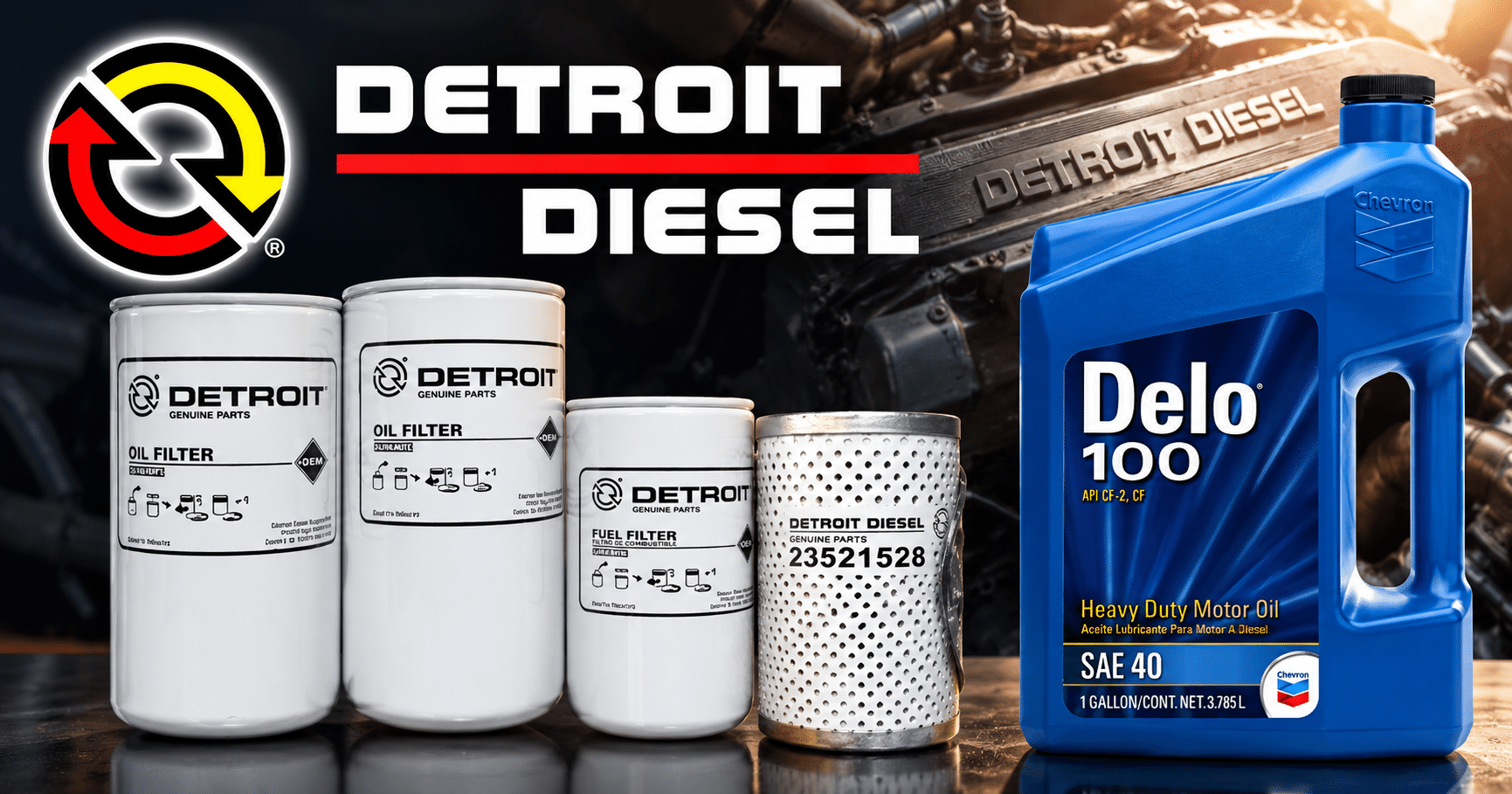
Detroit Diesel Marine
Review oil specifications for classic Detroit Diesel two-stroke marine engines and selected later four-stroke marine diesel platforms.
Detroit Diesel two-stroke engines require special attention to the correct lubricant specification and ash content. Do not assume that oil recommended for a modern four-stroke diesel is suitable for a two-stroke Detroit.
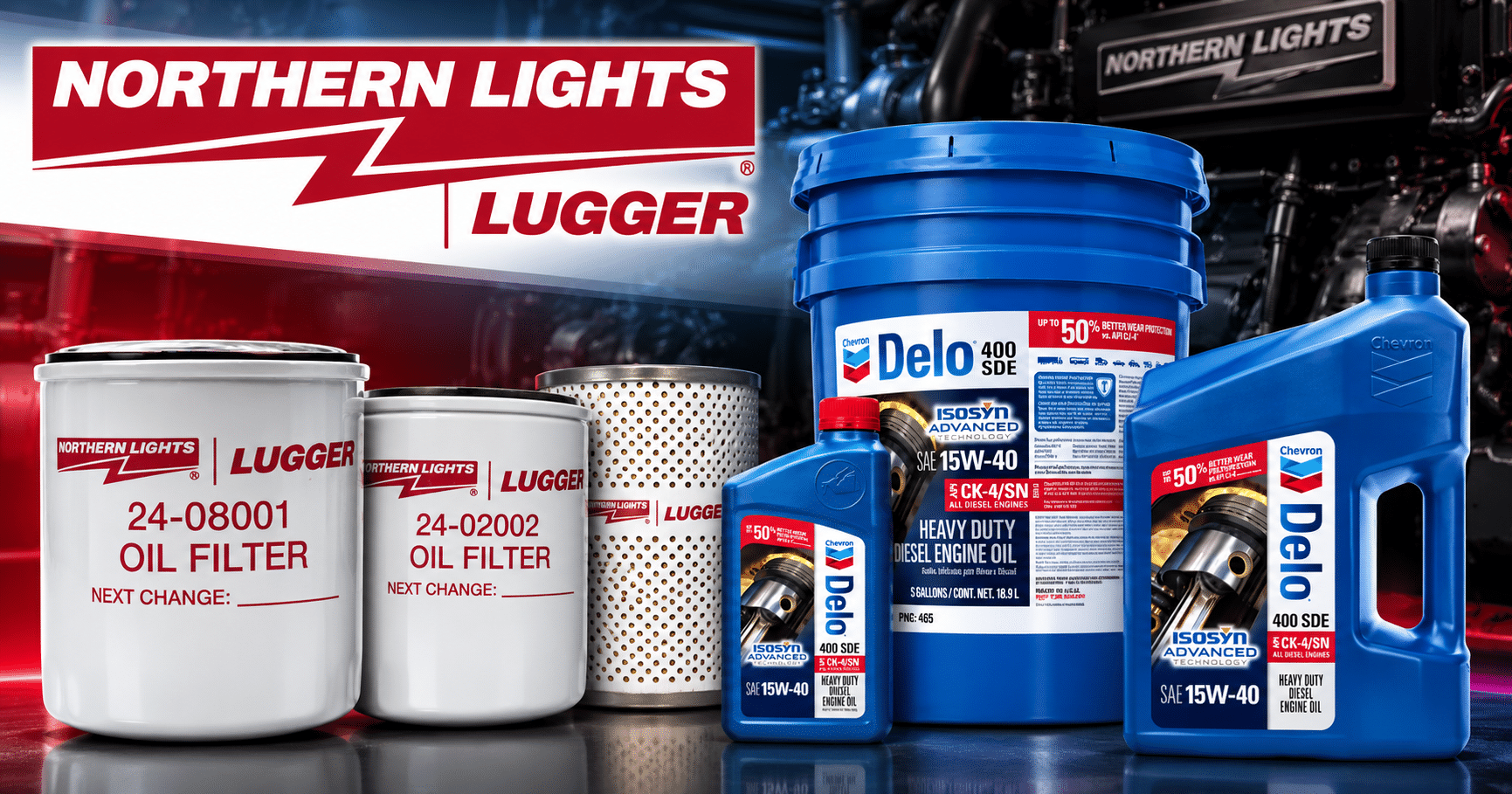
Lugger Marine Diesel
Lubrication references for Lugger marine engines found aboard long-range cruising yachts, trawlers and other heavy-duty vessels.
The correct oil capacity and filter depend on the Lugger engine model, its underlying engine platform and the installed oil-pan configuration.
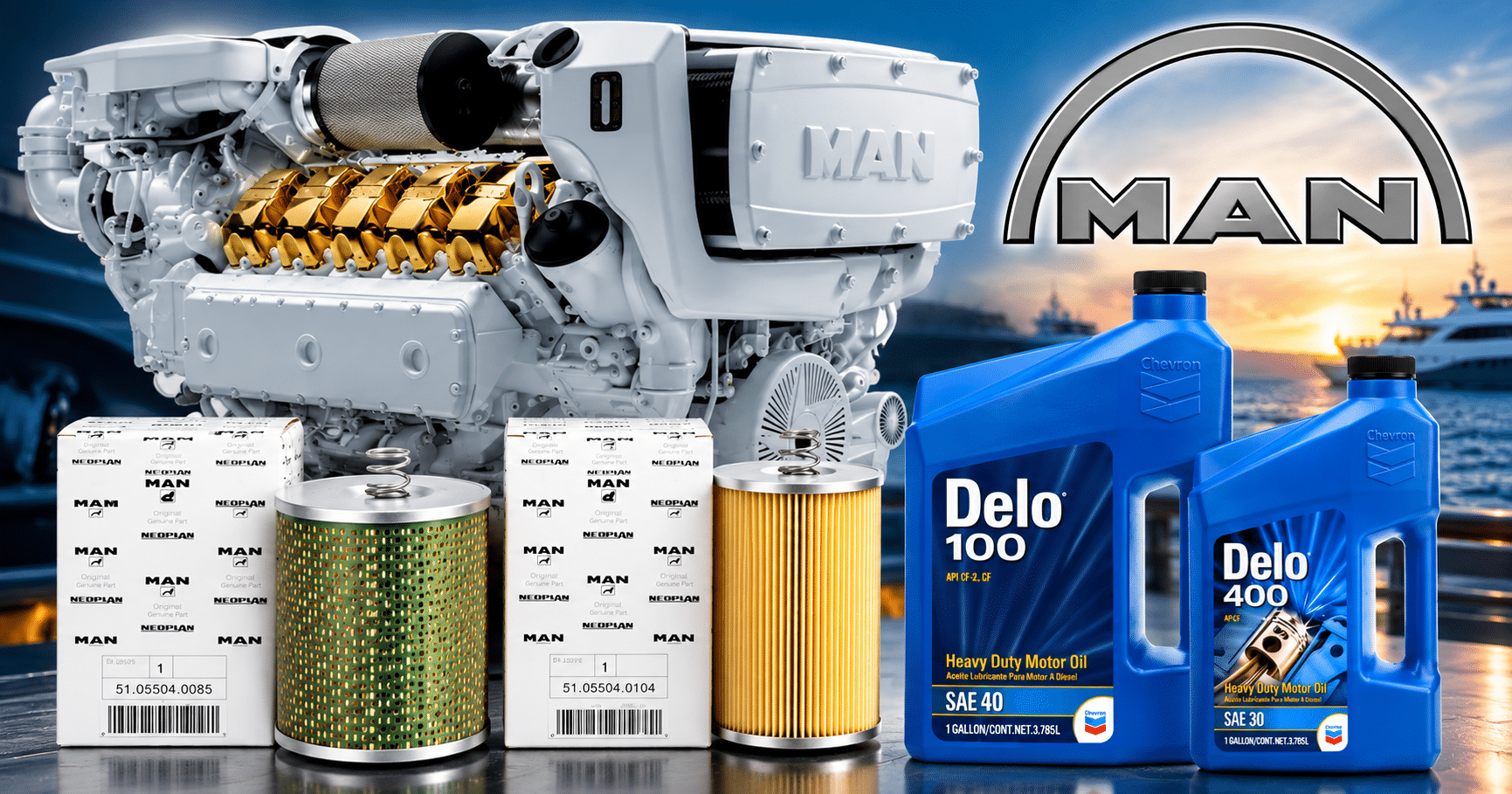
MAN Marine Diesel
Oil capacity and lubricant specification references for MAN marine propulsion engines used in motor yachts, sportfishing vessels and high-performance cruisers.
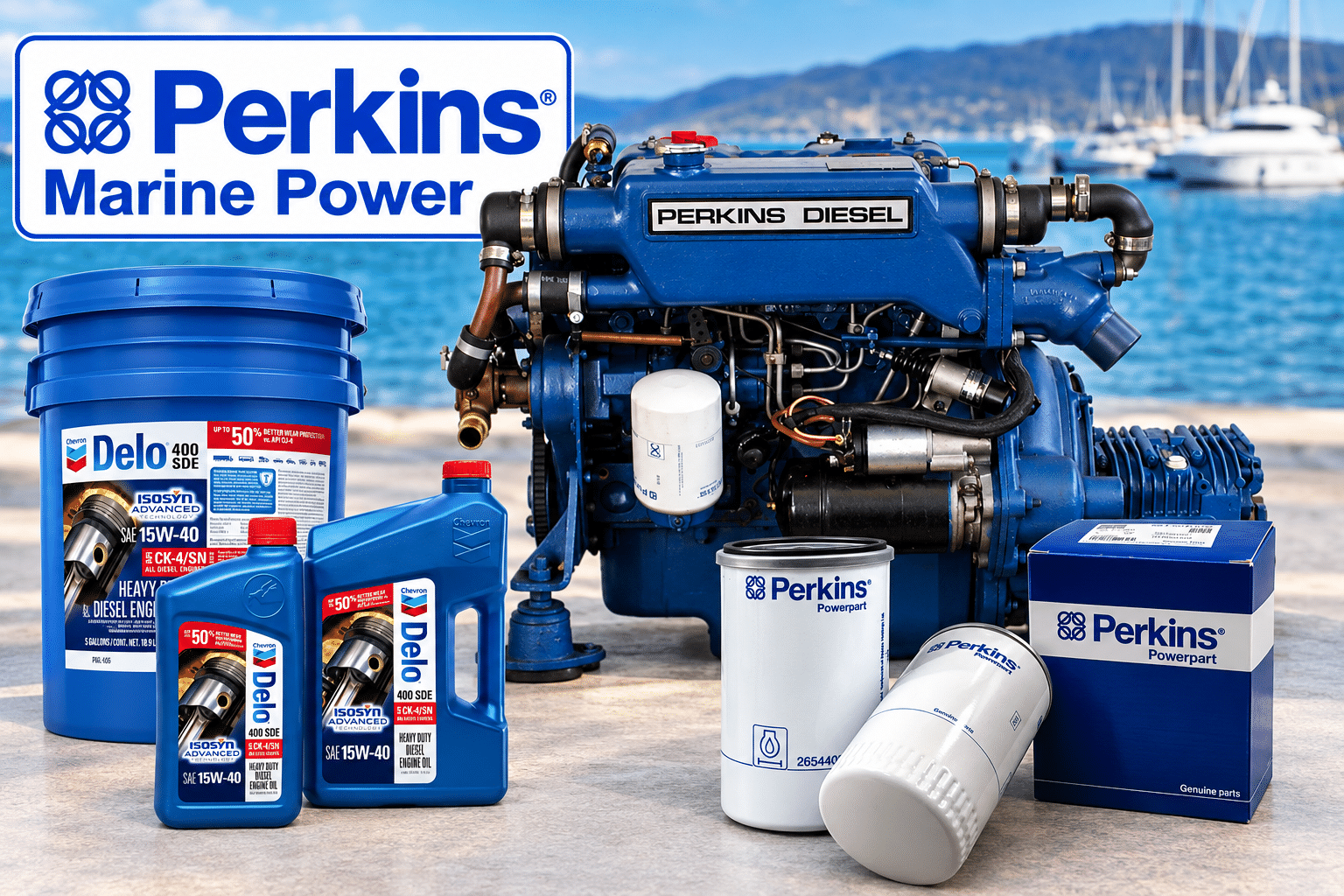
Perkins Marine Diesel
Oil capacity and filter guidance for classic Perkins marine engines and later Perkins-based marine propulsion systems.
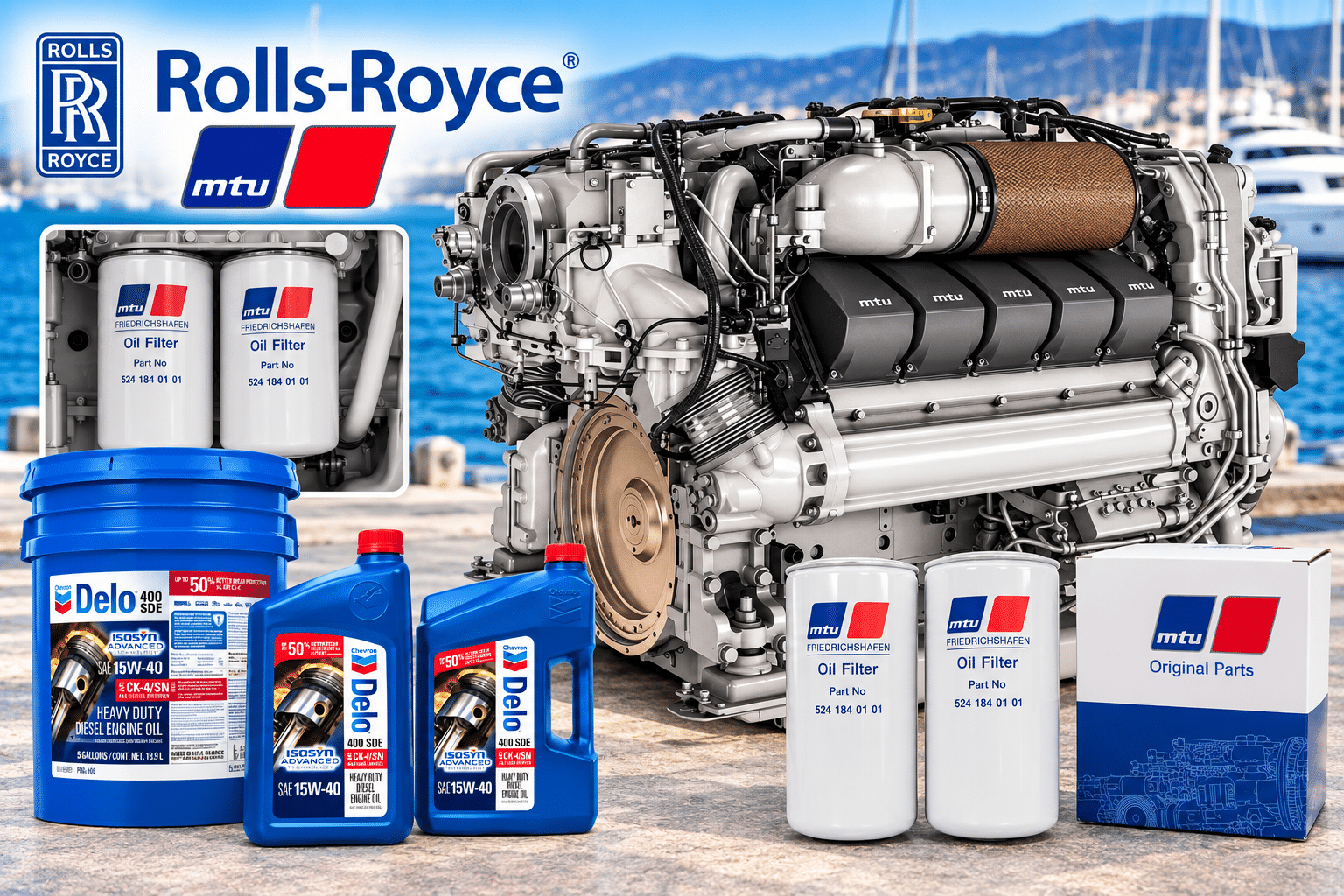
MTU Marine Diesel
Lubrication references for high-output MTU marine diesel engines installed in larger motor yachts, commercial vessels and performance applications.
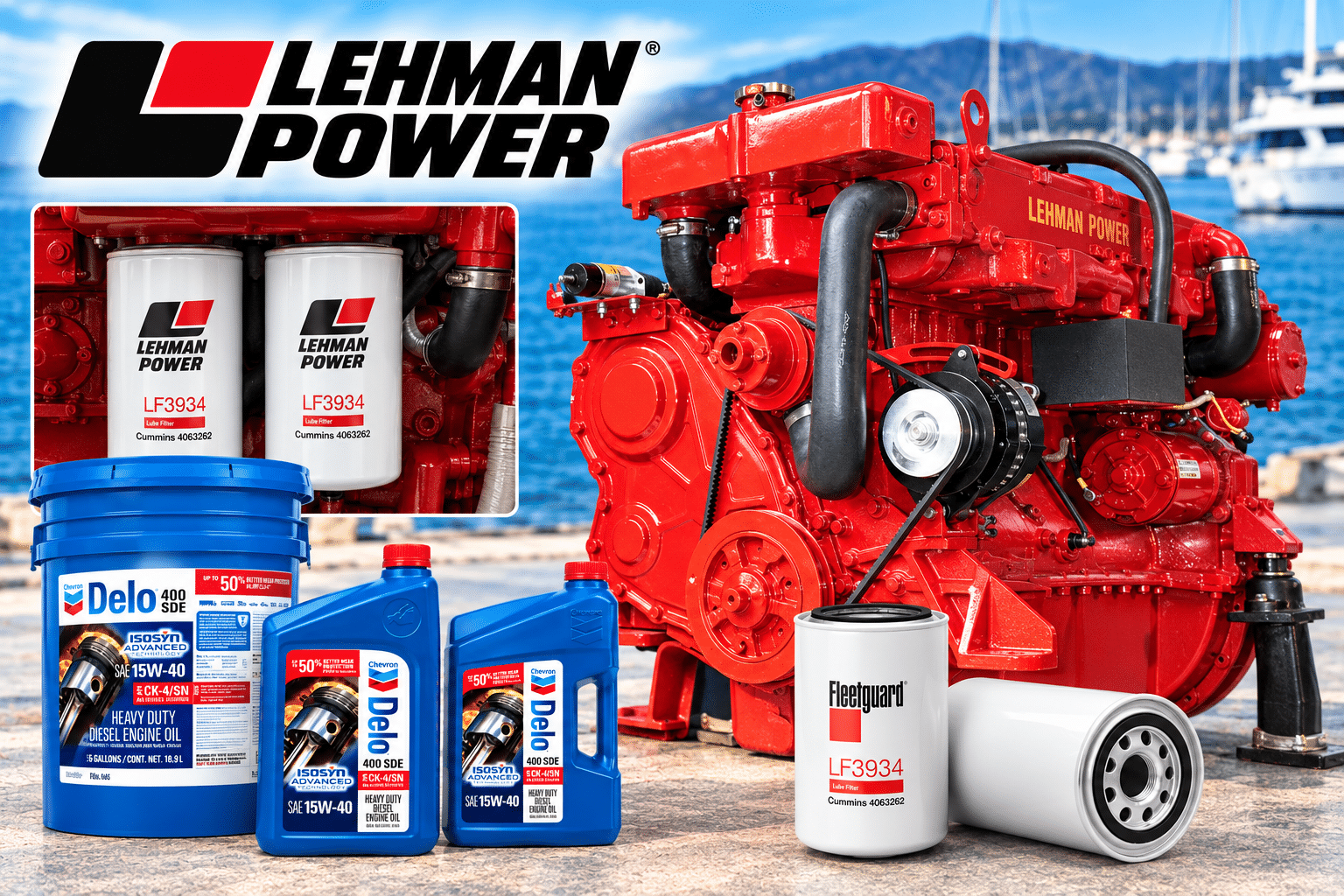
Ford Lehman Marine Diesel
Oil recommendations and capacity references for classic Ford Lehman marine diesels used aboard cruising trawlers, sailboats and displacement yachts.
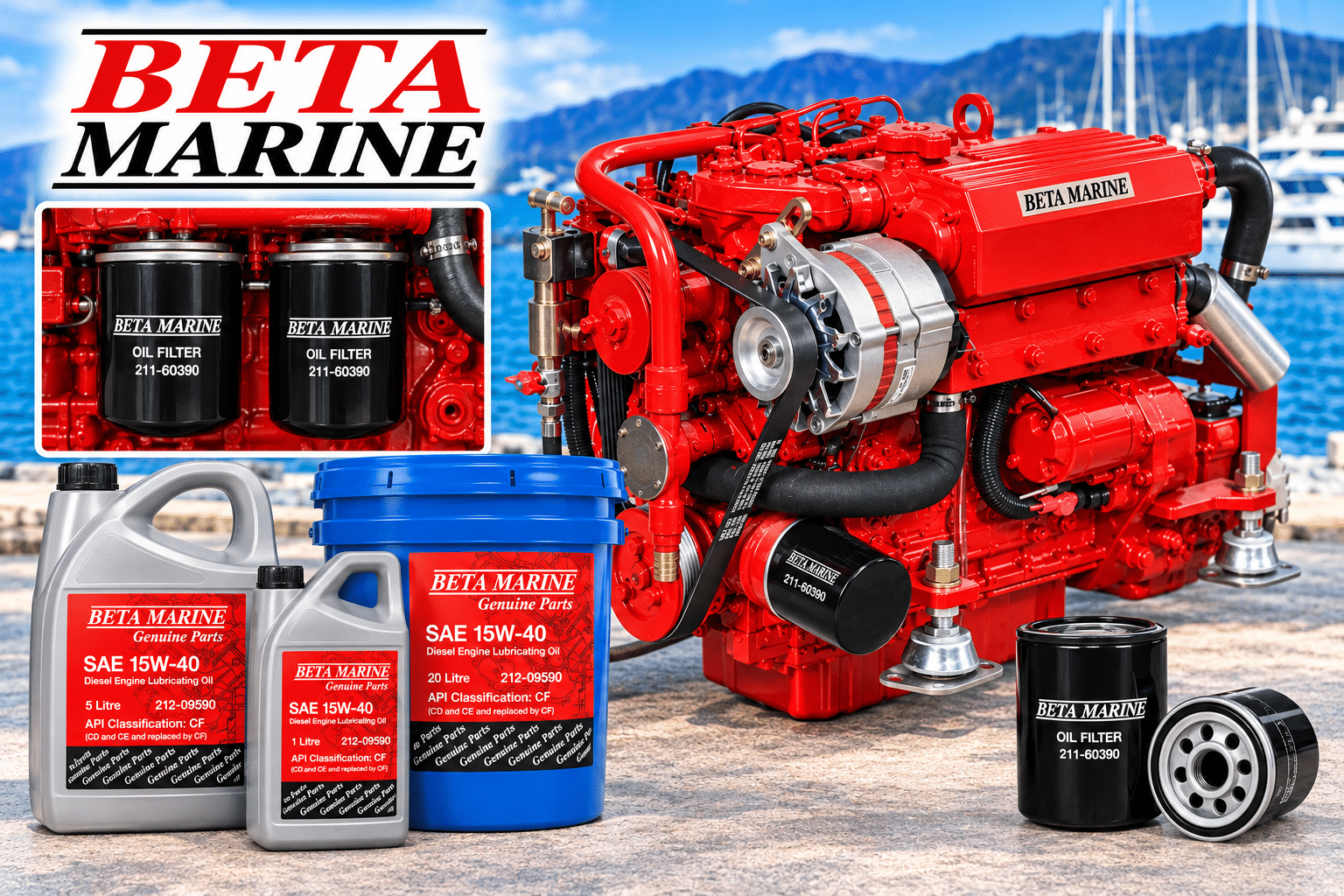
Beta Marine Diesel
Oil and filter information for Beta Marine auxiliary and propulsion diesels commonly installed in sailboats, cruising yachts and repower projects.
MAN Marine Engine Maintenance Reference
MAN marine engines can have different lubrication capacities and oil specifications even within similar engine families. Engine serial number, power rating, sump configuration and service documentation should all be checked before selecting an oil or determining a refill quantity.
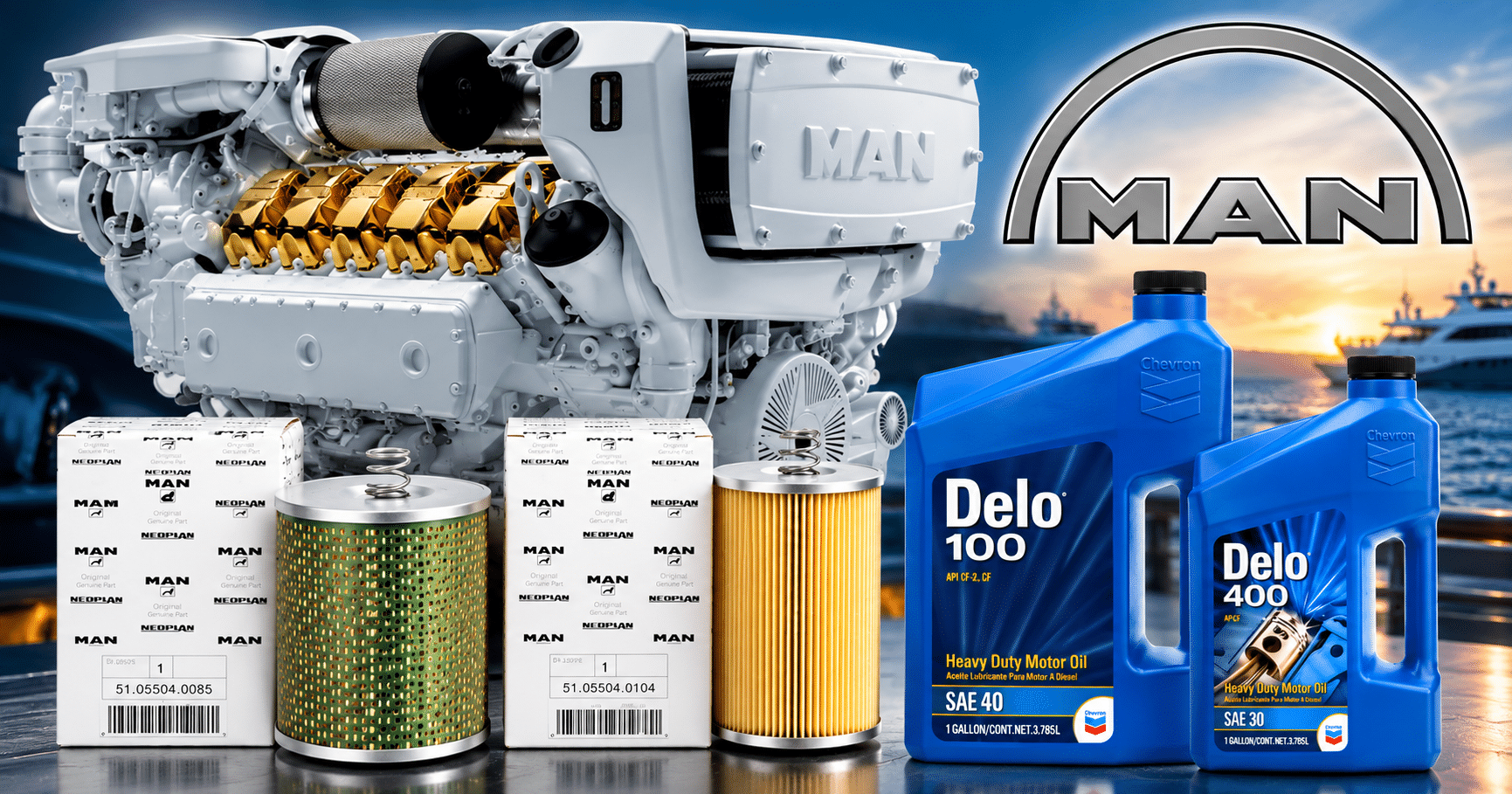
Explore the complete MAN Marine Engine Oil Type & Capacity Chart →
Marine Diesel Oil Chart Quick Reference
Use this directory to locate the correct manufacturer guide without searching through separate maintenance articles.
| Manufacturer | Engine Categories | Oil & Filter Guide |
|---|---|---|
| Cummins | B-Series, C-Series, Quantum | Open Chart |
| Caterpillar | Mechanical and electronic marine diesels | Open Chart |
| Volvo Penta | AD, TAMD, D-Series | Open Chart |
| Yanmar | YM, JH, LHA, LY | Open Chart |
| Detroit Diesel | Series 53, 71, 92, 60 | Open Chart |
| Lugger | L4105, L6105, L6125 | Open Chart |
| MAN | Inline-six, V8, V12 | Open Chart |
| Perkins | 4.108, 4.236, 6.354 | Open Chart |
| MTU | Series 2000, Series 4000 | Open Chart |
| Ford Lehman | Four- and six-cylinder marine diesels | Open Chart |
| Beta Marine | Auxiliary and propulsion diesels | Open Chart |
How to Choose the Correct Marine Diesel Engine Oil
Marine diesel engines operate under sustained loads, high engine-room temperatures and challenging environmental conditions. Proper lubrication is essential for protecting bearings, piston rings, cylinder walls, camshafts and turbochargers.
The correct oil must meet the manufacturer’s required viscosity and performance specification. Brand preference alone is not enough to determine suitability.
Identify the Exact Engine
Find the engine model and serial number. Confirm the engine’s generation, horsepower rating and installed configuration.
Check the Lubricant Specification
Verify the approved viscosity, diesel oil performance standard and any manufacturer-specific requirements.
Confirm Oil Capacity
Check the standard sump, installed filters and service refill instructions. Use the calibrated dipstick for final verification.
OEM Marine Oil vs. Chevron Delo and Shell Rotella
Many marine diesel manufacturers provide their own branded lubricants or publish approved lubricant specifications. When a suitable OEM oil is available, it provides a straightforward starting point for maintenance planning.
Chevron Delo and Shell Rotella are also widely used heavy-duty diesel lubricant brands. However, a specific product should only be selected when its viscosity and performance characteristics meet the requirements of the particular marine engine.
- Cummins: Verify the required Cummins oil specification before selecting Premium Blue or an approved alternative.
- Caterpillar: Use the appropriate Caterpillar lubricant specification for the engine and duty cycle.
- Volvo Penta and Yanmar: Follow the applicable model-specific lubricant requirements.
- Detroit Diesel: Distinguish traditional two-stroke engine requirements from later four-stroke diesel specifications.
- MAN and MTU: Confirm the correct manufacturer approval for the specific engine series.
- Perkins, Lugger, Ford Lehman and Beta Marine: Verify the oil specification for the exact model and generation.
Understanding Marine Engine Oil Capacity
One of the most common maintenance mistakes is treating a published oil capacity as the exact amount that must be poured into the engine during every oil change.
In practice, oil capacities can be published using different measurement conventions. Understanding those differences helps prevent overfilling and underfilling.
| Capacity Term | What It Means |
|---|---|
| Oil Pan or Sump Capacity | The volume associated with the engine’s oil pan under the manufacturer’s stated conditions. |
| Total Lubrication-System Capacity | The quantity associated with the engine’s complete lubrication system, which may include filters and additional components. |
| Oil Change Refill Capacity | The approximate amount needed after draining the engine and replacing filters according to the service procedure. |
| Dipstick Operating Range | The calibrated minimum and maximum operating levels for the installed engine configuration. |
For additional guidance on identifying the causes of abnormal oil pressure, excessive oil consumption, overheating or other engine problems, see our Master Marine Diesel Troubleshooting Guide.
Marine Diesel Oil Filters: Why the Correct Part Number Matters
Oil filters are designed to remove harmful particles from the lubrication system while maintaining the oil flow required by the engine. Filter selection should account for the manufacturer’s specified dimensions, sealing arrangement, filtration performance and bypass-valve characteristics.
Some engines use spin-on oil filters, while others use replaceable filter elements, multiple filters or remote-mounted filtration systems. Similar-looking filters are not necessarily interchangeable.
Before Ordering Marine Diesel Oil Filters
- Record the complete engine model and serial number.
- Check whether the engine has original or modified filtration equipment.
- Confirm the current OEM or approved replacement part number.
- Inspect the filter mounting base and sealing surface.
- Follow the manufacturer’s filter installation and priming procedure.
- Start the engine after service and inspect carefully for leaks and proper oil pressure.
For Cummins engine identification and service documentation, Cummins QuickServe Online provides serial-number-specific service information. For Caterpillar engines, consult Caterpillar service documentation or an authorized parts source.
Marine Diesel Engine Oil Change Best Practices
A proper oil change involves more than draining old oil and installing a replacement filter. Marine engine compartments often have limited access, remote oil drains, multiple filters and components that make maintenance more complicated than on automotive engines.
Prepare the Engine
Verify the correct lubricant, filters and refill specification. Follow the manufacturer’s safe shutdown and oil-temperature guidance.
Drain and Inspect
Remove the used oil using the approved method. Inspect the oil for unusual appearance, fuel dilution, water or metal contamination.
Replace Filters
Install the specified filters using the correct seals, lubrication and tightening procedures.
Refill Carefully
Add an appropriate initial amount of oil and avoid assuming that the published total capacity equals the service refill volume.
Verify Oil Pressure
Follow the engine manufacturer’s startup procedure, confirm oil pressure and inspect for leaks.
Confirm Final Level
Shut down and allow the specified settling time before checking the calibrated dipstick and recording the service.
Professional dockside maintenance can be especially valuable on twin-engine installations where access is restricted and the lubrication systems contain significant oil volumes. Learn more about our Mobile Marine Diesel Oil & Filter Service.
Marine Diesel Oil Analysis: What It Can Reveal
Used-oil analysis is a valuable additional maintenance tool, especially for larger engines, older vessels, commercial applications and pre-purchase marine engine surveys.
A properly collected oil sample may help identify unusual wear metals, coolant contamination, fuel dilution, water intrusion, viscosity changes and other lubrication concerns. Results should be interpreted in the context of engine model, oil hours, operating history and previous sample trends.
One sample does not guarantee that an engine is mechanically sound. Oil analysis is most useful when combined with a physical inspection, service history and appropriate operational testing.
For buyers evaluating a used vessel, our Marine Engine Survey Services can incorporate oil analysis with mechanical inspection, computerized diagnostics where supported and sea-trial observations.
How Often Should Marine Diesel Engine Oil Be Changed?
Oil-change intervals depend on the manufacturer, engine model, lubricant specification, duty cycle, operating environment and engine condition.
Some marine diesel maintenance schedules specify intervals in engine operating hours, while others also require oil changes based on elapsed calendar time. Engines that sit unused for long periods can still accumulate moisture and contamination.
Operating Conditions That Deserve Closer Attention
- Extended low-load running or excessive idling.
- Heavy-duty commercial operation.
- Frequent short trips that do not allow normal operating temperatures.
- Fuel dilution, coolant contamination or suspected seawater intrusion.
- High engine-room temperatures.
- Abnormal oil consumption or declining oil pressure.
- Unknown maintenance history on a recently purchased vessel.
The correct service interval is the one specified for the engine and operating conditions. Oil analysis may provide additional information, but it should not be used to ignore manufacturer service requirements.
Professional Marine Diesel Oil & Filter Service
805 Marine Diesel Mechanic provides mobile marine diesel maintenance, diagnostics and repair for yachts, sportfishing boats, trawlers, sailboats and commercial vessels.
Ventura • Oxnard • Channel Islands Harbor • Santa Barbara
Family owned and operated with over 30 years of marine engine experience.
Reference disclaimer: Oil capacities, filter numbers and lubricant specifications must be confirmed against the engine manufacturer’s documentation for the exact engine serial number and installed configuration. Product images are illustrative and do not establish manufacturer approval or compatibility.
Marine Diesel Engine Oil & Capacity FAQ
20 frequently asked questions covering engine oil selection,
oil capacities, filters, maintenance intervals and the
11 manufacturers featured in our marine diesel oil chart library.
1. What is the best oil for a marine diesel engine?
The best oil is one that meets the exact engine manufacturer’s lubricant specification, viscosity requirement and operating conditions. An OEM-branded lubricant is often a straightforward choice when available.
Chevron Delo and Shell Rotella may also be suitable when the specific product meets the engine’s requirements. Start by identifying your engine in our marine diesel oil chart directory.
2. Can I use 15W-40 oil in a marine diesel engine?
SAE 15W-40 is commonly specified for many traditional four-stroke marine diesel engines. However, not every marine diesel engine requires or permits this viscosity.
Confirm the manufacturer’s requirements for your exact engine model and operating conditions before using 15W-40.
3. How do I determine my marine diesel engine oil capacity?
Locate the engine model and serial number, then consult the manufacturer’s lubrication-system specifications. Check whether the published quantity refers to the oil pan, the complete system or an oil-change refill.
Our 11 manufacturer oil charts provide starting references. The calibrated dipstick and manufacturer’s refill procedure determine the final oil level.
4. What is the difference between oil-pan capacity and total oil-system capacity?
Oil-pan capacity describes the oil associated with the engine’s sump under the manufacturer’s specified conditions. Total lubrication-system capacity may include oil filters, galleries, coolers and other components.
Oil-change refill capacity can differ from either figure because some oil may remain in the engine after draining.
5. What oil does a Cummins marine diesel engine use?
Cummins Premium Blue is an OEM-associated lubricant choice for many Cummins engines. Certain Chevron Delo and Shell Rotella products may also be suitable when they meet the applicable Cummins specification.
Check our Cummins Marine Engine Oil Type & Capacity Chart for 4BT, 6BTA, QSB, QSC, QSL, QSM11 and QSK19 engine families.
6. What oil should I use in a Caterpillar marine diesel engine?
Use an oil meeting the applicable Caterpillar lubricant specification for your engine model and operating conditions. Caterpillar-branded engine oil may be an appropriate option, while compatible heavy-duty alternatives may also be available.
See our Caterpillar Marine Engine Oil Chart for model-specific guidance.
7. How much oil does a Volvo Penta marine diesel engine hold?
Volvo Penta oil capacity depends on the specific engine model and configuration. A compact D-series engine and a larger TAMD or D9 engine will not necessarily have the same lubrication-system capacity.
Consult our Volvo Penta Oil Type & Capacity Chart and verify the correct quantity using the engine documentation.
8. What oil should I use in a Yanmar marine diesel engine?
Yanmar marine diesel engines require lubricants meeting the specification and viscosity published for the particular engine model. Requirements can vary between compact sailboat auxiliaries and larger high-output engines.
Use our Yanmar Marine Oil Type & Capacity Chart as a reference and confirm the final selection against the engine manual.
9. Can I use regular 15W-40 diesel oil in a Detroit Diesel two-stroke engine?
Do not assume that an ordinary modern 15W-40 diesel oil is suitable for a traditional Detroit Diesel two-stroke engine. These engines have specific lubricant requirements, including ash-content considerations, and many applications specify an appropriate SAE 40 oil.
See our Detroit Diesel Oil Type & Capacity Chart and confirm the exact specification before servicing.
10. What oil should I use in a Lugger marine diesel engine?
The correct lubricant for a Lugger marine engine depends on its model, generation and underlying engine platform. Different Lugger engines can have different viscosity, filtration and capacity requirements.
Review our Lugger Marine Engine Oil Type & Capacity Chart before ordering oil or filters.
11. What oil specifications are required for MAN marine diesel engines?
MAN marine diesel engines should be serviced using lubricants that meet the applicable MAN approval or published oil specification for the specific engine series. Engine generation and operating requirements can affect the correct selection.
Our MAN Marine Engine Oil Type & Capacity Chart provides an organized starting point for maintenance research.
12. How much oil does a Perkins marine diesel engine hold?
Perkins marine diesel oil capacity varies by engine model and oil-pan configuration. Classic models such as the 4.108, 4.236 and 6.354 have different lubrication requirements.
Consult our Perkins Marine Oil Type & Capacity Chart and verify the engine’s service documentation.
13. What oil should be used in an MTU marine diesel engine?
MTU marine engines require lubricants meeting the applicable MTU fluid specification for their engine series and service conditions. High-output marine propulsion engines should not be serviced using oil selected solely by viscosity.
See our MTU Marine Engine Oil Type & Capacity Chart for additional model information.
14. What oil does a Ford Lehman marine diesel engine use?
Ford Lehman marine diesel oil requirements depend on the engine model and its original lubrication specification. Many older engines were designed around lubricant standards that differ from those of modern electronically controlled marine diesels.
Review the Ford Lehman Marine Oil Type & Capacity Chart and the applicable engine service manual.
15. What oil and filter does a Beta Marine diesel engine require?
Beta Marine engines require the oil viscosity, performance specification and filter part number applicable to the particular Beta engine model. Compact auxiliary engines and larger propulsion models may have different requirements.
Find more information in our Beta Marine Engine Oil Type & Capacity Chart.
16. How often should I change marine diesel engine oil?
Follow the engine manufacturer’s service interval, which may be based on operating hours, calendar time or both. Engine duty cycle, operating conditions and oil contamination can justify additional attention.
Our Marine Diesel Troubleshooting Guide covers warning signs that may indicate a developing lubrication or engine problem.
17. Why is it important to use the correct marine diesel oil filter?
The correct filter must meet the engine manufacturer’s requirements for filtration, flow, fitment and any specified bypass-valve characteristics. Similar-looking filters are not necessarily interchangeable.
Confirm the current part number using the engine serial number and the manufacturer’s service documentation.
18. Can marine diesel oil analysis detect engine problems?
Oil analysis can identify indicators such as abnormal wear metals, fuel dilution, coolant contamination, water and changes in lubricant condition. Trending results over multiple samples is often more useful than interpreting a single result in isolation.
Oil analysis is also a useful component of a professional marine engine survey, although it does not replace mechanical inspection or operational testing.
19. What happens if I overfill a marine diesel engine with oil?
Excessive oil can cause aeration, increased crankcase pressure, oil carryover and other operating problems depending on the engine design. Overfilling should not be treated as harmless.
Use the manufacturer’s refill procedure and calibrated dipstick rather than pouring in a published capacity without checking the actual level.
20. Where can I get professional marine diesel oil and filter service in Ventura or Santa Barbara?
805 Marine Diesel Mechanic provides mobile marine diesel maintenance, diagnostics and repair throughout Ventura, Oxnard, Channel Islands Harbor and Santa Barbara.
We service a variety of marine diesel engine makes and can assist with oil and filter changes, troubleshooting and pre-purchase marine engine surveys. Call (805) 774-0637 to discuss your engine and service requirements.
Oil specifications, filter numbers and capacity figures must be verified for the exact engine model, serial number and installed configuration. A published sump capacity is not necessarily the same as the oil-change refill quantity. Follow the manufacturer’s procedure and use the calibrated dipstick to establish the final oil level.
Explore All 11 Marine Diesel Oil Charts
Need Marine Diesel Engine Maintenance?
805 Marine Diesel Mechanic
Family Owned & Operated
Over 30 Years of Marine Engine Experience
Marine Diesel Oil & Filter Changes • Diagnostics • Cooling Systems
• Fuel Systems • Turbochargers • Mechanical Repairs • Engine Surveys
Serving Ventura, Oxnard, Channel Islands Harbor and Santa Barbara