
Marine diesel seawater cooling-system descaling helps prevent overheating, restricted raw-water flow, corrosion damage, and expensive cooling-system failures.
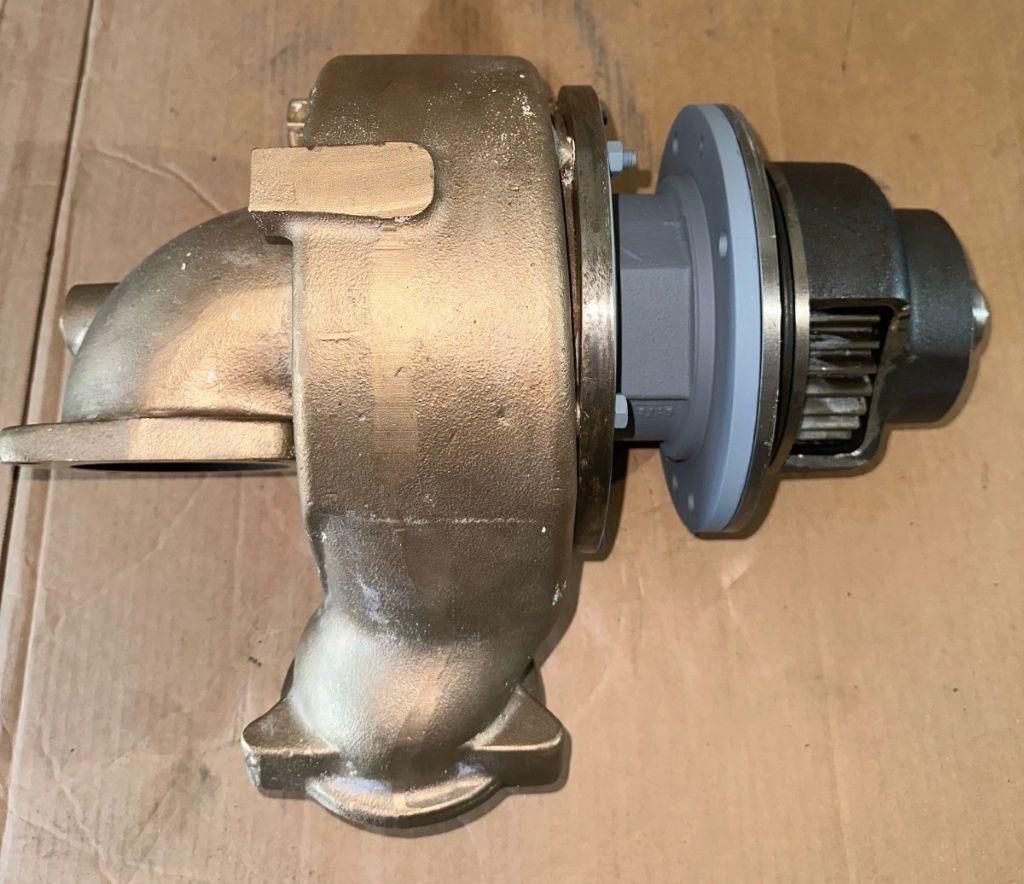
At 805 Marine Diesel Mechanic, seawater cooling-system descaling services are performed throughout Ventura Harbor, Oxnard, Channel Islands Harbor, and Santa Barbara Harbor for yachts, sportfishing vessels, sailboats, and commercial diesel vessels. Saltwater cooling systems constantly accumulate mineral deposits, corrosion buildup, marine growth, calcium scaling, rust, and biological contamination that gradually restrict cooling-system performance.
Before replacing expensive cooling-system components, start with the Marine Diesel Troubleshooting Guide. Many overheating problems begin with restricted seawater flow long before major engine damage occurs.
Schedule Cooling-System Descaling Service
Marine Diesel Engine Seawater System Descaling
Marine diesel engines depend heavily on unrestricted seawater circulation to control operating temperatures. Heat exchangers, aftercoolers, oil coolers, seawater pumps, exhaust mixers, and cooling passages all rely on consistent seawater flow to remove heat from the engine.
Over time, internal seawater passages accumulate:
- Calcium deposits
- Salt buildup
- Marine growth
- Rust contamination
- Zebra mussels and barnacles
- Corrosion deposits
- Scale buildup
- Mineral restriction
As deposits build inside cooling passages, seawater flow decreases and operating temperatures begin rising under load.
For broader cooling-system diagnostics, visit the Cooling System Diagnosis Center.
Why Cooling-System Maintenance Is Critical
Marine diesel cooling systems operate in one of the harshest environments on the vessel. Saltwater continuously circulates through metal cooling passages while heat cycles constantly expand and contract internal components.
As cooling systems age:
- Heat exchangers become restricted
- O-rings harden and leak
- Anodes deteriorate
- Cooling passages corrode
- Raw-water pumps wear down
- Aftercoolers accumulate scale
Many boat owners delay cooling-system maintenance because the engine “still runs,” but internal restriction often develops slowly until the engine overheats under heavy load or offshore conditions.
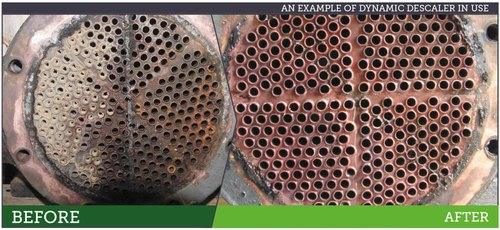
How Marine Cooling-System Descaling Works
805 Marine Diesel Mechanic uses modern recirculating descaling methods designed specifically for marine diesel seawater systems. Instead of removing every cooling component for mechanical cleaning, specialized descaling solution is circulated through the seawater side of the engine.
Barnacle Buster is commonly used because it safely dissolves:
- Calcium deposits
- Salt accumulation
- Marine growth
- Barnacles
- Zebra mussels
- Rust contamination
- Lime deposits
The process often requires far less disassembly compared to older acid-dipping methods while still restoring cooling-system flow.
For related flushing support, visit Marine Engine Fresh Water Flushing System.
Signs Your Marine Cooling System Needs Descaling
Restricted cooling systems often develop gradually. Many engines operate normally at idle while overheating only under cruise RPM or heavy load.
Common warning signs include:
- Overheating at cruise RPM
- Rising operating temperature
- Low seawater discharge
- Steam from the exhaust outlet
- Exhaust temperature alarms
- Reduced engine power
- Frequent impeller damage
- Corrosion around cooling components
- Salt buildup around heat exchangers
Cooling restriction can also contribute to turbocharger overheating, exhaust damage, and shortened engine life.
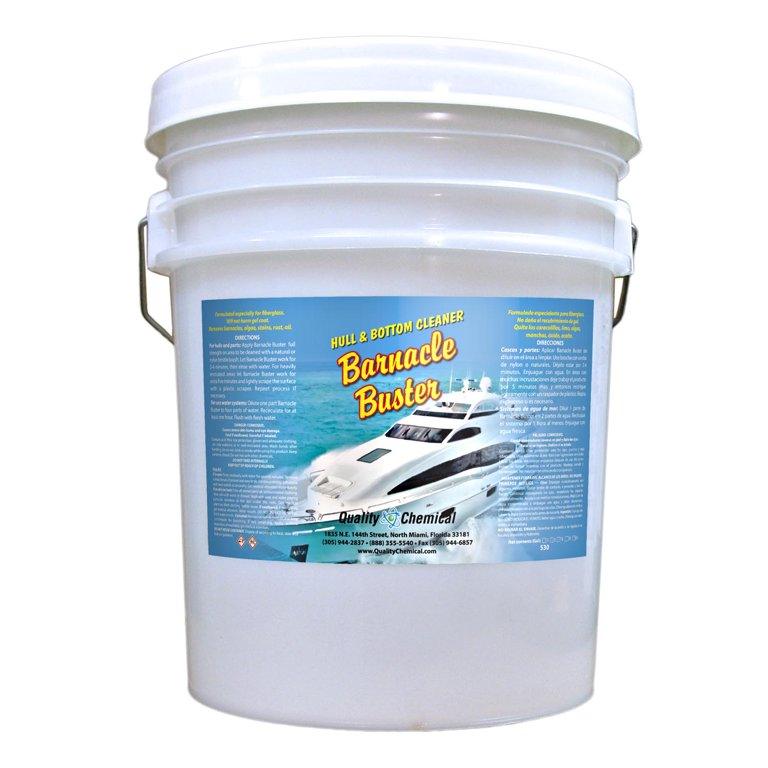
Raw-Water Pump and Impeller Maintenance
Seawater pumps and impellers are critical parts of the cooling system. Even a partially damaged impeller may circulate enough water at idle while failing under heavy load.
Most marine diesel manufacturers recommend:
- Impeller replacement every 250 hours
- Seasonal seawater-pump inspection
- Regular seawater-flow verification
- Annual cooling-system inspection
For detailed pump support, visit Marine Raw Water Pump Maintenance.
Broken impeller blades often become trapped inside coolers, heat exchangers, or exhaust mixers, continuing to restrict seawater flow even after a new impeller is installed.
Heat Exchangers and Marine Diesel Cooling Components
Heat exchangers transfer engine heat into seawater. As deposits build inside the exchanger core, cooling efficiency drops and operating temperatures increase.
Marine diesel cooling systems commonly include:
- Heat exchangers
- Aftercoolers
- Oil coolers
- Transmission coolers
- Exhaust mixers
- Seawater pumps
- Thermostats
- Coolant circulation systems
All of these components should be inspected periodically as part of long-term preventive maintenance.
For broader engine maintenance support, visit the Marine Diesel Engine Maintenance Schedule.
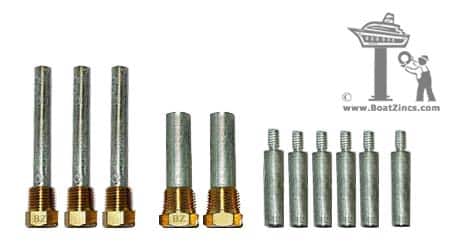
The Importance of Cooling-System Anodes
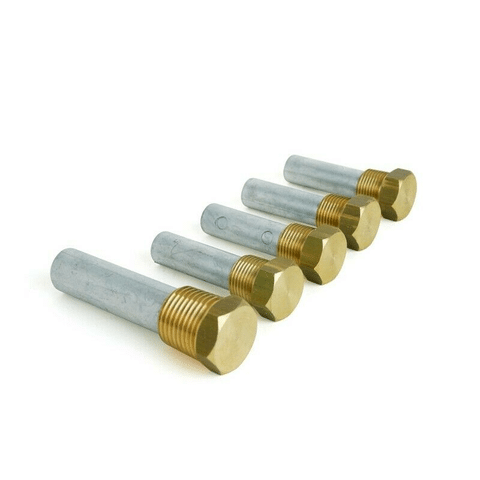
Sacrificial zinc anodes help protect expensive cooling-system components from galvanic corrosion. As the zinc deteriorates, it sacrifices itself before the surrounding metal components corrode.
If anodes are neglected:
- Heat exchangers may corrode internally
- Cooling-system passages can deteriorate
- Seawater components may fail prematurely
- Internal leaks may develop
Most marine diesel engines require cooling-system zinc replacement annually.
For related corrosion support, visit Marine Engine Survey.
Why Saltwater Maintenance Cannot Be Ignored
Many boat owners skip maintenance because the vessel has not been used frequently. Unfortunately, saltwater corrosion continues even while the vessel sits idle.
Once saltwater leakage begins around a cooling-system O-ring, seal, or fitting, corrosion slowly damages surrounding engine components, hose fittings, clamps, and sealing surfaces.
Cooling-system neglect often creates:
- Heat-exchanger failure
- Aftercooler corrosion
- Leaking seals and O-rings
- Exhaust corrosion
- Turbocharger overheating
- Internal scaling
- Engine overheating
Preventive Cooling-System Maintenance
Routine seawater cooling maintenance is far less expensive than repairing severe overheating damage or replacing major cooling-system components.
Recommended maintenance often includes:
- Inspecting seawater discharge regularly
- Checking coolant levels before operation
- Replacing impellers seasonally
- Changing zinc anodes annually
- Descaling seawater passages every 2 years or 500 hours
- Inspecting heat exchangers regularly
- Monitoring operating temperatures
For related fuel-system reliability support, visit the Fuel System Diagnosis Center.
Marine Cooling-System Service in Ventura and Santa Barbara
805 Marine Diesel Mechanic provides seawater-system descaling, Barnacle Buster cleaning, heat-exchanger service, raw-water pump maintenance, impeller replacement, cooling diagnostics, and overheating troubleshooting throughout Ventura Harbor, Oxnard, Channel Islands Harbor, and Santa Barbara Harbor.
For local mobile diesel service, visit Marine Mechanic Ventura CA.
Keeping seawater systems clean and unrestricted is one of the most important parts of long-term marine diesel reliability.
Contact 805 Marine Diesel Mechanic
What is marine diesel cooling-system descaling?
Cooling-system descaling removes mineral deposits, salt buildup, marine growth, and corrosion from marine diesel seawater passages.
Why do marine cooling systems become restricted?
Saltwater systems gradually accumulate calcium, marine growth, corrosion deposits, and mineral buildup that reduce seawater flow.
How often should marine cooling systems be descaled?
Many marine diesel cooling systems should be cleaned approximately every two years or 500 operating hours depending on usage.
What is Barnacle Buster?
Barnacle Buster is a biodegradable marine descaling solution designed to dissolve marine growth and mineral buildup safely.
Can restricted cooling systems cause overheating?
Yes. Restricted seawater flow is one of the leading causes of marine diesel overheating problems.
What are signs of cooling-system restriction?
Common signs include overheating at cruise RPM, low seawater discharge, steam, rising temperatures, and reduced engine performance.
How often should impellers be replaced?
Most marine diesel impellers should be replaced every 250 hours or seasonally.
Can broken impeller blades restrict seawater flow?
Yes. Broken impeller pieces often become trapped inside coolers or heat exchangers and continue restricting flow.
Why are cooling-system zincs important?
Zinc anodes protect cooling-system components from galvanic corrosion in saltwater environments.
Can heat exchangers corrode internally?
Yes. Saltwater exposure and neglected zinc maintenance can lead to internal corrosion and cooling failure.
Should seawater strainers be inspected regularly?
Yes. Strainers should be cleaned frequently to maintain proper cooling-system flow.
Can cooling-system neglect damage turbochargers?
Yes. Overheating from restricted cooling systems can damage turbochargers and exhaust components.
Do boats need cooling maintenance even if rarely used?
Yes. Saltwater corrosion continues even while vessels sit unused.
Can descaling improve engine temperatures?
Yes. Removing scale and marine growth often restores cooling efficiency and lowers operating temperatures.
What cooling components are commonly serviced?
Heat exchangers, aftercoolers, oil coolers, seawater pumps, exhaust mixers, and zincs are commonly serviced.
Can overheating damage marine diesel engines?
Yes. Severe overheating can damage cylinder heads, turbochargers, exhaust systems, and internal engine components.
What causes seawater-system corrosion?
Saltwater exposure, neglected zincs, leaking seals, and trapped deposits all contribute to corrosion.
Is cooling-system maintenance preventive maintenance?
Yes. Routine cooling maintenance helps prevent expensive overheating repairs and offshore failures.
Where does 805 Marine Diesel Mechanic provide cooling-system descaling?
805 Marine Diesel Mechanic provides cooling-system descaling throughout Ventura Harbor, Oxnard, Channel Islands Harbor, and Santa Barbara Harbor.
Can cooling-system diagnostics identify restriction problems?
Yes. Cooling-system diagnostics help identify restricted seawater flow, overheating causes, and failing cooling components.