
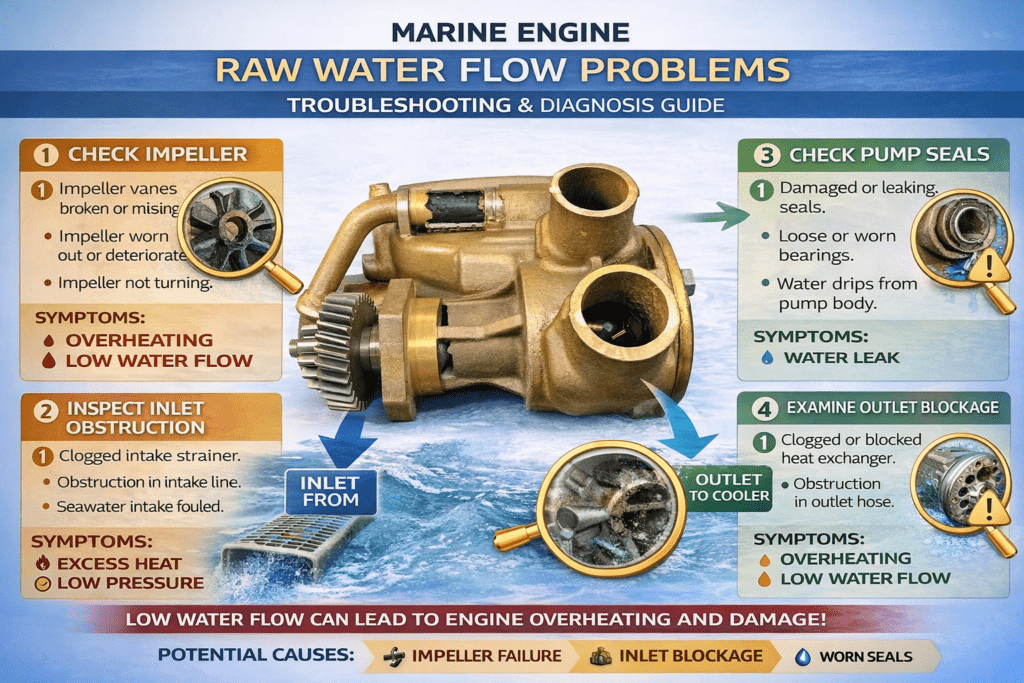
Marine Engine Raw Water Flow Problems — Troubleshooting & Diagnosis Guide
Quick Technical Diagnosis Summary: Raw water flow problems are most often caused by intake restrictions, air leaks on the suction side, damaged pump impellers, collapsed hoses, or internal blockages in the strainer/heat exchanger circuit. The fastest diagnostic clue is whether exhaust discharge water volume is reduced or intermittent.
At 805 Marine Diesel Mechanic, raw water flow problems are a common root cause behind overheating, low power, and exhaust temperature issues in Ventura, Oxnard, Channel Islands Harbor, and Santa Barbara. Use this guide to narrow down whether the failure is at the intake, pump, hoses, or downstream cooling components.
What “Raw Water Flow Problems” Usually Look Like
- Overheating at idle or under load
- Weak or reduced water discharge at the exhaust outlet
- Intermittent cooling (temperature rises and falls)
- Steam at the exhaust or “hot rubber” smell
- Alarms: high temp, high exhaust temp (where equipped)
Safety Note
If the engine is overheating or exhaust temperature is climbing, reduce load and shut down before damaging the exhaust hose, turbo, or head gasket. Raw water flow issues can escalate fast.
1. Seacock Closed or Intake Blocked
Start with the simplest causes:
- Seacock partially/fully closed
- Intake grate blocked by kelp, plastic, or growth
- Debris in the intake scoop after docking or shallow water
2. Clogged Seawater Strainer
A partially clogged strainer can allow some flow at idle but starve the system under load.
Pro Tip: If the strainer lid O-ring is damaged or the cap isn’t sealing, the pump may suck air instead of water.
3. Suction-Side Air Leak
Air leaks before the pump can cause reduced flow and overheating without obvious external water leaks.
- Loose hose clamps
- Cracked suction hose
- Strainer lid O-ring leak
- Corroded fittings or worn gasket surfaces
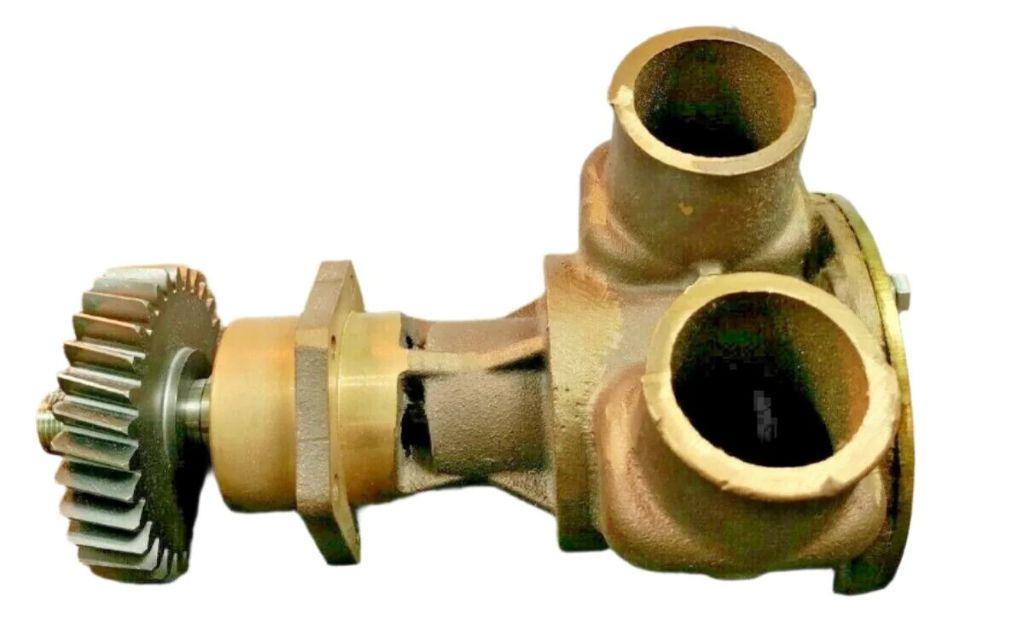
4. Raw Water Pump Issues (Wear, Shaft Seal, or Housing Damage)
Worn pump housings and cam plates reduce output—especially at low RPM.
5. Damaged Impeller (Most Common Failure)
A damaged impeller can still move some water, which tricks owners into thinking the pump is fine—until overheating returns.
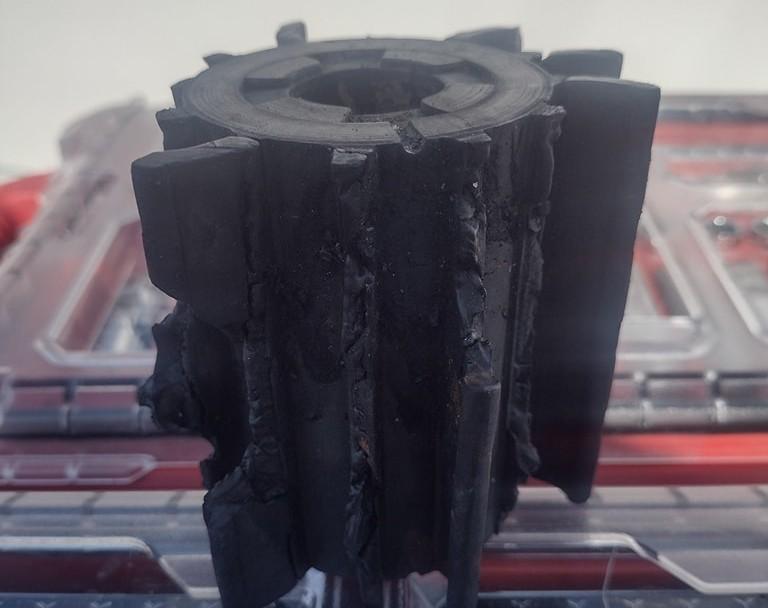
Critical: If the impeller has missing vanes, those pieces often lodge downstream in the oil cooler, heat exchanger, or aftercooler inlet.
6. Collapsed or Delaminated Raw Water Hoses
Hoses can collapse internally under suction, especially older rubber hoses. This often shows up at higher RPM when demand increases.
7. Blocked Oil Cooler / Heat Exchanger / Aftercooler Inlet
Impeller debris, zinc fragments, and marine growth frequently block the first restriction points.
- Oil cooler (common debris trap)
- Heat exchanger inlet and tube bundle
- Aftercooler (turbo engines)
8. Exhaust Mixing Elbow Restriction
Carbon buildup and internal corrosion can restrict water injection flow and raise exhaust temps.
Quick Diagnostic Checklist (Field Method)
- Confirm seacock open and intake clear
- Inspect strainer basket and lid seal
- Check for suction-side air leaks
- Verify pump impeller condition
- Inspect hoses for collapse/delamination
- Check downstream for debris (coolers/heat exchanger)
- Confirm strong, steady exhaust water discharge
What We Check on a Service Call
- Raw water flow volume and consistency
- Pump wear and cam plate condition
- Strainer sealing and suction integrity
- Debris traps (oil cooler/heat exchanger inlet)
- Temperature rise pattern at idle vs under load
For general boating maintenance and safety references, see BoatUS and Yachting Magazine.
Continue Troubleshooting
- Marine Diesel Overheating at Idle vs Cruise
- Excessive Black Smoke Under Throttle
- Marine Engine Surging at Cruise RPM
- Fresh Water Flushing
- Master Marine Diesel Troubleshooting Guide – 805 Marine Diesel Mechanic
Mobile Marine Diesel Service in Ventura & Santa Barbara
If your engine is overheating or you’re seeing weak exhaust water discharge, our trained technicians can diagnose the raw water system quickly. We provide mobile marine diesel service throughout Ventura, Oxnard, Channel Islands Harbor, and Santa Barbara.
FAQ
Why is my marine diesel overheating but still pumping some water?
Partially damaged impellers, suction-side air leaks, or downstream blockages can reduce flow enough to cause overheating while still showing some discharge water.
What happens if an impeller loses blades?
Missing impeller vanes often lodge in the oil cooler, heat exchanger inlet, or aftercooler and must be removed to restore full flow.
Can a seawater strainer cause intermittent overheating?
Yes. A partially clogged basket or a leaking lid O-ring can cause intermittent flow loss and temperature spikes.
One Response