
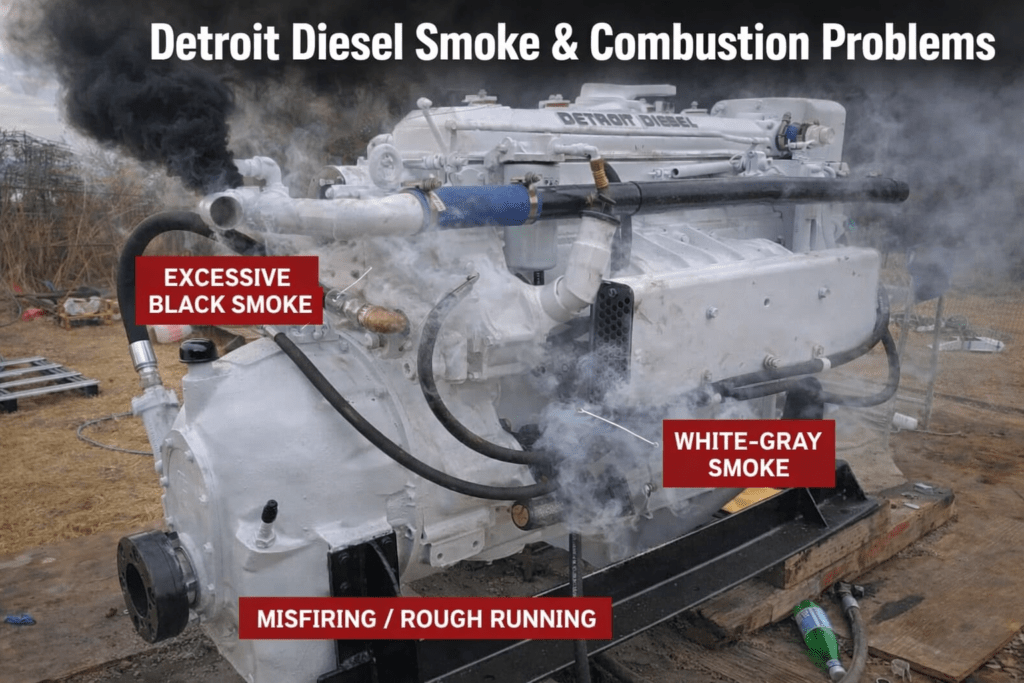
Detroit Diesel Smoke & Combustion Problems: Marine Diesel Diagnosis Authority Guide
Smoke from a marine diesel engine is one of the most important diagnostic indicators of combustion health. Detroit Diesel engines such as the 6-71, 8V71, 6V92, and 8V92 provide clear warning signs through exhaust color when something is wrong with fuel delivery, airflow, or internal engine components.
Understanding the meaning of exhaust smoke helps identify problems early before they turn into major engine failures.
At 805 Marine Diesel Mechanic, we provide professional combustion and smoke diagnosis throughout Ventura, Oxnard, Channel Islands Harbor, and Santa Barbara. With more than 30 years of marine diesel experience, we diagnose smoke issues by evaluating fuel systems, turbo performance, airflow, and internal engine condition.
For a full troubleshooting workflow, visit our main diagnostic hub:
Master Marine Diesel Troubleshooting Guide
What Marine Diesel Exhaust Smoke Means
The color of diesel exhaust smoke provides valuable clues about combustion efficiency.
The three most common smoke colors are:
- Black smoke – excess fuel or insufficient air
- White smoke – unburned fuel or low cylinder temperature
- Blue smoke – burning engine oil
Identifying smoke color helps narrow the diagnostic process to the correct engine system.
Additional airflow-related performance problems are covered here:
Turbo & Air System Problems Center
Black Smoke Causes
Black smoke indicates incomplete combustion caused by too much fuel or insufficient air.
Common causes include:
- Restricted air filters
- Turbocharger failure
- Aftercooler restrictions
- Overfueling injectors
- Fuel injection timing issues
When airflow becomes restricted, the engine cannot burn fuel efficiently, producing dark exhaust smoke.
Airflow problems are often diagnosed through:
Low Power Loss of RPM Diagnosis Center
White Smoke Causes
White smoke usually indicates unburned diesel fuel exiting the exhaust.
Typical causes include:
- Cold engine conditions
- Low compression
- Faulty injectors
- Incorrect injection timing
- Fuel contamination
White smoke during startup can be normal in cold conditions, but persistent white smoke usually requires inspection.
Fuel quality issues contributing to combustion problems are discussed here:
Fuel Contamination & Filtration Issues Center
Blue Smoke Causes
Blue smoke indicates that engine oil is entering the combustion chamber.
Common causes include:
- Worn piston rings
- Valve guide wear
- Turbocharger oil seal failure
- Overfilled crankcase oil
Blue smoke is often a sign of engine wear and should be evaluated promptly.
Injector and Fuel System Combustion Problems
Detroit Diesel engines rely on precise fuel injection for efficient combustion.
Fuel system issues affecting combustion include:
- Injector spray pattern problems
- Injection pump wear
- Fuel pressure issues
- Contaminated fuel
These problems reduce combustion efficiency and may produce smoke during acceleration.
Fuel delivery diagnostics can also be found here:
Airflow and Turbocharger Effects on Combustion
Detroit Diesel two-stroke engines are extremely sensitive to airflow problems.
If the turbocharger or intake system becomes restricted, the engine may run rich and produce black smoke.
Common airflow-related issues include:
- Turbocharger wear
- Restricted intake filters
- Aftercooler fouling
- Air intake leaks
Cooling system performance can also influence combustion efficiency.
Cooling System Diagnosis Center
Professional Combustion Diagnosis
Proper combustion diagnosis requires more than visual observation of exhaust smoke.
Our professional diagnostic process includes:
- Injector testing
- Turbocharger inspection
- Fuel pressure evaluation
- Compression testing
- Airflow restriction checks
Advanced diagnostic inspections are also available through our survey services:
Computerized Marine Engine Survey Diagnostics Center
Preventing Marine Diesel Combustion Problems
Routine maintenance helps maintain proper combustion and prevents excessive smoke.
Recommended preventive maintenance includes:
- Regular injector inspections
- Air filter replacement
- Fuel system maintenance
- Turbocharger inspection
- Monitoring exhaust smoke changes
Monitoring smoke changes is often the earliest warning sign of developing engine problems.
Detroit Diesel Combustion Diagnosis in Ventura & Channel Islands Harbor
805 Marine Diesel Mechanic provides professional combustion and smoke diagnostics throughout:
- Ventura Harbor
- Channel Islands Harbor
- Oxnard
- Santa Barbara
If your Detroit Diesel engine is producing excessive smoke or showing combustion problems, professional diagnosis can identify the root cause quickly.
Contact 805 Marine Diesel Mechanic
Detroit Diesel Smoke Diagnosis FAQ
Black smoke usually indicates excess fuel or insufficient air caused by airflow restrictions or turbocharger problems.
Some white smoke may occur during cold startup, but persistent white smoke usually indicates injector or compression problems.
Blue smoke indicates engine oil burning in the cylinders due to worn rings, valve guides, or turbo oil seal failure.
Yes. Smoke changes are often the first warning sign of combustion or fuel system problems.