
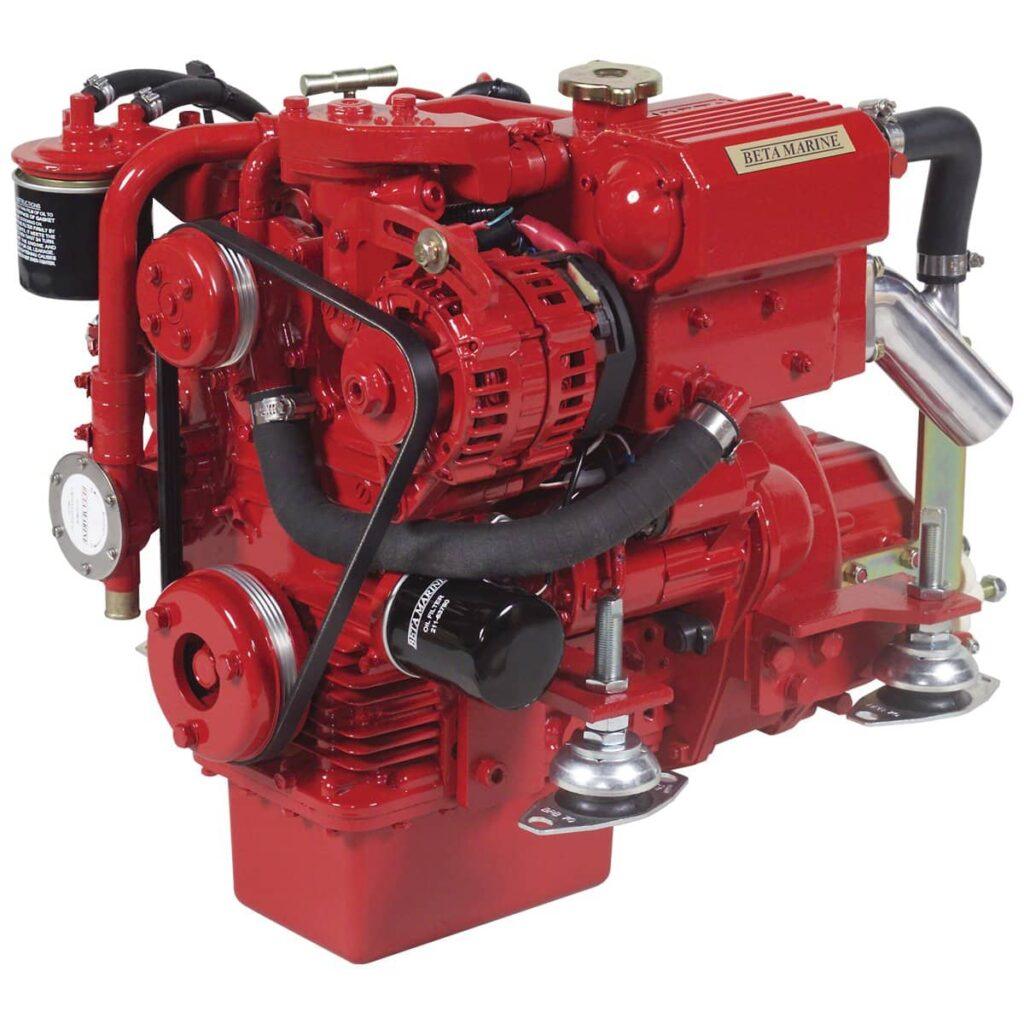
The BETA 16 marine diesel engine is a compact, efficient repower option for sailboats and small displacement vessels that need dependable inboard diesel power. Before choosing an engine, transmission, or saildrive setup, start with the Master Marine Diesel Troubleshooting Guide so performance problems are separated by fuel, cooling, electrical, transmission, and load before a repower decision is made.
805 Marine Mechanic supports BETA Marine engine sales, installation planning, diagnostics, and maintenance for vessels in Ventura, Oxnard, Channel Islands Harbor, and Santa Barbara. The BETA 16 is especially attractive for owners who want simple service access, low fuel use, quiet operation, and a compact footprint.
BETA 16 Marine Engine Overview
The BETA 16 is a naturally aspirated 2-cylinder diesel rated at approximately 16 hp at 3,600 rpm. It uses heat exchanger cooling, a standard 40-amp alternator, flexible mounts, an oil change pump, and a TMC40 transmission, making it a practical package for small sailboat repowers and auxiliary propulsion.
Owners comparing options can review our BETA Marine engine sales page for broader model selection. For official product support, the BETA Marine official website provides manufacturer information for engines, saildrives, manuals, and installation resources.
Key BETA 16 Specifications
| Specification | BETA 16 Detail |
|---|---|
| Power | 16 hp / 12.5 kW at 3,600 rpm |
| Cylinders | 2-cylinder naturally aspirated diesel |
| Displacement | 599 cc / 37 cubic inches |
| Weight | Approx. 95 kg / 210 lbs |
| Transmission | TMC40 standard |
| Alternator | 40 amp standard |
Standard Equipment and Upgrade Options
The BETA 16 includes useful standard equipment such as flexible mounts, shaft coupling, ABV instrument panel, heat exchanger cooling, high-inertia flywheel, shallow oil pan, stop solenoid, and standard exhaust injection elbow. These features help make the engine easier to install and easier to maintain in tight sailboat engine compartments.
Popular upgrades include a serpentine belt alternator setup, 75-amp alternator, waterproof panels, and high-rise exhaust elbows for different hose sizes or installation heights. During repower planning, we compare the engine bed, exhaust route, cooling layout, panel location, and transmission clearance before recommending the correct setup.
Why the BETA 16 Works Well for Sailboats
Compact Size and Practical Access
The BETA 16 fits many smaller vessels where engine-room space is limited. Good access matters because filters, belts, raw-water components, wiring, mounts, and transmission couplings all need future service.
Fuel Efficiency and Simple Operation
Because the BETA 16 is naturally aspirated and mechanically straightforward, it provides efficient auxiliary power without unnecessary complexity. For fuel-related reliability concerns, our fuel contamination and filtration issues center explains why clean fuel remains essential even on smaller engines.
Cooling System Reliability
Heat exchanger cooling protects the engine block from direct seawater exposure while still allowing effective temperature control. Maintenance should include raw-water pump checks, coolant condition, and routine inspection through services like marine seawater pump maintenance.
Installation Planning for the BETA 16
A successful installation begins before the old engine is removed. We inspect mount spacing, shaft height, coupling alignment, exhaust lift, seacock size, fuel supply, electrical wiring, and control-panel access. Marine installation work should follow safe service practices, and the ABYC standards list is a useful reference for marine electrical, fuel, exhaust, and propulsion-system safety.
Transmission compatibility also matters. If the vessel has shifting issues, shaft vibration, or gear concerns, our marine transmission service and repair page explains why gearbox condition and alignment should be verified before installation.
Maintenance Priorities After Installation
- Check oil and coolant levels regularly.
- Inspect belts, hoses, clamps, and mounts.
- Service fuel filters before restriction becomes a no-start issue.
- Inspect the raw-water pump and impeller seasonally.
- Confirm shaft alignment after the engine settles on mounts.
For scheduled service planning, use the marine diesel engine maintenance schedule. For saltwater operation, fresh water flushing can help reduce corrosion and buildup when installed and used correctly.
Local BETA 16 Service and Repower Support
805 Marine Mechanic supports BETA 16 owners throughout Ventura, Oxnard, Channel Islands Harbor, and Santa Barbara. For local service, visit mobile marine mechanic Ventura, Channel Islands marine services, or Santa Barbara marine services.
If you are comparing a BETA 16 repower with larger options, review your vessel’s weight, propeller size, shaft angle, expected cruise load, and electrical demand. A well-planned BETA 16 installation can deliver quiet, economical, and dependable auxiliary power for years of coastal sailing.
Frequently Asked Questions
What is the BETA 16 marine engine?
The BETA 16 is a compact 2-cylinder marine diesel engine rated at about 16 horsepower. It is commonly used for small sailboat repowers and auxiliary propulsion.
How much horsepower does the BETA 16 produce?
The BETA 16 produces approximately 16 hp at 3,600 rpm. That makes it suitable for many smaller displacement sailboats and light auxiliary applications.
Is the BETA 16 naturally aspirated?
Yes, the BETA 16 is a naturally aspirated diesel engine. This keeps the design simple and easier to maintain compared with turbocharged engines.
What transmission comes with the BETA 16?
The standard transmission listed for this engine is the TMC40. Final transmission choice should always be confirmed against the vessel layout and propeller shaft requirements.
Is the BETA 16 good for sailboat repowers?
Yes, the BETA 16 is a strong option for smaller sailboat repowers. Its compact footprint, low weight, and service access make it practical for tight engine spaces.
What alternator comes standard on the BETA 16?
The BETA 16 is listed with a 40-amp standard alternator. Owners with heavier electrical loads may consider upgrade options during repower planning.
Can the BETA 16 use a higher-output alternator?
Yes, upgrade options may include larger alternators and serpentine belt systems. The correct setup depends on battery bank size, charging needs, and belt alignment.
Why does engine mount spacing matter?
Mount spacing determines whether the engine can fit the existing bed with minimal modification. Incorrect mount height or position can create shaft alignment problems.
Does the BETA 16 use heat exchanger cooling?
Yes, the BETA 16 is equipped with heat exchanger cooling. This helps protect the engine from direct seawater exposure while still controlling temperature.
How often should the seawater pump be inspected?
The seawater pump and impeller should be inspected at least seasonally. In saltwater use, early inspection helps prevent overheating and impeller debris problems.
What causes BETA 16 overheating?
Overheating can come from a worn impeller, clogged strainer, low coolant, blocked heat exchanger, or exhaust restriction. A trained technician should test the full cooling circuit before replacing parts.
Can the BETA 16 be paired with a saildrive?
BETA Marine offers saildrive-related solutions for certain engine ranges and applications. Compatibility should be confirmed with the vessel, saildrive leg, mounting base, and manufacturer guidance.
What should be checked before installing a BETA 16?
The engine beds, shaft alignment, exhaust height, fuel system, cooling system, and electrical layout should all be inspected. A proper installation plan reduces vibration, leaks, and service-access problems.
Do I need a high-rise exhaust elbow?
A high-rise elbow may be required when the exhaust layout needs additional water-intrusion protection. The correct elbow depends on hose size, engine height, and vessel exhaust geometry.
Is the BETA 16 easy to maintain?
Yes, the BETA 16 is designed with practical service access and common maintenance points. Regular oil, fuel, belt, coolant, and impeller checks are still essential.
Can 805 Marine Mechanic install a BETA 16?
805 Marine Mechanic can assist with BETA 16 repower planning, installation support, diagnostics, and service. Work is available for vessels in Ventura, Oxnard, Channel Islands Harbor, and Santa Barbara.
What areas do you service?
805 Marine Mechanic serves Ventura, Oxnard, Channel Islands Harbor, and Santa Barbara. Local service is focused on inboard marine diesel engines and related propulsion systems.
How do I know if my current engine should be replaced?
Replacement may make sense if repairs are frequent, parts are difficult to source, or the engine no longer matches your vessel needs. A diagnostic inspection should come before any repower decision.
Does freshwater flushing help a BETA 16?
Freshwater flushing can help reduce salt buildup in suitable raw-water circuits. It does not replace impeller checks, coolant service, zinc inspection, or heat exchanger maintenance.
How do I schedule BETA 16 service?
You can schedule service through the 805 Marine Mechanic contact page. Include your engine model, vessel location, symptoms, and any recent service history.
Schedule BETA 16 Engine Service
If you are planning a BETA 16 repower, comparing transmission options, or troubleshooting a small marine diesel, 805 Marine Mechanic can help with local service across Ventura, Oxnard, Channel Islands Harbor, and Santa Barbara.