
MAN Marine Engine Survey Checklist | Pre-Purchase Inspection Guide
A MAN marine engine survey checklist provides a structured inspection process that helps buyers evaluate engine condition before purchasing a vessel. While visual inspections can reveal obvious concerns, a comprehensive survey checklist helps ensure that cooling systems, fuel systems, turbochargers, electronic diagnostics, oil analysis, transmissions, and sea-trial performance are all properly evaluated. The goal is to identify expensive problems before ownership changes hands and provide a realistic assessment of buyer risk.
MAN Survey Navigation
Maintenance Record Review
The first step in any MAN marine engine survey is reviewing available maintenance records. Service documentation often provides valuable insight into how the engines have been maintained throughout their operating life.
- Engine-hour documentation
- Service records
- Oil-analysis history
- Cooling-system service records
- Fuel-system maintenance history
- Turbocharger service records
- Previous survey reports
Engine Identification Verification
Surveyors should verify engine serial numbers, horsepower ratings, engine models, and hour-meter readings. Accurate identification is critical for maintenance planning, service history review, and future parts sourcing.
- Model verification
- Serial number verification
- Horsepower confirmation
- Engine-hour documentation
- Installation review
Electronic Diagnostic Evaluation
Modern MAN engines rely heavily on electronic controls. Diagnostic review often reveals active faults, stored fault history, sensor failures, communication issues, and engine protection events that may not be obvious during a visual inspection.
- Stored fault codes
- Active alarms
- Sensor health
- Engine operating history
- Protection events
- Communication faults
Cooling-System Inspection
Cooling systems remain one of the most important portions of a MAN marine engine survey. Proper temperature control is essential for engine longevity and performance.
- Heat exchanger inspection
- Coolant condition evaluation
- Raw-water pump inspection
- Thermostat evaluation
- Charge-air cooler inspection
- Cooling-system leak inspection
MAN Marine Engine Cooling System Maintenance
Aftercooler Evaluation
Aftercooler condition is one of the most important items on a MAN survey checklist. Deferred aftercooler maintenance can lead to reduced performance, elevated temperatures, airflow restrictions, and costly repairs.
- Aftercooler service history
- Corrosion inspection
- Airflow evaluation
- Temperature concerns
- Boost-efficiency review
MAN Aftercooler Failure Authority Guide
Fuel-System Inspection
Fuel contamination remains one of the leading causes of marine diesel reliability issues. Survey inspections should evaluate both fuel quality and overall fuel-system condition.
- Fuel quality inspection
- Water contamination review
- Fuel-filter inspection
- Tank contamination review
- Injector symptom evaluation
MAN Marine Engine Fuel System Upgrade
Turbocharger Inspection
Turbochargers directly affect horsepower, acceleration, fuel efficiency, and smoke output. Survey inspections should carefully evaluate turbocharger condition and charge-air system performance.
- Turbocharger condition
- Boost leaks
- Charge-air cooler condition
- Airflow restrictions
- Exhaust-temperature clues
Oil Analysis
Oil analysis is included with every MAN marine engine survey and frequently identifies wear patterns or contamination concerns that may not be visible during a physical inspection.
- Wear metals
- Fuel dilution
- Coolant contamination
- Soot loading
- Lubricant condition
Cooling-System Pressure Testing
Pressure testing helps identify hidden cooling-system concerns before purchase.
- Cooling-system leaks
- Weak hoses
- Failing clamps
- Cooler concerns
- System integrity issues
Sea-Trial Preparation
Every MAN marine engine survey checklist should culminate with a complete sea trial. Many engine problems only become visible under actual vessel load.
- Cold-start evaluation
- Idle quality
- Cruise RPM testing
- Wide-open-throttle testing
- Temperature monitoring
- Oil-pressure monitoring
- Smoke evaluation
- Turbocharger response
- Diagnostic monitoring
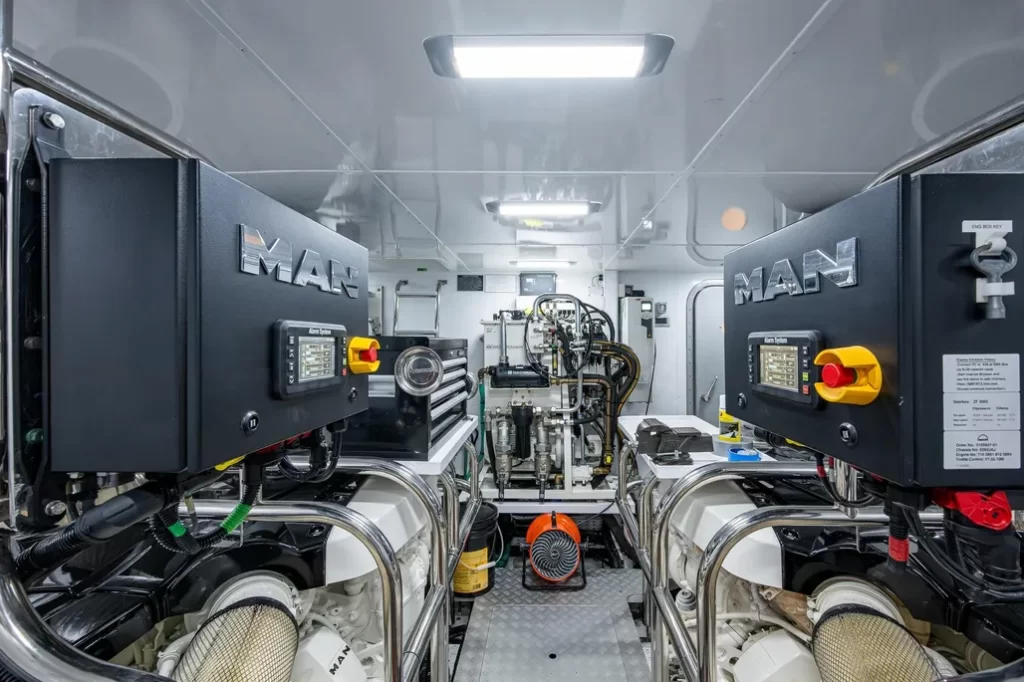
Pershing Yacht 7X Powered by Twin MAN V12 1800 Diesel Engines
Checklist Summary
- Maintenance records reviewed
- Engine identification verified
- Diagnostics reviewed
- Cooling system inspected
- Aftercoolers evaluated
- Fuel system inspected
- Turbochargers evaluated
- Oil analysis completed
- Pressure testing completed
- Sea trial performed
External Resources
Service Areas
805 Marine Diesel Mechanic performs MAN marine engine surveys throughout Ventura Harbor, Channel Islands Harbor, Oxnard, Santa Barbara Harbor, Marina del Rey, Malibu, and Port Hueneme.
MAN Marine Engine Survey Checklist FAQ
What is a MAN marine engine survey checklist?
A MAN marine engine survey checklist is a structured inspection process used to evaluate engine condition, diagnostics, cooling systems, fuel systems, turbochargers, oil analysis, pressure testing, and sea-trial performance before vessel purchase.
Why is a survey checklist important?
A checklist helps ensure that critical systems are evaluated consistently and reduces the risk of overlooking expensive maintenance or repair concerns before purchase.
What maintenance records should be reviewed?
Service records, oil-analysis history, cooling-system maintenance records, fuel-system service records, turbocharger maintenance history, diagnostic reports, and previous survey reports should all be reviewed when available.
Why is engine identification verification important?
Verifying engine models, serial numbers, horsepower ratings, and engine hours helps confirm vessel equipment and assists with future maintenance planning and parts sourcing.
Are electronic diagnostics included in the survey?
Yes. Diagnostic review is a critical part of modern MAN engine surveys and can reveal active faults, stored fault history, sensor concerns, communication problems, and engine protection events.
What cooling-system components are inspected?
Heat exchangers, charge-air coolers, raw-water pumps, thermostats, coolant condition, hoses, clamps, and overall cooling-system integrity are evaluated.
Why are aftercoolers important on MAN engines?
Aftercoolers improve intake-air density and engine efficiency. Deferred maintenance can reduce performance, increase operating temperatures, and contribute to engine damage.
What fuel-system items are inspected?
Fuel quality, water contamination, filtration systems, tank condition, injector symptoms, and fuel-delivery performance are evaluated during the survey.
Why are turbochargers inspected?
Turbochargers directly affect horsepower, acceleration, fuel economy, smoke output, exhaust temperatures, and overall engine performance.
What turbocharger issues are commonly discovered?
Turbocharger wear, boost leaks, intake restrictions, charge-air cooler contamination, and reduced boost performance are among the most common findings.
Is oil analysis included?
Yes. Oil analysis is included and helps identify wear metals, fuel dilution, coolant contamination, soot loading, and lubricant-condition concerns.
Can oil analysis reveal hidden engine problems?
Yes. Oil analysis frequently identifies abnormal wear patterns and contamination concerns before visible symptoms develop.
Why is cooling-system pressure testing performed?
Pressure testing helps identify hidden leaks, cooler issues, weak hoses, failing clamps, and cooling-system integrity concerns before purchase.
Why is a sea trial important?
Many MAN engine concerns only become visible under actual vessel load. Sea trials help identify overheating, RPM limitations, vibration concerns, turbocharger deficiencies, and diagnostic alarms.
What is evaluated during the sea trial?
Cold-start behavior, idle quality, cruise RPM operation, wide-open-throttle performance where appropriate, temperatures, oil pressure, turbocharger response, vibration levels, smoke output, and diagnostic activity are evaluated.
What does failure to reach rated RPM indicate?
Failure to reach rated RPM may indicate fuel restrictions, turbocharger deficiencies, cooling-system concerns, hull fouling, propeller overload, electronic derates, or engine-performance limitations.
Can a survey identify overheating risks?
Yes. Cooling-system inspections, diagnostics, pressure testing, oil analysis, and sea-trial observations frequently reveal overheating risks before purchase.
Can a survey identify deferred maintenance?
Yes. Deferred maintenance involving cooling systems, aftercoolers, fuel systems, turbochargers, injectors, and electronic controls is one of the most common survey findings.
Do you perform MAN marine engine surveys in Marina del Rey?
Yes. Marina del Rey is one of our active MAN marine engine survey service areas.
How do I schedule a MAN marine engine survey?
Call 805-774-0637 or use the contact page to discuss vessel location, engine model, survey timing, diagnostic access, and sea-trial availability.