
MAN Marine Engine Surveys | Pre-Purchase Diesel Engine Inspections
MAN marine diesel engines are among the most popular propulsion platforms found in luxury yachts, sportfishing vessels, express cruisers, commercial vessels, and performance-oriented marine applications. Known for strong acceleration, compact design, advanced electronic controls, and excellent power density, MAN engines require specialized survey procedures before purchase. A professional MAN marine engine survey helps buyers identify cooling-system concerns, fuel-system problems, electronic diagnostic faults, turbocharger issues, aftercooler deficiencies, oil-analysis abnormalities, transmission concerns, and sea-trial performance risks before ownership changes hands.
MAN Survey Navigation
- Marine Engine Survey
- Common MAN Marine Engine Survey Findings
- MAN Marine Engine Survey Checklist
- MAN Marine Engine Survey Sea Trial Guide
- MAN R6 Marine Engine Survey
- MAN V8 Marine Engine Survey
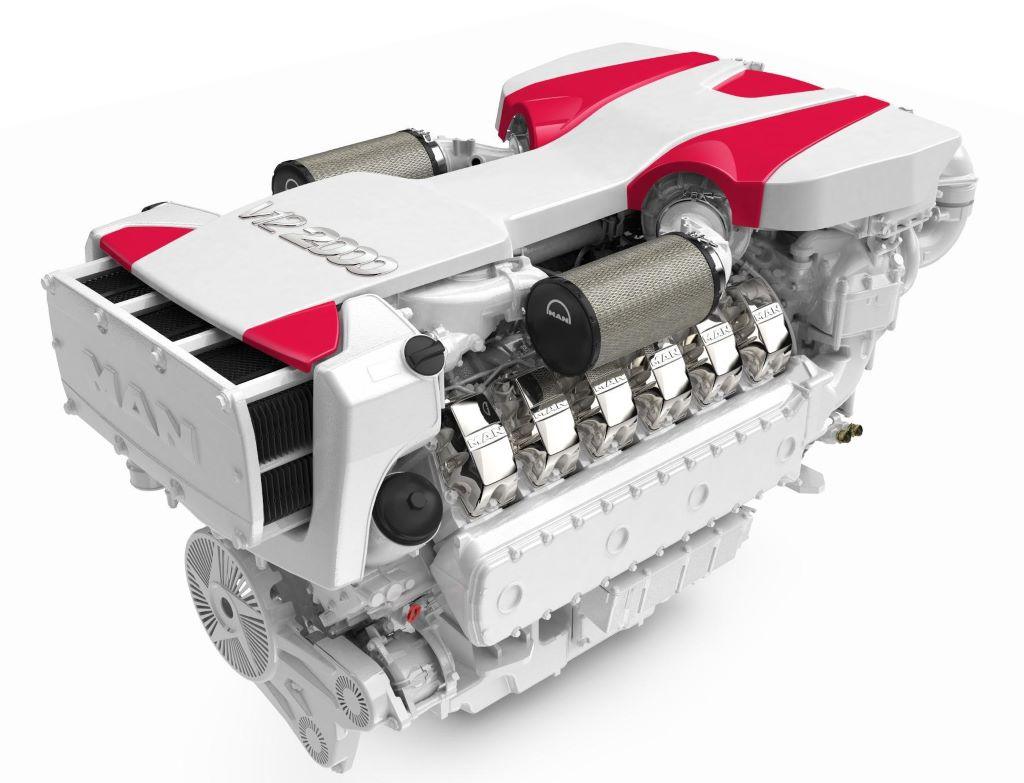
- MAN V12 Marine Engine Survey
MAN Technical Resources
- MAN Marine Services
- MAN Marine Diesel FAQ
- MAN Marine Engine Cooling System Maintenance
- MAN Marine Engine Fuel System Upgrade
- MAN Aftercooler Failure Authority Guide
Why MAN Engines Require Specialized Surveys
MAN marine engines are high-output electronically managed diesel platforms that combine sophisticated engine controls, turbocharging, charge-air cooling, fuel-management systems, and advanced monitoring systems. Proper surveys evaluate both mechanical condition and electronic operating history.
- Electronic diagnostic history
- Engine operating data review
- Cooling-system condition
- Fuel-system condition
- Turbocharger condition
- Aftercooler condition
- Oil-analysis results
- Sea-trial performance
- Transmission evaluation
- Buyer-risk assessment
MAN Engines Commonly Surveyed
- MAN R6 Marine Engine Survey
- MAN V8 Marine Engine Survey
- MAN V12 Marine Engine Survey
- MAN D2842 Marine Engine Survey
- MAN D2862 Marine Engine Survey
- MAN Common Rail Marine Engine Survey
MAN Survey Silo
- Common MAN Marine Engine Survey Findings
- MAN Marine Engine Survey Checklist
- MAN Marine Engine Survey Sea Trial Guide
- MAN R6 Marine Engine Survey
- MAN V8 Marine Engine Survey
- MAN V12 Marine Engine Survey
MAN Performance Yacht Applications
Many high-performance luxury yachts rely on MAN propulsion packages. Survey inspections help buyers verify actual engine condition and maintenance history before purchasing premium vessels.
Pershing Yacht 7X Powered by Twin MAN V12 1800 Diesel Engines
Cross-Brand Marine Engine Survey Resources
- MTU Marine Engine Surveys
- Caterpillar Marine Engine Surveys
- Cummins Marine Engine Surveys
- Volvo Penta Marine Engine Surveys
- Yanmar Marine Engine Surveys
External Resources
Service Areas
805 Marine Diesel Mechanic performs MAN marine engine surveys throughout Ventura Harbor, Channel Islands Harbor, Oxnard, Santa Barbara Harbor, Marina del Rey, Malibu, and Port Hueneme.
MAN Marine Engine Surveys FAQ
Why should I perform a MAN marine engine survey before purchasing a vessel?
A MAN survey helps identify cooling-system issues, fuel-system problems, electronic diagnostic faults, turbocharger concerns, aftercooler problems, oil-analysis abnormalities, and sea-trial performance risks before ownership changes hands.
What is included in a MAN marine engine survey?
A complete survey includes visual inspection, maintenance-record review, electronic diagnostic review, cooling-system evaluation, fuel-system inspection, turbocharger inspection, aftercooler evaluation, oil analysis, pressure testing, sea-trial evaluation, and buyer-risk assessment.
Are electronic diagnostics important on MAN engines?
Yes. Modern MAN engines rely heavily on electronic engine management systems, and diagnostic review can reveal active faults, stored fault history, alarm events, derate conditions, and sensor issues.
Why is cooling-system inspection important?
Cooling-system condition directly affects reliability, operating temperature, and long-term engine life. Heat exchangers, raw-water pumps, charge-air coolers, aftercoolers, coolant condition, hoses, and clamps should all be evaluated.
Why are aftercoolers inspected during a MAN survey?
Aftercoolers directly affect intake-air temperature, power output, smoke control, and long-term engine health. Deferred aftercooler maintenance can create expensive repair risk.
What fuel-system issues are commonly found?
Fuel contamination, water intrusion, microbial growth, restricted filters, injector concerns, and fuel-delivery deficiencies are common MAN survey findings.
Why are turbochargers inspected?
Turbochargers directly affect horsepower, acceleration, smoke output, exhaust temperature, and overall engine performance.
Is oil analysis included?
Yes. Oil analysis helps identify wear metals, fuel dilution, coolant contamination, soot loading, and lubricant-condition concerns that may not be visible during inspection.
Why is a sea trial important?
Many MAN engine concerns only become visible under actual vessel load. Sea trials help identify overheating, low-power conditions, vibration issues, turbocharger deficiencies, RPM limitations, and diagnostic alarms.
What MAN engines are commonly surveyed?
Common survey platforms include MAN R6, MAN V8, MAN V10, MAN V12, D2842, D2862, and common-rail MAN marine diesel engines.
Do you survey MAN R6 engines?
Yes. MAN R6 engines can be evaluated with diagnostics, cooling-system inspection, fuel-system inspection, aftercooler review, oil analysis, pressure testing, and sea-trial performance checks.
Do you survey MAN V8 engines?
Yes. MAN V8 engines can be surveyed during pre-purchase inspections with attention to diagnostics, cooling systems, fuel systems, turbochargers, oil analysis, and sea-trial operation.
Do you survey MAN V12 engines?
Yes. MAN V12 engines can be evaluated during yacht pre-purchase surveys with attention to electronic diagnostics, aftercoolers, cooling systems, fuel systems, turbochargers, and performance under load.
Can a survey identify deferred maintenance?
Yes. Deferred maintenance is one of the most common survey findings and often includes overdue cooling-system service, fuel-system maintenance, aftercooler service, turbocharger inspections, and diagnostic-related repairs.
Can a survey identify overheating risks?
Yes. Cooling-system inspection, pressure testing, diagnostics, oil analysis, and sea-trial observations frequently reveal overheating risks before purchase.
Are MAN marine engines reliable?
Yes. MAN engines are widely respected for performance, power density, fuel efficiency, and reliability when properly maintained.
Do you perform MAN surveys in Marina del Rey?
Yes. Marina del Rey is one of our active MAN marine engine survey service areas.
Do you perform MAN surveys in Ventura Harbor and Channel Islands Harbor?
Yes. Ventura Harbor, Channel Islands Harbor, Oxnard, Santa Barbara Harbor, Marina del Rey, Malibu, and Port Hueneme are included when scheduling allows.
How do I schedule a MAN marine engine survey?
Call 805-774-0637 or use the contact page to discuss vessel location, engine model, diagnostic access, survey timing, and sea-trial availability.
Schedule a MAN Marine Engine Survey
Need a MAN Marine Engine Survey?
805 Marine Diesel Mechanic performs MAN marine engine surveys throughout Ventura Harbor, Channel Islands Harbor, Oxnard, Santa Barbara Harbor, Marina del Rey, Malibu, and Port Hueneme.