
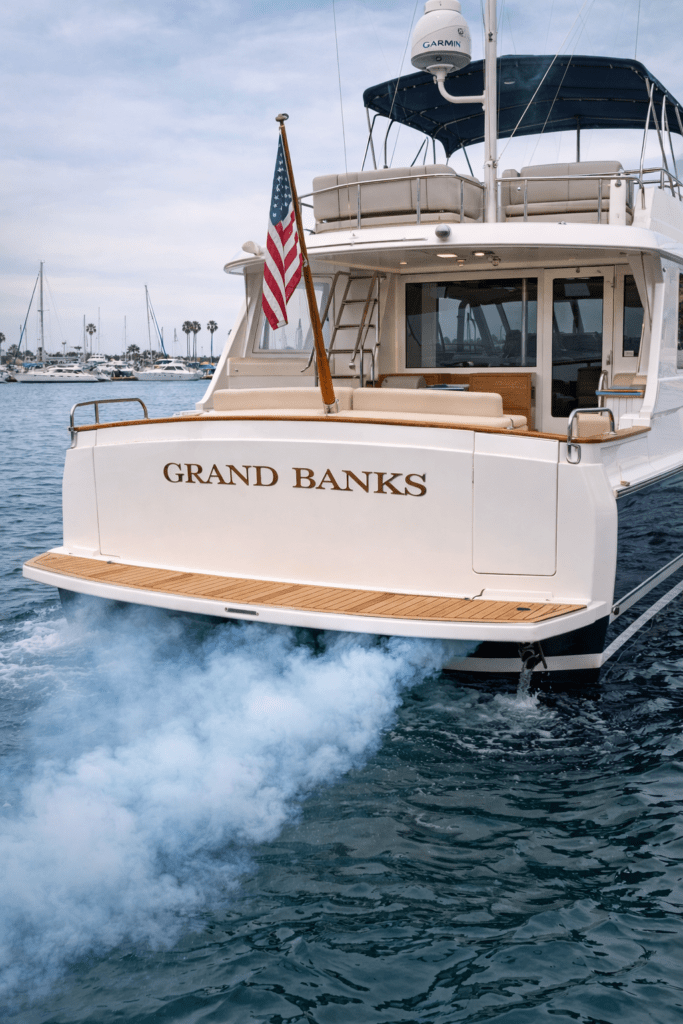
Why Does My Boat Engine Blow Blue Smoke? (Marine Diesel Oil Burning Guide)
If your boat is producing blue or bluish-gray smoke from the exhaust, that’s a clear sign of one thing: engine oil is being burned in the combustion process.
After 30+ years working on inboard marine diesel engines throughout Ventura, Oxnard, Channel Islands Harbor, and Santa Barbara, we can tell you that blue smoke is one of the most important early warning signs of internal engine wear or turbo-related issues.
Unlike black smoke (fuel) or white smoke (combustion), blue smoke is directly tied to oil entering places it shouldn’t be.
Start with the full diagnostic system here:
Marine Diesel Troubleshooting Guide
What Blue Smoke Means
Blue smoke occurs when engine oil is burned along with fuel. This usually indicates oil is leaking past seals, rings, or guides into the combustion chamber.
Modern marine diesel engines from manufacturers like
Caterpillar Marine and
Cummins Marine Engines are designed to minimize oil consumption — so visible blue smoke is always a sign of a problem.
Common Blue Smoke Symptoms
- Blue or bluish-gray exhaust smoke
- Oil consumption increasing over time
- Smoke worse at startup or idle
- Oil residue in exhaust outlet
- Fouled turbo or intercooler
👉 Related: Black Smoke Guide
👉 Related: White Smoke Guide
1. Worn Piston Rings (Most Common Cause)
Piston rings seal combustion pressure and control oil. When they wear out, oil leaks into the combustion chamber.
- High engine hours
- Poor maintenance history
- Cylinder wear
👉 Related: Mechanical Failure Diagnostics
2. Valve Guide or Valve Seal Wear
Oil can enter the cylinder through worn valve guides or seals.
- Blue smoke at startup
- Smoke after idle periods
- Oil dripping into combustion chamber
3. Turbocharger Oil Seal Failure
Turbochargers rely on oil lubrication. If seals fail, oil can enter the intake or exhaust.
- Oil in intake piping
- Blue smoke under load
- Loss of turbo efficiency
👉 Related: Turbo Systems Diagnosis Center
4. Excessive Crankcase Pressure (Blow-By)
Blow-by occurs when combustion gases leak past piston rings, increasing crankcase pressure and forcing oil into the intake system.
- Oil leaks
- Breather smoke
- Reduced engine efficiency
5. Overfilled Engine Oil
Too much oil can be pulled into the intake system and burned.
- Recent oil change
- Incorrect oil level
6. Worn Cylinder Walls
Cylinder wear reduces sealing ability and allows oil to pass into combustion.
- High-hour engines
- Poor lubrication history
7. Poor Engine Break-In or Long Idle Operation
Engines that idle excessively or were not broken in properly may develop oil consumption issues.
- Glazing of cylinder walls
- Incomplete ring seating
8. Intake System Oil Contamination
Oil entering the intake from breather systems or turbo failure can be burned during combustion.
9. Fuel Dilution of Oil
In some cases, fuel contamination of oil reduces viscosity, allowing oil to pass seals more easily.
10. Engine Wear Over Time (Normal Aging)
Older engines — especially long-running platforms like Detroit Diesel or Lugger — may develop gradual oil consumption.
Lugger engines are known for durability and serviceability even under heavy use
(Lugger Marine Engine Overview)
Real-World Diagnosis (Channel Islands Harbor Case)
We recently inspected a Grand Banks vessel in Channel Islands Harbor producing blue smoke at idle.
The issue was worn turbo seals combined with moderate piston ring wear.
After turbo replacement and compression evaluation, the engine returned to clean operation.
Step-By-Step Professional Diagnosis
- Check oil level and condition
- Inspect turbocharger for oil leakage
- Perform compression test
- Inspect crankcase ventilation system
- Check for blow-by
- Inspect intake and intercooler for oil
👉 Related: Power Loss Guide
👉 Related: Overheating Guide
Why Blue Smoke Should Not Be Ignored
Oil burning can lead to:
- Engine damage
- Turbo failure
- Increased operating costs
- Loss of performance
Professional Marine Diesel Diagnosis in Ventura
At 805 Marine Diesel Mechanic, we specialize in diagnosing oil consumption and internal engine issues with over 30 years of experience.
We provide mobile service throughout Ventura, Oxnard, Channel Islands Harbor, and Santa Barbara.
Blue Smoke Is an Oil-Path Problem — Not Just a Smoke Issue
Blue smoke is one of the most direct diagnostic signals in a marine diesel engine because it almost always traces back to oil entering the combustion process or exhaust stream. But the key to accurate diagnosis is understanding how that oil is getting there and when the symptom appears.
For example, blue smoke that appears only at startup often points toward oil draining into the combustion area while the engine sits. Blue smoke during long idle can indicate breather or oil carryover behavior. Blue smoke under load frequently shifts the focus toward turbocharger oil control, crankcase pressure, or deeper wear conditions.
That timing-based approach is what separates correct diagnosis from unnecessary parts replacement. Instead of assuming “engine wear,” trained technicians follow the oil path through the engine system — from crankcase to breather, turbo, intake, and combustion chamber.
Advanced Blue Smoke Diagnostic Patterns
- Startup blue smoke that clears quickly: valve guides, oil seepage, or residual oil in cylinders during shutdown.
- Idle-only blue smoke: crankcase ventilation restriction, oil carryover, or long low-load operation patterns.
- Blue smoke under throttle or load: turbo oil seal failure, oil drain restriction, or increased crankcase pressure forcing oil into intake airflow.
- Blue smoke + rising oil consumption: confirms active oil loss and requires deeper inspection.
- Blue smoke + low RPM or poor performance: may indicate turbo inefficiency or broader system imbalance.
For comparison with other smoke types, see:
Marine Diesel Smoke Diagnosis Guide,
Black Smoke Under Load, and
White Smoke at Startup.
How Oil Enters the Combustion Process
Oil can enter combustion through several mechanical and airflow-related paths. Understanding these pathways helps narrow down root cause quickly:
- Past piston rings: worn rings or cylinder walls allow oil bypass into combustion.
- Through valve guides: oil leaks into cylinders during shutdown or idle.
- Through turbocharger seals: oil enters intake or exhaust depending on failure point.
- Via crankcase ventilation: excess pressure pushes oil vapor into intake airflow.
- From overfilled oil: excessive oil is pulled into intake or combustion.
This is why blue smoke is often tied to multiple systems — not just one failed component.
When Blue Smoke Becomes a Serious Problem
Light blue smoke at startup may not always indicate immediate failure. However, the condition becomes more serious when:
- Oil consumption increases noticeably
- Smoke worsens under load
- Engine loses RPM or efficiency
- Oil residue appears in intake or exhaust
- Symptoms are getting progressively worse
At that point, the issue is no longer just a visual symptom — it becomes a reliability and engine longevity concern.
Boat Engine Blowing Blue Smoke — FAQ
What does blue smoke mean on a boat engine?
Is blue smoke always engine wear?
Why does my engine smoke blue at startup?
Why is blue smoke worse at idle?
Why does blue smoke increase under load?
Can turbo failure cause blue smoke?
Can overfilled oil cause blue smoke?
Can crankcase pressure cause oil burning?
Do worn piston rings cause blue smoke?
Can valve guides cause blue smoke?
Can long idle operation cause blue smoke?
Can injector problems look like blue smoke?
What if I see oil in intake piping?
Is blue smoke dangerous?
Can blue smoke reduce engine performance?
Should I keep running with blue smoke?
When should I call a mechanic?
Can blue smoke lead to turbo failure?
What is the first step in diagnosing blue smoke?
Where should I continue troubleshooting?
805 Marine Diesel Mechanic provides mobile oil-consumption, turbo, and internal engine diagnostics throughout Ventura, Oxnard, Channel Islands Harbor, and Santa Barbara.