
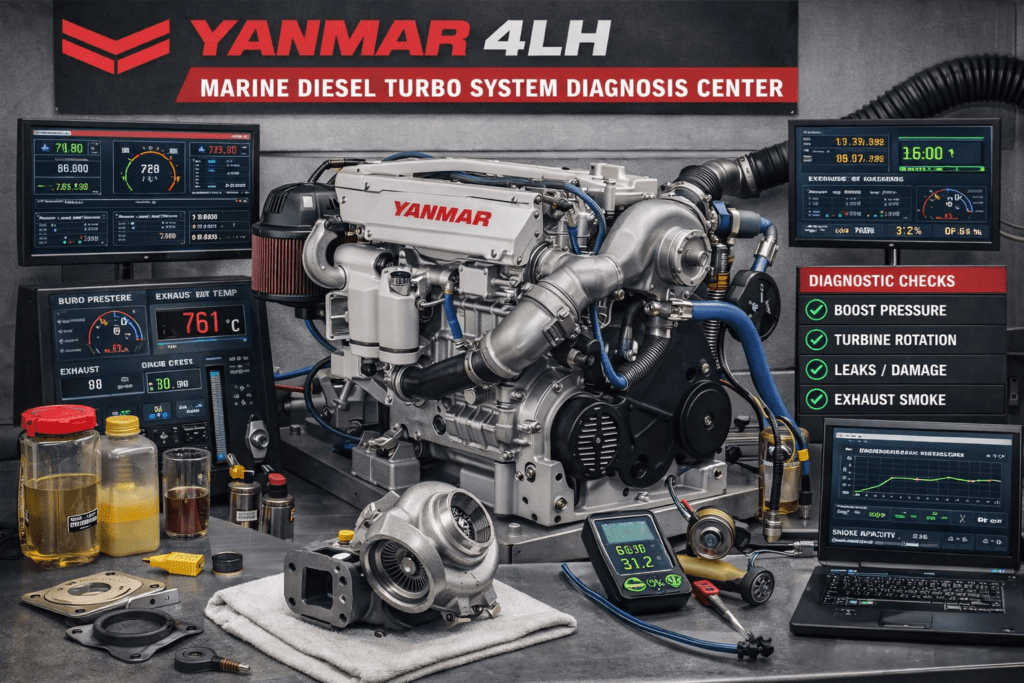
Yanmar 4LH Marine Diesel Turbocharger Problems: Complete Turbo System Diagnosis Guide
The Yanmar 4LH marine diesel engine is a widely used turbocharged diesel platform found in sportfishing boats, cruising vessels, and commercial marine applications. Turbochargers allow these engines to produce significantly more horsepower by forcing additional air into the combustion chambers.
When turbocharger problems occur, engine performance can decline rapidly. Loss of boost pressure, excessive exhaust smoke, and reduced RPM are often the first signs of turbo system issues.
At 805 Marine Diesel Mechanic, we diagnose turbocharger and air intake system problems throughout Ventura, Oxnard, Channel Islands Harbor, and Santa Barbara. With over 30 years of marine diesel experience, we evaluate boost pressure, airflow restrictions, and turbocharger mechanical condition to identify the cause of performance problems.
This article is part of our complete troubleshooting hub:
Master Marine Diesel Troubleshooting Guide
Schedule Turbocharger Diagnosis
How Marine Diesel Turbochargers Work
Turbochargers use exhaust gas energy to spin a turbine wheel connected to a compressor. This compressor forces additional air into the engine, allowing more fuel to burn efficiently and increasing engine power.
The Yanmar 4LH turbo system typically includes:
- Exhaust-driven turbocharger
- Compressor housing
- Charge air system
- Intercooler or aftercooler
- Air intake filtration system
If any component in this system becomes restricted or damaged, engine performance will be affected.
Common Yanmar 4LH Turbocharger Symptoms
Turbo system problems typically produce noticeable engine performance symptoms.
- Loss of engine power
- Reduced maximum RPM
- Black exhaust smoke
- Whistling or abnormal turbo noises
- Slow acceleration
Performance issues connected to turbo problems can also be investigated here:
Low Power Loss of RPM Diagnosis Center
Boost Pressure Loss
Turbochargers must generate adequate boost pressure for proper engine performance. If boost pressure drops, the engine receives insufficient airflow for efficient combustion.
Common boost pressure problems include:
- Worn turbocharger bearings
- Air leaks in charge air hoses
- Loose intake connections
- Intercooler restrictions
Low boost pressure almost always results in power loss.
Air Intake Restrictions
Restricted airflow entering the turbocharger can significantly reduce engine performance.
Common intake restrictions include:
- Clogged air filters
- Blocked intake ducts
- Collapsed air hoses
- Debris entering the intake system
Maintaining clean air filters is critical for proper turbocharger operation.
Turbocharger Mechanical Failure
Over time turbocharger components may wear due to high operating speeds and temperatures.
Signs of turbocharger failure include:
- Excessive shaft play
- Oil leakage into intake system
- Metal debris inside compressor housing
- Unusual turbocharger noise
If the turbocharger fails completely, the engine may lose most of its power.
Fuel System Interaction with Turbo Performance
Turbocharger performance must work together with the fuel injection system. If fuel delivery exceeds available airflow, incomplete combustion may occur.
Fuel system issues can also contribute to smoke and turbo performance problems.
Cooling System Influence on Turbocharger Health
Turbochargers operate under extreme heat. Cooling system restrictions can increase exhaust temperatures and accelerate turbocharger wear.
Cooling system issues can be explored here:
Cooling System Diagnosis Center
Professional Turbo System Diagnosis
Diagnosing turbocharger problems requires inspecting both airflow and fuel delivery systems.
Our diagnostic process typically includes:
- Boost pressure measurement
- Turbo shaft play inspection
- Air intake restriction testing
- Charge air leak inspection
- Exhaust temperature analysis
Advanced diagnostic services are also available here:
Computerized Marine Engine Survey Diagnostics Center
Request Turbocharger Inspection
Yanmar 4LH Marine Diesel Service in Ventura & Channel Islands Harbor
805 Marine Diesel Mechanic provides Yanmar turbocharger diagnostics and repair services throughout:
- Ventura Harbor
- Channel Islands Harbor
- Oxnard
- Santa Barbara
If your Yanmar 4LH marine diesel engine is experiencing loss of boost pressure, excessive smoke, or reduced RPM, professional diagnostics can quickly determine the cause.
Contact 805 Marine Diesel Mechanic
Yanmar 4LH Turbocharger FAQ
Turbocharger failure is often caused by oil starvation, excessive heat, contaminated air intake systems, or mechanical wear.
Common signs include power loss, black exhaust smoke, unusual turbo noises, and reduced boost pressure.
Yes. If the turbo cannot provide adequate airflow, incomplete combustion may produce black exhaust smoke.
Technicians inspect boost pressure, airflow restrictions, turbo shaft condition, and exhaust temperatures.