
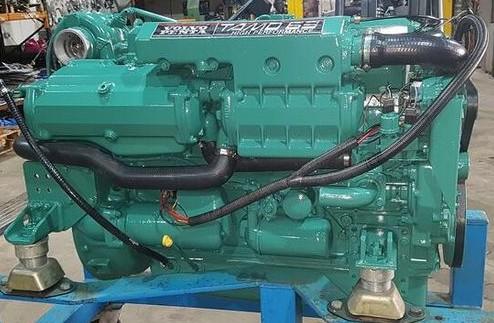
ZF 220A
Sea Trial
Oil Analysis
Conducted by:
Jeff Lendall & Sons – 805 Marine Diesel Mechanic
Official #: WMA24013J798
Vessel Length: 38.58 FT
Year: 2003 Wellcraft
This survey documents the operational testing, sea trial observations, drivetrain findings, cooling-system inspection, turbocharger condition, oil analysis review, and repair recommendations for the propulsion systems aboard this 2003 Wellcraft.
ENGINE 1
Make: Volvo Penta
Model: TAMD63P-A
Type: Inboard
Power: 370 HP
Fuel: Diesel
Hours: 1033
Serial: 2061190898
Transmission: ZF 220A
Serial: 37435L
ENGINE 2
Make: Volvo Penta
Model: TAMD63P-A
Type: Inboard
Power: 370 HP
Fuel: Diesel
Hours: 1033
Serial: 2061190897
Transmission: ZF 220A
Serial: 37434L
Engine Room Systems Inspection
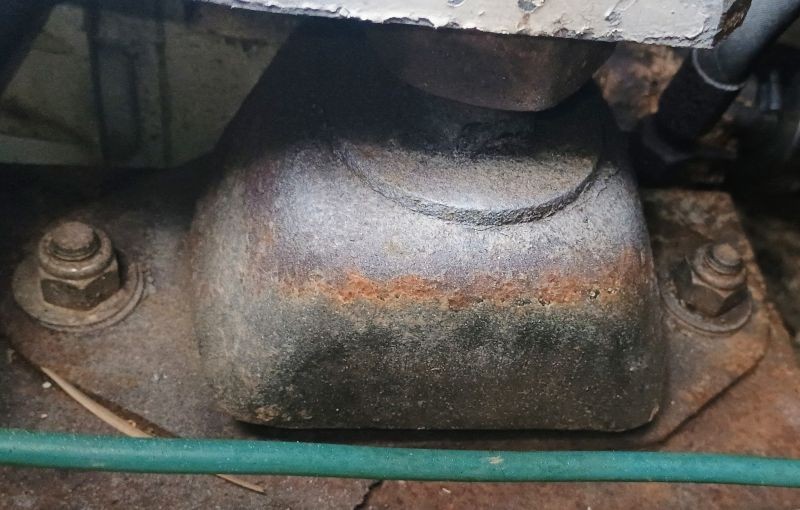
All 8 mounts show wear and require replacement.
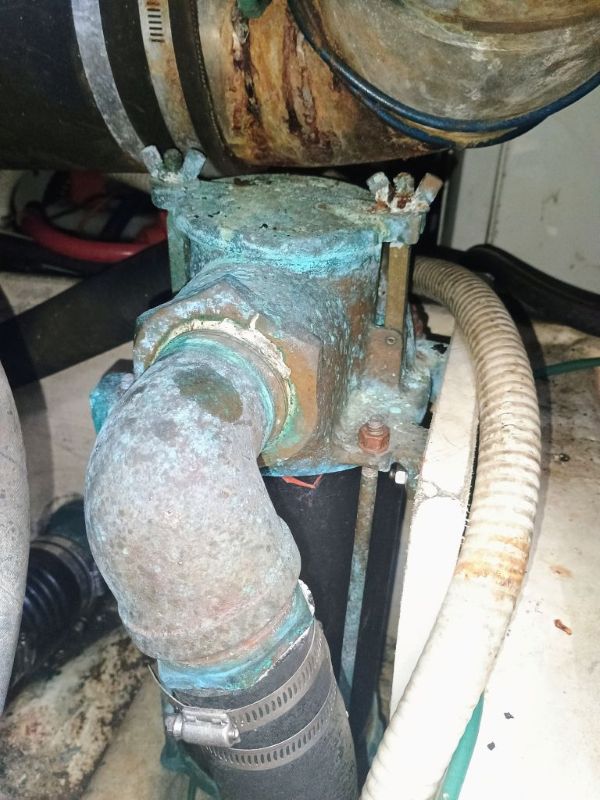
Excessive shaft play – rebuild or replacement required.
SEA TRIAL RESULTS
| Engine Start | Engines started cleanly without excessive cranking |
| Exhaust Smoke | Minimal smoke observed |
| Cooling Water Discharge | Cooling water discharge normal |
| Instrument Panel | Electrical fault present – inspection recommended |
| Steering System | Steering responsive |
| Transmission Operation | Smooth engagement |
| Backdown Test | Satisfactory |
WOT PERFORMANCE
WOT tested at 2600 RPM for 2 minutes. Engine performed clean with no smoke and strong acceleration.
Slight RPM loss from rated 2800 likely due to worn turbochargers.
Operating temperature stable at 195°F.
RECOMMENDATIONS
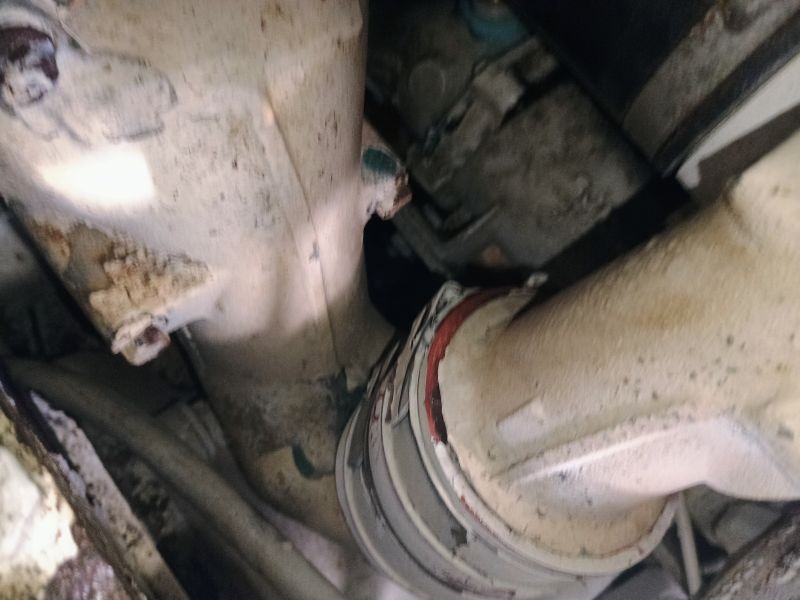
- Turbochargers rebuild/replace
- Exhaust hose clamps replace
- Engine mounts replace
FINAL SURVEY SUMMARY
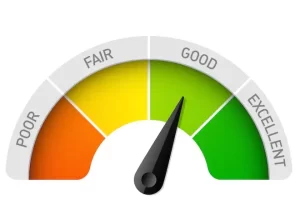
Overall Rating: GOOD – Engines and engine room appear maintained with noted service items.
1. Are Volvo Penta TAMD63P-A engines reliable?
Yes, they are considered very durable marine diesel engines when properly maintained.
2. What does turbocharger shaft play mean?
It indicates internal bearing wear and typically requires rebuild or replacement.
3. Is 2600 RPM WOT acceptable?
It is slightly below rated 2800 RPM and indicates minor performance loss.
4. Why are engine mounts important?
They control vibration and alignment. Worn mounts can lead to drivetrain damage.
5. What causes worn engine mounts?
Age, vibration cycles, and oil contamination.
6. Should turbochargers be replaced in pairs?
Yes, for balanced engine performance.
7. What does normal exhaust smoke indicate?
Efficient combustion and proper fuel-air balance.
8. Why service seacocks regularly?
Saltwater corrosion can cause failure or restricted cooling flow.
9. What is a Racor filter?
A primary fuel filter/water separator for diesel engines.
10. How important is oil analysis?
It reveals internal engine wear and contamination.
11. What causes instrument panel faults?
Loose wiring, corrosion, or electrical shorts.
12. What is considered normal coolant temperature?
Typically 180–195°F under load.
13. What does clean WOT performance indicate?
Strong engine health and combustion efficiency.
14. Why replace hose clamps?
Old clamps can fail and cause flooding or exhaust leaks.
15. What is a backdown test?
A reverse thrust test to evaluate drivetrain response.
16. How often should turbochargers be inspected?
Every major service interval or if performance drops.
17. What does good oil pressure mean?
Healthy lubrication system and internal engine condition.
18. Why is cooling flow critical?
Prevents overheating and engine damage.
2 Responses