
Preventative Maintenance • Cummins QSB6.7 • QSC8.3 • QSL9 • QSM11
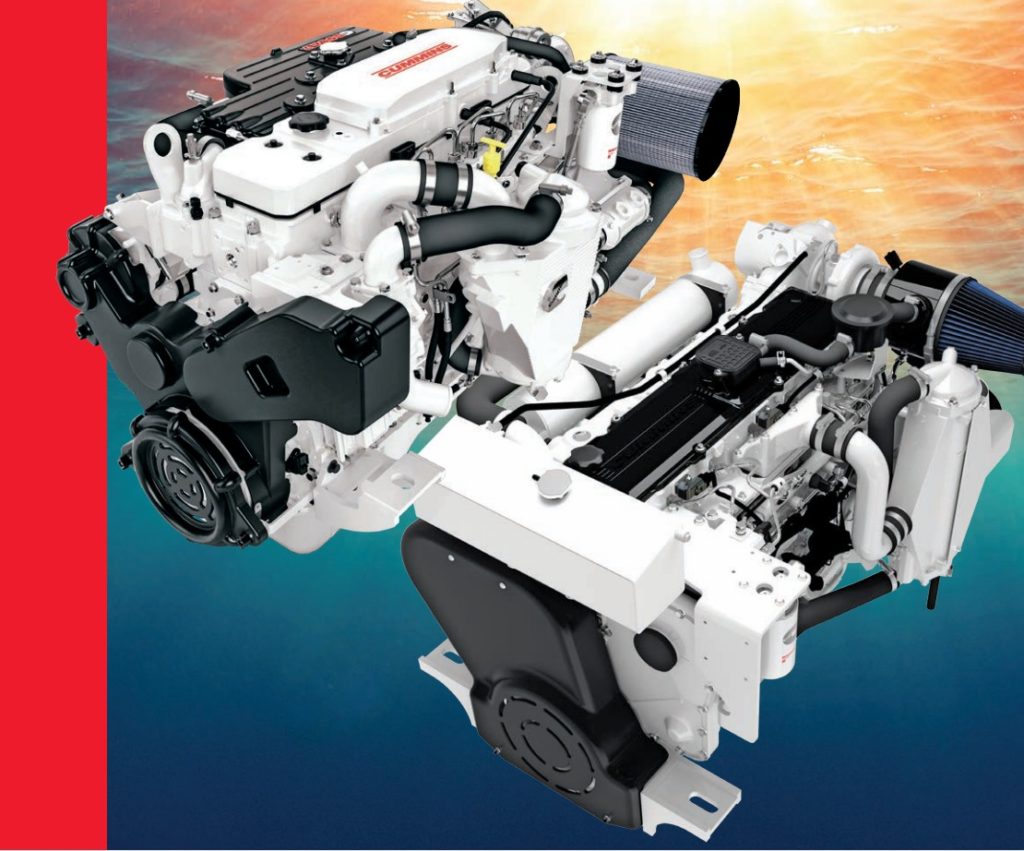
Preventative Maintenance Schedule for Cummins Marine Engines
Recommended Maintenance Schedule
Use the table below as a planning guide. Actual intervals vary by model, duty cycle, environment and current Cummins manual. Our technicians tailor the schedule to your engine and usage.
| Interval | Key Tasks |
|---|---|
| Daily / Pre-Operation | • Check oil & coolant levels • Visual leaks & loose connections • Belts/hoses condition • Fuel system prime & leak check |
| Every 50 Hrs / Weekly | • Inspect oil & fuel filters; replace if needed • Check/clean air filter • Verify belt tension • Clean battery terminals & check connections |
| Every 100 Hrs / Monthly | • Engine oil & filter change • Replace primary/secondary fuel filters • Coolant concentration & condition check • Exhaust system leak/fitment inspection • Electrical wiring & harness inspection |
| 250 Hrs / Quarterly | • Valve/overhead set (model-specific) • Turbocharger inspection & play check • Alternator belt wear/tension • Drain & service water separator |
| 500 Hrs / Bi‑Annual | • Flush & replace coolant; service heat exchanger • Inspect raw‑water pump & impeller; replace if worn • Engine mounts torque & condition check • Inspect all hoses & clamps (cooling & fuel) |
| Annual | • Comprehensive inspection & sea trial as required • Test/clean fuel injectors; replace if needed • Inspect exhaust manifolds & risers for leaks/corrosion • Propulsion: prop, shaft, cutlass & alignment checks • Corrosion protection: inspect/replace anodes |
| 4 Years / 2,000 Hrs* | • Coolant system major service & vibration damper cleaning (model‑dependent) |
| 6 Months / 250 Hrs | • Replace zinc anodes (typical saltwater cadence) |
*Intervals vary by engine family and application. Ask us for your current Cummins schedule.
Operating Hours vs. Calendar Time
Service is due when either threshold is reached. Example: if you hit 500 hrs before your annual date, complete the 500‑hour tasks. Some items are strictly hour‑based (e.g., overhead set), while others are calendar‑based (e.g., aftercooler inspection on QSB6.7/QSC8.3/QSL9). The QSM11 aftercooler typically includes a 1,500‑hour service anchor.
Essential Preventative Services
Oil & Lubrication
High‑quality oil and on‑time changes minimize wear and protect bearings, cams and turbocharger journals.
Cooling System Care
Prevent overheating and corrosion with routine coolant checks, heat‑exchanger cleaning, and raw‑water impeller service. Considering an upgrade? See our Cooling System Maintenance guide.
Fuel System Optimization
Clean fuel equals reliable combustion. We replace filters, check pressure/vacuum, and can upgrade to advanced filtration to extend injector life.
Exhaust Integrity
Leaks are dangerous and costly. We inspect manifolds/risers, gaskets and clamps to maintain safety and emissions compliance.
Electrical Diagnostics
Harness checks, sensor health and charging system verification prevent no‑start events and intermittent faults offshore.
Models We Service
- QSB6.7 – Quiet, efficient power for mid‑size yachts and sportfishers.
- QSC8.3 – Robust torque and smooth delivery for reliable cruising.
- QSL9 – Heavy‑duty durability for demanding applications.
- QSM11 – Top‑tier output and efficiency for captains who demand more.
Ventura HarborChannel Islands MarinaSanta Barbara HarborOxnard Marinas
Professional Repowers & Upgrades
When it’s time to modernize, a Cummins repower can deliver better fuel economy, quieter cruising, lower emissions and added horsepower. We integrate engines, electronic controls and filtration—end‑to‑end.
- Improved efficiency for longer range
- Reduced emissions for cleaner harbors
- Quieter operation for passenger comfort
- Power reserve for rough seas and heavy loads
- Higher resale value with documented installs
Why 805 Marine Mechanic
- Factory‑trained on Cummins marine engines
- Genuine Cummins parts & fluids
- Service performed to current Cummins intervals
- Detailed inspection reports & sea‑trial verification
- Mobile dockside service & 24/7 emergency response
FAQs
- Do you follow hours or time?
- Whichever comes first. Hitting the hour mark early requires completing those tasks even if the calendar date hasn’t arrived.
- Saltwater use: what should I watch?
- Accelerated corrosion. Inspect raw‑water components, aftercoolers and anodes more frequently; consider closed‑loop cooling where feasible.
- What if I rarely hit 100 hours per year?
- Complete annual items anyway—fluids age, filters saturate and corrosion doesn’t wait.
- Can you create a vessel‑specific plan?
- Yes. We build schedules around your duty cycle (charter, recreational, commercial), fuel quality and storage patterns.
One Response