
Caterpillar Marine Engine Survey vs Oil Analysis | Do You Need Both?
One of the most common questions asked by yacht buyers is whether oil analysis alone is enough to evaluate a Caterpillar marine diesel engine before purchase. While oil analysis is an extremely valuable tool, it should never be considered a replacement for a complete Caterpillar marine engine survey. The strongest pre-purchase evaluation combines visual inspection, diagnostics when available, cooling-system testing, oil analysis, and a sea trial to create a complete picture of engine condition.
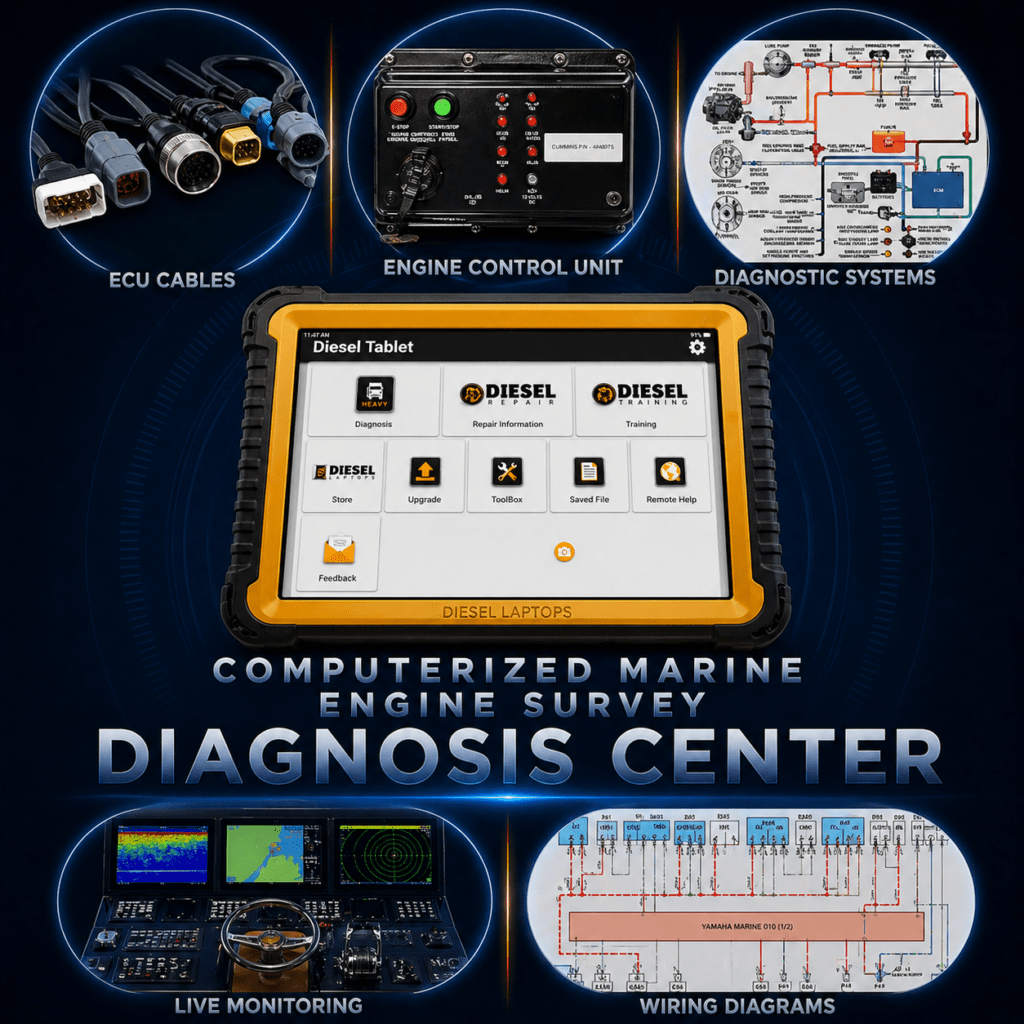
Schedule a Caterpillar Engine Survey
What Is Oil Analysis?
Oil analysis is a laboratory evaluation of engine oil. The sample is tested for wear metals, coolant contamination, fuel dilution, soot levels, lubricant condition, and other indicators of internal engine health.
Oil analysis can provide valuable clues regarding what may be happening inside the engine without disassembly.
- Wear metals
- Fuel dilution
- Coolant contamination
- Soot loading
- Lubricant breakdown
- Internal wear indicators
What Is a Caterpillar Marine Engine Survey?
A Caterpillar marine engine survey is a complete evaluation of the propulsion system. It goes far beyond oil analysis by evaluating how the engine actually performs under operating conditions.
At 805 Marine Diesel Mechanic, every Caterpillar survey includes:
- Visual inspection
- Oil analysis
- Cooling-system pressure testing
- Sea trial evaluation
- Electronic diagnostics when supported
- Maintenance history review
- Turbocharger evaluation
- Fuel-system inspection
- Exhaust-system inspection
What Oil Analysis Can Tell You
Oil analysis can reveal conditions that are often impossible to identify during a visual inspection.
Wear Metals
Elevated wear metals may indicate abnormal wear within bearings, pistons, rings, valve train components, or other internal engine parts.
Coolant Contamination
The presence of coolant within the oil may indicate internal cooling-system leaks or gasket failures.
Fuel Dilution
Fuel contamination of engine oil may indicate injector problems, excessive idling, or combustion-related concerns.
Lubricant Condition
Oil analysis helps determine whether the lubricant remains healthy and capable of protecting engine components.
What Oil Analysis Cannot Tell You
This is where many buyers misunderstand the purpose of oil sampling.
Oil analysis generally cannot tell you:
- If the engine reaches rated RPM
- If the vessel is overloaded
- If the turbocharger is producing proper boost
- If the aftercooler is restricted
- If the cooling system is functioning correctly
- If the engine smokes under load
- If the engine overheats at cruise speed
- If vibration exists underway
- If electronic fault codes are present
Those observations require a complete survey and sea trial.
What a Caterpillar Survey Can Reveal
A survey evaluates the complete propulsion package and how the engine behaves under real operating conditions.
Cooling-System Problems
Heat exchangers, aftercoolers, raw-water pumps, thermostats, coolers, and coolant condition can all be evaluated during inspection and sea trial.
Turbocharger Problems
Poor boost response, airflow restrictions, smoke production, and performance concerns often become visible during operation.
Sea Trial Performance
Many hidden issues only appear when the engine is operating under load.
Electronic Diagnostic Information
On Caterpillar electronic engines, diagnostic data may provide additional information regarding faults, events, sensors, and operating history.
Why Buyers Should Use Both
The strongest pre-purchase evaluation combines oil analysis with a complete Caterpillar marine engine survey.
Oil analysis evaluates internal clues while the survey evaluates real-world performance. Together they provide a much more complete understanding of engine condition.
Examples of Problems Oil Analysis Might Miss
- Failure to reach rated RPM
- Propeller overload
- Black smoke under load
- Overheating at cruise speed
- Turbocharger lag
- Aftercooler restriction
- Exhaust-system deterioration
- Electronic fault history
- Excessive vibration
Examples of Problems a Survey Might Miss Without Oil Analysis
- Early bearing wear
- Fuel dilution
- Coolant contamination
- Lubricant degradation
- Internal wear indicators
Best Practice for Yacht Buyers
If you are purchasing a Caterpillar-powered vessel, the best practice is to combine oil analysis, cooling-system pressure testing, diagnostics when available, visual inspection, and a sea trial.
That combination provides the most complete understanding of engine condition before closing.
Common Caterpillar Engines Covered
- Caterpillar C18 Marine Engine Survey
- Caterpillar C12 Marine Engine Survey
- Caterpillar C9 Marine Engine Survey
- Caterpillar 3406C Marine Engine Survey
- Caterpillar 3208 Marine Engine Survey
- Caterpillar 3126 Marine Engine Survey
Service Areas
805 Marine Diesel Mechanic provides Caterpillar marine engine surveys throughout Ventura Harbor, Channel Islands Harbor, Oxnard, Santa Barbara Harbor, Marina del Rey, Malibu, and Port Hueneme.
Authority Resources
For manufacturer information visit Caterpillar Marine. For marine standards visit the American Boat & Yacht Council.
Caterpillar Marine Engine Survey vs Oil Analysis FAQ
Is oil analysis enough before buying a boat?
No. Oil analysis is valuable but should be combined with a complete Caterpillar marine engine survey and sea trial.
What does oil analysis reveal?
Oil analysis can reveal wear metals, coolant contamination, fuel dilution, soot levels, and lubricant condition.
Can oil analysis identify overheating problems?
Not reliably. Overheating concerns are often identified during inspection and sea-trial evaluation.
Can oil analysis identify turbocharger problems?
Not directly. Turbocharger performance is best evaluated during inspection and sea trial.
Can oil analysis identify failure to reach rated RPM?
No. Rated RPM verification requires a sea trial under load.
Why is a sea trial important?
A sea trial allows the engine to be evaluated under actual operating conditions.
Why include cooling-system pressure testing?
Cooling-system pressure testing helps identify leaks and cooling-system concerns before purchase.
What is included in a Caterpillar marine engine survey?
Visual inspection, oil analysis, cooling-system pressure testing, sea trial, diagnostics when available, and maintenance-history review.
Can a survey identify black smoke under load?
Yes. Black smoke observations are typically made during sea-trial operation.
Can a survey identify electronic fault codes?
Yes, on supported Caterpillar electronic engines.
Can oil analysis identify coolant contamination?
Yes. Coolant contamination is one of the most important reasons oil analysis is performed.
Can oil analysis identify fuel dilution?
Yes. Fuel dilution is commonly evaluated through laboratory testing.
Can a survey identify aftercooler problems?
Yes. Aftercooler condition and maintenance history are evaluated during inspection.
Do I need both oil analysis and a survey?
Yes. Together they provide a more complete understanding of engine condition.
What Caterpillar engines can be surveyed?
C18, C12, C9, 3406C, 3208, 3126, 3116, C7, and many other Caterpillar marine engines.
Do you perform surveys in Marina del Rey?
Yes. Marina del Rey is one of our primary service areas.
Do you perform surveys in Ventura Harbor?
Yes. Ventura Harbor and Channel Islands Harbor are core service locations.
Can a survey reduce purchase risk?
Yes. Surveys help buyers identify mechanical concerns before purchase.
How much does a Caterpillar survey cost?
Computerized surveys are $950 per engine and mechanical surveys are $750 per engine.
How do I schedule a Caterpillar survey?
Call 805-774-0637 or use the contact page to discuss your vessel and survey requirements.