
Ford Lehman 120 Marine Engine Survey | Pre-Purchase Inspection Guide
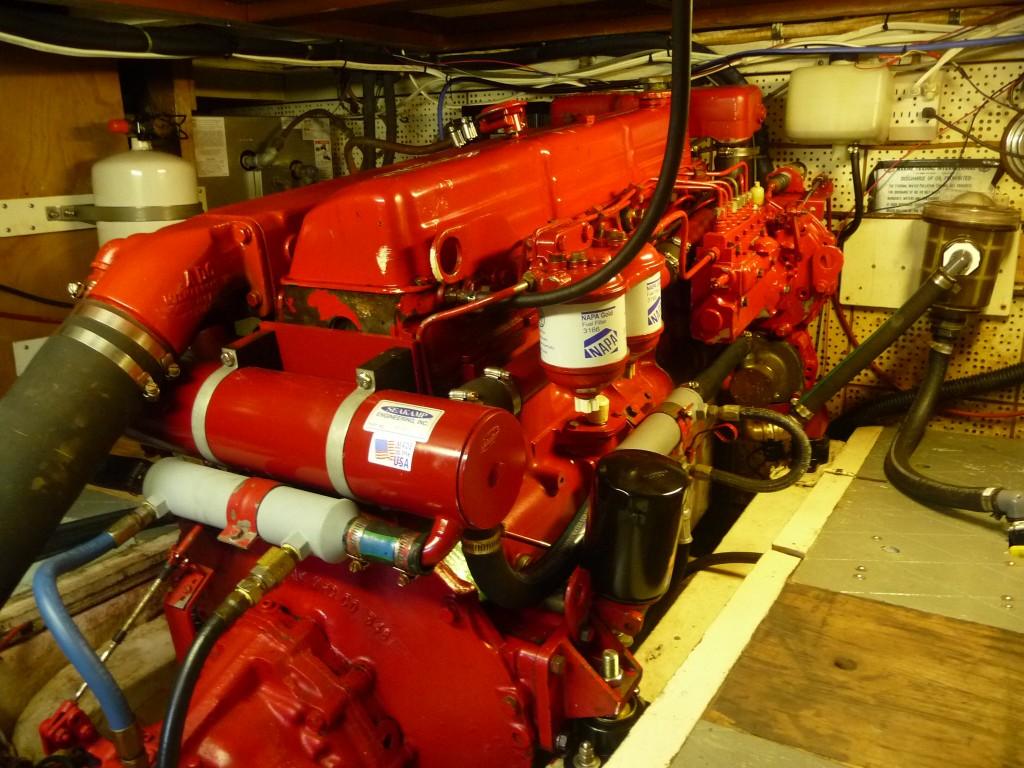
The Ford Lehman 120 remains one of the most recognized marine diesel engines ever installed in trawlers and long-range cruising vessels. Known for simplicity, reliability, and exceptionally long service life, the Ford Lehman 120 continues to power thousands of vessels decades after its original installation. Built around the Ford 2715E six-cylinder platform, the engine earned a reputation for dependable low-RPM operation and straightforward maintenance. A Ford Lehman 120 marine engine survey helps buyers determine actual engine condition before purchase and identify cooling-system issues, fuel-system concerns, oil-analysis abnormalities, transmission problems, and deferred maintenance before ownership changes hands. American Diesel continues to provide owner support resources for the Ford Lehman 120 platform.
Schedule a Ford Lehman 120 Survey
Ford Lehman Survey Navigation
- Ford Lehman Marine Engine Surveys
- Common Ford Lehman Marine Engine Survey Findings
- Ford Lehman Marine Engine Survey Checklist
- Ford Lehman Marine Engine Survey Sea Trial Guide
About the Ford Lehman 120 Platform
The Ford Lehman 120 is based on the Ford 2715E six-cylinder diesel engine and became one of the most successful propulsion engines used in classic trawlers. Owners value these engines because they operate conservatively relative to displacement, contributing to their reputation for longevity when properly maintained.
- Six-cylinder naturally aspirated diesel
- Approximately 120 horsepower output
- Mechanical fuel-injection system
- Excellent low-speed torque characteristics
- Popular trawler propulsion platform
- Strong owner support network
Why a Ford Lehman 120 Survey Is Important
Most Ford Lehman 120 engines currently in service are several decades old. While internal engine durability remains excellent, survey findings frequently involve cooling systems, fuel systems, exhaust components, electrical systems, and age-related maintenance concerns.
- Cooling-system deficiencies
- Fuel contamination
- Exhaust-system deterioration
- Oil leaks
- Electrical-system concerns
- Transmission issues
- Deferred maintenance
- Buyer-risk assessment
Maintenance Record Review
Service records provide valuable insight into long-term engine care and often reveal how well the vessel has been maintained over time.
- Oil-change history
- Cooling-system service records
- Raw-water pump maintenance
- Injector service history
- Transmission service records
- Previous survey reports
Cooling-System Inspection
Cooling-system condition is one of the most important areas evaluated during a Ford Lehman 120 survey. Restricted heat exchangers, aging hoses, weak clamps, and raw-water pump wear are among the most common findings on older trawlers.
- Heat exchanger inspection
- Raw-water pump inspection
- Coolant-condition evaluation
- Thermostat inspection
- Hose and clamp inspection
- Leak detection
Fuel-System Inspection
Fuel contamination remains one of the most common operational concerns on older vessels. Survey inspections focus on fuel quality, filtration systems, injector symptoms, and overall fuel delivery.
- Fuel quality inspection
- Fuel-filter evaluation
- Water-separator inspection
- Fuel-line inspection
- Injector symptom evaluation
Exhaust-System Inspection
Exhaust-system deterioration is frequently identified during Ford Lehman surveys. Wet exhaust systems require careful inspection for corrosion, restrictions, leaks, and deteriorated hose sections.
- Exhaust elbow condition
- Wet-exhaust hose inspection
- Clamp inspection
- Leak detection
- Support-bracket inspection
Electrical-System Inspection
- Battery condition
- Starter performance
- Alternator output
- Ground-system inspection
- Wiring-condition evaluation
Oil Analysis
Oil analysis is included with every Ford Lehman 120 marine engine survey. Laboratory testing helps identify wear metals, coolant contamination, fuel dilution, soot loading, and lubricant-condition concerns before purchase.
Cooling-System Pressure Testing
Cooling-system pressure testing helps identify hidden leaks, weak hoses, clamp issues, and cooling-system integrity concerns that may not be visible during routine inspection.
Sea Trial Evaluation
The sea trial remains one of the most important parts of the survey process because many problems only appear when the engine is operating under actual vessel load.
- Cold-start evaluation
- Idle quality assessment
- Cruise-RPM testing
- Temperature monitoring
- Oil-pressure monitoring
- Smoke evaluation
- Vibration analysis
- Transmission evaluation
Cross-Brand Marine Engine Survey Resources
External Resources
Service Areas
805 Marine Diesel Mechanic performs Ford Lehman 120 marine engine surveys throughout Ventura Harbor, Channel Islands Harbor, Oxnard, Santa Barbara Harbor, Marina del Rey, Malibu, and Port Hueneme.
Ford Lehman 120 Marine Engine Survey FAQ
What is a Ford Lehman 120 marine engine survey?
A Ford Lehman 120 marine engine survey is a comprehensive pre-purchase inspection that evaluates cooling systems, fuel systems, exhaust systems, electrical systems, oil analysis, sea-trial performance, and overall buyer risk.
Why should I survey a Ford Lehman 120 before buying a boat?
Most Ford Lehman 120 engines currently in service are several decades old. A survey helps identify cooling-system deficiencies, fuel contamination, oil leaks, exhaust deterioration, electrical-system concerns, and deferred maintenance before ownership changes hands.
What is included in a Ford Lehman 120 survey?
A complete survey includes maintenance-record review, visual inspection, cooling-system evaluation, fuel-system inspection, exhaust-system inspection, electrical-system testing, oil analysis, cooling-system pressure testing, and sea-trial evaluation.
Is oil analysis included?
Yes. Oil analysis is included with every Ford Lehman 120 marine engine survey and helps identify wear metals, coolant contamination, fuel dilution, soot loading, and lubricant-condition concerns.
Is cooling-system pressure testing included?
Yes. Cooling-system pressure testing is included and helps identify hidden leaks, deteriorated hoses, weak clamps, and cooling-system integrity concerns.
Why is cooling-system inspection important on a Ford Lehman 120?
Cooling-system condition directly affects reliability and engine life. Heat exchangers, raw-water pumps, thermostats, hoses, clamps, and coolant quality are critical inspection areas.
What cooling-system problems are commonly found?
Restricted heat exchangers, worn raw-water pumps, deteriorated hoses, weak clamps, thermostat issues, coolant contamination, and deferred maintenance are common survey findings.
What fuel-system issues are commonly discovered?
Fuel contamination, water intrusion, microbial growth, dirty fuel tanks, restricted filters, injector wear, and fuel-delivery deficiencies are frequently identified during surveys.
Why is the exhaust system inspected?
Exhaust elbows, wet-exhaust hoses, clamps, supports, and leakage points can deteriorate with age and significantly affect safety and engine reliability.
Why are electrical systems inspected?
Electrical-system reliability affects starting performance, charging-system output, instrumentation accuracy, and overall vessel dependability.
What electrical problems are commonly found?
Weak batteries, alternator deficiencies, starter wear, corroded wiring, poor grounds, and voltage-drop issues are among the most common findings.
Why is a sea trial important?
Many engine problems only become apparent under actual vessel load. Sea trials evaluate temperatures, oil pressure, smoke output, vibration levels, acceleration, transmission operation, and overall performance.
What does failure to reach rated RPM indicate?
Failure to achieve expected RPM may indicate fuel restrictions, cooling-system deficiencies, exhaust restrictions, hull fouling, propeller overload, transmission drag, or reduced engine output.
Can a survey identify overheating concerns?
Yes. Cooling-system inspections, pressure testing, maintenance-record review, and sea-trial observations frequently reveal overheating risks before purchase.
Can a survey identify transmission concerns?
Yes. Transmission-fluid condition, leaks, engagement quality, vibration levels, and operating behavior can reveal driveline or transmission concerns.
Are Ford Lehman 120 engines reliable?
Yes. The Ford Lehman 120 is widely respected for simplicity, durability, and long service life when maintained properly. Many owners report exceptionally long operating lives due to the engine’s conservative power output and robust design.
Are parts still available for the Ford Lehman 120?
Yes. Dedicated suppliers continue to provide technical support, manuals, owner resources, and replacement parts for Ford Lehman 120 engines.
Do you perform Ford Lehman 120 surveys in Marina del Rey?
Yes. Marina del Rey is one of our active Ford Lehman marine engine survey service areas.
Do you perform Ford Lehman 120 surveys in Ventura Harbor and Channel Islands Harbor?
Yes. Ventura Harbor, Channel Islands Harbor, Oxnard, Santa Barbara Harbor, Marina del Rey, Malibu, and Port Hueneme are included when scheduling allows.
How do I schedule a Ford Lehman 120 marine engine survey?
Call 805-774-0637 or use the contact page to discuss vessel location, engine configuration, survey timing, and sea-trial availability.