
Ford Lehman Marine Engine Survey Sea Trial Guide | Evaluating Performance Under Load
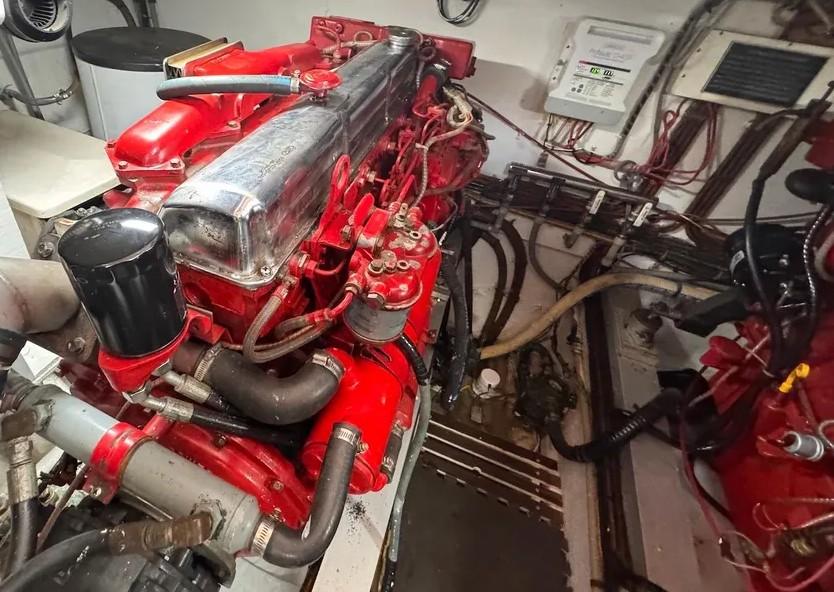
A sea trial is one of the most important parts of any Ford Lehman marine engine survey because many issues only become visible when the engine is operating under actual vessel load. While dockside inspections provide valuable information, a properly conducted sea trial evaluates cooling-system performance, fuel delivery, oil pressure, transmission operation, smoke output, vibration levels, and overall engine health. Ford Lehman engines have earned a reputation for durability and long service life, but most examples in service today are several decades old and benefit from thorough under-load evaluation.
Schedule a Ford Lehman Engine Survey
Ford Lehman Survey Navigation
- Ford Lehman Marine Engine Surveys
- Common Ford Lehman Marine Engine Survey Findings
- Ford Lehman Marine Engine Survey Checklist
Why Sea Trials Matter
Many Ford Lehman engines sound healthy at the dock but reveal cooling-system deficiencies, fuel restrictions, exhaust restrictions, transmission concerns, or vibration issues once the vessel is operating under load.
- Verify operating temperatures
- Verify oil pressure
- Evaluate smoke output
- Evaluate vibration levels
- Verify transmission operation
- Confirm cruise performance
- Evaluate overall engine health
Pre-Departure Inspection
Before leaving the dock, the engine should be inspected and started from a cold condition whenever possible.
- Cold-start evaluation
- Initial smoke observations
- Fluid-level verification
- Alarm-system verification
- Gauge operation check
Idle Evaluation
Idle quality provides valuable insight into fuel-system condition, injector performance, engine mounts, and overall combustion quality.
- Smooth idle operation
- Oil-pressure observations
- Smoke evaluation
- Engine vibration
- Charging-system output
Acceleration Testing
Acceleration performance helps evaluate fuel delivery, transmission response, propeller loading, and overall engine condition.
- Throttle response
- RPM progression
- Smoke development
- Engine smoothness
- Load acceptance
Cruise RPM Evaluation
Most of the sea trial should be conducted at normal cruising RPM because this is where the engine spends the majority of its operating life.
- Coolant-temperature stability
- Oil-pressure stability
- Smoke observations
- Vibration analysis
- Transmission performance
Wide Open Throttle Testing
When appropriate and safe for the vessel, wide-open-throttle testing helps determine whether the engine can achieve expected RPM and properly carry vessel load.
- Maximum RPM achieved
- Temperature response
- Oil-pressure response
- Smoke output
- Overall engine performance
Smoke Evaluation
Exhaust smoke remains one of the most useful diagnostic indicators during a Ford Lehman sea trial.
- Black smoke
- White smoke
- Blue smoke
- Transient smoke
- Load-related smoke
Cooling-System Evaluation Under Load
Cooling-system deficiencies are among the most common Ford Lehman issues. Sea trials frequently reveal restrictions that are not visible at the dock. Common overheating causes include restricted heat exchangers, worn raw-water pumps, restricted seawater flow, and exhaust restrictions.
- Temperature rise
- Raw-water flow
- Heat-exchanger performance
- Cooling-system stability
- Leak detection
Transmission Evaluation
Ford Lehman surveys also evaluate driveline and transmission operation because propulsion-system concerns can significantly affect vessel value and reliability.
- Shift quality
- Engagement characteristics
- Vibration levels
- Noise observations
- Operating temperatures
Cross-Brand Marine Engine Survey Resources
Many buyers compare classic Ford Lehman-powered trawlers with vessels powered by other diesel platforms. Reviewing survey procedures across different manufacturers helps buyers better understand maintenance requirements and ownership expectations.
External Resources
Service Areas
805 Marine Diesel Mechanic performs Ford Lehman marine engine surveys throughout Ventura Harbor, Channel Islands Harbor, Oxnard, Santa Barbara Harbor, Marina del Rey, Malibu, and Port Hueneme.
Ford Lehman Marine Engine Survey Sea Trial Guide FAQ
Why is a sea trial important during a Ford Lehman marine engine survey?
A sea trial allows the engine to operate under actual vessel load where cooling-system deficiencies, fuel restrictions, transmission issues, vibration concerns, and low-power conditions often become visible.
Can a Ford Lehman engine pass a dockside inspection but fail a sea trial?
Yes. Many engines appear normal at the dock but reveal overheating concerns, smoke issues, fuel-delivery problems, transmission deficiencies, or vibration under load.
What is evaluated during a Ford Lehman sea trial?
Engine temperatures, oil pressure, smoke output, vibration levels, acceleration, transmission operation, cruise performance, and overall engine behavior are evaluated.
Should the engine be started cold?
Yes. A cold start often reveals injector concerns, fuel-system issues, hard-starting problems, electrical deficiencies, and combustion-related concerns.
What should oil pressure look like during a sea trial?
Oil pressure should remain stable and within the normal operating range throughout idle, cruise RPM, and higher-load operation.
Why is coolant temperature monitored?
Temperature stability helps verify proper cooling-system operation and can reveal heat-exchanger restrictions, raw-water pump deficiencies, coolant-flow problems, or exhaust restrictions.
Why is acceleration testing important?
Acceleration testing helps evaluate fuel delivery, transmission response, propeller loading, and overall engine condition.
What causes a Ford Lehman engine to accelerate poorly?
Fuel restrictions, injector issues, cooling-system deficiencies, exhaust restrictions, propeller overload, hull fouling, or transmission concerns can affect acceleration.
Why is cruise RPM testing important?
Cruise RPM testing evaluates how the engine performs under its most common operating conditions and helps identify temperature, smoke, vibration, or fuel-delivery issues.
Why is wide-open-throttle testing performed?
When appropriate, wide-open-throttle testing helps verify the engine can achieve expected RPM and properly carry vessel load.
What does failure to reach rated RPM indicate?
Failure to achieve expected RPM may indicate fuel restrictions, cooling-system deficiencies, exhaust restrictions, propeller overload, hull fouling, transmission drag, or reduced engine output.
Why is exhaust smoke evaluated?
Smoke color and quantity often reveal fuel-system problems, combustion issues, oil consumption, injector concerns, or operating-load problems.
What does black smoke indicate?
Black smoke may indicate excessive fuel delivery, restricted airflow, overloaded propellers, fuel-system issues, or excessive engine load.
What does white smoke indicate?
White smoke may indicate incomplete combustion, injector concerns, fuel-quality issues, or low cylinder temperatures.
What does blue smoke indicate?
Blue smoke may indicate oil consumption, worn valve guides, piston-ring wear, or other lubrication-related concerns.
Can a sea trial identify cooling-system problems?
Yes. Extended operation under load frequently reveals cooling-system deficiencies that are not visible during dockside inspections. Restricted raw-water flow and worn pumps are among the most common causes of overheating.
Can a sea trial identify transmission concerns?
Yes. Shift quality, engagement characteristics, vibration levels, driveline behavior, and operating performance help identify transmission-related concerns.
Are Ford Lehman engines still reliable?
Yes. Ford Lehman engines remain highly respected for durability and long service life when maintained properly, and dedicated technical support and parts resources remain available.
Do you perform Ford Lehman sea-trial surveys in Ventura Harbor and Channel Islands Harbor?
Yes. Ventura Harbor, Channel Islands Harbor, Oxnard, Santa Barbara Harbor, Marina del Rey, Malibu, and Port Hueneme are included when scheduling allows.
How do I schedule a Ford Lehman marine engine survey and sea trial?
Call 805-774-0637 or use the contact page to discuss vessel location, engine model, survey timing, and sea-trial availability.