
Caterpillar 3208 Marine Engine Survey | Pre-Purchase Inspection Guide
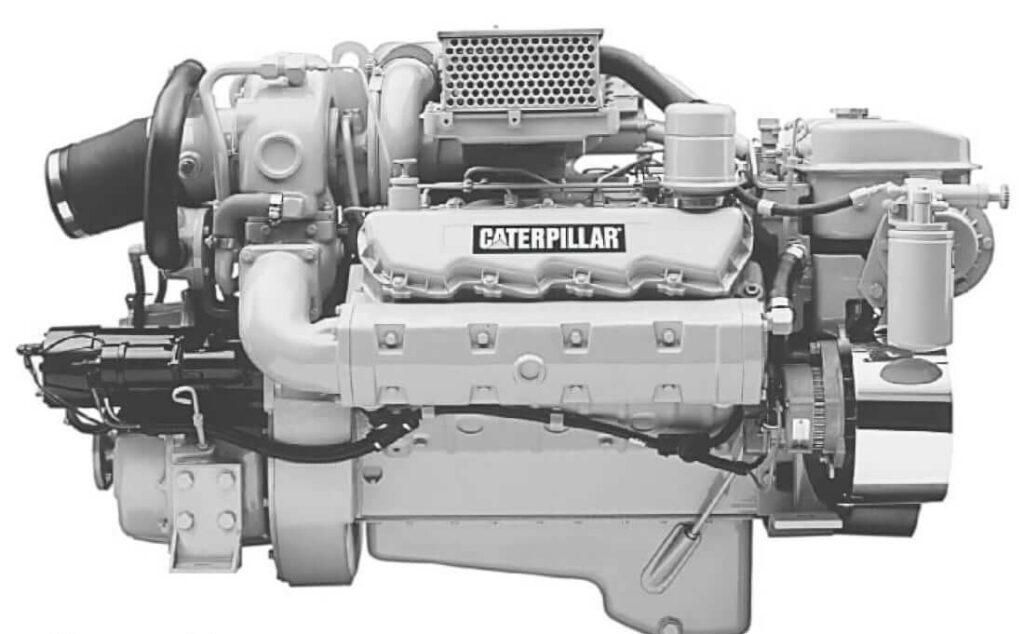
The Caterpillar 3208 remains one of the most recognized marine diesel engines ever installed in sportfishing boats, motor yachts, commercial vessels, and cruising boats. A Caterpillar 3208 marine engine survey helps buyers evaluate engine condition, maintenance history, cooling-system health, smoke characteristics, and overall purchase risk before committing to a vessel in Ventura Harbor, Channel Islands Harbor, Santa Barbara Harbor, Oxnard, or Marina del Rey.
Schedule a Caterpillar 3208 Engine Survey
Caterpillar 3208 Marine Engine Overview
The Caterpillar 3208 developed a strong reputation in both commercial and recreational marine applications. Available in naturally aspirated and turbocharged versions, the 3208 powered countless West Coast sportfishers, trawlers, cruisers, and commercial vessels.
Because many of these engines are now decades old, buyers often have concerns that differ significantly from newer Caterpillar engines. Rather than focusing on electronic fault codes and modern diagnostics, a Caterpillar 3208 survey focuses heavily on mechanical condition, cooling-system health, visible wear patterns, service records, smoke evaluation, and sea-trial performance.
Why Buyers Request a Caterpillar 3208 Marine Engine Survey
A vessel equipped with Caterpillar 3208 engines may appear well maintained while still hiding expensive mechanical concerns. The purpose of the survey is not simply to determine whether the engine starts and runs. The goal is to evaluate overall condition and identify warning signs that may affect ownership costs.
Many buyers specifically want to understand whether the engines appear healthy enough for continued service or whether overhaul planning may be necessary in the future.
Common Caterpillar 3208 Survey Findings
Cooling System Maintenance History
Cooling-system condition remains one of the most important inspection areas on older Caterpillar engines. Heat exchangers, raw-water pumps, hoses, coolers, thermostats, and seawater plumbing should all be evaluated carefully.
Restricted cooling systems frequently contribute to elevated operating temperatures and reduced engine life.
Blow-By Evaluation
Excessive crankcase pressure and visible blow-by can provide clues regarding internal engine wear. Blow-by alone does not automatically determine engine condition, but it should be considered together with operating performance, maintenance records, oil analysis, and sea-trial observations.
Oil Leaks and External Condition
Many older 3208 engines develop oil leaks around gaskets, fittings, seals, and accessory components. While some leakage may be expected on older engines, excessive leakage can indicate deferred maintenance or more significant concerns.
Exhaust Smoke Characteristics
Smoke evaluation remains one of the most useful inspection tools during a Caterpillar 3208 survey.
White smoke, blue smoke, and black smoke each point toward different mechanical systems and should be evaluated carefully during sea trial and dockside operation.
Turbocharger Condition
On turbocharged 3208 models, turbocharger health directly affects performance. Poor boost response, abnormal smoke, reduced RPM, and sluggish acceleration can all indicate turbocharger or airflow-related issues.
Exhaust System Corrosion
Marine exhaust systems endure years of heat, vibration, moisture, and saltwater exposure. Risers, elbows, clamps, and exhaust plumbing should be evaluated for leakage, corrosion, and age-related deterioration.
What Is Evaluated During a Caterpillar 3208 Survey?
- Engine-room condition
- Visible leak inspection
- Cooling-system condition
- Fuel-system observations
- Exhaust-system inspection
- Turbocharger review
- Mount condition
- Driveline observations
- Oil condition
- Maintenance history review
- Sea-trial performance
For broader survey information, visit our Marine Engine Survey page and our Caterpillar Marine Engine Surveys Hub.
Caterpillar 3208 Sea Trial Evaluation
The sea trial is often where important information becomes visible. During testing, the Caterpillar 3208 should be evaluated for acceleration, operating temperature, smoke, oil pressure, vibration, cruise performance, and maximum attainable RPM.
An engine that cannot achieve proper RPM may have excessive vessel load, restricted airflow, fuel-system issues, cooling concerns, running-gear problems, or internal engine wear.
Related diagnostic resources include:
- Caterpillar Marine Diesel Low Power & RPM Loss
- Yacht Engine Black Smoke Under Load
- Master Marine Diesel Troubleshooting Guide
Common Caterpillar 3208 Purchase Risks
Unknown Rebuild History
Many buyers want to know whether a 3208 has ever been rebuilt or overhauled. Documentation and maintenance records are valuable because they help establish service history and maintenance quality.
Deferred Cooling-System Service
Older marine diesels depend heavily on proper cooling-system maintenance. Missing service records should prompt further evaluation.
Long Periods of Inactivity
Extended storage can affect seals, cooling systems, fuel systems, and overall reliability. Engines that have sat unused for long periods should receive careful inspection.
Overloading
Propeller mismatch, vessel modifications, fouled bottoms, and excessive weight can overload an engine and affect long-term durability.
Caterpillar 3208 Surveys in Ventura, Channel Islands, Santa Barbara & Marina del Rey
805 Marine Diesel Mechanic provides Caterpillar 3208 pre-purchase engine surveys and inspections throughout Ventura Harbor, Channel Islands Harbor, Oxnard, Santa Barbara Harbor, Marina del Rey, Malibu, and Port Hueneme.
These locations continue to have a large number of classic vessels powered by Caterpillar 3208 engines, making careful survey work especially important before purchase.
Related Caterpillar Survey Resources
- Caterpillar Marine Engine Surveys Hub
- Caterpillar C12 Marine Engine Survey
- Caterpillar C7 Marine Engine Survey
- Caterpillar 3116 Marine Engine Survey
- Computerized Marine Engine Survey Diagnostics Center
- Contact 805 Marine Diesel Mechanic
Caterpillar 3208 Marine Engine Survey FAQ
What is a Caterpillar 3208 marine engine survey?
It is a focused inspection of the Caterpillar 3208 engine, cooling system, fuel system, exhaust, mounts, oil leaks, smoke behavior, and sea-trial performance. The goal is to help buyers understand engine condition before purchase.
Is the Caterpillar 3208 a reliable marine engine?
Yes, the Caterpillar 3208 has a strong reputation when maintained correctly. Because many are older engines, condition and maintenance history matter more than reputation alone.
What are common Caterpillar 3208 problems?
Common findings include cooling-system restriction, oil leaks, exhaust corrosion, smoke under load, blow-by, fuel-system issues, turbo wear on turbocharged models, and failure to reach rated RPM.
How do you inspect a 3208 before purchase?
The inspection includes visual condition, leaks, cooling system, fuel system, exhaust, mounts, smoke behavior, maintenance records, and sea-trial performance. Oil analysis may also be recommended.
What is blow-by on a Caterpillar 3208?
Blow-by is crankcase pressure caused by combustion gases passing the piston rings. Excessive blow-by may suggest internal wear and should be reviewed with oil analysis, performance, and service history.
How important is cooling-system maintenance?
Cooling-system maintenance is extremely important on older Caterpillar 3208 engines. Heat exchangers, raw-water pumps, hoses, thermostats, and coolers all affect operating temperature and engine life.
What RPM should a Caterpillar 3208 reach?
The correct RPM depends on the exact 3208 rating and vessel setup. During sea trial, the engine should be compared with the correct specification for that installation.
Can a survey identify overheating problems?
Yes, a survey and sea trial may reveal overheating symptoms under load. Causes may include restricted raw-water flow, fouled heat exchangers, worn pumps, thermostat issues, or engine overload.
What causes black smoke on a 3208?
Black smoke may come from restricted airflow, fuel delivery issues, turbocharger problems, overloaded propellers, hull growth, or incomplete combustion. The cause should be diagnosed by system.
Can a survey reveal fuel-system issues?
A survey may reveal symptoms of fuel restriction, contamination, air leaks, poor filter condition, or uneven fuel delivery. Further testing may be recommended depending on findings.
Should I get oil analysis performed?
Oil analysis is useful on older 3208 engines because it may show wear metals, fuel dilution, coolant contamination, soot, or other internal clues. It should be used with inspection and sea-trial data.
What maintenance records should I request?
Request records for oil service, coolant service, heat-exchanger cleaning, raw-water pump work, injector service, turbocharger service, valve adjustments, rebuild history, and prior oil analysis.
Can a survey identify turbocharger problems?
On turbocharged 3208 models, a survey may identify poor boost response, oil leakage, abnormal sound, smoke, or poor acceleration. These symptoms should be evaluated during inspection and sea trial.
What are signs of engine overload?
Signs include failure to reach rated RPM, black smoke, high operating temperature, sluggish acceleration, and heavy load at normal cruise. Overload may come from propeller, hull, weight, or engine condition.
Can a survey reduce purchase risk?
Yes, a survey helps identify mechanical concerns before closing. Findings may support repair planning, negotiation, or a decision to continue or walk away from the purchase.
Do you survey 3208 engines in Marina del Rey?
Yes, Marina del Rey is included in the target service area for Caterpillar 3208 pre-purchase engine surveys. Scheduling depends on vessel access, timing, and survey scope.
Do you survey 3208 engines in Ventura Harbor?
Yes, Ventura Harbor is a core service area. Channel Islands Harbor, Oxnard, Santa Barbara, Marina del Rey, Malibu, and Port Hueneme are also included when scheduling allows.
Can twin 3208 engines be compared?
Yes, twin 3208 engines should be compared for RPM, smoke, vibration, oil pressure, temperature, leaks, and sea-trial response. Differences between port and starboard engines can be important.
How long does a Caterpillar 3208 survey take?
The time depends on access, single or twin engines, sea-trial availability, oil sampling, and inspection scope. A complete survey takes longer than a quick dockside look.
How do I schedule a Caterpillar 3208 survey?
Call 805-774-0637 or use the contact page with the vessel location, engine model, survey date, and whether a sea trial is available.