
Racor Vacuum Gauges, Water Detection & Duplex Filtration: The Fuel-System Upgrades That Prevent Diesel Breakdowns
If you run a diesel boat out of Ventura, Oxnard, Channel Islands Harbor, or Santa Barbara, your fuel system is always working against the real-world stuff: condensation in tanks, questionable marina fuel, algae growth, rust, sludge, and long sits between trips. The result is predictable—filters clog, engines lose power, and the “it ran fine last weekend” story turns into a tow, a missed trip, or a long day in the engine room.
At 805 Marine Diesel Mechanic, we’re big on upgrades that give you feedback—because feedback lets you service the system before it becomes a breakdown. Two of the best add-ons for Racor-style primary filtration are:
- A vacuum gauge (restriction gauge) that shows filter loading in real time
- A water detection / change-filter alert that gives you early warning when water collects or restriction rises
Pair those with a duplex (two-filter) Racor setup for serious reliability, and you’ve got a fuel system that’s much harder to surprise.
Schedule a Fuel System Inspection
Request a Racor Upgrade Quote
Why Racor Primary Filtration Matters on Marine Diesels
On most marine diesel installations, the Racor (or Racor-style) filter/water separator is your first line of defense before fuel reaches the lift pump, high-pressure pump, and injectors. It’s designed to:
- Separate free water from diesel fuel (water is a major cause of corrosion and injector damage)
- Remove particulate contamination before it reaches sensitive components
- Provide a serviceable “checkpoint” you can maintain at the dock
When the primary filter clogs, the engine doesn’t always fail instantly. More often, you’ll see subtle symptoms first—slower acceleration, lower top RPM, surging under load, or a generator that hunts when a large load hits. That’s exactly why restriction monitoring is such a smart move: it turns a mystery into a number you can track.
The Vacuum Gauge Upgrade: Your “Fuel Filter Health” Readout
A vacuum gauge (restriction gauge) measures how hard the fuel system has to pull diesel through the filter. As the element loads with debris, restriction rises. Instead of guessing based on hours, you can service based on actual filter condition.
What you gain with a vacuum gauge
- Early warning before power loss becomes an emergency
- Smarter maintenance (change elements when needed—not too early, not too late)
- Faster troubleshooting when you suspect fuel starvation
- Confidence offshore—especially on long runs toward the Channel Islands
Many kits use a T-handle assembly with an integrated gauge, replacing the standard T-handle on certain Racor turbine housings. That means the gauge sits right where you already look during pre-checks.
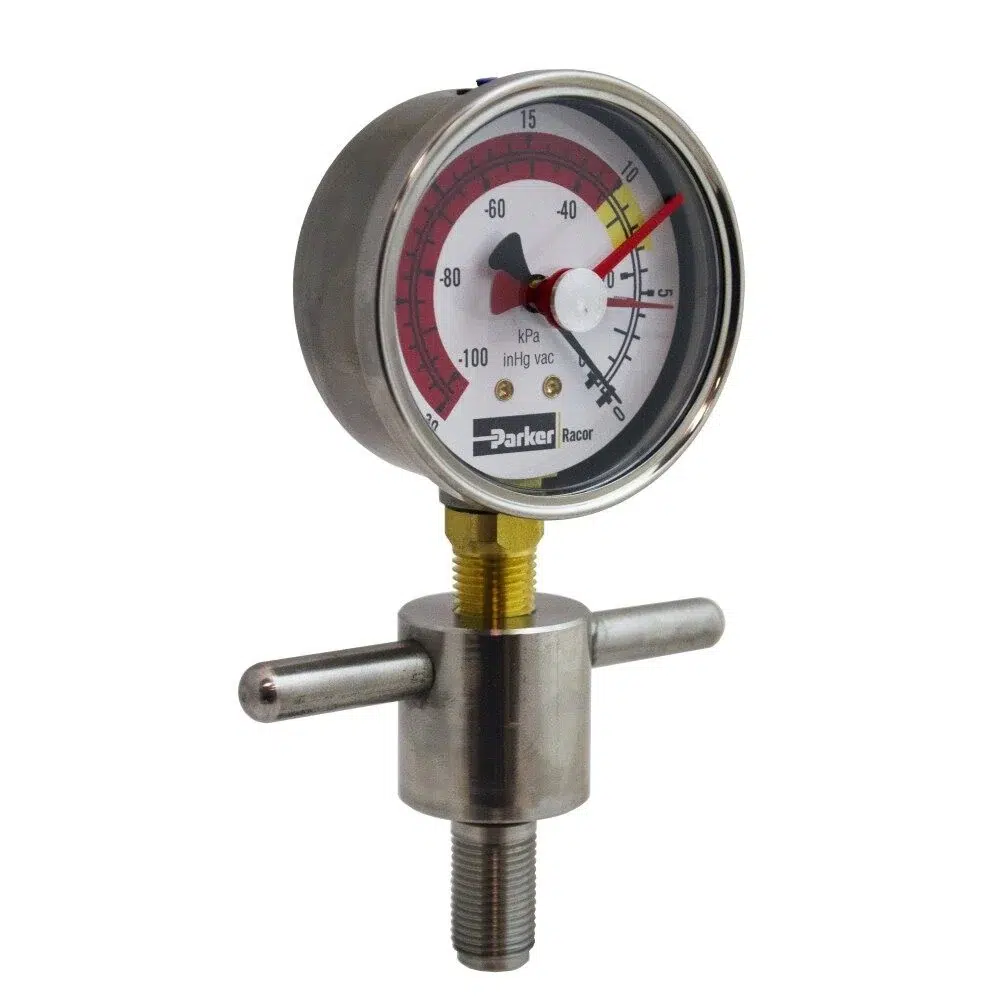
Pro tip: A restriction gauge is most useful when you check it consistently—log it at idle and at cruise RPM. That way you can spot trends. When restriction rises faster than normal, it often points to contaminated fuel, a tank issue, or a recent fuel fill that brought in debris.
Water Detection & Change-Filter Alerts: Another Layer of Protection
Water in diesel happens. Even “good” fuel can carry water, and condensation can build in tanks—especially on boats that sit between trips or experience big temperature swings along the coast.
A water detection and filter restriction alert kit adds clear warnings that something is changing inside your filtration system. Depending on the configuration, these kits can provide:
- Drain water alert (water collecting in the bowl)
- Change filter alert (restriction threshold reached)
- Simple dash/helm indicators so you don’t have to rely on memory

This kind of warning is especially helpful on boats with multiple operators (captain, crew, family members) or boats that run long distances. If you’re pushing to make a weather window, an alert can prevent you from unknowingly running toward a fuel starvation event.
Reference product page: Racor Water Detection and Filter Restriction Kit
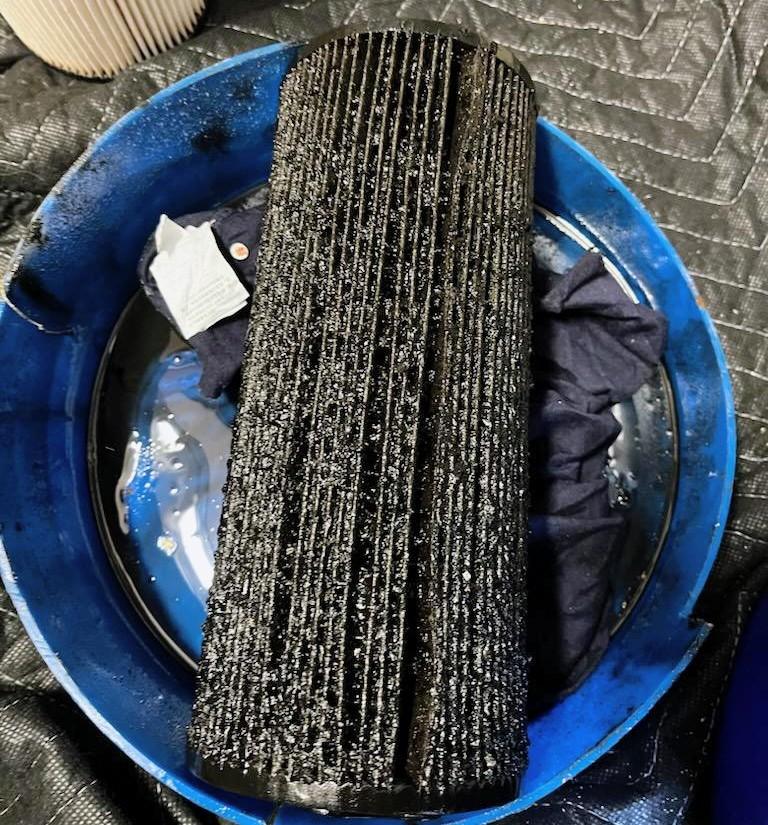
The Real-World Problem: What “Extremely Clogged” Looks Like
Clogged filters aren’t theoretical. When a boat’s fuel tanks have sludge, microbial growth, or stirred-up debris after a rough crossing, the element can load fast—sometimes in a single trip. That’s why the best practice is not “change the filter every X hours,” it’s “monitor restriction and keep spares.”
A filter can look fine on the outside and still be at its limit. The engine may idle normally, then fall on its face when you throttle up. A vacuum gauge and alert system help you catch this before it becomes a dead-in-the-water call.
When a Racor Duplex 900 Setup Makes Sense
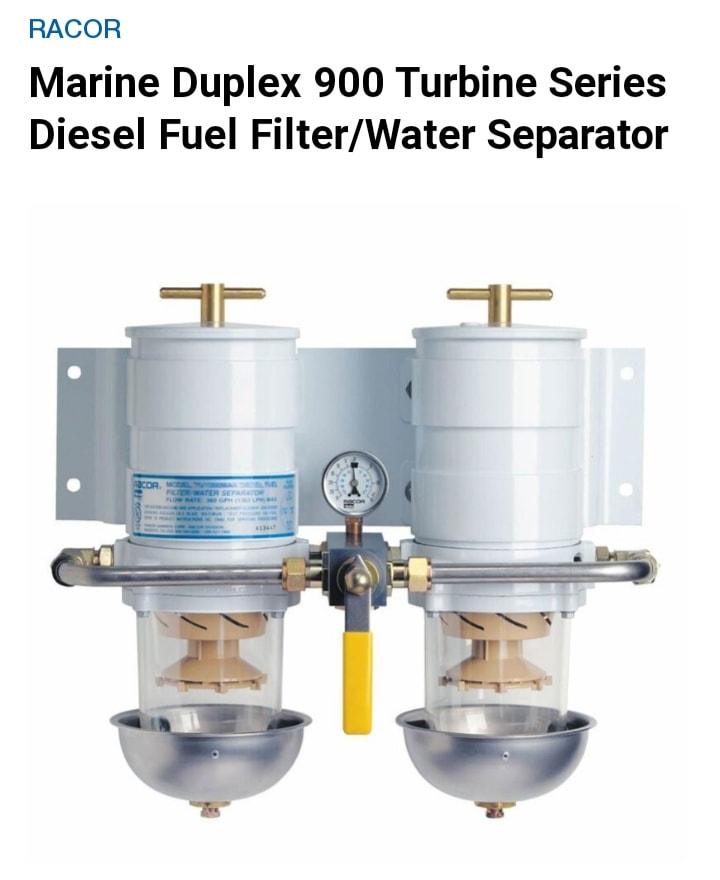
If you want a serious reliability upgrade—especially for offshore runs, commercial use, or boats that cannot afford downtime—a duplex filtration system is the gold standard. A duplex setup uses two filters and a selector valve so you can switch from one filter to the other while running.
That means if one element begins to clog during a trip, you can:
- Switch to the clean side
- Restore normal fuel flow immediately
- Service the clogged side safely later (or once you’re back at the dock)
- Master Marine Diesel Troubleshooting Guide – 805 Marine Diesel Mechanic
Who benefits most from duplex filtration?
- Boats running to the Channel Islands regularly
- Sportfishers, trawlers, and cruisers doing long coastal passages
- Commercial operators (work boats, charters, transport)
- Any boat with a history of tank contamination or unknown fuel quality
With a duplex system, we can also configure restriction monitoring so you can compare both sides and plan element changes around real data.
Installation & Setup Notes (What We Focus On During Service)
Fuel system upgrades are not just “bolt-on parts.” The reliability comes from correct installation and correct system checks. When we upgrade Racor filtration, we pay attention to:
- Correct sealing surfaces and O-ring fitment (air leaks can mimic fuel starvation)
- Hose routing and proper support (avoid chafe and sharp bends)
- Leak checks on suction side connections (even tiny air leaks can cause hard starts and surging)
- Primer/polishing compatibility where applicable
- Sensor wiring and helm indicators that are clean, labeled, and service-friendly
If you want to get the most value from a vacuum gauge, we’ll also recommend a simple routine: check restriction at idle, then check it again after your boat is warmed up and running at normal cruise. Consistent notes make your gauge a true diagnostic tool.
Common Symptoms a Vacuum Gauge Can Help Diagnose
Not every fuel problem is a “bad filter,” but restriction monitoring narrows the hunt fast. If restriction is rising abnormally, we look at:
- Contaminated fuel from a recent fill
- Microbial growth in the tank (diesel bug)
- Tank pickup screen restriction
- Collapsed or delaminating fuel hose (internal restriction)
- Improperly sized filtration for the engine’s fuel demand
If restriction stays low but symptoms persist, we shift attention to lift pump performance, return restrictions, injector issues, or other factors. The key is that a gauge helps you stop guessing.
Recommended Service Plan for Coastal California Boaters
For boats that run Ventura to Santa Barbara, down toward Oxnard, and out to the Islands, we typically recommend a maintenance approach that assumes real-world conditions, not perfect lab fuel:
- Pre-trip check: inspect Racor bowl, check for water, check restriction (if equipped)
- Keep spares onboard: correct Racor elements, bowl seals, and the tools needed
- Log restriction: a simple note in your phone is enough
- Drain water promptly: don’t let water sit in the bowl
- Periodic tank health check: especially after purchasing a boat or after long storage
Want to reduce surprise failures even further? Ask us about fuel polishing, tank cleanouts, and filtration upgrades matched to your engine’s consumption and return flow.
Racor Fuel Filtration Upgrades in Ventura, Oxnard, Channel Islands Harbor & Santa Barbara
Fuel issues are one of the most common “no-start” or “lost power” causes we see on the coast. If you’re running Cummins, Caterpillar, Volvo Penta, Yanmar, Perkins, MAN, MTU, Detroit Diesel, or other marine diesels, we can help you build a filtration setup that matches how you actually use your boat.
805 Marine Diesel Mechanic provides mobile service throughout Ventura County and Santa Barbara—dockside when possible—so you can improve reliability without losing weeks of boating season.
Book a Racor System Upgrade
Troubleshoot Fuel Starvation
Related Service Pages
- Perkins Marine Diesel Engine Services
- Yanmar Marine Diesel Engine Services
- Fresh Water Flushing & Cooling System Care
- Contact 805 Marine Diesel Mechanic
Helpful Resources
- BoatUS (boating safety, ownership resources, and membership services)
- Yachting Magazine (maintenance and cruising insights)
- ABYC (marine standards and best practices)
FAQ: Racor Vacuum Gauges, Water Detection & Duplex Systems
What does a Racor vacuum gauge tell me?
It shows fuel filter restriction (how hard the system is pulling fuel through the element). Rising restriction usually means the filter is loading with debris and needs service soon.
Do I need a vacuum gauge if I already change filters regularly?
Yes—because contamination doesn’t follow your schedule. A gauge helps you service based on real conditions, especially after fueling or rough trips that stir tanks.
What causes marine diesel filters to clog quickly?
Common causes include sludge in tanks, microbial growth (“diesel bug”), rust/scale, stirred debris after rough seas, and contaminated fuel from a recent fill.
What’s the advantage of a Racor duplex system?
A duplex system lets you switch from one filter to the other while running. If one side clogs, you can restore fuel flow immediately and deal with the clogged element later.
Can water detection kits prevent injector damage?
They help by warning you early when water is collecting so you can drain it and address the source. Water and corrosion are major contributors to fuel system wear.
Can an air leak look like a clogged filter?
Absolutely. Small suction-side air leaks can cause surging, hard starts, and power loss. During installation we check sealing surfaces and fittings carefully.
Do you install these upgrades dockside in Ventura and Channel Islands Harbor?
Yes. We provide mobile service in Ventura, Oxnard, Channel Islands Harbor, and Santa Barbara, and we can evaluate your current setup and recommend the right upgrade path.
Talk With a Trained Technician
4 Responses