
Conducted by : Jeff Lendall & Sons. 805 Marine Diesel Mechanic
1998 SeaSport xl 2400
OFFICIAL# WMA24013J798 LOA: 24FT YEAR: 1998 Seasport
ENGINE 1:
-
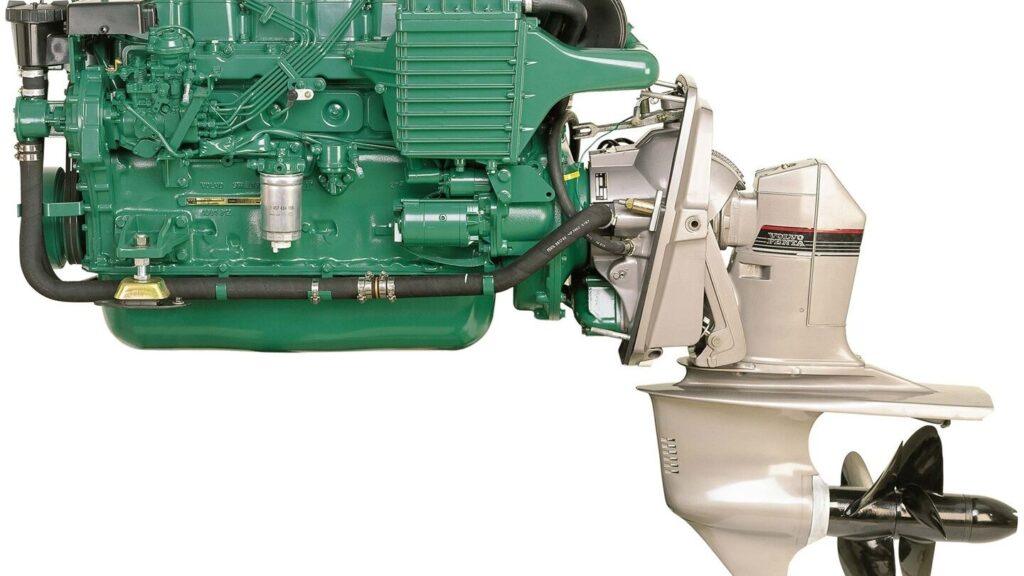
Engine Make: Volvo Penta
Engine Model: AD41P-A
Engine Type: Inboard/Outdrive
Power HP: 200
Fuel Type: Diesel
Hours: 507
Serial Number: 452602
-
TRANSMISSION PORT:  Volvo Penta 3868224 DP-E
Serial Number: 4111578632
Engine Room Systems:
FUEL FILTRATION SYSTEM: Racor Fuel Filter/Water Separator 10 Micron filter assembly: Appeared serviceable, No water present.
THROTTLE & SHIFTER CONTROLS: Morse cable shifters worked properly at Main cabin.
SEAWATER PUMP: Seals leaking/needs to be replaced.
TUBE-TYPE HEAT EXCHANGER: checked inlet and outlet flow temperature, within parameters
ENGINE OIL COOLER: checked inlet and outlet temperatures, all within parameters
SEAWATER PUMP OUTLET PRESSURE: adequate pressure
COOLANT LEVEL SENSOR: working properly no leaks observed.
ENGINE MOUNTS AND BED: Main engine beds are heavy longitudinal stringers inboard and outboard. Engine Mounts Satisfactory
LUBE OIL PRESSURE: (WOT) engine 100% load 90 psi.
COOLING SYSTEM TYPE: Freshwater reservoir type cooling with Seawater cooled wet exhaust, Operated satisfactory.
COOLANT LEVEL: Normal levels observed. used heat sensing gun on all cooling system surfaces. operated normal.
HOSES AND CLAMPS: Cooling system hoses & hose clamps showing wear, need to be replaced
BELTS AND PULLEYS: Pulleys condition appeared serviceable, Belts showing wear need to be replaced
SEACOCKS AND STRAINERS: Seawater seacocks were ball valve type. Operated smooth & satisfactory.
EXHAUST SYSTEM: Seawater cooled with risers and flexible coupling sections double clamped where sighted.
ENGINE ALARMS: Test of low oil pressure alarm, and coolant overheat warning audible at helm station. Operated satisfactory.
ENGINE SHUT DOWN: electronic style shut off solenoid switches operated satisfactory
BELLOWS & BEARINGS: Rubber bellows appeared flexible and without leaks. Bearings seem serviceable.
ENGINE ALIGNMENT: Appeared Smooth & without vibration.
RUDDERS: Packing gland style, not leaking excessively appeared serviceable. no vibration.
TURBOCHARGERS: Movement in turbine wheel shaft bearings, leaking a small amount of oil at turbine wheel shaft, sounded like it spooled up around 2400 RPM and operated satisfactory
VOLVO PENTA TRANSMISSION & OUTDRIVE: performed adequately while shifting no excessive noise or vibration while under way.
——————————————————————————————-
SEATRIAL REPORT:
1. The engine started without excessive cranking.
2. The engine exhaust appeared normal. very minimal smoke for an engine of this age.
3. The cooling water exhaust appeared adequate and normal.
4. The engine instruments operate within normal operating limits at idle, cruising speed and at wide open throttle.
5. The steering system operated normally. very responsive.
6. The throttle & shifter: operated normally. no adjustment needed
7. The transmission, went in & out of gear smooth with no excessive noise
8. The backdown test was satisfactory.
| Activity | RPM Range | Notes |
|---|---|---|
| Wide Open Throttle (WOT) | 3700–3900 RPM | This is the target range the engine should achieve when properly propped and loaded (with full fuel, water, and gear). |
| Rated Engine Speed | 3800 RPM | The specified speed at which the engine produces its maximum power (200 hp). |
| Cruising Speed | 3200–3600 RPM | A general guideline for a good, sustainable cruising speed is to run about 200–400 RPM below the maximum RPM. Many operators run at lower RPMs for better fuel economy, such as around 2800-3200 rpm, as long as the boat is on plane. |
| Planning Speed (approx.) | ~2600 RPM | The turbocharger and main power typically “kick in” at around 2600 RPM, which helps the boat get onto a plane. |
- Propeller Matching: The engine should be able to reach the specified WOT range (3700-3900 RPM) to prevent lugging or over-revving. Propeller size and pitch must be selected correctly to achieve this.
- Continuous Operation: The engine is designed for applications where full power is used for a maximum of 1 hour per 12-hour operational period.
- Maintenance: Regular maintenance of the cooling system, fuel filters, and aftercooler is crucial for maintaining optimal RPM and engine health.
- Documentation: For specific, authoritative limits for your exact installation, consult the official AD41P-A operator’s manual. Master Marine Diesel Troubleshooting Guide – 805 Marine Diesel Mechanic
Wide-open throttle (WOT) testing confirmed excellent performance: no smoke was observed, the boat accelerated smoothly onto plane, and the engine delivered strong, confident power throughout. Results indicate the system is operating cleanly and reliably. WOT test 3500 RPMs continuous for 3 minutes, is a little lower than the 3800 Rated Engine Speed. could be a number of factors but nothing to be concerned about, 170 degree water temperature for the entire WOT test, and 90 lbs oil pressure, all within parameters.
Recommendations and observations:
- Saltwater cooling system needs to be serviced (DESCALED) Heat exchanger, intercooler, lube oil cooler & seawater pump. new zinc anodes throughout.
- Turbocharger has excessive play at shaft bearings and is leaking oil, needs to be rebuilt.
- Cooling system hoses and hose clamps have excessive wear, need to be replaced.
- Drive belts worn need to be replaced.
- Oil leaking at head gasket or valve cover gaskets, need to be replaced.
- Saltwater pump leaking at seals, needs to be replaced.
OIL ANALYSIS REPORT:
Volvo Penta Marine Engine AD41P-A
Volvo Penta AD41PA Coolant sample
I pulled the coolant directly from the overflow reservoir, so the chance of contamination is minimal, with that being said
Possible Reasons for Oil in the Coolant
1. Oil Cooler Internal Corrosion or Failure
The AD41P-A uses an oil cooler where engine oil and coolant pass through adjacent chambers.
If the cooler core begins to corrode or crack, oil (higher pressure) can push into the coolant circuit.
This is the #1 most common cause of oil in coolant on Volvo Penta 40-series engines.
2. Failing Gasket or Seal Between Oil and Coolant Passages
A compromised gasket — especially around:
-
the oil cooler end caps,
-
heat exchanger sealing surfaces, or
-
block/head coolant/oil routing points
— can allow oil to migrate into the cooling system.
3. Head Gasket Leak (Less Common on AD41 but Possible)
A small breach in the head gasket can allow oil to enter the coolant jacket, although these engines usually show overheating, pressurized coolant, or white exhaust if it’s more serious.
4. Sampling Contamination
Even when draining the overflow reservoir directly, the reservoir can retain:
-
film from older contamination,
-
residue from a previous failure, or
-
contamination introduced during bottle filling.
This is why the lab recommended a resample as soon as possible.
Master Marine Diesel Troubleshooting Guide – 805 Marine Diesel Mechanic
MARINE ENGINE SURVEY SUMMARY:
As a result of my investigation, MARINE ENGINE SURVEY, and by virtue of my experience, my opinion is OVERALL ENGINE RATING: GOOD: the engine room and engines appear to be well maintained. 
[videopress 43hJLBBI w=”1565″ loop=”true”]
Leaking Seawater pump at seals, needs to be replaced
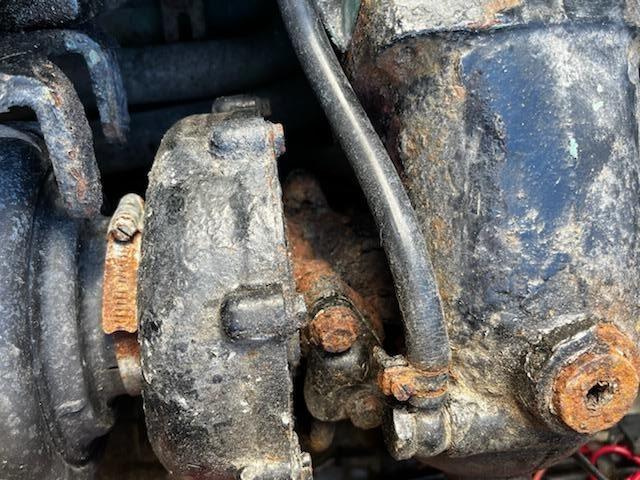
Turbocharger: Bearings are worn & leaking a small amount of oil at shaft seals, needs to be rebuilt
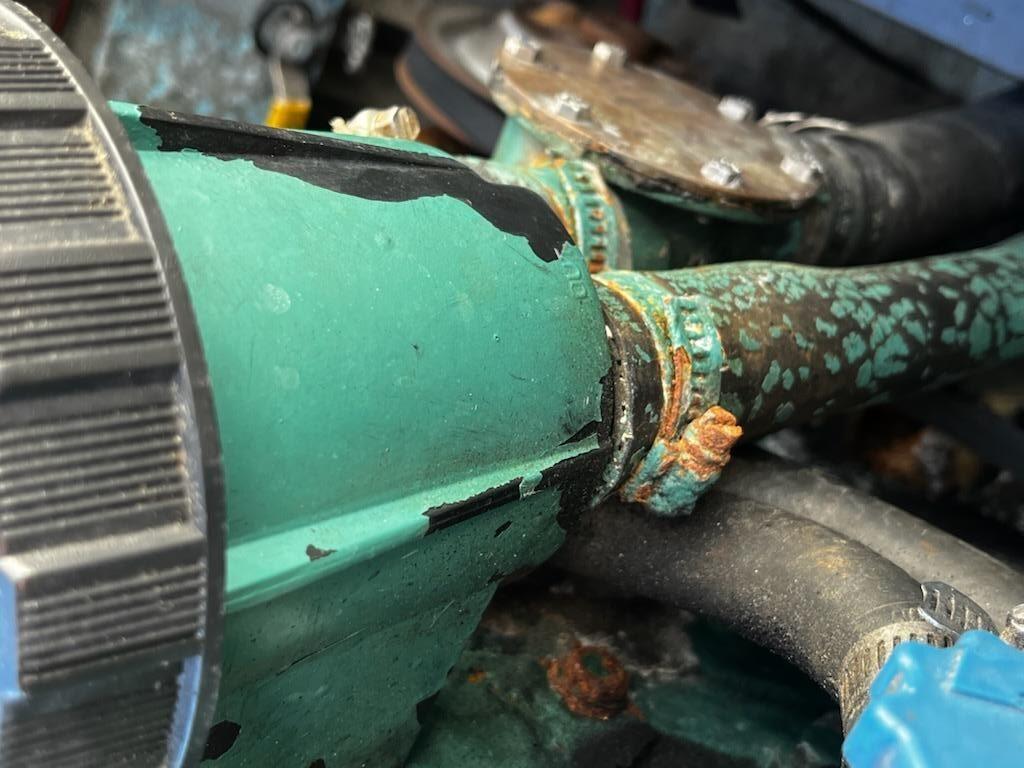
Volvo Penta cooling system hoses & Hose clamps need to be replaced
NOTICE:
The following statements limit the liability of the undersigned and set ethical standards associated with this report. Use of this report for any purpose constitutes acceptance of the following:
NOTE A: This report is issued without prejudice and is the property of the Requestor
as listed above. Any use or distribution by another party is prohibited and shall render this report invalid.
NOTE B: This report is issued subject to the understanding that the undersigned surveyor is not responsible for error, omission, negligence or misstatement. This report is a statement of my opinion based on the conditions as I found them. It is not a warranty express or implied. This inspection is valid this date only as conditions of vessels in a saltwater environment can deteriorate rapidly. Condition is to be regarded as good or better unless reported herein.
Owner/Surveyor Jeff Lendall
Ball park estimate of repairs needed
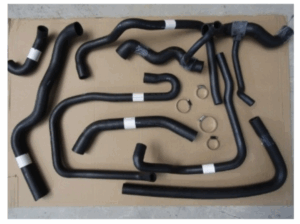
- cooling system hoses and hose clamps: $940.00 hoses 5hr
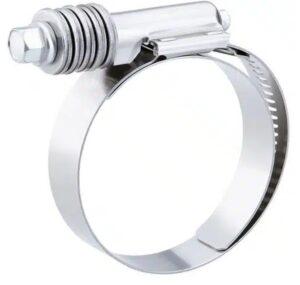
- 24 S.S. constant torque hose clamps 14each $336.00
- 2 drive belts $64.00 1hr
- 3 head gaskets or valve cover gaskets $150.00- $220.00 3hr
- turbocharger rebuild $1600.00 2hr
- seawater pump $420.00 1hr
- descale saltwater cooling system $89.00 4hr
16 hours labor at $165.00= $2640.00 parts= $3669.00
Ball park estimate of repairs needed:
parts and labor $6,309.00
One Response