
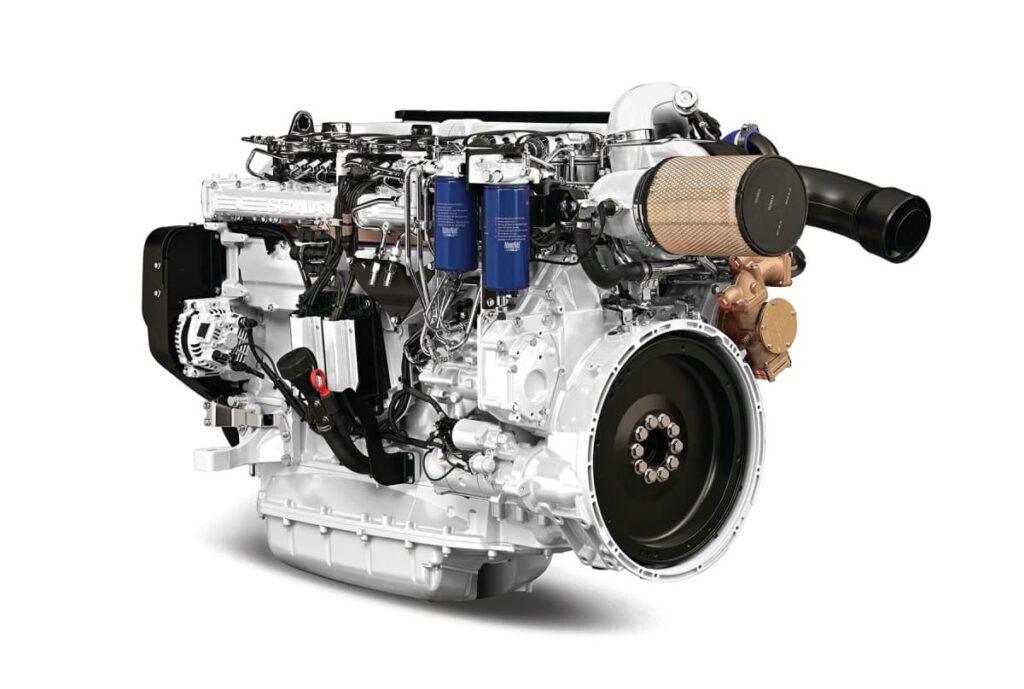
The Scania DI13 900 hp marine diesel engine is built for demanding applications where power density, fuel economy, fast throttle response, and long service life matter. These engines are commonly used in sportfishing yachts, patrol vessels, commercial workboats, passenger vessels, and high-end recreational boats that need reliable power without excessive fuel burn.
805 Marine Diesel Mechanic supports Scania-powered vessels throughout Ventura Harbor, Oxnard, Channel Islands Harbor, Santa Barbara Harbor, Port Hueneme, and nearby Central Coast marine facilities. Our mobile dockside service helps owners and captains reduce downtime while keeping inboard marine diesel systems inspected, documented, and ready for hard use.
Scania DI13 900 HP Marine Diesel Overview
Power, Efficiency, and Long Service Life
The Scania DI13 platform is known for strong torque, efficient combustion, and a service-friendly design. When the engine is installed, propped, and maintained correctly, it can deliver excellent acceleration, stable cruise performance, reduced fuel consumption, and dependable operation in both commercial and recreational use.
Fuel efficiency is not only about the engine. The hull, propeller load, running gear condition, fuel quality, turbocharger response, seawater cooling, and ECU data all affect how efficiently the DI13 performs in real operating conditions.
Scania DI13 Technical Highlights
- Horsepower: 900 hp class
- Configuration: inline 6-cylinder marine diesel
- Displacement: approximately 12.7 liters
- Fuel system: high-pressure common rail
- Induction: turbocharged and aftercooled
- Cooling: heat exchanger or keel-cooling options depending on installation
- Applications: sportfishers, patrol boats, ferries, workboats, and yachts
Scania DI13 Maintenance Priorities
Oil, Filters, and Routine Inspection
Routine Scania DI13 service should include oil and filter changes, fuel-filter replacement, coolant checks, belt inspection, hose inspection, seawater-system inspection, aftercooler inspection, heat-exchanger checks, ECU review, and visual engine-room inspection.
High-output engines should also be maintained through trend monitoring. Captains should track cruise RPM, boost, coolant temperature, oil pressure, exhaust temperature, fuel burn, alarms, and vibration so changes can be caught early.
Related support includes Scania marine diesel maintenance schedule, marine diesel engine services,
Fuel Efficiency and Fuel-System Service
The DI13’s fuel efficiency depends on precise injection, clean filters, proper fuel pressure, healthy injectors, and correct engine load. Water contamination, restricted filters, air leaks, or injector imbalance can quickly reduce efficiency and create smoke or power-loss complaints.
Fuel-system inspection should include the tank, water separators, primary and secondary filters, fuel lines, return system, pressure behavior, and contamination history. For boats that sit between trips, microbial growth and condensation can become a major cause of recurring filter restriction.
Existing supported service links include Perkins marine diesel service, Yanmar marine diesel service, and fresh water flushing systems and best practices.
Cooling-System Inspection
Cooling-system health is critical on a 900 hp marine diesel. Heat exchangers, aftercoolers, seawater pumps, raw-water strainers, hoses, coolant circuits, zincs, and exhaust components should be inspected regularly because high-load operation generates substantial heat.
A Scania DI13 may idle normally at the dock but still overheat or lose performance during a loaded run. Rising coolant temperature, reduced top-end RPM, weak seawater discharge, smoke under acceleration, or recurring alarms should be investigated before the next trip.
Additional cooling support includes marine raw-water pump maintenance, Sherwood marine engine pump maintenance, and fresh water flushing system.
Applications for the Scania DI13 900 HP
The Scania DI13 is a strong fit for vessels that need fast response, efficient cruise, and durable service life. It is commonly used in sportfishing yachts running offshore, patrol boats requiring quick acceleration, workboats with long duty cycles, and passenger vessels where uptime and fuel economy matter.
For West Coast vessels running from Ventura or Santa Barbara toward the Channel Islands, fuel efficiency, cooling reliability, and clean running gear all influence real-world range. A properly maintained DI13 can provide strong performance while helping reduce fuel cost over a season.
Common Scania DI13 Problems We Diagnose
- Loss of power under load
- Black smoke during acceleration
- Overheating at cruise RPM
- Fuel-filter restriction
- Hard starting after sitting
- ECU alarms or derate events
- Boost-pressure problems
- Aftercooler or heat-exchanger restriction
- Unusual vibration
- Failure to reach rated RPM
These symptoms should be diagnosed as a complete propulsion system. The root cause may involve fuel delivery, turbocharger response, seawater cooling, running gear load, exhaust restriction, ECU data, or mechanical wear.
How to Maximize Scania DI13 Engine Life
Protect Fuel Quality
Drain water separators, change filters on schedule, keep fuel tanks clean, and treat fuel during seasonal layups. Common-rail systems require clean fuel because contamination can damage injectors and create expensive repairs.
Keep Cooling Systems Clean
Saltwater scale, marine growth, and corrosion reduce heat transfer. Heat exchangers, aftercoolers, strainers, impellers, hoses, and coolant should be inspected before performance drops or alarms appear.
Track Operating Data
Log RPM, speed, boost, fuel burn, coolant temperature, oil pressure, and alarm history. Performance changes often appear in the data before they become obvious at the helm.
Inspect Belts, Hoses, and Electrical Connections
High-output engines depend on stable accessory systems. Belts, tensioners, hoses, batteries, grounds, sensors, and harnesses should be inspected during routine service because small failures can create major downtime offshore.
Mobile Scania Marine Diesel Service Areas
805 Marine Diesel Mechanic provides mobile dockside Scania DI13 service throughout Ventura Harbor, Oxnard, Channel Islands Harbor, Santa Barbara Harbor, Port Hueneme, and nearby Central Coast marinas.
We support Scania-powered commercial vessels, sportfishing yachts, patrol craft, ferries, and private yachts with maintenance, diagnostics, cooling-system service, fuel-system inspection, and pre-trip support.
Helpful Scania Technical Resources
Scania DI13 900 HP Marine Diesel FAQ
How often should I service my Scania DI13 900 hp?
Service intervals should follow Scania’s recommendations and the vessel’s real duty cycle. Many commercial, patrol, and sportfishing operators benefit from regular inspections plus oil and filter changes around 250–300 hours.
Can 805 Marine Diesel Mechanic service my Scania DI13 dockside?
Yes, 805 Marine Diesel Mechanic provides mobile dockside Scania DI13 service in Ventura Harbor, Oxnard, Channel Islands Harbor, Santa Barbara Harbor, and nearby Central Coast marinas.
What makes the Scania DI13 fuel efficient?
The Scania DI13 uses high-pressure common rail injection, efficient combustion, turbocharging, and strong midrange torque to reduce fuel consumption. Correct propeller load and clean running gear are also important.
What causes a Scania DI13 to lose power?
Power loss may come from restricted fuel flow, dirty filters, boost leaks, cooling-system restriction, exhaust restriction, overloaded propellers, hull fouling, or ECU derate conditions. A full diagnosis should evaluate the entire propulsion system.
Why does my Scania DI13 smoke under acceleration?
Smoke under acceleration can be caused by fuel imbalance, restricted airflow, turbocharger issues, overloaded running gear, poor fuel quality, or cooling problems. Diagnostic work should compare fuel, air, exhaust, load, and ECU data.
Can overheating happen only under load?
Yes, many cooling-system restrictions only appear during cruise or heavy acceleration. The engine may idle normally at the dock while still overheating under real operating load.
Do you use OEM or OEM-equivalent Scania parts?
805 Marine Diesel Mechanic prioritizes OEM or high-quality OEM-equivalent components where practical. Proper parts selection helps protect fitment, reliability, and long-term serviceability.
Should Scania DI13 operators track fuel burn?
Yes, tracking fuel burn, RPM, speed, boost, and temperature helps identify efficiency changes early. A rising fuel burn at the same speed can point to engine load, running gear, or fuel-system problems.
Is the Scania DI13 good for sportfishing yachts?
Yes, the DI13 is well suited for sportfishing yachts that need strong acceleration, efficient cruise, and dependable offshore performance. Maintenance and clean cooling systems are key to preserving that performance.
Do you service Scania marine engines in Ventura and Santa Barbara?
Yes, 805 Marine Diesel Mechanic provides mobile Scania marine diesel service throughout Ventura, Oxnard, Channel Islands Harbor, Santa Barbara, Port Hueneme, and nearby Central Coast marine facilities.
Need Scania DI13 900 HP Marine Diesel Service?
Get mobile dockside Scania diagnostics, fuel-efficiency inspection, cooling-system service, and inboard diesel repair throughout Ventura, Oxnard, Channel Islands Harbor, and Santa Barbara.