
The Most Overlooked Maintenance Items on Inboard Marine Diesel Engines in Santa Barbara, Ventura & the Channel Islands
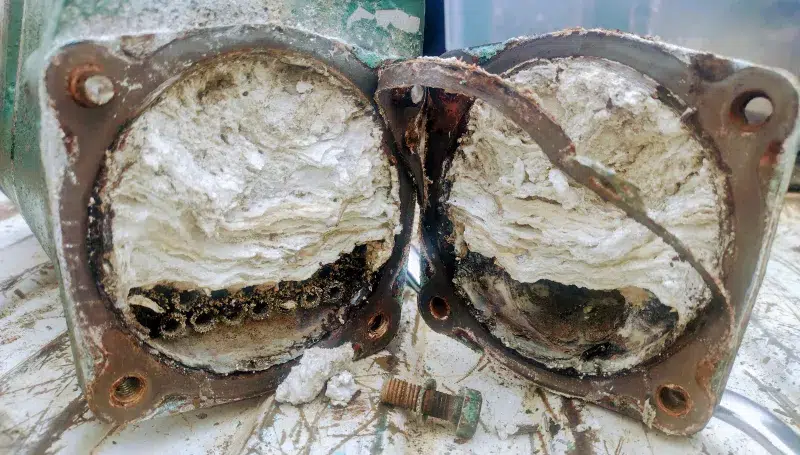
If you run an inboard marine diesel engine in Santa Barbara, Ventura, Oxnard, or anywhere around the Channel Islands, you’re operating in one of the most salt-heavy, warm-water environments on the California coast. And while these conditions are great for boating year-round, they also create hidden wear points inside your diesel engine room — issues many boat owners don’t see until performance drops, temperatures spike, or the engine simply won’t run at all.
Below is a breakdown of the most commonly overlooked maintenance items we see on the marine diesel engines we service throughout Santa Barbara Harbor, Ventura Harbor, and Channel Islands Harbor. Addressing these items early keeps your engine reliable, reduces repair costs, and helps ensure safe trips offshore.
Schedule Diesel Engine Service
Why These Maintenance Items Get Missed
Inboard diesel engines are tough, but many failure points develop slowly and silently. Warm water, bio-growth, corrosion, and long periods of sitting at the slip create conditions where parts fail without warning. Because the Santa Barbara and Ventura region doesn’t experience freezing temperatures, many owners assume they can skip certain checks — but warm coastal water is actually harder on cooling systems, impellers, zincs, and fuel systems.
1. Heat Exchanger Scale & Marine Growth
Warm Southern California water accelerates scale buildup inside heat exchangers and coolers. Combine that with high marine growth in Santa Barbara and Ventura harbors, and you end up with reduced cooling efficiency long before overheating alarms trigger.
What we see locally
- Heavy calcium scale in heat exchanger tubes
- Barnacle larvae inside raw-water circuits
- Warm-water corrosion on cooler stacks
If you haven’t had your heat exchanger cleaned in the last 2–3 years, there’s a good chance it’s overdue.
Learn more about fresh water flushing →
2. Raw-Water Pump & Impeller Wear From Sandy Harbors
Santa Barbara and Ventura harbor entrances carry sand, silt, and suspended debris — all of which slowly grind away at impeller vanes. Many failures happen not from broken impellers, but from reduced pumping volume due to micro-wear that owners never see.
Warning signs include:
- Engine runs slightly hotter at cruise
- Longer time to reach operating temp
- Reduced flow at the exhaust outlet
We inspect impellers on every service because this subtle wear is one of the most common causes of engine overheating offshore.
Master Marine Diesel Troubleshooting Guide – 805 Marine Diesel Mechanic
3. Fuel System Contamination (a huge warm-water problem)
Warm California coastal water and humid marine air encourage bacterial and fungal growth inside diesel tanks. When boats sit for weeks at a time, microbial colonies expand and create sludge that clogs Racors, injectors, and lift pumps.
Local symptoms we see constantly:
- Loss of power when throttling up
- Dark sludge in primary filters
- Frequent Racor clogging
Fuel system issues are the #1 cause of offshore power loss for recreational boats around the Channel Islands.
View Perkins diesel services →
4. Electrical Corrosion From Salt-Air Exposure
Santa Barbara’s salty marine environment is tough on engine-room wiring and electrical connections. Even insulated terminals can corrode under heat cycles and humidity, causing intermittent issues that are notoriously hard to diagnose.
Common failure points include:
- Ground connections
- Starter solenoids
- Battery cables
- Engine harness plug corrosion
If your engine cranks slowly or intermittently, electrical corrosion is often the source.
5. Exhaust Elbows & Mixing Elbows (high-risk in warm water)
Mixing elbows deteriorate far faster in warm, oxygen-rich seawater — which makes the Santa Barbara and Ventura region particularly hard on them.
When elbows begin to clog, your diesel engine can overheat or fail to reach rated RPM. Many owners never inspect them because the failure happens internally.
6. Shaft Seals, Zincs & Underwater Components
Warm water accelerates galvanic activity, and boats in Channel Islands Harbor and Ventura see zinc depletion much faster than cooler-water regions.
- Shaft seals drying out
- Bronze components showing pink spots (dezincification)
- Cutlass bearing wear from vibration or misalignment
How We Help Boat Owners Throughout Santa Barbara, Ventura & the Channel Islands
We specialize in keeping inboard marine diesel engines reliable for local conditions. Our trained technicians inspect the hidden failure points unique to warm-water Southern California boating and help ensure trouble-free operation offshore.
Whether you run a Perkins, Yanmar, Cummins, or other inboard diesel, we tailor maintenance to local harbor conditions, run cycles, and your vessel’s age.
Book a Diesel Engine Inspection
Helpful Resources
- BoatUS – Marine Maintenance Guides
- Yachting Magazine – Diesel Engine Articles
- Yanmar Marine Official Site
- Perkins Engines Official
FAQs
How often should I service my inboard diesel in Santa Barbara or Ventura?
Annually, or every 100–150 hours. Warm water, marine growth, and long idle periods make yearly service essential.
What’s the most common issue you see locally?
Fuel contamination and heat-exchanger fouling — both worsened by warm water.
How do I know if I need a heat-exchanger cleaning?
If your engine runs hotter than it used to, struggles at cruise RPM, or hasn’t been serviced in 2–3 years.
Can you inspect my mixing elbow?
Yes — we remove, evaluate, and measure back-pressure-related restrictions.