
Common Cummins Marine Engine Survey Findings | What Buyers Should Know
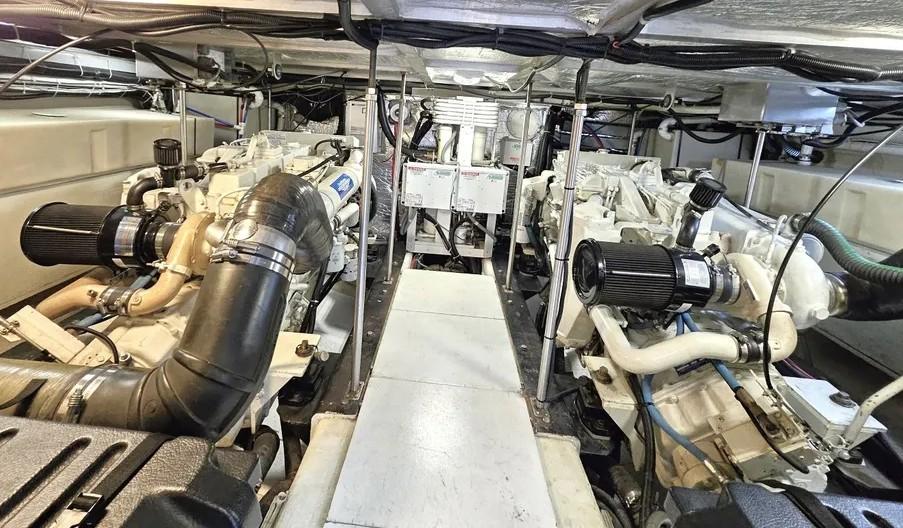
Cummins marine diesel engines are found in sportfishing boats, cruisers, motor yachts, commercial vessels, and long-range cruising boats throughout Southern California. During a Cummins marine engine survey, certain findings appear repeatedly, including cooling-system issues, aftercooler maintenance concerns, fuel-system problems, turbocharger wear, smoke under load, low RPM, vibration, and sea-trial performance deficiencies.
Schedule a Cummins Engine Survey
Why Common Cummins Survey Findings Matter
A Cummins engine may start easily and idle smoothly at the dock while still hiding problems that only appear under load. A complete survey helps identify mechanical, cooling, fuel, exhaust, turbocharger, and electronic concerns before a buyer commits to a vessel purchase.
805 Marine Diesel Mechanic performs Cummins marine engine surveys with oil analysis, cooling-system pressure testing, sea-trial evaluation, visual inspection, and electronic diagnostics when supported by the engine platform.
This page supports our Cummins Marine Engine Surveys Hub and our main Marine Engine Survey page.
Cooling-System Findings
Cooling-system condition is one of the most important areas of any Cummins survey. Heat exchangers, aftercoolers, seawater pumps, thermostats, coolant condition, hoses, coolers, and strainers all affect engine temperature and reliability.
Restricted Heat Exchangers
Heat exchangers can become restricted by scale, debris, age, or marine growth. Restricted heat transfer may cause rising engine temperature during cruise or wide-open-throttle operation.
Raw-Water Pump Wear
Worn impellers, weak pumps, leaking seals, or damaged pump housings can reduce seawater flow and contribute to overheating under load.
Coolant and Pressure-Test Concerns
Cooling-system pressure testing helps identify leaks, weak components, and system integrity concerns before purchase. This is included with every survey performed by 805 Marine Diesel Mechanic.
Aftercooler Findings
Aftercoolers are especially important on many Cummins marine engines, including QSM11, QSC, QSB, QSL, 6CTA, and 6BTA applications.
Missing Aftercooler Service Records
One of the most common findings is missing or incomplete aftercooler service history. Buyers should request records showing when the aftercooler was removed, cleaned, inspected, pressure tested, and reinstalled.
Corrosion or Contamination
Aftercooler corrosion, internal contamination, or airflow restriction can affect performance, smoke output, boost efficiency, and long-term reliability.
Fuel-System Findings
Fuel-system problems may show up as hard starting, poor acceleration, low RPM, black smoke, rough running, or uneven engine performance.
Fuel Restriction
Restricted filters, contaminated fuel, plugged fuel lines, or lift-pump concerns can reduce engine performance under load.
Injector Concerns
Injector-related symptoms may include smoke, rough operation, hard starting, uneven performance, and reduced power.
Fuel Contamination
Water, debris, biological growth, or poor fuel quality can create operating problems and should be considered during a pre-purchase survey.
Turbocharger and Air-System Findings
Turbocharger performance directly affects power, smoke, boost response, and fuel efficiency.
Poor Boost Response
Poor boost response can cause black smoke, slow acceleration, elevated exhaust temperatures, and inability to achieve rated RPM.
Airflow Restrictions
Dirty air filters, restricted intake plumbing, leaking charge-air connections, or aftercooler restriction can reduce performance.
Exhaust-System Findings
Marine exhaust systems operate in a harsh saltwater environment and should be inspected carefully.
Corrosion and Leakage
Exhaust elbows, risers, clamps, lagging, and joints should be evaluated for corrosion, leakage, and deterioration.
Backpressure Concerns
Restricted exhaust flow may contribute to poor engine performance, smoke, and elevated temperatures.
Electronic Diagnostic Findings
Many modern Cummins engines support electronic diagnostics. When available, diagnostic review may help identify stored faults, sensor issues, derate conditions, active faults, and operating history.
Stored Fault Codes
Stored codes may reveal previous operating problems not visible during a dockside inspection.
Sensor or Derate Events
Sensor history and derate events may provide useful clues about prior engine behavior and operating conditions.
Sea-Trial Findings
The sea trial is often where the most important findings appear. Dockside running alone does not confirm engine health.
Failure to Reach Rated RPM
Failure to reach rated RPM may indicate propeller overload, hull fouling, fuel restriction, turbocharger problems, airflow restriction, or engine-performance issues.
Black Smoke Under Load
Black smoke may indicate low boost, fuel problems, restricted airflow, aftercooler issues, injector concerns, or excessive load.
Overheating Under Load
Temperature rise during sea trial may indicate cooling-system restriction, poor seawater flow, heat-exchanger fouling, aftercooler problems, or excessive engine load.
Vibration or Uneven Twin-Engine Performance
When surveying twin Cummins engines, port and starboard engine performance should be compared for RPM, smoke, temperature, oil pressure, vibration, and acceleration.
Common Cummins Purchase Risks
- Missing maintenance records
- Unknown aftercooler service history
- Cooling-system neglect
- Fuel contamination
- Injector concerns
- Turbocharger wear
- Stored electronic faults
- Failure to reach rated RPM
- Black smoke under load
- Overheating during sea trial
Related Cummins Survey Resources
- Cummins Marine Engine Surveys Hub
- Cummins QSM11 Marine Engine Survey
- Cummins 6CTA 8.3 Marine Engine Survey
- Cummins 6BTA 5.9 Marine Engine Survey
- Cummins 6BTA 5.9 Marine Engine Survey #2
- Marine Engine Survey
- Contact 805 Marine Diesel Mechanic
Service Areas
805 Marine Diesel Mechanic provides Cummins marine engine surveys throughout Ventura Harbor, Channel Islands Harbor, Oxnard, Santa Barbara Harbor, Marina del Rey, Malibu, and Port Hueneme.
Authority Resources
For manufacturer information visit Cummins Marine. For marine standards visit the American Boat & Yacht Council.
Common Cummins Marine Engine Survey Findings FAQ
What are the most common Cummins marine engine survey findings?
Common findings include cooling-system issues, aftercooler maintenance concerns, fuel-system problems, turbocharger wear, electronic faults, black smoke, overheating, low RPM, and poor sea-trial performance.
Why is the cooling system important during a Cummins survey?
The cooling system directly affects engine temperature, reliability, and service life. Heat exchangers, aftercoolers, seawater pumps, thermostats, coolers, hoses, and coolant condition should all be evaluated.
Why are aftercoolers important on Cummins marine engines?
Aftercoolers help control intake-air temperature and support efficient combustion. If they are corroded, restricted, leaking, or poorly maintained, performance and reliability may be affected.
What fuel-system problems are commonly found?
Common fuel-system findings include fuel contamination, restricted filters, injector concerns, air intrusion, lift-pump issues, and poor fuel delivery under load.
What causes black smoke on a Cummins marine diesel?
Black smoke may be caused by restricted airflow, low boost, injector problems, fuel-system issues, dirty aftercoolers, overloaded propellers, hull growth, or poor combustion.
What causes overheating during a Cummins sea trial?
Overheating may result from restricted seawater flow, fouled heat exchangers, aftercooler restriction, raw-water pump wear, thermostat problems, coolant issues, or excessive engine load.
Why is rated RPM important during a Cummins survey?
Rated RPM helps confirm whether the engine can carry the vessel load properly. Failure to reach rated RPM may indicate propeller overload, hull fouling, fuel restriction, airflow problems, or engine-performance concerns.
Can diagnostics reveal hidden Cummins engine problems?
On supported Cummins engines, electronic diagnostics may show stored faults, active codes, sensor issues, derate events, and operating history that are not obvious during visual inspection.
What does oil analysis reveal during a Cummins survey?
Oil analysis may reveal wear metals, coolant contamination, fuel dilution, soot loading, and lubricant condition. It is most useful when combined with inspection and sea-trial findings.
Is cooling-system pressure testing included?
Yes. Cooling-system pressure testing is included with every marine engine survey performed by 805 Marine Diesel Mechanic.
Is oil analysis included?
Yes. Oil analysis is included with every Cummins marine engine survey performed by 805 Marine Diesel Mechanic.
Is a sea trial included?
Yes. A sea-trial evaluation is included whenever vessel access and conditions permit.
What is evaluated during a Cummins sea trial?
Sea-trial evaluation includes RPM, temperature stability, oil pressure, smoke output, vibration, acceleration, boost response, and overall load-carrying performance.
Can twin Cummins engines be compared?
Yes. Twin engines should be compared for RPM, temperature, oil pressure, smoke, vibration, acceleration, boost response, and sea-trial behavior.
What Cummins engines are commonly surveyed?
Common Cummins engines include QSM11, QSC, QSB, QSL, 6CTA, 6BTA, and other Cummins marine diesel models used in yachts, cruisers, sportfishers, and commercial vessels.
Do you survey Cummins engines in Marina del Rey?
Yes. Marina del Rey is included in the target service area for Cummins marine engine surveys and pre-purchase inspections.
Do you survey Cummins engines in Ventura Harbor?
Yes. Ventura Harbor, Channel Islands Harbor, Oxnard, Santa Barbara, Malibu, and Port Hueneme are included when scheduling allows.
Can a Cummins survey reduce purchase risk?
Yes. A survey helps buyers identify potential mechanical concerns before closing and may support repair planning, negotiation, or a decision to continue or walk away from the purchase.
How much does a Cummins marine engine survey cost?
Computerized surveys are $950 per engine and mechanical surveys are $750 per engine. Generator surveys are $750 computerized and $600 mechanical.
How do I schedule a Cummins marine engine survey?
Call 805-774-0637 or use the contact page with the vessel location, engine model, desired survey date, and whether sea-trial access is available.