
Comprehensive marine engine survey Conducted by :
Jeff Lendall & Sons. 805 Marine Diesel Mechanic
SPORT FISHING BOAT:
HIN/IMO: RPGBA132D505 OFFICIAL#: 1173363 LOA: 33FT YEAR: 2005
ENGINE 1:
-
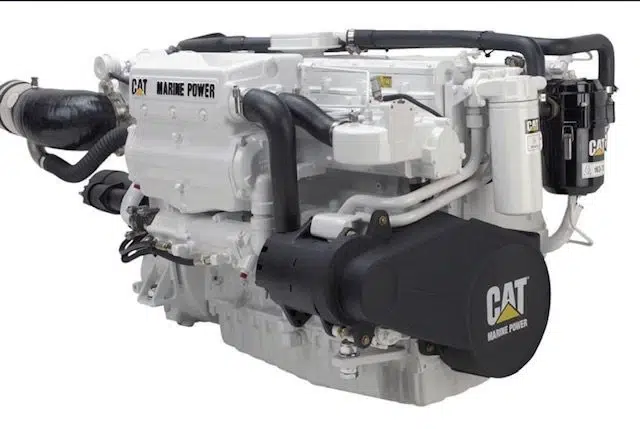
Engine Make: Caterpillar
Engine Model: C7
Engine Type: Inboard
Power HP: 455
Fuel Type: Diesel
Hours: 1752
Serial Number: C7X00327
Engine Location: Port
- TRANSMISSION PORT: ZF Marine Transmission ZF28C
ENGINE 2:
- Engine Make: Caterpillar
- Engine Model: C7
- Engine Type: Inboard
- Power HP: 455
- Fuel Type: Diesel
- Hours: 1763
- Serial Number: TC7X00326
- Engine Location: Starboard
- TRANSMISSION STRB: ZF Marine Transmission ZF28C
Caterpillar C7 inspection (Starboard): Mirror checks matched the port protocol. Harness connectors were tight and free of corrosion. Engine mounts were secure with satisfactory rubber condition and no excessive deflection on load-up. ZF28C transmission engagement and shift quality were assessed during dock maneuvering and on-plane transitions; see Seatrial notes for a starter engagement concern requiring service. No abnormal gear chatter, no burnt odor in the bilge, and transmission cooler lines were dry.
GENERATOR:
- Generator Make: Cummins/Onan
- Generator Model: E-QD
- Generator KW: 13.5
- Serial # G70613.5TX
The Onan E-QD 13.5 kW marine generator was inspected for cooling water flow, exhaust water discharge, vibration at mounts, belt condition, and sound shield integrity. Operational checks were limited to visual/short-run evaluation; see oil analysis link for fluid condition trends.
(ECU) Computerized Survey Findings along with visual inspection:
NO FAULTS DETECTED WITH ECU CONNECTION: Both ECM/ECU communications were clean, with no active codes. Live data at idle and under load tracked within expected parameters for Caterpillar C7 marine engines of this hour class, with stable sensor reporting and no derates logged.
FUEL FILTRATION SYSTEM: Racor Twin Turbine Series Fuel Filter/Water Seperator 10 Micron Port & Starboard side filter assembly: Appeared serviceable, No water present. Pre-filters were bled to confirm absence of water; bowls were clear and seals intact. This supports consistent diesel fuel system reliability underway.
THROTTLE & SHIFTER CONTROLS: Glendinning shifters worked properly at flybridge and Main cabin locations. Electronic throttle control response was linear with no hunting or lag detected.
SERIES TURBOCHARGERS WITH HEAT SHIELD: Turbo boost pressure maxed out at 53psi while performing (WOT) wide open throttle. Observed boost is consistent with healthy turbocharger performance on the C7 platform; no compressor surge or anomalous whine was noted.
GEAR-DRIVEN SEAWATER PUMP WITH BRONZE IMPELLER: Seals not leaking/no water present. Pump housings were dry; no salt trails or sling marks, indicating cooling water pump integrity.
TUBE-TYPE HEAT EXCHANGER: checked inlet and outlet flow temperature, within parameters. Surface temps via IR confirmed adequate delta-T; zincs should be maintained per schedule to preserve exchanger efficiency.
ENGINE OIL COOLER: checked inlet and outlet temperatures, all within parameters. No seepage at fittings; hoses double-clamped where sighted.
ENGINE MOUNTED FUEL COOLER: checked inlet and outlet temperatures, all within parameters. Fuel cooling supports stable injection system performance, especially at cruise RPMs.
SEAWATER PUMP OUTLET PRESSURE: sensor working properly. Readings tracked engine speed and load as expected.
WATER-IN-FUEL DETECTION SWITCH: sensor working properly. No alarms during test profile.
EXHAUST TEMPATURE SENSOR: working properly. Exhaust temperatures remained balanced port/starboard, indicating even combustion and proper aftercooler function.
COOLANT LEVEL SENSOR: working properly. No low-level events recorded.
ENGINE MOUNTS AND BED: Main engine beds are heavy longitudinal stringers inboard and outboard. BARRY Engine Mounts Appeared Satisfactory. No witness marks of migration; alignment appears well maintained.
LUBRICATION: Oil Level indication is normal both port and starboard. Consumption since last service not reported; recommend trending with stick logs between trips.
LUBE OIL PRESSURE: (WOT) engine 100% load 47psi. Pressure stability across the range supports good bottom-end health; no flicker or alarm events.
VENTILATION: Working properly. Engine room air exchange was adequate; no heat soak issues observed after high-load run-down.
COOLING SYSTEM TYPE: Freshwater reservoir type cooling with Seawater cooled wet exhaust, Operated satisfactory. Hoses were high-temp silicone, clamps corrosion-free.
SEAWATER STRAINERS: 2 inch Groco bronze alloy with sight glass. Appeared serviceable. well maintained. Strainer baskets were clean and gaskets sealed.
COOLANT LEVEL: Normal levels observed. Pressurized expansion tanks on both engines to 25psi no noticeable drop in pressure. used heat sensing gun on all cooling system surfaces. operated normal. Pressure hold indicates system tightness with no cap or hose leaks.
HOSES AND CLAMPS: Double clamped where sighted. All quality 304 SS Compression style hose clamps & top-quality high temp silicon hoses. all in good condition. This supports cooling system reliability offshore.
BELTS AND PULLEYS: Belts & Pulleys condition appeared serviceable with very minimal wear. No glazing or fray; tension satisfactory.
SEACOCKS AND STRAINERS: Seawater seacocks were ball valve type. Operated smooth & satisfactory. well, maintained. Handles free; bonding appears intact.
EXHAUST SYSTEM: Seawater cooled with risers and flexible coupling sections double clamped where sighted. all high-quality silicon exhaust hose, Operated satisfactory. No weeping at joints; lagging and heat shields properly secured.
ENGINE ALARMS: Test of port and starboard low oil pressure alarm, water in fuel alarm and coolant overheat warning audible at helm station. Operated satisfactory. Helm annunciators clearly labeled.
ENGINE SHUT DOWN: Port and starboard shut down push buttons at helm station & main cabin clearly marked. Operated satisfactory.
STUFFING BOXES: Dripless Shaft Seals, Starboard side leaking. The starboard dripless shaft seal showed leakage beyond acceptable drip; recommend immediate adjustment and inspection of the mating face and hose integrity. If leak persists, replace the seal assembly to protect bearings and prevent bilge contamination.
EMERGENCY SHUT-DOWNS. Port & Starboard Engine equipped appeared to work properly
——————————————————————————————-
SEATRIAL REPORT:
The seatrial was conducted in moderate conditions with normal load-out. We recorded start behavior, idle quality, shift response, acceleration, cruise performance, and wide open throttle (WOT) pulls, followed by thermal stabilization and a run-down to idle to observe heat soak and any latent alarms.
1. The engines started without excessive cranking. Starboard side would not engage the first couple times. needs to be Rebuilt/Replaced Based on symptoms, the most likely culprit is the starter motor/solenoid or associated cabling/ground. We recommend bench testing the starter, verifying voltage drop during crank, and, if needed, rebuild or replace the starter to restore dependable hot and cold starts.
2. The engine exhaust appeared normal. No visible black, blue, or white smoke at idle, transition, or cruise, consistent with healthy fuel delivery and combustion.
3. The cooling water exhaust appeared adequate and normal. Discharge volume was even port/starboard, indicating proper raw-water flow.
4. The engine instruments operate within normal operating limits at idle, cruising speed and at wide open throttle. Temps, oil pressures, volts, and boost matched expected profiles for Caterpillar C7 marine engines.
5. The steering system operated normally. very responsive. No play noted at the wheel; rudder feedback and linkage were tight under load.
6. The throttles operated normally. Glendinning controls provided smooth, progressive input with no dead band.
7. The transmissions both went in & out of gear smooth with no excessive noise, no leaks detected from any of the seals on both. Engagement at idle RPM was predictable fore and aft; ZF28C housings were dry post-run.
8. The backdown test was satisfactory. Reverse thrust was effective without cavitation complaints; prop and rudder alignment behaved as expected.
9. both rudder linkage operated smooth while underway, no leaks detected. Packing glands observed dry; tiller arm fasteners tight.
10. There were no oil or coolant leaks observed. (On main engines or in exhaust water) Engine pans and bilge remained clean through the test profile.
WOT TEST: (wide open throttle) sea trial test for 2 minutes, smooth clean power. Boost stabilized at the noted 53 psi with steady lube oil pressure and proper EGT behavior, supporting strong top-end performance.
Oil Analysis:
The following lab reports provide condition-based evidence for trend monitoring and wear-metal analysis. Review each PDF for viscosity, fuel dilution, soot, oxidation, and metal particulates to guide predictive maintenance and service intervals.
Starboard Caterpillar C7 Engine
FINDINGS:
Caterpillar C7 marine engines, port & starboard, ran very smooth with confident throttle response and no smoke signatures indicative of injector, turbo, or ring wear. Dripless packing on Starboard side leaking, needs to be adjusted or replaced. Starter on Starboard side needs to be repaired or replaced. These two items represent the primary corrective actions following this survey. Secondary items include routine cooling system maintenance (zincs per schedule, periodic strainer checks) and continued monitoring of belts, clamps, and hose age—even when visually sound—to align with best practices for offshore reliability.
Overall, the propulsion package presents as well maintained and ready for sport fishing or coastal cruising. Addressing the starboard dripless shaft seal and starter will improve reliability, safety, and uptime. We recommend owners keep a running log of hot/cold start voltage, WOT load data, and post-trip leak checks to support trend-based decision making. When paired with periodic oil analysis and aftercooler service at manufacturer-recommended intervals, these engines should continue to deliver dependable performance.
MARINE ENGINE SURVEY SUMMARY:
As a result of this Marine Engine Survey—including ECU scans, visual checks, and seatrial—the system condition and documentation indicate a vessel that has benefited from attentive ownership and quality service habits. The propulsion and support systems demonstrated clean power delivery, proper cooling and lubrication behavior, and responsive controls. Two corrective actions are recommended (starboard starter service and dripless seal repair/replacement). With those addressed, the overall package is positioned for reliable use.
OVERALL ENGINE RATING: VERY GOOD — the engine room and engines appear to be well maintained. For buyers, this rating supports confidence; for current owners, it confirms that staying on schedule with diesel engine maintenance, corrosion control, fuel quality management, and periodic oil sampling will preserve value and reliability.

-
805 Marine Diesel Mechanic is a mobile marine diesel engine specialist based in Ventura, CA. They serve the Ventura Harbor, Channel Islands, and Santa Barbara areas, providing marine engine surveys, diesel engine diagnostics, fuel system troubleshooting, cooling system service, and pre-purchase inspections for sport fishing boats and cruisers.
Speak with a certified marine diesel mechanic in Ventura about your Caterpillar C7 marine engine, ZF transmission, and full-vessel inspection needs.