

50ft Grand Banks Marine Engine Survey
Conducted by : Jeff Lendall & Sons. 805 Marine Diesel Mechanic
HIN/IMO: 116E595 OFFICIAL#: 1031921 LOA: 50.5FT YEAR: 1995
ENGINE 1:
-
Engine Make: LUGGER
Engine Model: L6125A
Engine Type: Inboard
Power HP: 490
Fuel Type: Diesel
Hours: 3356
Serial Number: TPJ00575
Engine Location: Port
- TRANSMISSION PORT: ZF Marine Transmission ZF1RM310-PL
ENGINE 2:
- Engine Make: LUGGER
- Engine Model: L6125A
- Engine Type: Inboard
- Power HP: 490
- Fuel Type: Diesel
- Hours: 3335
- Serial Number: TPJ00574
- Engine Location: Starboard
- TRANSMISSION STRB: ZF Marine Transmission ZF1RM310-PL
GENERATOR 1:
- Generator Make: Northern Lights
- Generator Model: M844l-20KW
- Generator KW: 20
- Serial # G190612415
FUEL FILTRATION SYSTEM: Racor Twin Turbine Series Fuel Filter/Water Seperator 10 Micron Port & Starboard side filter assembly: Appeared serviceable, No water present.
THROTTLE & SHIFTER CONTROLS: Glendinning hydraulic shifters worked properly at flybridge and Main cabin locations.
GEAR-DRIVEN SEAWATER PUMP WITH BRONZE IMPELLER: Seals not leaking/no water present
PLATE-TYPE HEAT EXCHANGER: checked inlet and outlet flow temperature, within parameters
ENGINE OIL COOLER: checked inlet and outlet temperatures, all within parameters
ENGINE MOUNTED FUEL COOLER: checked inlet and outlet temperatures, all within parameters
SEAWATER PUMP OUTLET PRESSURE: adequate pressure
WATER-IN-FUEL DETECTION SWITCH: sensor working properly
COOLANT LEVEL SENSOR: working properly
ENGINE MOUNTS AND BED: Main engine beds are heavy longitudinal stringers inboard and outboard. Engine Mounts Satisfactory
LUBRICATION: Oil Level indication is normal both port and starboard.
LUBE OIL PRESSURE: (WOT) engine 100% load 40psi. Starboard pressure gauge not reading properly at cabin.
COOLING SYSTEM TYPE: Freshwater reservoir type cooling with Seawater cooled wet exhaust, Operated satisfactory.
SEAWATER STRAINERS: 2 2.5inch Groco bronze alloy with sight glass. Appeared serviceable. well maintained
COOLANT LEVEL: Normal levels observed. Pressurized expansion tanks on both engines to 25psi no noticeable drop in pressure. used heat sensing gun on all cooling system surfaces. operated normal.
HOSES AND CLAMPS: Double clamped where sighted. All quality 304 SS style hose clamps. Cooling system, Transmission & oil system hoses, in need of replacement at next service.
BELTS AND PULLEYS: Belts & Pulleys condition appeared serviceable, port side alignment is off, repair at next service
SEACOCKS AND STRAINERS: Seawater seacocks were ball valve type. Operated smooth & satisfactory.
EXHAUST SYSTEM: Seawater cooled with risers and flexible coupling sections double clamped where sighted. port side leaking at fiberglass elbow, recommend replacing with SS elbow
ENGINE ALARMS: Test of port and starboard low oil pressure alarm, water in fuel alarm and coolant overheat warning audible at helm station. Operated satisfactory.
ENGINE SHUT DOWN: Port and starboard shut down push buttons at helm station & main cabin clearly marked. Operated satisfactory.
STUFFING BOXES: Packing gland style, both leaking at correct rate.
EMERGENCY SHUT-DOWNS. Port & Starboard Engine equipped appeared to work properly
ENGINE ALIGNMENT: Appeared Smooth & without vibration.
RUDDERS: Packing gland style, not leaking appeared serviceable. no vibration.
TURBOCHARGERS: Turbo boost pressure maxed out at 48psi while performing (WOT) wide open throttle test, kicked in at 1300rpm and everything runs smooth. recently new.
——————————————————————————————-
SEATRIAL REPORT:
1. The engines started without excessive cranking.
2. The engine exhaust appeared normal.
3. The cooling water exhaust appeared adequate and normal.
4. The engine instruments operate within normal operating limits at idle, cruising speed and at wide open throttle. except starboard oil pressure gauge.
5. The steering system operated normally. very responsive.
6. The throttles operated normally.
7. The transmissions, both went in & out of gear smooth with no excessive noise, no leaks detected from any of the seals on both
8. The backdown test was satisfactory.
9. both rudder linkage operated smooth while underway, no leaks detected
10. OIL LEAKS detected at port exhaust manifold, #4 port injector nozzle, port exhaust elbow, port & starboard seawater pumps, generator fuel lines & water temperature sensor
11. Bow thruster had excessive growth (mussels & barnacles) seemed to spin freely buy hand, but by the end of day was not working at all, maybe bad motor or an electrical issue.
12. Port & Starboard bearing assembly moving while shifting, needs larger bolts installed.
13. Port & Starboard seawater pumps leaking at weep holes, need to be replaced.
14. Coolant filters bypassed port & starboard L6125A need to be reconnected into the coolant system. and coolant system flushed and refilled.
15. Port & Starboard alternator pully out of alignment, needs to be readjusted.
WOT TEST: (wide open throttle) sea trial test for 3 minutes, Starboard engine smoking a little (white) could be faulty (clogged) injectors. recommend shocking the fuel system with LUCAS Injector cleaner. as soon as we throttled back the smoke went away. other than that, everything performed within parameters.


OIL ANALYSIS PORT ENGINE:
Port Engine Oil L6125A
Port Transmission Oil
Port Engine Coolant

OIL ANALYSIS STARBOARD ENGINE:
Starboard Engine Oil L6125A
Starboard Transmission Oil
Starboard Engine Coolant


OIL ANALYSIS GENSET:
Genset Northern Lights 20KW Oil
Genset Northern Lights 20KW Coolant
MARINE ENGINE SURVEY SUMMARY:
As a result of my investigation, MARINE ENGINE SURVEY, and by virtue of my experience, my opinion is OVERALL ENGINE RATING: GOOD: the engine room and engines appear to be well maintained.


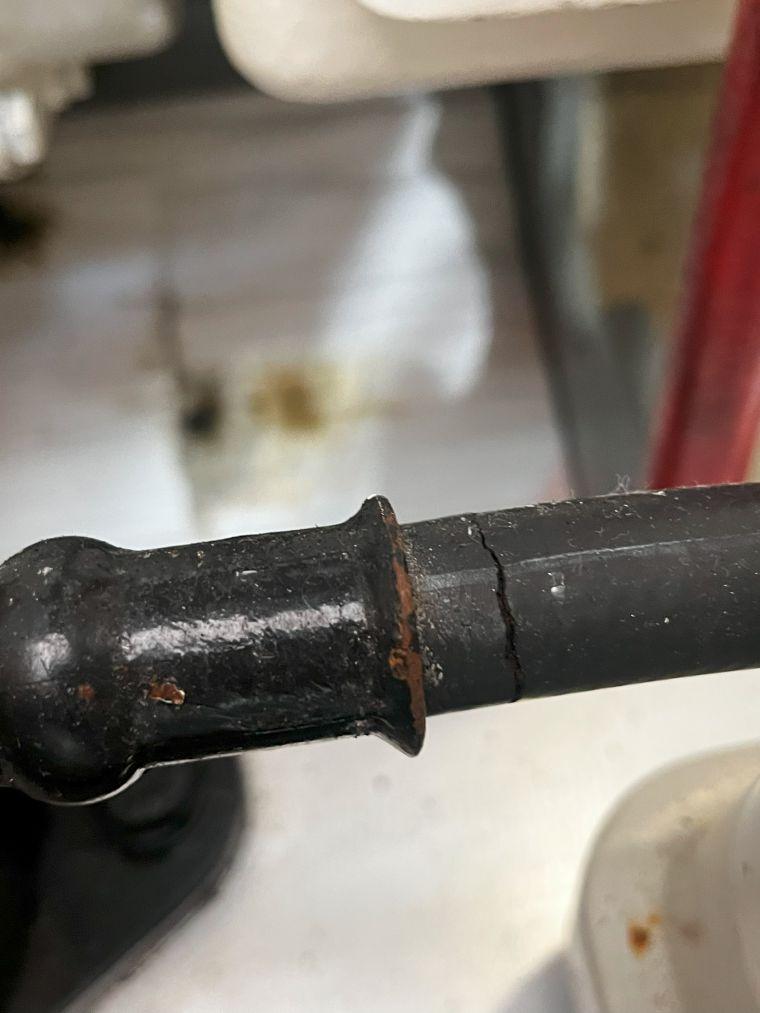
Cracked Transmission oil line
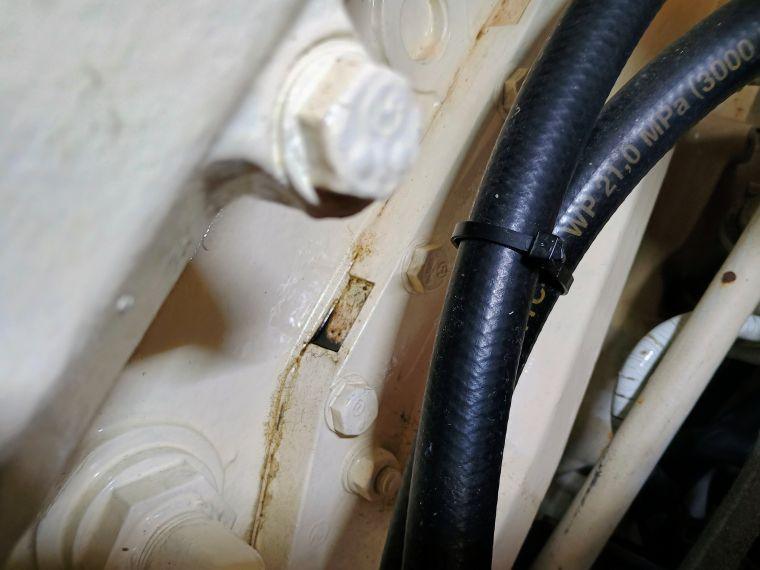 Leaking Exhaust Manifold
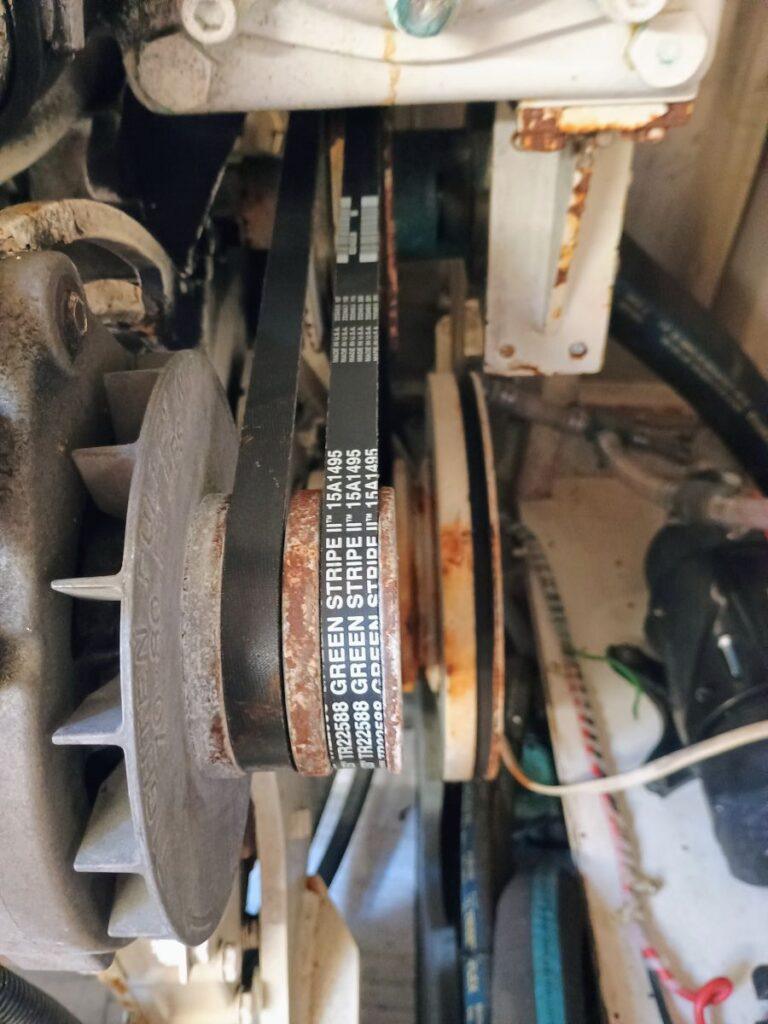
Port side belts out of alignment
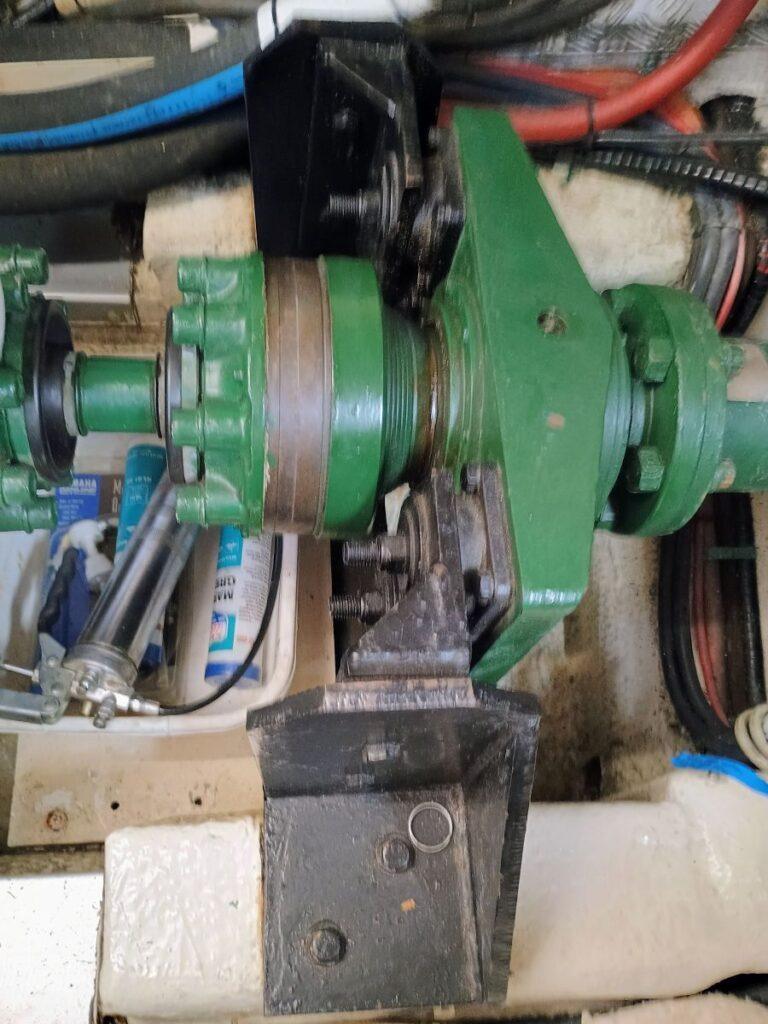
Bearing housing loose
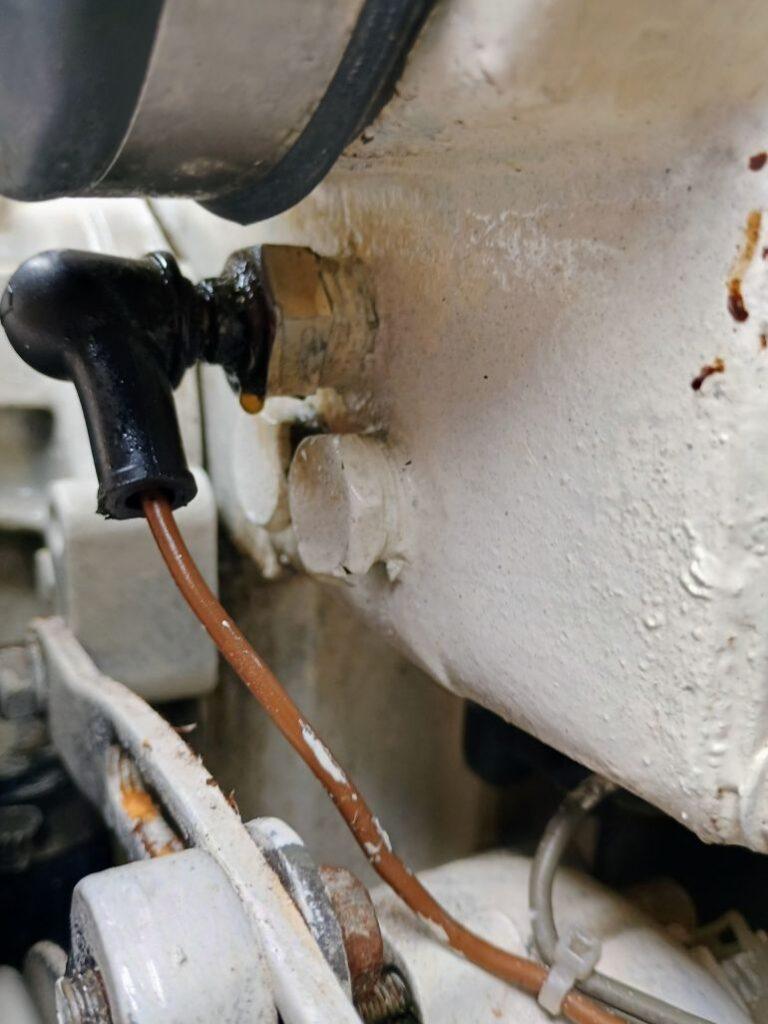
Generator water temperature sensor leaking
[videopress 15jtpO6s]
Port Side #4 Injector Leaking
Estimate to repair/replace faulty items
- Starboard pressure gauge not reading properly at cabin. $150.00
- Replace cooling system hoses & hose clamps 3 engines. $ 4000.00
- Replace exhaust system SS elbows, hoses & hose clamps. $4700.00
- Replace Transmission oil hoses port & starboard. $ 700.00
- Refasten shaft bearing housing to stringers. x2 $ 500.00
- Repair port exhaust manifold leak. $500.00
- Repair port #4 Injector leak. $300.00
- Replace Port & Starboard seawater pumps $3300.00
- Port & Starboard side alternator alignment. $350.00
- Repair Generator fuel line leaks. $200.00
- Repair Generator water temperature sensor leak $75.00
- Bow thruster inoperable motor or system ??? $5000.00 – $7000.00 ??
- Coolant filters bypassed port & starboard
- L6125A need to be reconnected into the coolant system. $400.00
- Port & Starboard coolant system flushed & refilled $1,300.00
Guesstimate on parts and labor without pricing out all the materials = $23,425.00
Lugger L6125A Marine Engine Pre-Purchase Survey by 805 Marine Diesel Mechanic
Why Is a Specialized Lugger L6125A Marine Engine Survey Essential?
What Unique Features Make the Lugger L6125A Engine Require Expert Inspection?
How Does a Pre-Purchase Survey Protect Buyers and Ensure Vessel Reliability?
What Does the Comprehensive Lugger L6125A Survey Process Include?
How Is Engine History and Specification Reviewed Before Inspection?
-
We confirm total engine hours and overhaul dates.
-
We compare log entries to Northern Lights’ maintenance schedule.
-
We retrieve original factory spec sheets for torque and pressure benchmarks.
What Are the Key Components Checked During the Visual Inspection?
-
Engine mounts and beds for crack patterns
-
Hoses, clamps, and fuel lines for seepage
-
Raw-water pump, heat exchanger, and exhaust manifolds
-
Belt condition, pulley alignment, and mounting hardware
Which Diagnostic Tests Are Performed to Detect Hidden Engine Issues?
|
Test
|
Purpose
|
Insight
|
|---|---|---|
|
Cylinder Compression
|
Measures sealing and wear
|
Identifies low-pressure cylinders
|
|
Crankcase Pressure
|
Detects blow-by and seal integrity
|
Indicates ring or gasket failure
|
|
Exhaust Back-Pressure
|
Assesses exhaust system restriction
|
Reveals clogged manifold or turbo
|
|
Oil & Coolant Analysis
|
Evaluates contamination and additives
|
Shows bearing wear or coolant leak
|
This academic paper explores data-driven models for effective marine engine fault diagnosis, focusing on identifying critical faults and quantifying their severity. It discusses the use of in-cylinder pressure signals and regression techniques to estimate fault severity, contributing to cost-effective diagnostic methods and predictive maintenance.
This research supports the article’s discussion of computerized diagnostics and fluid analysis tests, particularly the focus on quantifiable metrics and identifying internal wear and contamination for precise repair recommendations.
How Is the Sea Trial Conducted to Assess Engine Performance Under Load?
-
RPM vs. boat speed to verify propeller matching
-
Oil and coolant temperature stability under load
-
Transmission oil pressure and exhaust smoke levels
-
Vibration patterns at the engine mounts
This article emphasizes the critical role of thorough marine engine surveys, detailing essential components like sea trials, compression tests for engines with significant hours, and monitoring exhaust system back pressure. It highlights that skilled technicians with the right tools are crucial for ensuring an engine is in proper working order.
This source directly supports the article’s emphasis on comprehensive survey processes, including sea trials, compression tests, and exhaust back-pressure checks, and the need for experienced technicians.
What Information Is Provided in the Post-Survey Report and Recommendations?
-
Critical defects requiring immediate attention
-
Routine maintenance tasks to prevent future failures
-
Estimated timelines and part sourcing guidance
How Can Buyers Understand and Use Their Lugger L6125A Engine Survey Report?
-
Low compression in one cylinder indicating seal leaks
-
High crankcase pressure signaling ring degradation
-
Exhaust back-pressure above spec from manifold restrictions
How Should Buyers Prioritize Repairs Based on Survey Recommendations?
-
Repair cylinder seals and gasket leaks to avoid engine shutdowns
-
Clear exhaust restrictions to restore full power delivery
-
Replace belts and filters to maintain service intervals
One Response