
Fuel Contamination in Warm Coastal Harbors: Why Diesel Boats in Santa Barbara, Ventura and Channel Islands Need More Frequent Fuel System Checks
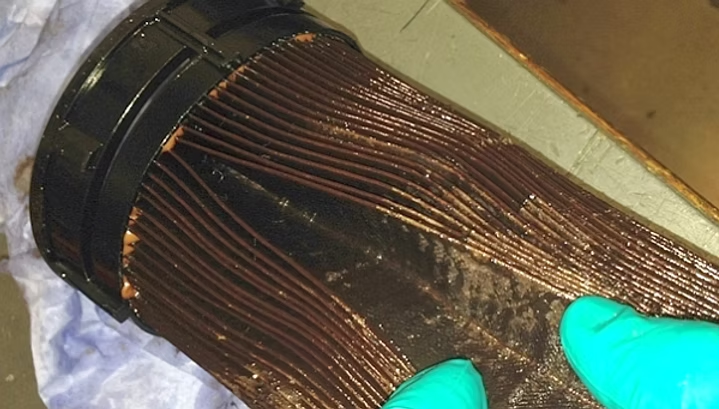
Fuel contamination is one of the most common causes of diesel engine failure in Santa Barbara, Ventura, and Channel Islands Harbor. Warm water, humid marine air, and long periods of sitting at the slip create ideal conditions for microbial growth inside diesel tanks — leading to clogged filters, power loss, and dangerous offshore breakdowns.
This guide explains why Southern California diesel boats face higher contamination risk and how proactive inspections keep your engine reliable year-round.
Schedule a Fuel System Inspection
Why Fuel Contamination Is Worse in Warm Coastal Harbors
Unlike boats in colder regions, vessels in Santa Barbara and Ventura sit in warm seawater nearly all year. This creates the perfect environment for microbial colonies — commonly called “diesel bug” — to form inside your tank.
Microbes feed on diesel hydrocarbons and multiply rapidly when three conditions are present:
- Warm water beneath the hull
- Moisture inside the fuel tank
- Long idle periods at the slip
These conditions are present in every local harbor from Santa Barbara to Oxnard — which is why fuel contamination is so widespread here.
How Microbial Contamination Forms Inside Diesel Tanks
Diesel bug grows where water and fuel meet — typically at the bottom of the tank. Over time, microbes create sludge that gets pulled into the fuel system, clogging filters and starving the engine of fuel.
Three stages of contamination:
- Stage 1 – Mild: Small amounts of dark residue in Racor bowls.
- Stage 2 – Moderate: Filter clogging under throttle-up conditions.
- Stage 3 – Severe: Engine loses power offshore or won’t restart.
Symptoms of Fuel System Contamination
Most owners don’t realize they have contamination until the engine starts acting up. Common symptoms include:
- Loss of power when throttling up
- Rough running under load
- Dark, cloudy, or layered fuel in Racor bowls
- Multiple filter changes in a short period
- Engine shutting down offshore
Why Santa Barbara & Ventura Boats Need More Frequent Checks
In warm coastal regions like Santa Barbara and Ventura, we see diesel fuel contamination 2–3x more frequently than colder-water areas. Boats that sit at the slip are particularly vulnerable because condensation forms inside tanks as temperatures fluctuate.
Even newer boats are not immune — contamination is based on environmental conditions, not vessel age.
High-risk situations include:
- Boats that run infrequently
- Older fuel tanks with debris or pitting
- Poor-quality diesel from low-turnover docks
- Warm, humid engine rooms
How We Diagnose & Treat Fuel Contamination
Our trained technicians use a combination of filtration, inspection, and diagnostics to determine contamination levels. Typical service includes:
- Sampling diesel at multiple tank levels
- Inspecting Racors and secondary filters
- Checking lift pump pressures and injector performance
- Cleaning or replacing affected components
- Recommending tank cleaning or fuel polishing if necessary
Key Considerations for Your Fuel Filtration System
Choosing the right fuel filtration setup is just as important as keeping the tank clean. In warm coastal harbors like Santa Barbara and Ventura, properly sized Racor-style systems can make the difference between a smooth trip and a tow from the Islands.
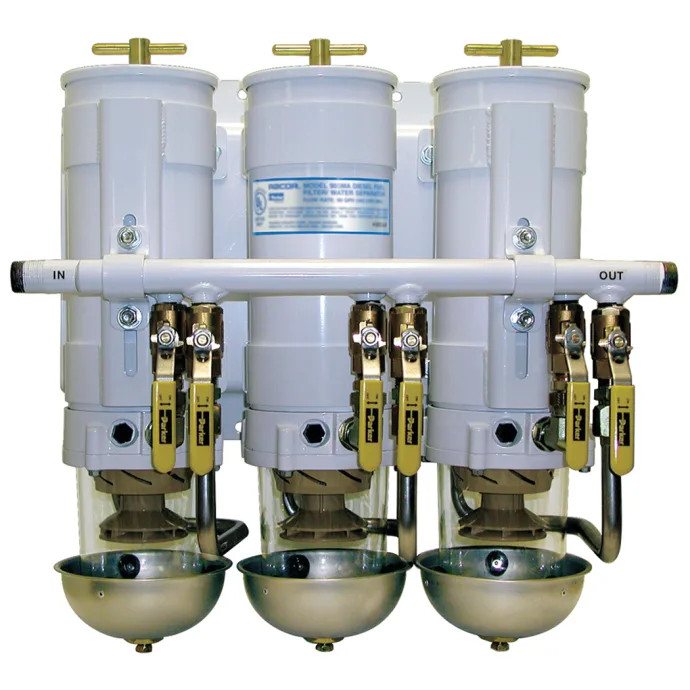
- Flow Rate: Make sure the system’s flow rate meets or exceeds your engine’s requirements. A common rule of thumb is that the required flow rate should be about 10% of the engine’s horsepower rating. For example, a 200 hp engine should have roughly a 20 GPH (gallons per hour) rated filtration system. Always confirm with the engine and filter manufacturer’s specifications.
- Micron Rating: Modern high-pressure common-rail engines — including many MTU and similar platforms — need fine filtration to protect sensitive injectors. A final filtration stage of 10 microns or finer (often 2 microns) is typically recommended.
- Monitoring: Systems with clear collection bowls and vacuum gauges (or optional water-in-fuel alarms) make it easy to monitor fuel quality and filter life. This lets you spot restrictions early and schedule proactive maintenance instead of reacting to a shutdown offshore.
Preventing Fuel Contamination in Southern California
Prevention is far cheaper than rebuilding an injection pump or getting towed in from the Channel Islands. We recommend:
- Regular fuel system inspections (1–2 times per year)
- Keeping tanks at least 70% full to reduce condensation
- Using high-quality docks with frequent turnover
- Draining water from Racors often
- Replacing filters at recommended intervals
For Perkins and Yanmar owners, we also provide brand-specific guidance:
Perkins Diesel Service →
Yanmar Diesel Service →
Serving Santa Barbara, Ventura & Channel Islands Harbor
Fuel contamination is one of the most preventable causes of diesel failure along the Southern California coast. We help boat owners stay ahead of these issues with routine inspections, fuel testing, and complete fuel system service tailored to local harbor conditions.
Helpful Resources
- BoatUS – Diesel Fuel Articles
- Yachting Magazine – Engine Room Tips
- Yanmar Marine Official
- Perkins Engines Official
- Master Marine Diesel Troubleshooting Guide – 805 Marine Diesel Mechanic
FAQs
How often should I check my fuel system?
At least once per year — twice is recommended for boats that sit at the slip.
What causes diesel contamination in Santa Barbara?
Warm water and humidity create ideal conditions for microbial growth in tanks.
Can fuel polishing fix contamination?
Yes, but only if the tank itself is structurally sound and sludge hasn’t hardened.
How do I know if my filters are clogged?
Loss of power, difficulty throttling up, and dark sludge in Racor bowls are common indicators.
One Response