
Marine diesel cooling system diagnostics & repair — Ventura • Santa Barbara • Channel Islands
Common Cooling System Problems in Marine Diesels: Impellers, Heat Exchangers, and More
Keeping your marine diesel cool isn’t just about performance — it’s about protection. Learn the issues we fix most in Ventura, Santa Barbara, and the Channel Islands, plus maintenance tips to avoid overheating, corrosion, and costly downtime.
How Marine Diesel Cooling Systems Work
Most modern inboard diesels use a two-stage cooling design: a raw water circuit that draws seawater through a seacock and strainer via a rubber-vane impeller pump, and a closed freshwater circuit that circulates engine coolant through a heat exchanger. This isolates corrosive seawater from the engine block while still keeping operating temperatures stable — but it also means there are two systems to maintain and twice as many potential failure points.
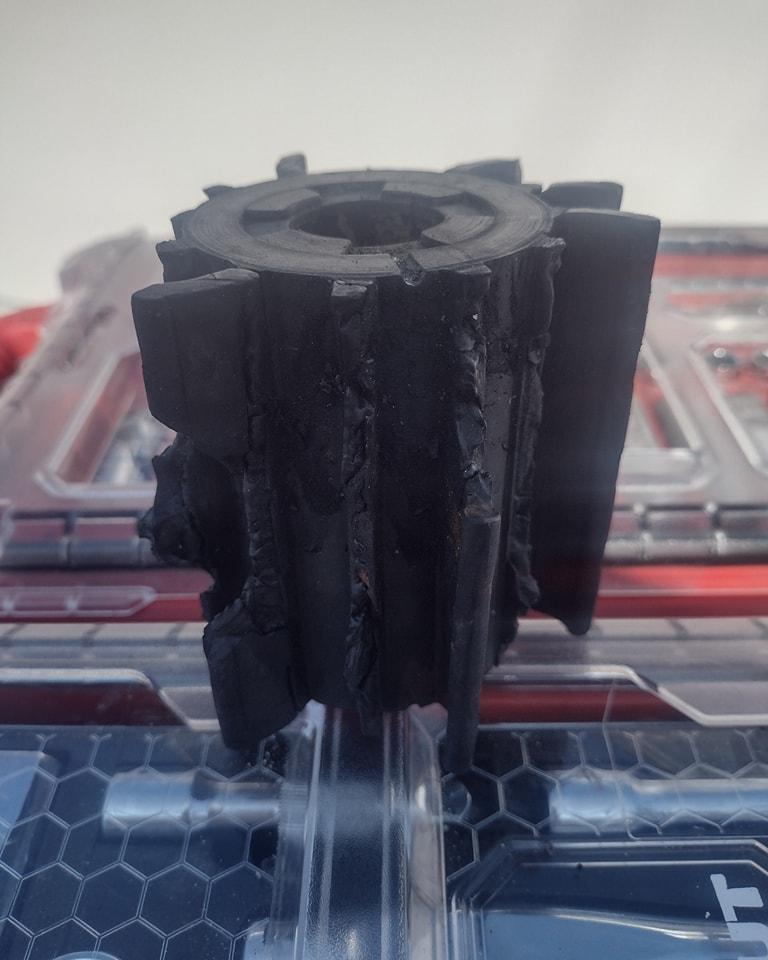
1) Worn or Damaged Impellers
The raw water impeller is the beating heart of the seawater circuit. Over time the flexible vanes harden, crack, or snap off — especially after a dry start, long layups, or excess heat. Missing vanes can migrate downstream and block your heat exchanger or oil cooler.
Symptoms
- High engine temperature after a few minutes underway
- Weak water flow at the exhaust
- Overheat alarm under load
Maintenance tip: Replace the impeller annually or every 200 hours (whichever comes first). When you pull it, account for every vane and check downstream components for debris.
Model-specific help: Yanmar Marine Diesel Service • Perkins Diesel Repair
2) Clogged Raw Water Strainers
Your sea strainer is the first line of defense against marine growth and debris, but also the most overlooked. Barnacles, eelgrass, kelp, or plastic bags can reduce flow dramatically.
Signs of restriction
- Steam or “smoky” exhaust discharge
- Uneven or reduced water out the transom
- Sudden temperature spikes after entering weedy areas
Maintenance tip: Inspect and clean before every outing, especially in Ventura and Santa Barbara harbors where growth is common. Always close the seacock before removing the lid. Consider a clear strainer bowl so you can see flow before startup.
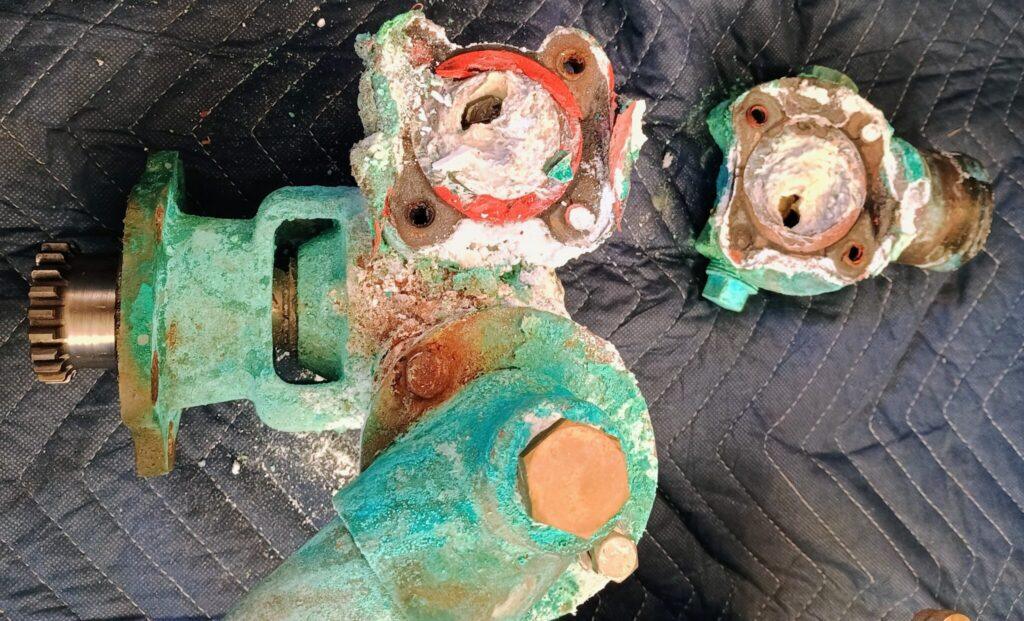
3) Heat Exchanger Scaling or Corrosion
The heat exchanger transfers heat from engine coolant to seawater. Salt, scale, and galvanic corrosion reduce efficiency and restrict flow; neglected zincs accelerate tube damage. In Channel Islands conditions, plan a professional service every 2–3 years.
- Mineral scale narrowing seawater tubes
- Internal corrosion from depleted zinc anodes
- Coolant contamination (milky coolant suggests a leak between circuits)
Maintenance tip: Have the exchanger cleaned and pressure-tested; replace all zincs. We use ultrasonic cleaning and inspect oil cooler and aftercooler paths during service.
Trusted resource: BoatUS: Heat Exchanger Maintenance
4) Thermostat Malfunctions
The thermostat regulates internal coolant flow. If it sticks closed, your engine overheats quickly. If it sticks open, the engine runs too cool — increasing fuel burn and soot.
What to watch
- Slow warm-up or never reaching normal temp
- Temp swings at cruise
- Overheating only under load
Maintenance tip: Replace every 2–3 years. Bench-test in hot water to verify opening temperature during spring commissioning.
5) Coolant Leaks and Contamination
Hose pinholes, loose clamps, and failed seals let coolant escape and can introduce air locks. Old coolant loses corrosion inhibitors and turns rusty or sludgy.
Checklist
- Look for pink/green/orange residue by hose barbs
- Verify level at the expansion tank when cold
- Inspect coolant color; flush every two years with marine-rated antifreeze
DIY help: Fresh Water Flushing Guide
6) Blocked Exhaust Elbows
The wet exhaust elbow mixes cooling water with exhaust gases. Over time, carbon and salt narrow the passage, creating backpressure and heat.
Symptoms
- Reduced transom water flow
- Black smoke under load
- Overheating despite a new impeller and clean strainer
Maintenance tip: Remove and inspect every 2–3 years (especially common on Yanmar and Perkins). Replace if the internal diameter is significantly restricted.
Service info: Perkins Diesel Engine Repair
7) Failing Temperature Sensors or Gauges
Sometimes the problem is instrumentation. Corroded senders or wiring can trigger false alarms or mask genuine overheating.
Maintenance tip: Periodically test with an infrared thermometer, clean terminals, and replace questionable senders.
Preventive Maintenance Checklist
| Component | What to Check | Recommended Action |
|---|---|---|
| Impeller | Cracks, missing vanes | Replace annually |
| Sea Strainer | Debris, leaks | Clean before each trip |
| Heat Exchanger | Scale, corrosion, zincs | Service every 2–3 years |
| Hoses & Clamps | Cracks, rust | Replace as needed |
| Coolant | Level, color | Flush every 2 years |
| Exhaust Elbow | Carbon buildup | Inspect every 2–3 years |
Local Insight: Ventura, Santa Barbara & Channel Islands
Our local waters are hard on cooling systems. High salinity speeds zinc wear, while kelp and eelgrass can clog strainers in minutes. Temperature swings and seasonal growth stress hoses and seals. We tailor maintenance intervals to these realities so your diesel stays cool and reliable all year.
When to Call a Professional
If overheating recurs or coolant keeps disappearing with no visible leak, schedule a full diagnostic. A certified marine diesel tech will pressure-test the freshwater side, verify raw water flow end-to-end, and inspect the heat exchanger and exhaust elbow.
- Prevent head gasket failures and warped heads
- Protect turbos and aftercoolers from heat soak
- Ensure OEM-spec parts and torque values
Further Reading
- BoatUS: Heat Exchanger Maintenance
- Yachting: Engine Maintenance Tips
- Fresh Water Flushing
- Contact 805 Marine Mechanic
Frequently Asked Questions
How often should I replace my marine diesel impeller?
Replace your impeller every 200 hours or once per year. Always inspect for missing vanes and carry a spare onboard.
How do I know if my heat exchanger is failing?
Watch for rising temperature, reduced water flow, and contaminated coolant. Service the unit every 2–3 years in saltwater use.
Can I use automotive coolant in my marine diesel?
No — use marine-formulated antifreeze for diesels. It offers the correct inhibitors for aluminum, copper, and mixed-metal systems.
What causes marine diesel engines to overheat most often?
Impeller failure, clogged strainers, fouled heat exchangers, restricted exhaust elbows, or low coolant are the usual suspects.
How can I prevent corrosion in my cooling system?
Flush with fresh water after use and replace zinc anodes on schedule. Monitor coolant condition and keep strainers clean.
One Response