
Cummins Marine Engine Survey vs Oil Analysis | Which Is More Important?
One of the most common questions buyers ask during a pre-purchase inspection is whether oil analysis alone is enough to evaluate a Cummins marine diesel engine. While oil analysis is an extremely valuable diagnostic tool, it is only one part of a complete engine evaluation. A professional Cummins marine engine survey combines visual inspection, diagnostics, cooling-system testing, oil analysis, and sea-trial evaluation to provide a much more complete picture of engine condition.
Schedule a Cummins Engine Survey
What Is Oil Analysis?
Oil analysis is a laboratory test performed on an engine-oil sample. The laboratory evaluates the oil and measures wear metals, contamination levels, lubricant condition, soot loading, fuel dilution, and coolant contamination.
Oil analysis can provide valuable clues regarding internal engine condition that may not be visible during a standard inspection.
- Iron wear metals
- Aluminum wear metals
- Copper wear metals
- Lead wear metals
- Fuel dilution
- Coolant contamination
- Soot loading
- Lubricant condition
What Is a Cummins Marine Engine Survey?
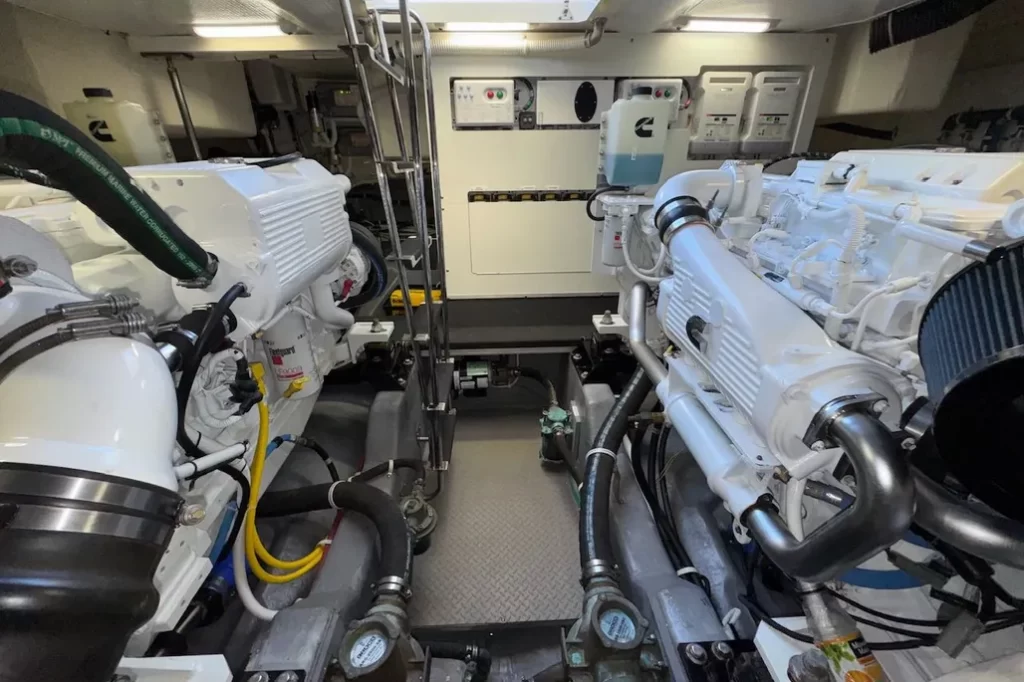
A Cummins marine engine survey is a comprehensive evaluation of the entire propulsion system. The survey includes visual inspection, diagnostics when available, cooling-system pressure testing, oil analysis, maintenance-record review, and sea-trial evaluation.
The objective is to identify mechanical concerns, maintenance issues, operational deficiencies, and purchase risks before the buyer completes the transaction.
This page supports our Cummins Marine Engine Surveys Hub, Cummins Survey Checklist, and our Marine Engine Survey service page.
What Oil Analysis Can Reveal
Internal Engine Wear
Elevated wear metals may indicate abnormal wear occurring inside the engine. Trending oil-analysis reports over time can provide valuable information regarding engine health.
Coolant Contamination
Oil analysis may identify coolant contamination before it becomes visible through other symptoms.
Fuel Dilution
Excessive fuel dilution can indicate injector-related concerns or combustion issues.
Lubricant Condition
Laboratory testing helps determine whether the oil remains suitable for continued use or whether contamination and degradation have occurred.
What Oil Analysis Cannot Reveal
Oil analysis is valuable, but it has limitations.
- Turbocharger condition
- Sea-trial performance
- Rated RPM achievement
- Cooling-system operation
- Engine vibration
- Propeller loading issues
- Electronic fault history
- Hull-performance concerns
- Running-gear problems
An oil sample cannot tell a buyer whether the vessel reaches proper RPM, overheats under load, develops smoke during operation, or suffers from propulsion-system issues.
What a Cummins Survey Reveals Beyond Oil Analysis
Cooling-System Condition
Cooling-system pressure testing and inspection help evaluate heat exchangers, aftercoolers, seawater pumps, thermostats, coolers, hoses, and overall system integrity.
Electronic Diagnostic Information
Many Cummins engines store valuable fault history and operating data that can only be reviewed through diagnostic tools.
Turbocharger Performance
Turbocharger response, boost behavior, smoke characteristics, and load acceptance are evaluated during sea trial.
Sea-Trial Performance
Sea trials allow evaluation of RPM, temperatures, oil pressure, vibration, acceleration, and overall operating performance.
Maintenance Quality
Inspection of the engine room, service records, and maintenance history often reveals important information about how the vessel has been maintained.
Why Buyers Need Both
The strongest pre-purchase evaluation combines both oil analysis and a complete engine survey.
Oil analysis provides information regarding internal engine condition. The survey provides information regarding system condition, operational performance, maintenance quality, diagnostics, cooling systems, and real-world behavior.
Together they create a much more complete picture than either method alone.
Real-World Example
A Cummins engine may produce a clean oil-analysis report while still suffering from restricted aftercoolers, overheating under load, turbocharger deficiencies, electronic fault history, or inability to achieve rated RPM.
Likewise, an engine that performs well during sea trial may still show elevated wear metals or contamination in oil-analysis results.
This is why professional buyers, insurers, lenders, and experienced vessel owners frequently rely on both.
Cummins Engines Commonly Surveyed
- Cummins QSM11 Marine Engine Survey
- Cummins QSC Marine Engine Survey
- Cummins QSB Marine Engine Survey
- Cummins QSL Marine Engine Survey
- Cummins QSK Marine Engine Survey
- Cummins 6CTA Marine Engine Survey
- Cummins 6BTA Marine Engine Survey
Service Areas
805 Marine Diesel Mechanic performs Cummins marine engine surveys throughout Ventura Harbor, Channel Islands Harbor, Oxnard, Santa Barbara Harbor, Marina del Rey, Malibu, and Port Hueneme.
Authority Resources
For manufacturer information visit Cummins Marine. For marine standards visit the American Boat & Yacht Council.
Cummins Marine Engine Survey vs Oil Analysis FAQ
Is oil analysis enough before buying a boat?
No. Oil analysis is valuable but should be combined with a complete marine engine survey and sea trial.
What does oil analysis reveal?
Wear metals, coolant contamination, fuel dilution, soot loading, and lubricant condition.
Can oil analysis identify cooling-system problems?
Not directly. Cooling-system issues are best evaluated through inspection, pressure testing, and sea-trial observations.
Can oil analysis identify turbocharger problems?
No. Turbocharger condition is typically evaluated through inspection and sea-trial performance.
Can oil analysis reveal fault codes?
No. Electronic fault history requires diagnostic equipment and engine-data review.
Why is a sea trial important?
A sea trial evaluates RPM, temperature, smoke, vibration, acceleration, and load-carrying ability under real operating conditions.
Can a survey identify overheating concerns?
Yes. Cooling-system inspection and sea-trial evaluation often reveal overheating problems.
Can a survey identify fuel-system issues?
Yes. Fuel-system condition and performance are evaluated during inspection and operation.
Can oil analysis identify internal wear?
Yes. Elevated wear metals may indicate abnormal internal engine wear.
Can a survey identify maintenance issues?
Yes. Service records, engine-room condition, and system inspections often reveal maintenance deficiencies.
Why do professional buyers use both?
Because each method reveals different information and together provide the most complete assessment.
Is oil analysis included with a Cummins survey?
Yes. Oil analysis is included with every Cummins marine engine survey performed by 805 Marine Diesel Mechanic.
Can diagnostics identify hidden engine problems?
Yes. Diagnostics often reveal stored faults and operating history not visible during inspection.
Can a survey reduce purchase risk?
Yes. Surveys help identify potential mechanical concerns before the transaction is completed.
Do you survey Cummins QSC engines?
Yes. QSC engines are commonly included in pre-purchase inspections.
Do you survey Cummins QSL engines?
Yes. QSL-powered vessels are frequently surveyed throughout Southern California.
Do you survey Cummins QSK engines?
Yes. QSK-powered yachts and commercial vessels can be evaluated as part of a marine engine survey.
Do you perform surveys in Marina del Rey?
Yes. Marina del Rey is one of our primary survey service areas.
Do you perform surveys in Ventura Harbor?
Yes. Ventura Harbor and Channel Islands Harbor are core service locations.
How do I schedule a Cummins marine engine survey?
Call 805-774-0637 or use the contact page to discuss your vessel and survey requirements.