
Cummins Marine Engine Survey Checklist | What Buyers Should Inspect Before Purchase
One of the most common questions yacht buyers ask is, “What should actually be inspected during a Cummins marine engine survey?” A structured survey checklist helps ensure critical systems are evaluated before purchasing a vessel. Whether the boat is powered by a Cummins QSM11, QSC, QSB, QSL, QSK, 6CTA, or 6BTA, a thorough inspection process helps identify potential concerns before they become expensive surprises.
Schedule a Cummins Engine Survey
Why a Cummins Survey Checklist Matters
A marine diesel survey is far more than starting an engine at the dock. Modern Cummins engines combine cooling systems, turbochargers, aftercoolers, electronic controls, fuel systems, and emissions-related components that should all be evaluated before purchase.
The goal of a checklist is to ensure every major system is reviewed consistently and documented properly.
This page supports our Cummins Marine Engine Surveys Hub and our Marine Engine Survey service page.
Step 1: Review Engine Documentation
Before any inspection begins, available records should be reviewed.
- Engine serial numbers
- Engine hours
- Maintenance records
- Oil-analysis reports
- Aftercooler service history
- Cooling-system service records
- Injector replacement records
- Turbocharger maintenance records
- Overhaul history
- Previous survey reports
Maintenance history often provides valuable insight into how the engines have been cared for over time.
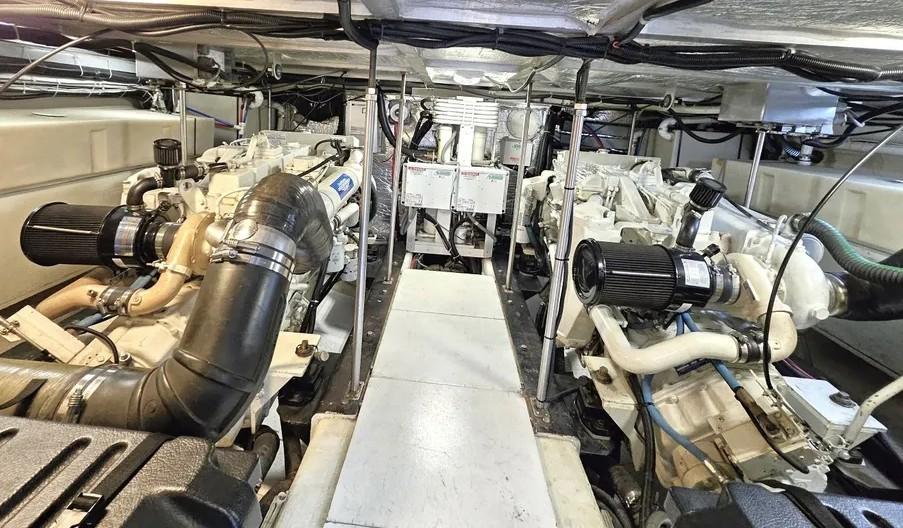
Step 2: Engine Room Inspection
The engine room frequently reveals clues regarding maintenance quality and overall vessel condition.
- Fuel leaks
- Oil leaks
- Coolant leaks
- Corrosion
- Wiring condition
- Hose condition
- Clamp condition
- Mount condition
- General cleanliness
- Safety concerns
Step 3: Cooling-System Inspection
Cooling-system evaluation remains one of the most important parts of a Cummins survey.
- Heat exchangers
- Aftercoolers
- Raw-water pumps
- Thermostats
- Coolant condition
- Expansion tanks
- Coolers
- Seawater strainers
- Cooling-system hoses
- Cooling-system pressure testing
Cooling-system failures are among the most expensive marine diesel repairs encountered after vessel purchase.
Step 4: Fuel-System Inspection
- Fuel filters
- Fuel contamination
- Fuel lines
- Injector performance
- Lift pumps
- Fuel restriction indicators
- Throttle response
- Fuel quality concerns
Fuel-system issues often contribute to poor performance, smoke, hard starting, and power loss.
Step 5: Turbocharger and Air-System Inspection
- Turbocharger condition
- Boost response
- Air filters
- Charge-air plumbing
- Airflow restrictions
- Visible leakage
- Aftercooler condition
Turbocharger performance directly affects engine efficiency, smoke output, and horsepower production.
Step 6: Exhaust-System Inspection
- Exhaust elbows
- Exhaust risers
- Exhaust clamps
- Corrosion
- Leakage
- Backpressure concerns
Marine exhaust systems operate in harsh environments and should be inspected carefully.
Step 7: Electronic Diagnostics
Many Cummins engines utilize Quantum electronic controls and advanced engine-management systems.
- Stored fault codes
- Active fault codes
- Sensor history
- Operating data
- Derate events
- Electronic system health
Diagnostic review may reveal concerns not visible during physical inspection.
Step 8: Oil Analysis
Oil analysis is included with every Cummins marine engine survey performed by 805 Marine Diesel Mechanic.
- Wear metals
- Fuel dilution
- Coolant contamination
- Soot loading
- Lubricant condition
Oil analysis provides valuable information regarding internal engine condition.
Step 9: Sea-Trial Evaluation
The sea trial is often the most important portion of the survey.
- Rated RPM
- Cruise RPM
- Oil pressure
- Coolant temperature
- Smoke output
- Turbocharger response
- Acceleration
- Vibration
- Engine synchronization
- Load-carrying performance
Many hidden issues only become visible when the vessel is operating under load.
Step 10: Final Findings and Risk Assessment
Survey findings should be organized into categories that help buyers understand risk.
- Normal observations
- Maintenance recommendations
- Repair recommendations
- Safety concerns
- Purchase risks
- Further evaluation recommendations
Cummins Engines Commonly Surveyed
- Cummins QSM11 Marine Engine Survey
- Cummins QSC Marine Engine Survey
- Cummins QSB Marine Engine Survey
- Cummins QSL Marine Engine Survey
- Cummins QSK Marine Engine Survey
- Cummins 6CTA Marine Engine Survey
- Cummins 6BTA Marine Engine Survey
Service Areas
805 Marine Diesel Mechanic performs Cummins marine engine surveys throughout Ventura Harbor, Channel Islands Harbor, Oxnard, Santa Barbara Harbor, Marina del Rey, Malibu, and Port Hueneme.
Authority Resources
For manufacturer information visit Cummins Marine. For marine standards visit the American Boat & Yacht Council.
Cummins Marine Engine Survey Checklist FAQ
What is a Cummins marine engine survey checklist?
A structured inspection process used to evaluate Cummins marine diesel engines before purchase.
Why is a survey checklist important?
It helps ensure critical systems are inspected consistently and thoroughly before purchase.
What records should buyers review?
Maintenance records, oil-analysis reports, overhaul documentation, cooling-system service records, and aftercooler service history.
Why inspect the cooling system?
Cooling-system failures are among the most expensive marine diesel repairs and directly affect engine longevity.
Why inspect aftercoolers?
Aftercoolers affect intake-air temperature, combustion efficiency, power production, and reliability.
What fuel-system items are inspected?
Fuel filters, injectors, fuel lines, contamination concerns, lift pumps, and fuel-delivery performance.
Why inspect turbochargers?
Turbochargers directly affect horsepower, acceleration, fuel efficiency, and smoke output.
What electronic diagnostics are reviewed?
Fault codes, sensor information, operating history, active faults, and derate events.
Is oil analysis included?
Yes. Oil analysis is included with every Cummins marine engine survey.
What does oil analysis reveal?
Wear metals, fuel dilution, coolant contamination, soot loading, and lubricant condition.
Why is a sea trial important?
Many engine problems only appear under real operating loads.
What is evaluated during a sea trial?
RPM, oil pressure, coolant temperature, smoke output, vibration, turbocharger response, and load performance.
Can a survey identify purchase risks?
Yes. Survey findings help buyers understand potential mechanical concerns before purchase.
Can diagnostics reveal hidden issues?
Yes. Diagnostics often reveal historical faults not visible during physical inspection.
Do you inspect Cummins QSC engines?
Yes. QSC engines are commonly surveyed during pre-purchase inspections.
Do you inspect Cummins QSB engines?
Yes. QSB engines are frequently included in vessel survey projects.
Do you inspect Cummins QSL engines?
Yes. QSL-powered yachts and commercial vessels are regularly surveyed.
Do you inspect Cummins QSK engines?
Yes. QSK19, QSK23, QSK38, QSK50, and QSK60 platforms can be surveyed.
Do you perform surveys in Marina del Rey?
Yes. Marina del Rey is one of our primary survey service areas.
How do I schedule a Cummins survey?
Call 805-774-0637 or use the contact page to discuss your vessel and survey requirements.