
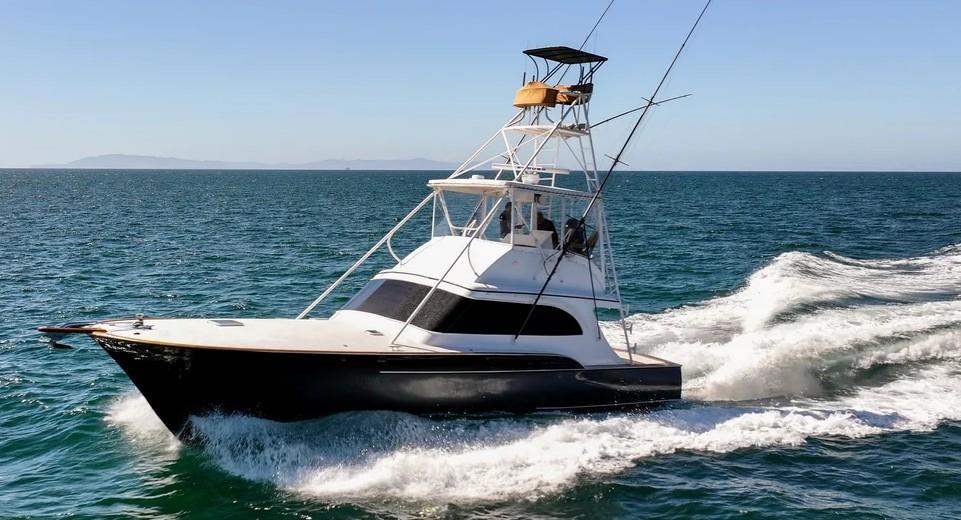
1991 • 47 FT • Official #949819 • Twin Detroit Diesel 8V92TI Marine Diesel Engines
Marine Engine Survey
Conducted by: Jeff Lendall & Sons — 805 Marine Diesel Mechanic
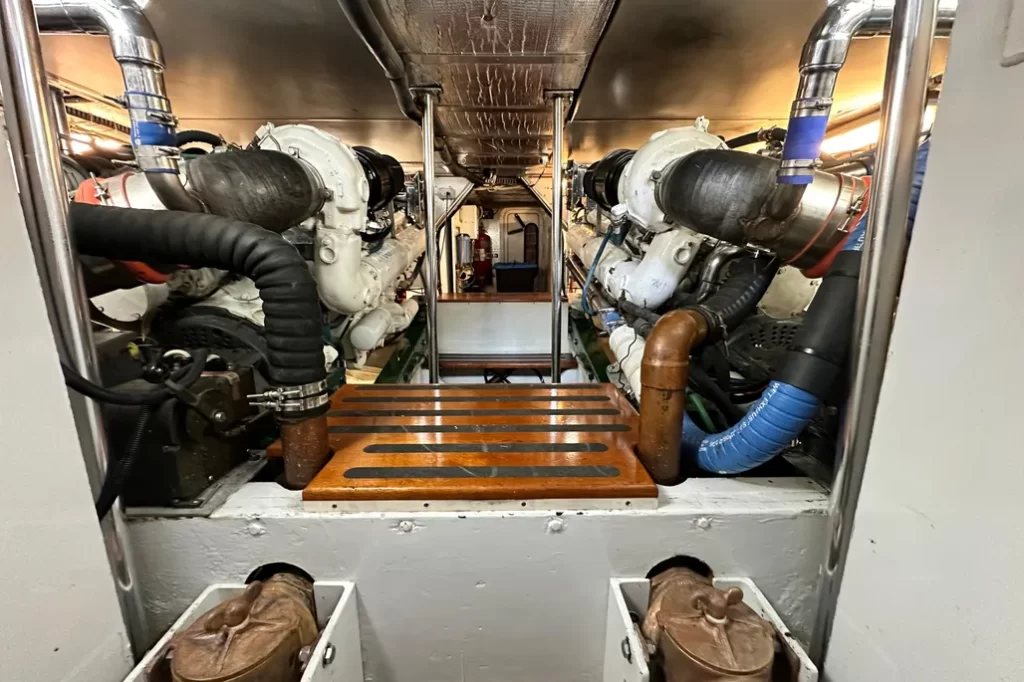
This Detroit Diesel 8V92TI marine engine survey documents propulsion-system condition, Twin Disc MG5114SC marine transmission findings, cooling-system inspection, turbocharger observations, drivetrain condition, oil-leak findings, sea-trial performance, oil-analysis sampling, and overall machinery condition aboard this 47FT Buddy Davis Sport Fisher.
Detroit Diesel 8V92TI
Twin Disc MG5114SC
Sea Trial
Oil Analysis
Executive Survey Summary
As a result of my investigation, marine engine survey, visual inspection, operational testing, oil-analysis sampling, and sea trial, my opinion is that the overall machinery rating is GOOD.
The twin Detroit Diesel 8V92TI engines demonstrated strong acceleration, exceptionally low smoke output for engines of this age and horsepower, smooth drivetrain operation, satisfactory cooling-system performance, and strong high-load operation.
GOOD
Approximately 2,150 RPM / approximately 25 knots
Oil leaks, aging hoses, air filters/breathers, and port oil-pressure gauge
These Detroit Diesel 8V92TI engines produced exceptionally low smoke during high-load testing. Both engines accelerated quickly to approximately 2,150 RPM and the vessel operated very smoothly at approximately 25 knots.

Vessel Identification
| Vessel | 47FT Buddy Davis Sport Fisher |
|---|---|
| HIN / IMO | DYW47179F091 |
| Official Number | 949819 |
| Length Overall | 47 FT |
| Year | 1991 |
| Propulsion | Twin Detroit Diesel 8V92TI Marine Diesel Engines |
| Marine Transmissions | Twin Disc MG5114SC |
Main Propulsion Engines
PORT ENGINE
Good overall operation with maintenance items requiring attention.
STARBOARD ENGINE
Good overall operation with minor oil-leak findings requiring attention.
System Condition Matrix
| System | Survey Condition |
|---|---|
| Fuel Filtration System | Good |
| Lubrication System | Oil leaks require service |
| Cooling System | Good — hoses require future maintenance replacement |
| Seawater Pumps | Good |
| Turbochargers | Good — appear rebuilt or recently serviced |
| Engine Alignment | Good |
| Twin Disc MG5114SC Transmissions | Operational — small port-side leak at transmission pump |
| Instrumentation | Port oil-pressure gauge at flybridge inoperable |
| Dripless Shaft Seals | Good — no leaks detected |
| Rudder System | Good |
Engine Room Systems Inspection
Racor Twin Turbine Series fuel filter/water-separator 10-micron port and starboard assemblies appeared serviceable. No water was present. Electric priming pumps and vacuum gauges were installed.
Panish Morse cable controls operated properly at the flybridge.
Seals were not leaking. No water was present and adequate pressure was observed.
Inlet and outlet temperatures were checked and remained within normal operating parameters.
Inlet and outlet temperatures were checked and remained within normal operating parameters.
Temperature differential appeared within normal operating parameters.
Adequate seawater pressure was observed.
Working properly with no leaks observed.
Main engine beds consist of heavy longitudinal stringers inboard and outboard. Engine mounts appeared satisfactory.
Oil-level indication appeared normal on both the port and starboard engines.
WOT engine load indicated approximately 75 PSI starboard. The port-side oil-pressure gauge at the flybridge was inoperable.
Freshwater reservoir-type cooling with seawater-cooled wet exhaust operated satisfactorily.
Normal coolant levels were observed. Expansion tanks were pressure tested to 25 PSI with no noticeable pressure drop. Infrared heat-gun testing showed normal cooling-system temperatures.
Double clamped where sighted. Quality 304 stainless-steel hose clamps were installed. Some cooling-system, air-breather, and oil hoses should be replaced as part of preventative maintenance.
Condition appeared serviceable.
Ball-valve seawater seacocks operated smoothly and satisfactorily.
Seawater-cooled exhaust with risers and flexible coupling sections. New hoses and double clamps were observed where sighted.
Port and starboard low-oil-pressure alarms and coolant-overheat warnings were audible at the helm station.
Electronic shut-off solenoid systems operated satisfactorily.
Working properly with no leaks detected.
Appeared smooth and without vibration.
Packing-gland-style rudders appeared serviceable with no excessive leakage or vibration.
Appear rebuilt or recently serviced. Turbochargers spooled smoothly around 1,200 RPM and operated satisfactorily.
Both shifted smoothly with no excessive noise or vibration. A small leak was observed at the port-side transmission engine pump.
Sea Trial Report
| Sea Trial Item | Observation |
|---|---|
| Cold Start | Engines started without excessive cranking. |
| Exhaust Appearance | Very minimal smoke observed for engines of this age and horsepower. |
| Cooling Water Discharge | Cooling-water discharge appeared strong and normal. |
| Instrumentation | Engine instrumentation operated within normal limits except the port oil-pressure gauge at the flybridge was inoperable. |
| Steering System | Steering system operated normally and was highly responsive. |
| Throttle Operation | Throttle controls operated normally. |
| Transmission Operation | Both transmissions shifted smoothly in and out of gear with no excessive noise. |
| Backdown Test | Backdown test was satisfactory. |
| Rudder Linkage | Rudder linkage operated smoothly with no leaks detected. |
| Oil Leaks | Oil leaks detected at the port transmission, starboard governor, and both valve covers. |
Wide Open Throttle Test:
In 1982 the U.S. Navy sent Jeff Lendall to Diesel Mechanic School with heavy focus on Detroit Diesel engines.
In over 40 years of experience, this pair of 8V92TI engines produced exceptionally low smoke output. Both engines accelerated quickly to approximately 2,150 RPM, and the vessel operated extremely smoothly at approximately 25 knots.
Oil Analysis Samples
The following oil-analysis samples are included as part of the machinery survey record:
| Component | Oil Analysis Link |
|---|---|
| Detroit Diesel 8V92TI Port Engine |
Detroit Diesel 8V92TI Port Engine |
| Detroit Diesel 8V92TI Starboard Engine |
Detroit Diesel 8V92TI Starboard Engine |
| Port Twin Disc Marine Transmission |
Marine Gear Port |
| Starboard Twin Disc Marine Transmission |
Marine Gear Starboard |
Survey Recommendations & Observations
Primary Recommendations:
-
Some cooling-system hoses, air-breather hoses, and oil hoses should be replaced.
-
Oil leaks are present at the port transmission pump, valve covers, and oil-pan areas.
-
AIR-SEP air filters and oil breathers require replacement.
-
The port-side oil-pressure gauge at the flybridge should be replaced.
-
Both engines and transmissions are due for oil and filter service.
For additional information on marine diesel diagnosis and system inspection, visit the
Master Marine Diesel Troubleshooting Guide
.
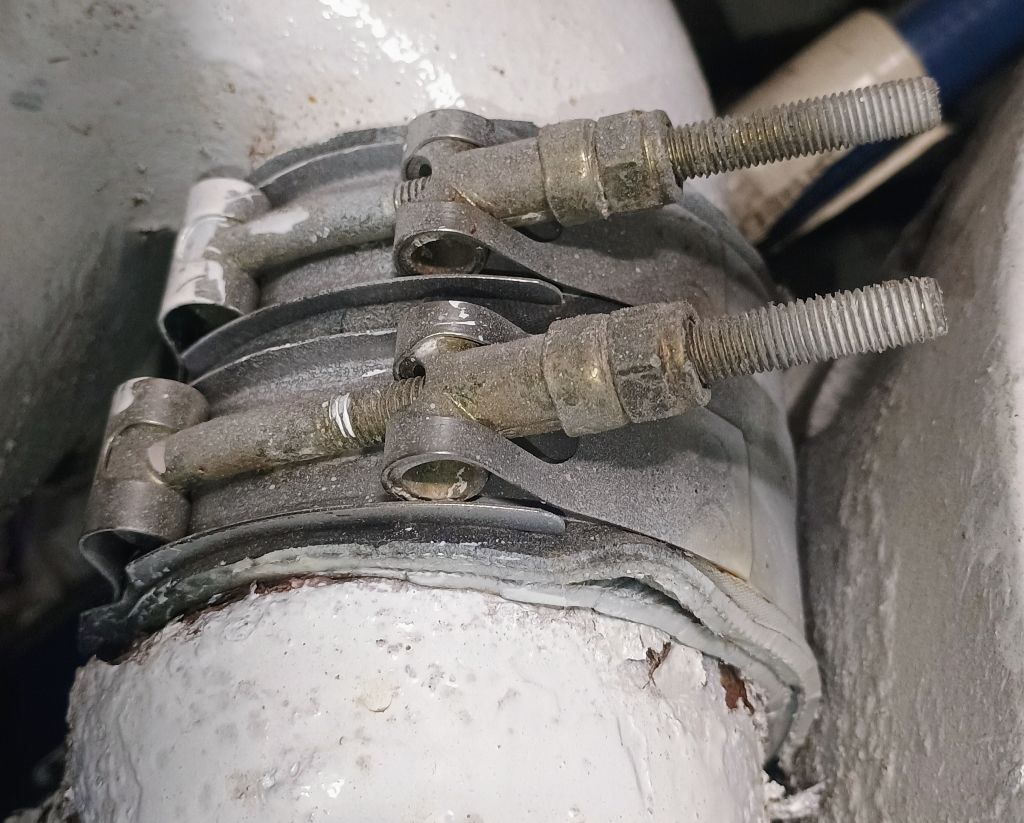
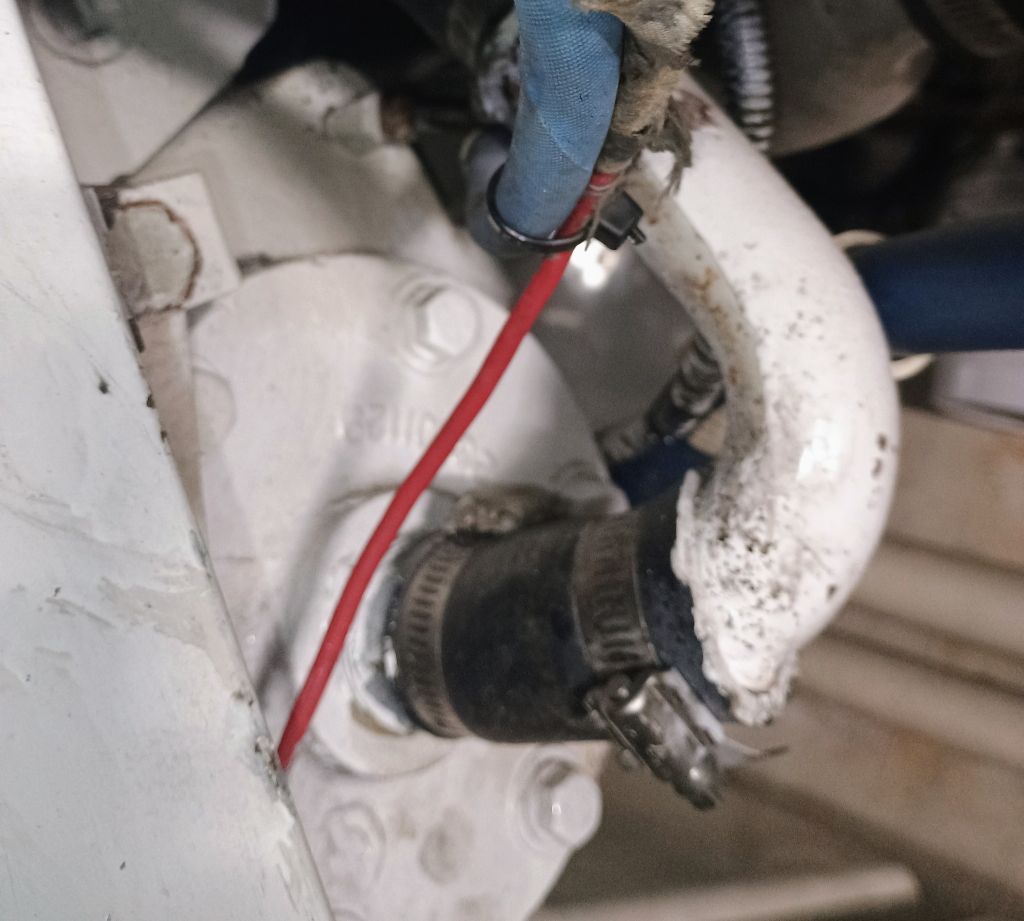
The cooling-system hose shown above displays deterioration and should be replaced as part of the recommended preventative maintenance.
Documented Survey Evidence
Approximately 2,150 RPM with exceptionally low smoke output.
Port transmission pump, starboard governor, valve-cover, and oil-pan leakage documented.
Aging and deteriorated hoses photographically documented for preventative replacement.
Priority Recommendations
1. Replace Deteriorated Hoses
Replace cooling-system hoses, air-breather hoses, and oil hoses showing deterioration or age-related degradation.
2. Correct Oil Leaks
Inspect and repair oil leaks at the port transmission pump, starboard governor, both valve covers, and oil-pan areas as required.
3. Replace AIR-SEP Filters & Oil Breathers
Replace AIR-SEP air filters and oil-breather components as part of scheduled preventative maintenance.
4. Replace Port Flybridge Oil-Pressure Gauge
The port oil-pressure gauge at the flybridge was inoperable and should be replaced so engine oil pressure can be properly monitored from the helm.
5. Complete Engine & Transmission Service
Both main engines and both Twin Disc marine transmissions are due for oil and filter service.
Detroit Diesel 8V92TI Fuel Consumption Planning
Assumptions: Twin engines operating under heavy offshore load conditions.
Typical Fuel Burn: Approximately 25–30 GPH per engine, or approximately 50–60 GPH combined.
| Speed | Run Time | Total Fuel Burn | +20% Reserve | +30% Reserve |
|---|---|---|---|---|
| 18 knots | 11.1 hrs | 555–665 gal | 665–800 gal | 720–865 gal |
| 20 knots | 10 hrs | 500–600 gal | 600–720 gal | 650–780 gal |
| 22 knots | 9.1 hrs | 455–545 gal | 545–655 gal | 590–710 gal |
Best Real-World Planning Number:
Approximately 20 knots with around 700 gallons onboard for reserve and weather safety margin.
Long-Range Offshore Fuel Planning
The approximate distance between Ensenada, B.C.N., Mexico and Bahia Tortuga, B.C.S., Mexico is approximately 524–529 miles depending on route selection.
Expected Total Fuel Burn:
Approximately 1,300–1,600 gallons combined for both engines under heavy offshore load conditions.
Recommended Real-World Planning Fuel Capacity:
Approximately 1,700–1,900 gallons onboard including reserve fuel margin.
Final Machinery Assessment
The twin Detroit Diesel 8V92TI engines demonstrated favorable operational characteristics throughout the inspection and sea trial.
Smooth and without excessive cranking
Exceptionally low smoke output
Smooth spool-up and satisfactory operation
Smooth engagement and operation
Normal temperatures and satisfactory pressure testing
Approximately 2,150 RPM / approximately 25 knots
Final Surveyor Conclusion
Based on visual inspection findings, operational testing, oil-analysis sampling, and sea-trial observations, the propulsion systems aboard this 1991 47FT Buddy Davis Sport Fisher appear generally well maintained and demonstrated strong operational performance.
The twin Detroit Diesel 8V92TI engines demonstrated favorable operating characteristics including smooth starting, strong high-load performance, very low exhaust smoke, satisfactory turbocharger operation, smooth Twin Disc transmission engagement, and stable cooling-system temperatures.
The primary maintenance concerns identified during the survey are oil leaks at several locations, aging cooling and breather hoses, AIR-SEP air filters and oil breathers requiring replacement, an inoperable port oil-pressure gauge at the flybridge, and overdue engine/transmission oil and filter service.
The port transmission also showed a small leak at the transmission pump and should be inspected and repaired.
Professional Survey Notes
NOTICE:
The following statements limit the liability of the undersigned and set ethical standards associated with this report. Use of this report for any purpose constitutes acceptance of the following:
NOTE A:
This report is issued without prejudice and is the property of the Requestor as listed above. Any use or distribution by another party is prohibited and shall render this report invalid.
NOTE B:
This report is issued subject to the understanding that the undersigned surveyor is not responsible for error, omission, negligence, or misstatement. This report is a statement of my opinion based on the conditions as I found them. It is not a warranty, express or implied.
Professional Marine Engine Surveys
805 Marine Diesel Mechanic provides professional marine engine surveys, pre-purchase diesel inspections, sea trials, cooling-system evaluations, oil analysis, transmission inspections, fuel-system diagnostics, and marine diesel troubleshooting throughout Ventura, Oxnard, Channel Islands Harbor, Santa Barbara, Marina del Rey, and surrounding Southern California harbors.
Survey Conducted By
Owner / Surveyor: Jeff Lendall
Jeff Lendall & Sons
805 Marine Diesel Mechanic
3 Responses