
The Ultimate Marine Engine Painting Process: Transform Your Boat with 805 Marine Mechanic
805 Marine Mechanic provides professional, on-site marine engine painting and restoration for yachts and boats across Ventura, the Channel Islands, and Santa Barbara. Our certified mobile team handles meticulous prep, rust conversion, and high-temp finishing—right at your dock or marina—so your vessel looks clean, runs protected, and is ready for the water with minimal downtime.

Why Marine Engine Painting Matters (Beyond Looks)
A freshly painted engine bay does more than impress—it protects critical components from salt, moisture, heat, and corrosion. In a coastal environment like Ventura and the Channel Islands, unprotected metal surfaces oxidize quickly. High-quality surface preparation, rust conversion, and high-temp coating create a durable barrier that extends engine longevity, simplifies future inspections, and helps retain resale value. With 805 Marine Mechanic’s mobile service, you get these benefits without trailering your boat or losing valuable time on the water.
Our Unified, Three-Part Marine Engine Painting System
We follow a proven sequence for consistent, long-lasting results. Each step is completed on-site by skilled technicians using purpose-built tools and marine-grade products—all while safeguarding your vessel and surrounding equipment.
Step 1 — Precision Prep & Degreasing
Paint adhesion is only as good as the surface beneath it. We begin by removing flaking paint and scale to expose a sound base. Then we perform a deep degrease using
Purple Power to cut through oil, fuel residue, and grime that would otherwise cause bubbling, peeling, or fisheyes in the finish. Brushed agitation and careful wipe-downs ensure every nook and fastener head is properly cleaned.
Step 2 — Rust Conversion with OSPHO
Coastal air accelerates corrosion. After degreasing, we treat affected areas with OSPHO, a phosphoric-acid rust converter that chemically stabilizes rust into a paintable surface. We allow proper dwell time, then reinspect and retreat stubborn spots. This step is key to a finish that lasts seasons—not weeks.
Step 3 — Final Clean & High-Temp Coating
Before color, we wipe down with brake fluid cleaner to remove trace contaminants and ensure a surgically clean surface. Then we apply multiple, even coats of high-temp marine engine spray paint for a smooth, heat-resistant finish that resists salt, oil, and UV exposure. Each coat is allowed to flash and dry for maximum adhesion and durability.
What You Can Expect from 805 Marine Mechanic
- Mobile Convenience: We come to your slip, mooring, or driveway in Ventura, Channel Islands, and Santa Barbara.
- Certified Marine Techs: Skilled with diesel and gasoline inboards/outboards; precise prep and masking around belts, hoses, wiring, and sensors.
- Premium Materials: OSPHO rust conversion and high-temp coatings built for marine heat cycles and salt exposure.
- Respect for Your Vessel: Careful masking of decks, bilges, stringers, batteries, and electronics to avoid overspray or contamination.
- Transparent Guidance: We explain options, colors, cure times, and safe re-commissioning timelines, so you know exactly what’s next.
Local Conditions We Build For
Boating in Ventura Harbor, the Channel Islands, and Santa Barbara means persistent salt mist, sun, and temperature swings. Our process is tailored to these realities—corrosion-prone fasteners, heat-soaked manifolds, and tight engine rooms. We also advise on periodic wipe-downs, ventilation, and inspection routines that fit your typical usage—whether you’re a weekend island-hopper or a frequent coastal cruiser.
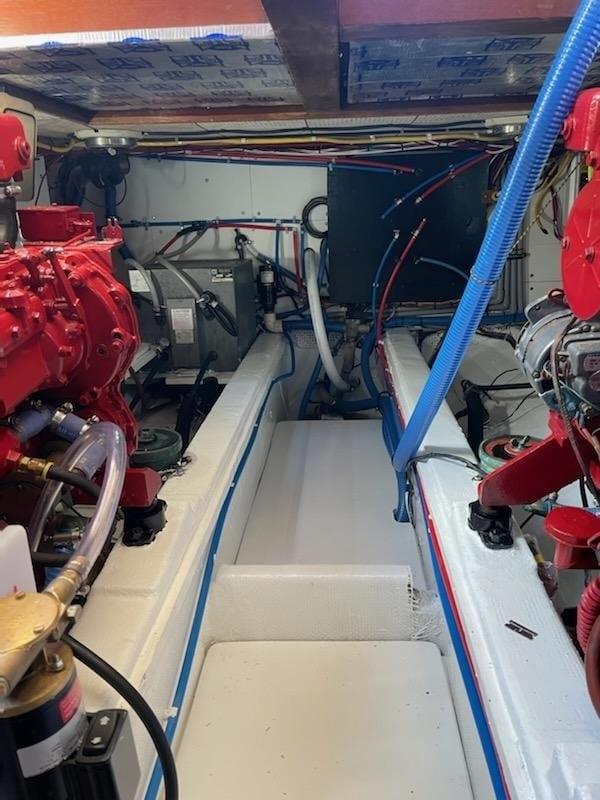
Before & After: What a Proper Engine Refresh Delivers
- Cleaner Serviceability: A crisp, uniform finish makes leaks and anomalies easier to spot early.
- Corrosion Resistance: Converted rust + high-temp coating creates a durable barrier against salt and heat.
- Higher Resale Confidence: Buyers love clean engine rooms—fresh paint signals care and helps your listing photos stand out.
- Professional Appearance: Engine bays look organized and well-maintained, reflecting pride of ownership.
DIY vs. Professional: When to Call 805 Marine Mechanic
Light touch-ups in easy-to-reach areas can be DIY. But full-bay refreshes in tight engine rooms—with delicate wiring, sensors, fuel rails, turbos, and aftercoolers—benefit from a professional. Our team handles ventilation, masking, product selection, and safe re-commissioning so the job looks right and lasts. We can also coordinate related maintenance—impellers, belts, hose clamps, anodes—while the area is accessible.
Smart Add-Ons While We’re There
- Seawater pump/impeller service to protect cooling performance.
- Fuel system inspection for leaks, filter dates, and hose condition.
- Electrical clean-up (terminals, corrosion inhibitor, loom tidying).
- Propeller inspection and guidance on ding/bend remediation.
- Battery and charging check to ensure reliable starts post-service.
Care Guide: Keep That Finish Looking New
- Monthly wipe-down: Light degreaser on a microfiber to remove salt film and oil mist.
- Spot protection: Use corrosion inhibitor on fasteners and raw edges after heavy use.
- Ventilate: After running, open the engine hatch to dissipate heat and moisture.
- Watch hot spots: Manifolds, turbos, and risers see the most heat—report discoloration or flaking early.
- Seasonal check: Have us inspect for abrasion, chafe, or leaks that could degrade the coating.
Frequently Asked Questions About Marine Engine Painting
How long does the process take?
Most on-site projects finish in one to two days, depending on access, engine size, and corrosion levels. We’ll give you a clear schedule before we begin.
What paint do you use?
We use high-temp marine engine spray coatings designed for sustained heat and salt exposure—for example, the marine white referenced here:
Cummins Onan 3885912.
Will painting improve performance?
Paint itself doesn’t change horsepower, but it protects metal, simplifies leak detection, and helps prevent corrosion-related failures—benefits that support reliability and longevity.
How often should I repaint?
Many boats do well with a 3–5 year refresh cycle. Heavy salt exposure, frequent use, or engine-room heat may justify more frequent touch-ups.
Can you match my current engine color?
Yes—let us know your preferred shade or OEM reference and we’ll advise on the closest high-temp marine equivalent.
Areas We Serve
805 Marine Mechanic proudly provides mobile marine painting and maintenance throughout Ventura, the Channel Islands, and Santa Barbara. Whether you’re berthed in Ventura Harbor, launching to Santa Cruz Island, or cruising the Santa Barbara coastline, our team brings the workshop to you.
Ready to Transform Your Engine?
Don’t settle for flaking paint and creeping corrosion. Choose the mobile experts who prep correctly, convert rust the right way, and finish with durable high-temp coatings—so your engine looks sharp and stays protected.
Have questions about timing, color, or coordinating other services while we’re there? We’re happy to help and provide a clear, tailored quote.