
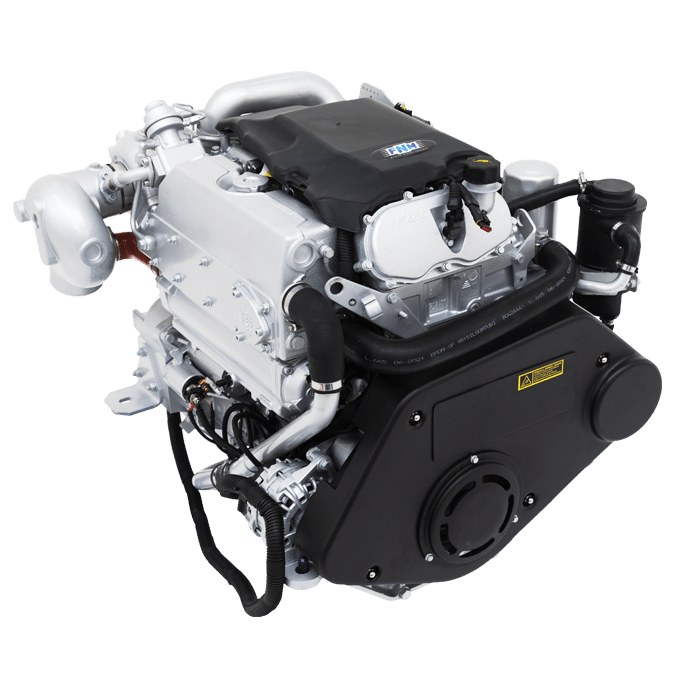
FNM Marine Engine Maintenance Schedule 30HPE, performed by the trained technicians at 805 Marine Diesel Mechanic, serving Oxnard, Channel Islands Marina, Ventura Harbor, and Santa Barbara Harbor. Preventive maintenance periods below reflect average operating conditions; always consider the builder’s guidance for your specific installation and duty cycle.
At each visit we check for leaks, loose fasteners, and emerging issues. These schedules assume compliant fuels and lubricants per the FNM handbook. Use the procedures and interval breakdowns here to keep your 30HPE running cool, clean, and efficient—season after season.
FNM Marine Engine Maintenance Schedule:
Daily:
- Check the amount of coolant in the header tank.
- Check the engine for leakage of oil and coolant.
- Check the sea water strainer.
- Drain water from the fuel pre-filter.
- Check the amount of lubricating oil in the sump.
- Check the lubricating oil pressure at the gauge.
- Check the amount of lubricating oil in the reverse gearbox.
250 service hours or yearly:
- Check the amount of coolant in the header tank.
- Check the engine for leakage of oil and coolant.
- Check the seawater strainer.
- Drain water from the fuel pre-filter.
- Check the amount of lubricating oil in the sump.
- Check the lubricating oil pressure at the gauge.
- Check the amount of lubricating oil in the reverse gearbox.
- Check the tension and the condition of the drive belt.
- Renew the lubricating oil in the reverse gearbox.
500 service hours or yearly:
- Check the amount of coolant in the header tank.
- Check the engine for leakage of oil and coolant.
- Check the seawater strainer.
- Drain water from the fuel pre-filter.
- Check the amount of lubricating oil in the sump.
- Check the lubricating oil pressure at the gauge.
- Check the amount of lubricating oil in the reverse gearbox.
- Check the tension and the condition of the drive belt.
- Renew the lubricating oil in the reverse gearbox.
- Check the specific gravity of the coolant.
- Check the impeller of the seawater pump.
- Clean the sediment chamber and the strainer of the fuel lift pump.
- Renew the element of the fuel filter.
- Renew the engine lubricating oil.
- Renew the canister of the lubricating oil filter.
- Renew the element of the air filter.
- Check all hoses and connections.
- Check the audible warning system which protects the engine.
- Check the engine mounts.
1000 service hours:
- Check the amount of coolant in the header tank.
- Check the engine for leakage of oil and coolant.
- Check the seawater strainer.
- Drain water from the fuel pre-filter.
- Check the amount of lubricating oil in the sump.
- Check the lubricating oil pressure at the gauge.
- Check the amount of lubricating oil in the reverse gearbox.
- Check the tension and the condition of the drive belt.
- Renew the lubricating oil in the reverse gearbox.
- Check the specific gravity of the coolant.
- Check the impeller of the seawater pump.
- Clean the sediment chamber and the strainer of the fuel lift pump.
- Renew the element of the fuel filter.
- Renew the engine lubricating oil.
- Renew the canister of the lubricating oil filter.
- Renew the element of the air filter.
- Check all hoses and connections.
- Check the audible warning system which protects the engine.
- Check the engine mounts.
- Check the valve tip clearances of the engine and adjust if necessary.
- Inspect the electrical system for signs of damage.
- FNM Marine Engine Maintenance Schedule
NOTE: These are FNM Marine periodic maintenance recommendations straight from the service manual. At Santa Barbara Marine Diesel Mechanic / 805 Marine Mechanic, we can customize your periodic maintenance to fit your vessel, hours, and local conditions.
How to Extend Your Boat’s Life: A Complete FNM 30HPE Maintenance Guide
Your FNM 30HPE thrives on regular, hour-based service. Daily checks protect critical systems before you leave the dock, while the 250/500/1000-hour milestones reset filtration, cooling performance, and hardware integrity. Our dockside team documents everything, provides photos on request, and keeps a simple, date-and-hours log so you can track trends and prepare for the next run.
Daily (5-minute readiness)
Clear seawater strainers prevent overheating; draining the pre-filter removes water before it reaches injectors. Oil/coolant level checks and a quick look around for leaks catch problems early. A stable gearbox level and healthy oil pressure protect bearings and gearsets.
250 Hours / Annual (baseline protection)
We verify belts, renew gearbox oil, inspect strainers, and strip condensation from the tank. This visit confirms that filtration and cooling hardware are clean and moving fluid at design rates—key to keeping temperatures and wear metals low.
500 Hours / Annual (system refresh)
Coolant chemistry is checked and renewed as needed; the raw-water impeller is inspected, and filters (fuel, air, oil) are replaced. We clean the lift-pump strainer, test alarms, and inspect mounts. The outcome: better fuel economy, smoother idle, and lower EGTs under load.
1000 Hours (deep inspection)
In addition to 500-hour work, we adjust valve clearances, look closely at wiring and connectors, and re-verify exhaust and cooling integrity. This prevents gradual performance loss and protects against sudden failures offshore.
Best Practices for Ventura, Channel Islands & Santa Barbara Waters
- Zinc Anodes: Warm, saline conditions accelerate consumption—inspect mid-intervals and replace proactively.
- Heat Exchangers: Descale on a time basis if hours are low but seasons are long; flow/ΔT checks confirm effectiveness.
- Fuel Quality: Keep tanks topped to limit condensation; treat with biocide during layups and log treatment dates.
- Impeller Spares: Carry a spare impeller and gasket set onboard; change at the first sign of vanes deforming.
- Electrical Corrosion: Protect connectors with marine-safe dielectric products; verify grounds and charging voltages every service.
Marine Diesel Engine Maintenance
Regular Oil Changes
Oil in a diesel works under higher temperature and pressure than gasoline engines, and short, low-load operation can cause moisture and carbon buildup that form acids and sludge. Running only at the slip or idling long periods accelerates this. Avoid frequent short runs; when that isn’t possible, shorten oil intervals and use top-quality oil and filters. This simple habit preserves compression, reduces soot on valves and stems, and keeps bearings happy.

What 805 Marine Mechanic Does on Every Visit
- Operational Baseline: Record temps, pressures, alternator output, and idle quality; check for abnormal noise/vibration.
- Cooling System: Clean strainers, inspect/replace impeller, pressure-test caps, verify exchanger/inlet restrictions, and confirm raw-water flow.
- Fuel System: Replace primary/secondary filters, drain Racors, inspect lift pump screen, and check for air leaks.
- Lubrication: Engine and gearbox oil per interval, filter change, and optional oil sample to trend wear metals.
- Air & Exhaust: Replace/clean air element, inspect turbo and mixing elbow for scaling and corrosion.
- Belts & Hoses: Tension and condition checks; proactive replacement of aging rubber.
- Electrical: Battery load tests, voltage drop checks, connector cleaning/protection, and alarm verification.
- Mounts & Alignment: Mount condition and height; coupling and shaft alignment checks reduce seal wear and vibration.
- Documentation: Photos on request, logbook entries, and next-interval recommendations tailored to your usage.
How to Extend Your Boat’s Life: A Complete FNM Marine Engine Maintenance Schedule
Sticking to hour-based milestones and seasonal checks is the surest way to extend engine life and prevent mid-season surprises. After the first 50 hours (early wear-in), a steady rhythm of 100–250–500–1000 hour service catches issues before they grow. If your 30HPE idles often, tows, or runs short cycles, we adjust intervals accordingly.
Comprehensive Maintenance Schedule
Essential Servicing Intervals
Every 100–250 hours we focus on fluids, filters, and cooling flow. At 500 hours we refresh air and fuel filtration, inspect the raw-water path end-to-end, and test alarms. At 1000 hours we add valve adjustments, deeper electrical inspection, and vibration/heat-related checks to preserve compression and output.
Key Inspection Checkpoints
Leaks, corrosion, loose clamps, and tired hoses are the top causes of downtime. We verify oil level/quality, coolant level and chemistry, belt tension, fuel line integrity, and battery health. A quick alternator/voltage-drop test prevents no-starts. These basic checkpoints dramatically improve reliability.
FNM 30HPE Maintenance — Frequently Asked Questions
How often should I service my FNM 30HPE in Southern California?
Follow the daily checks and complete the 250/500/1000-hour services as listed. In warm, salty waters like Ventura and Channel Islands, inspect zincs, strainers, and impellers more frequently—even mid-interval.
What’s the number one cause of marine diesel overheating?
Restricted raw-water flow: clogged strainers, worn impellers, scale in heat exchangers, or a weak pressure cap. Routine cleaning and timely impeller changes prevent most incidents.
Can you combine hour-based and time-based tasks to save trips?
Yes. We routinely bundle seasonal (time) tasks with your next hour milestone to minimize downtime and cost while keeping warranty compliance.
Do you service my harbor?
We provide mobile dockside service for Ventura Harbor, Channel Islands Marina/Harbor, Santa Barbara Harbor, and Oxnard.
Schedule Your FNM 30HPE Service
Protect your engine with a maintenance plan tuned to Ventura, Channel Islands, Santa Barbara, and Oxnard conditions. Mobile, in-slip service with OEM-spec parts and clear documentation.