
MAN D2868 V8 and D2862 V12 marine engine maintenance and diagnostics for yachts and sportfishing vessels in Ventura, Oxnard, Channel Islands Harbor, and Santa Barbara by the trained technicians at 805 Marine Diesel Mechanic.
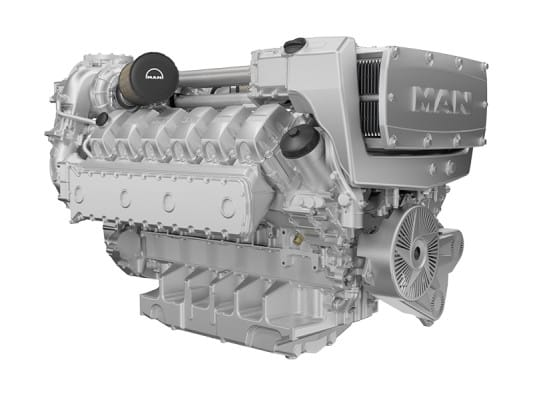
MAN V8 and V12 common-rail diesels deliver serious power for fast cruising between Ventura, the Channel Islands, and Santa Barbara—but only when their maintenance schedule is followed precisely. Light-duty MAN engines like the D2868 (V8) and D2862 (V12) demand disciplined oil changes, clean fuel, and proper cooling system care to stay reliable at high load and RPM. At 805 Marine Diesel Mechanic, our trained technicians follow MAN’s recommended marine engine maintenance schedule and adapt it to local Central Coast conditions so your engines start clean, run cool, and deliver full power season after season.
Schedule MAN Engine Service
Request a MAN Maintenance Assessment
MAN V8 & V12 Marine Engines on the California Central Coast
MAN’s D2868 V8 and D2862 V12 engines are compact, high-speed diesels widely used in performance yachts and sportfishing boats from roughly 1,000 to 2,000 hp. They are designed for “Light Duty” profiles—short warm-up, rapid planing, and long periods at cruise speed—exactly how many vessels are run between Ventura, Oxnard, the Channel Islands, and Santa Barbara.
These engines reward owners who stay ahead of the maintenance curve: clean fuel, frequent oil changes, and disciplined cooling system care. Conversely, neglected service quickly shows up as higher EGTs, oil contamination, charge air temperature issues, and shortened turbocharger life. Our role is to translate MAN’s factory maintenance schedule into a practical plan that fits how you actually operate your boat along the Santa Barbara Channel.
Technical Demands of MAN Common-Rail Marine Diesels
MAN V8/V12 marine engines are highly engineered powerplants with tight tolerances and sophisticated control systems. Key technical considerations include:
- High specific output: Large horsepower from a compact footprint requires aggressive air handling, precise fueling, and robust cooling.
- Common-rail injection: High-pressure fuel systems rely on exceptionally clean, water-free diesel and regular filter changes.
- Charge-air cooling: Aftercoolers must stay clean and leak-free to keep intake temps in spec and protect pistons and valves.
- Thermal management: Heat exchangers, raw water circuits, and zinc protection must be maintained to prevent hot spots and corrosion.
Because these engines are often installed in tight, high-end engine rooms, access and routing matter. Our technicians plan work to respect MAN’s procedures while protecting finishes, wiring looms, and surrounding systems.
Why Scheduled Service & Clean Fuel Matter So Much on MAN Engines
Sophisticated engines magnify the results of good—or bad—maintenance. For MAN marine engines, three areas are especially critical:
- Oil changes: MAN recommends frequent oil changes, often in the 50–100 hour range depending on duty and conditions. Keeping oil fresh helps manage soot, acid, and heat generated during hard planing and fast cruise.
- Fuel quality: Dual-stage filtration and regular water draining protect injectors, pumps, and common-rail hardware from wear and corrosion.
- Cooling system health: Clean raw water circuits, good zinc protection, and proper coolant chemistry prevent overheating, charge-air temperature rise, and internal corrosion.
In harbors like Ventura, Oxnard, Channel Islands, and Santa Barbara—where boats may sit for weeks and then run hard—fuel polishing, tank inspections, and periodic coolant testing are as important as the hourly intervals themselves.
Breaking Down the MAN Marine Engine Maintenance Schedule
The following overview is based on MAN’s light-duty guidance for V8 and V12 main propulsion engines. We always cross-check with your specific engine model and serial number, then adjust for your duty cycle and local conditions.
Daily Inspection (Before Every Run)
- Check engine oil level and transmission oil level.
- Verify coolant level in the expansion tank.
- Confirm proper operation of gauges and instruments.
- Visually inspect for oil, fuel, or coolant leaks around the engines.
- Drain water from fuel filters and pre-filters.
- Check reverse gear oil level and look for leaks or unusual noise.
These checks can often be completed in minutes and are the best way to catch small problems before they turn into major failures offshore.
At 200 Service Hours or 6 Months
In addition to daily checks, 805 Marine Diesel Mechanic typically performs:
- Drive belts: inspect condition and check tension, adjust if needed.
- Electrical: verify all electrical connections are clean and secure.
- Air cleaner: check for restrictions and clean/replace if required.
- Zinc anodes: inspect and replace as needed.
- Antifreeze: check concentration and top off or correct as necessary.
- Seawater pump seals: inspect raw-water pump for leakage.
- Sea water strainer: clean basket and verify flow.
- Engine oil and filter: change (or sooner based on 50–100 hour guidance).
At 400 Service Hours or Yearly
- Inspect/replace zinc anodes throughout cooling circuits.
- Replace seawater pump impeller and inspect pump seals.
- Flush the seawater system with descaling solution.
- Check battery electrolyte level (if applicable) and test condition.
- Inspect belt tensioner, drive belts; adjust or replace as needed.
- Test/add Supplemental Coolant Additive (SCA) or verify coolant spec.
- Clean or replace engine air cleaner elements.
- Clean crankcase breather.
- Obtain and document an engine oil sample for lab analysis.
- Clean fuel inlet screens and replace primary/secondary fuel filters.
- Drain water and sediment from fuel tanks.
- Inspect/replace hoses and clamps; pressure-check seawater lines.
- Clean/inspect seawater strainers.
- Inspect water pump and reverse gear; change reverse gear oil and filter.
- Inspect all hydraulic hoses and fittings for leaks, wear, or aging.
At 800 Service Hours or 2 Years
- Flush and test aftercooler core (charge-air cooler).
- Change cooling system coolant (DEAC or MAN-approved equivalent).
- Test engine protective devices and alarms.
- Clean/inspect magnetic pickups and speed sensors.
- Inspect turbochargers for play, oil leaks, and fouling.
- Inspect exhaust and cooling water hoses; replace as needed.
- Inspect/adjust valve lash.
- Check and verify fuel injection timing.
Beyond these milestones, long-term schedules call for additional aftercooler work, hose replacement, and system renewals at four-year and longer intervals. We track these in your service file so higher-interval items are not overlooked.
Core MAN Engine Services by 805 Marine Diesel Mechanic
Our MAN marine engine service packages are built around diagnostics, documentation, and predictable maintenance. Typical services include:
- Scheduled oil, coolant, and filter changes aligned with MAN’s guidance.
- Comprehensive fuel system service—primary/secondary filters, water drain, and tank inspections.
- Cooling system maintenance—zincs, impellers, heat exchanger and aftercooler care.
- Complete visual and borescope inspections where applicable.
- On-engine electronic diagnostics for alarms, sensors, and fault codes.
- Transmission, shaft, and coupling checks coordinated with your overall service plan.
We also coordinate MAN maintenance with other on-board diesels—for example, your Perkins marine diesel, Yanmar marine diesel, or auxiliary generators—to complete as much work as possible in a single visit.
Advanced Fuel, Filtration & Monitoring Upgrades
Central Coast fuel quality can vary, and MAN common-rail systems are not forgiving when it comes to contaminated diesel. To protect high-pressure pumps and injectors, we offer:
- Upgraded Racor or Fleetguard primary filtration with clear bowls for easy inspection.
- Fuel polishing and tank cleaning for vessels with long idle periods.
- Additional fuel pressure and vacuum monitoring to highlight filter loading.
- Integration with existing fresh water flushing and service routines to streamline maintenance days.
These upgrades help keep fuel clean long-term and reduce the risk of downtime-causing injector or pump failures.
Hoses, Plumbing & Engine Room Details
High-output MAN engines put significant demand on raw-water plumbing, coolant hoses, and hydraulic lines. As part of our service process we:
- Inspect all seawater and coolant hoses, replacing aging sections with marine-rated hose.
- Upgrade clamps where needed and re-orient them for easier future service.
- Verify routing for chafe protection and proper support.
- Check shaft couplings, flexible mounts, and seals for alignment and wear.
Attention to these details reduces the risk of leaks, overheat events, and vibration-related failures—especially important when running hard offshore to the Channel Islands.
Long-Term Benefits of a Structured MAN Maintenance Plan
Sticking to a documented MAN marine engine maintenance schedule delivers tangible benefits:
- Reliability: Fewer surprise alarms or derates when you’re offshore or lining up a harbor approach.
- Smoother operation: Cleaner fuel and air handling translate to smoother idle and better throttle response.
- Fuel efficiency: Properly tuned engines with clean aftercoolers and filters make more power from every gallon.
- Component life: Turbos, injectors, pumps, and cooling components last longer when kept clean and correctly serviced.
- Resale value: A complete service history from a trusted shop is a major asset when it’s time to sell or survey.
Legacy Support, Upgrades & Future Fuel Readiness
MAN continues to develop new engine families and fuel options, including renewable diesel approvals on current marine engines. If you operate earlier D-series engines or are considering alternative fuels, we can:
- Review existing installation against current MAN guidance and service bulletins.
- Evaluate coolant and lubricant specifications for updated recommendations.
- Discuss fuel quality and compatibility for your specific model and duty cycle.
- Coordinate with MAN marine service resources and your existing MAN documentation.
Our goal is to keep your engines compliant, efficient, and ready for evolving fuel and emissions expectations.
Trained Technicians, Documentation & Work Process
MAN engines reward meticulous, process-driven service. Our trained technicians follow a consistent workflow:
- Intake & interview: Discuss hours, duty cycle, past issues, and owner priorities.
- Inspection: Perform visual checks, scan for codes (where applicable), and verify key measurements.
- Service execution: Work through the agreed maintenance list with manufacturer procedures.
- Verification: Run engines to temperature, check for leaks, verify pressures and temps, and sea trial when appropriate.
- Documentation: Provide a written record of work performed, parts used, and any findings or future recommendations.
This documentation is invaluable for future troubleshooting, surveys, and owner peace of mind.
Local MAN Marine Service Coverage
805 Marine Diesel Mechanic provides MAN marine engine maintenance and troubleshooting across the Central Coast, including:
- Santa Barbara Harbor and nearby marinas.
- Ventura Harbor and Oxnard marinas.
- Channel Islands Harbor and Channel Islands Marina.
Most maintenance operations can be handled dockside, minimizing downtime. When haul-out or yard time is required, we coordinate work so engine service aligns with other projects like running gear, bottom paint, or shaft work.
Keep Your MAN Marine Engines on Schedule
Simple, regular maintenance is the fastest and least expensive way to avoid major MAN engine repairs. By pairing MAN’s factory maintenance schedule with our local experience in Ventura, Oxnard, Channel Islands Harbor, and Santa Barbara, 805 Marine Diesel Mechanic helps you protect your investment and enjoy more confident time on the water.
Request a MAN Maintenance Plan
Get a MAN Engine Service Quote
Whether you’re running a fast MAN-powered sportfisher to the Channel Islands or cruising the Santa Barbara coastline on a V12-powered yacht, our team keeps your engines on schedule, documented, and ready for the next trip.
Contact 805 Marine Diesel Mechanic Today
Frequently Asked Questions About MAN Marine Engine Maintenance
How often should I change the oil on my MAN marine engines?
For light-duty MAN V8 and V12 engines, many owners follow a 50–100 hour oil change interval or at least once per season, even if hourly limits are not reached. The exact interval depends on how you run the boat, fuel quality, and local conditions. We can help you dial in a schedule that balances protection and practicality.
What happens if I miss a MAN maintenance interval?
Occasionally going a few hours past an interval is usually not critical, but repeatedly stretching oil, filter, coolant, or aftercooler service can lead to accelerated wear, higher operating temperatures, and expensive repairs. If you are behind on service, the best approach is a comprehensive catch-up visit that brings all items back into alignment.
Do MAN engines require special fuel filtration?
MAN common-rail engines are very sensitive to contamination and water in fuel. A properly sized primary filter/water separator combined with the engine’s secondary filters is essential. We often recommend Racor or Fleetguard upgrades and regular water draining to protect injectors and pumps.
Can you coordinate MAN engine service with other diesel work on my boat?
Yes. We frequently coordinate MAN maintenance with generator service, auxiliary engines, and work on other brands such as Perkins and Yanmar. Grouping services reduces downtime and ensures all critical diesel systems are inspected on the same schedule.
Do you offer mobile MAN engine service at my slip?
We provide mobile MAN marine engine service at Santa Barbara Harbor, Ventura Harbor, Oxnard, and Channel Islands Harbor. Many scheduled maintenance tasks and diagnostics can be completed dockside. When more extensive work or sea trial validation is required, we plan the job around your schedule.
How do I get started with a MAN maintenance plan?
The first step is a conversation about your engines, current hours, and how you use the vessel. From there, we build a written maintenance plan that combines MAN’s recommended schedule with local experience. Contact us to schedule an onboard review and create a plan tailored to your boat.