
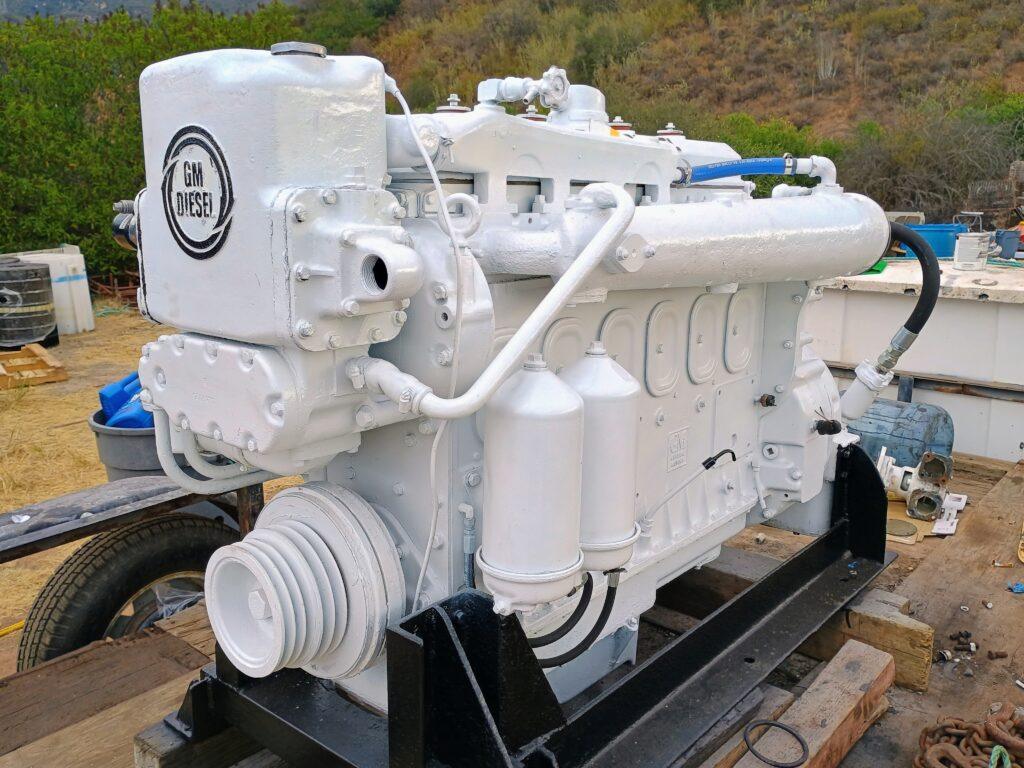
Low Power or Loss of RPM Diagnosis Center (Detroit Diesel Authority)
When a marine diesel engine suddenly loses power or cannot reach normal operating RPM, it is often a sign of developing mechanical, fuel, or airflow problems. Detroit Diesel engines are legendary for durability, but even these classic engines can experience power loss when fuel delivery, turbo boost, exhaust flow, or cooling systems become restricted.
With over 30 years of marine diesel engine experience, 805 Marine Diesel Mechanic provides professional diagnosis and repair for Detroit Diesel propulsion engines throughout Ventura, Oxnard, Channel Islands Harbor, and Santa Barbara. This Low Power / Loss of RPM Diagnosis Center is part of our Master Marine Diesel Troubleshooting Guide.
Common Symptoms of Marine Diesel Power Loss
Low power situations can present in several ways depending on the root cause. Detroit Diesel engines are particularly sensitive to airflow and fuel delivery restrictions because of their two-stroke scavenging design.
- Engine will not reach rated RPM under load
- Boat speed significantly reduced at normal throttle
- Black smoke under acceleration
- Turbo boost pressure lower than normal
- Engine sounds strained or overloaded
- High exhaust temperature
When these symptoms occur, a systematic diagnostic process is required to isolate the source of the power loss.
Fuel System Restrictions
The most common cause of marine diesel power loss is restricted fuel flow. Detroit Diesel engines rely on consistent fuel delivery to maintain injector performance and proper combustion timing.
Typical causes include clogged fuel filters, contaminated fuel, collapsed fuel hoses, or failing lift pumps. Restricted fuel flow limits the volume of fuel reaching the injectors which directly reduces engine power output.
Fuel contamination from microbial growth or water intrusion is particularly common in marine environments. When contamination builds up inside fuel tanks, filters can clog quickly and starve the engine.
Professional inspection should include:
- Fuel filter restriction testing
- Fuel pressure measurement
- Injector rack synchronization
- Fuel tank contamination inspection
Air Intake Restrictions
Detroit Diesel two-stroke engines depend heavily on unrestricted airflow for scavenging and combustion. Any restriction in the air intake system can reduce engine breathing and cause immediate power loss.
Common airflow issues include:
- Clogged air filters
- Collapsed intake hoses
- Dirty blower assemblies
- Restricted intake silencers
Unlike four-stroke engines, Detroit Diesel engines use a blower to move air through the cylinders. If blower seals or rotors wear, air delivery decreases and power output drops.
Turbocharger Problems
Many Detroit Diesel marine engines use turbochargers to increase airflow and boost power output. If the turbocharger is not producing proper boost pressure, engine performance will suffer dramatically.
Turbo related causes of power loss include:
- Turbo bearing wear
- Exhaust housing carbon buildup
- Boost leaks in charge air piping
- Wastegate malfunction
A professional technician should verify turbo boost pressure under load to determine whether the turbo system is operating correctly.
Additional marine turbocharger information can be found at Yachting Magazine’s diesel turbocharger guide.
Exhaust System Restrictions
Restricted exhaust flow can also prevent engines from reaching rated RPM. Marine exhaust systems can accumulate carbon deposits or experience internal hose collapse.
Common exhaust restrictions include:
- Clogged exhaust elbows
- Collapsed exhaust hoses
- Carbon buildup inside mixing elbows
- Restricted mufflers
When exhaust gases cannot escape freely, engine efficiency drops and power output declines.
Cooling System Performance Issues
Detroit Diesel engines may reduce power output if cooling systems are not operating correctly. Elevated engine temperatures can trigger protective behavior and reduce performance.
Cooling related causes of power loss include:
- Raw water pump impeller damage
- Heat exchanger blockage
- Restricted seawater intake
- Thermostat malfunction
Regular maintenance such as fresh water flushing helps prevent salt buildup and heat exchanger restriction.
Detroit Diesel Injector Rack Issues
Detroit Diesel engines use a mechanical injector rack system to control fuel delivery. If rack adjustments become misaligned or injectors wear unevenly, the engine may lose power.
Symptoms of rack problems include uneven cylinder firing, rough operation, or reduced RPM under load.
Professional rack synchronization is required to restore balanced fuel delivery across all cylinders.
Propeller or Load Problems
Not all power loss problems originate from the engine itself. Propeller fouling or incorrect propeller pitch can overload the engine and prevent it from reaching rated RPM.
Marine growth, bent blades, or over-pitched propellers can dramatically increase engine load.
When diagnosing power loss, propeller condition and hull cleanliness should always be inspected.
Professional Marine Engine Diagnosis
Diagnosing power loss requires a systematic inspection process including fuel pressure testing, turbo boost measurements, exhaust inspection, and load analysis.
805 Marine Diesel Mechanic provides advanced marine engine diagnostics throughout Ventura County and the Santa Barbara coastline.
Our mobile service specializes in Detroit Diesel engines along with other major marine diesel brands including Perkins and Yanmar.
Serving Southern California Boaters
We provide mobile marine diesel service throughout:
- Ventura Harbor
- Channel Islands Harbor
- Oxnard marinas
- Santa Barbara Harbor
With more than three decades of hands-on experience, we specialize in diagnosing complex performance issues in both classic and modern marine diesel engines.
Detroit Diesel Power Loss FAQ
Why won’t my Detroit Diesel reach full RPM?
Restricted fuel filters, turbocharger problems, air intake restrictions, or propeller overload are the most common causes of low RPM in Detroit Diesel engines.
Can dirty fuel cause engine power loss?
Yes. Fuel contamination or clogged filters can restrict fuel delivery to injectors and reduce engine power output.
What causes black smoke when accelerating?
Black smoke typically indicates incomplete combustion caused by restricted airflow, turbo problems, or excess fuel delivery.
Can a bad propeller cause low RPM?
Yes. Marine growth, bent blades, or incorrect propeller pitch can overload the engine and prevent it from reaching rated RPM.
How do professionals diagnose power loss?
Professional diagnosis includes fuel pressure testing, turbo boost measurement, exhaust inspection, and propeller load analysis.