
46ft Bertram Marine Engine Survey
Conducted by : Jeff Lendall & Sons. 805 Marine Diesel Mechanic
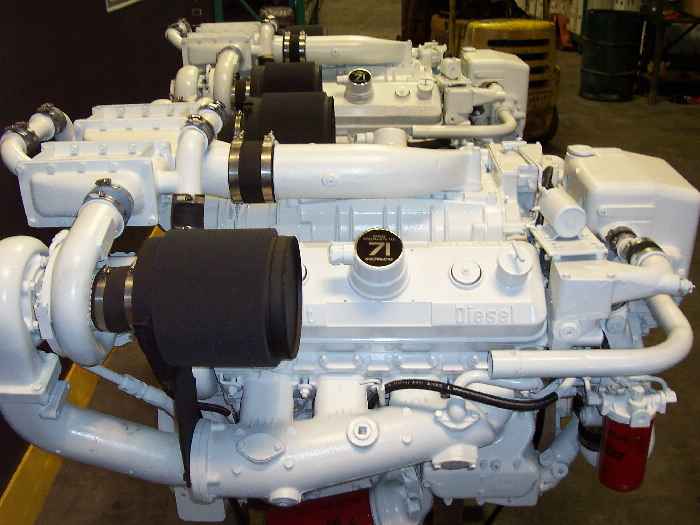
M/V Bad Habit:
HIN/IMO: 116E595 OFFICIAL#:949819 LOA:46.5FT YEAR: 1978
ENGINE 1:
-
Engine Make: Detroit Diesel
Engine Model: 8V-71TA
Engine Type: Inboard
Power HP: 462
Fuel Type: Diesel
Hours: 1906
Serial Number: 8VA365969
Engine Location: Port
-
TRANSMISSION PORT: Allison Transmission 1RM310-PL
ENGINE 2:
- Engine Make: Detroit Diesel
-
Engine Model: 8V-71TA
- Engine Type: Inboard
-
Power HP: 462
- Fuel Type: Diesel
-
Hours: 1822
-
Serial Number: 8VA370182
- Engine Location: Starboard
- TRANSMISSION STRB: Allison Marine Transmission 1RM310-PL
GENERATOR 1:
- Generator Make: Northern Lights
- Generator Model: M773LW2.3
- Hours: 4427
- Generator KW: 9.0
- Serial # 7732-40334C
FUEL FILTRATION SYSTEM: Racor Twin Turbine Series Fuel Filter/Water Seperator 10 Micron Port & Starboard side filter assembly: Appeared serviceable, No water present. Electric priming pump & vacuum gauges installed
THROTTLE & SHIFTER CONTROLS: Morse cable shifters worked properly at flybridge and Main cabin locations.
SEAWATER PUMP: Seals not leaking/no water present. adequate pressure.
PLATE-TYPE HEAT EXCHANGER: checked inlet and outlet flow temperature, within parameters
ENGINE OIL COOLER: checked inlet and outlet temperatures, all within parameters
ENGINE MOUNTED FUEL COOLER: checked inlet and outlet temperatures, all within parameters
SEAWATER PUMP OUTLET PRESSURE: adequate pressure
COOLANT LEVEL SENSOR: working properly no leaks observed.
ENGINE MOUNTS AND BED: Main engine beds are heavy longitudinal stringers inboard and outboard. Engine Mounts Satisfactory
LUBRICATION: Oil Level indication is normal both port and starboard.
LUBE OIL PRESSURE: (WOT) engine 100% load 51 psi. port engine 50 psi starboard engine
COOLING SYSTEM TYPE: Freshwater reservoir type cooling with Seawater cooled wet exhaust, Operated satisfactory.
SEAWATER STRAINERS: 3 inch Groco bronze alloy with sight glass. Appeared serviceable. well maintained
COOLANT LEVEL: Normal levels observed. Pressurized expansion tanks on both engines to 25psi no noticeable drop in pressure. used heat sensing gun on all cooling system surfaces. operated normal.
HOSES AND CLAMPS: Double clamped where sighted. All quality 304 SS style hose clamps.
BELTS AND PULLEYS: Belts & Pulleys condition appeared serviceable
SEACOCKS AND STRAINERS: Seawater seacocks were ball valve type. Operated smooth & satisfactory.
EXHAUST SYSTEM: Seawater cooled with risers and flexible coupling sections double clamped where sighted.
ENGINE ALARMS: Test of port and starboard low oil pressure alarm, and coolant overheat warning audible at helm station. Operated satisfactory.
ENGINE SHUT DOWN: electronic style shut off solenoid switches operated satisfactory
STUFFING BOXES: Packing gland style, both leaking at correct rate.
EMERGENCY SHUT-DOWNS. Port and starboard emergency shut down morse cable, both engines cables and actuators need to be replaced/serviced
ENGINE ALIGNMENT: Appeared Smooth & without vibration.
RUDDERS: Packing gland style, not leaking excessively appeared serviceable. no vibration.
TURBOCHARGERS: no tests performed on turbos, sounded like they spooled up around 1200 RPM and operated satisfactory
ALLISON TRANSMISSIONS: Both performed adequately while shifting no excessive noise or vibration while under way. port side leaking excessively at engine pump
——————————————————————————————-
SEATRIAL REPORT:
1. The engines started without excessive cranking.
2. The engine exhaust appeared normal. very minimal smoke for engines of this age.
3. The cooling water exhaust appeared adequate and normal.
4. The engine instruments operate within normal operating limits at idle, cruising speed and at wide open throttle.
5. The steering system operated normally. very responsive.
6. The throttles operated normally. need adjustment for WOT synchronization.
7. The transmissions, both went in & out of gear smooth with no excessive noise
8. The backdown test was satisfactory.
9. both rudder linkage operated smooth while underway, no leaks detected
10. OIL LEAKS detected at port transmission, starboard governor, port and starboard valve covers.
WOT TEST: (wide open throttle) Starboard engine smoking a little.
but it seems to go away as soon as you throttle down.
Master Marine Diesel Troubleshooting Guide - 805 Marine Diesel Mechanic

OIL ANALYSIS PORT ENGINE:
Port Engine

OIL ANALYSIS STARBOARD ENGINE:
Starboard engine

OIL ANALYSIS PORT TRANSMISSION:
Port Allison Transmission

OIL ANALYSIS STARBOARD TRANSMISSION:
Starboard Allison Transmission


OIL ANALYSIS GENSET:
Generator
MARINE ENGINE SURVEY SUMMARY:
As a result of my investigation, MARINE ENGINE SURVEY, and by virtue of my experience, my opinion is OVERALL ENGINE RATING: GOOD: the engine room and engines appear to be well maintained.

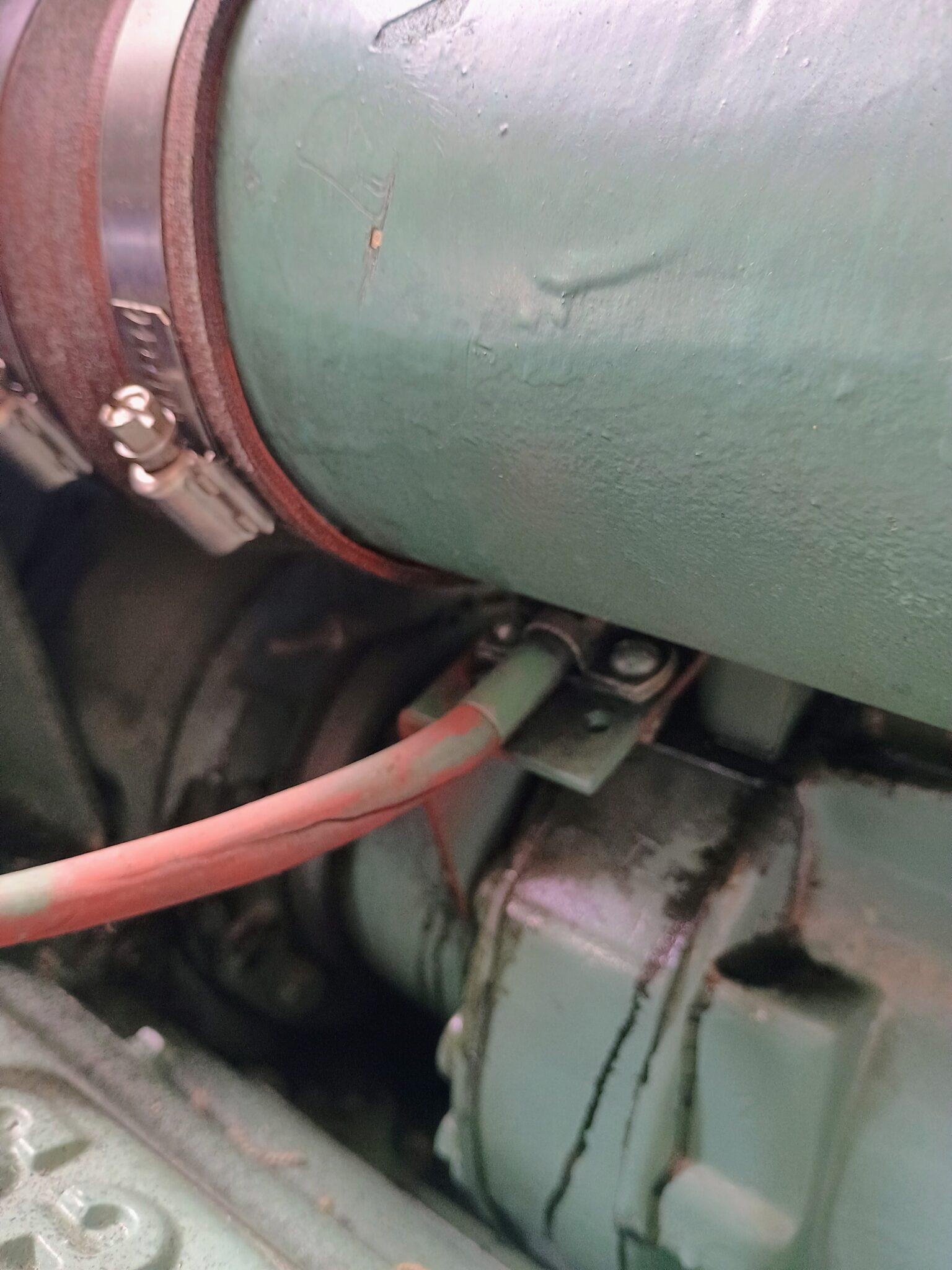
Port and starboard emergency shut down morse cables, both engines cables and actuators need to be replaced/serviced
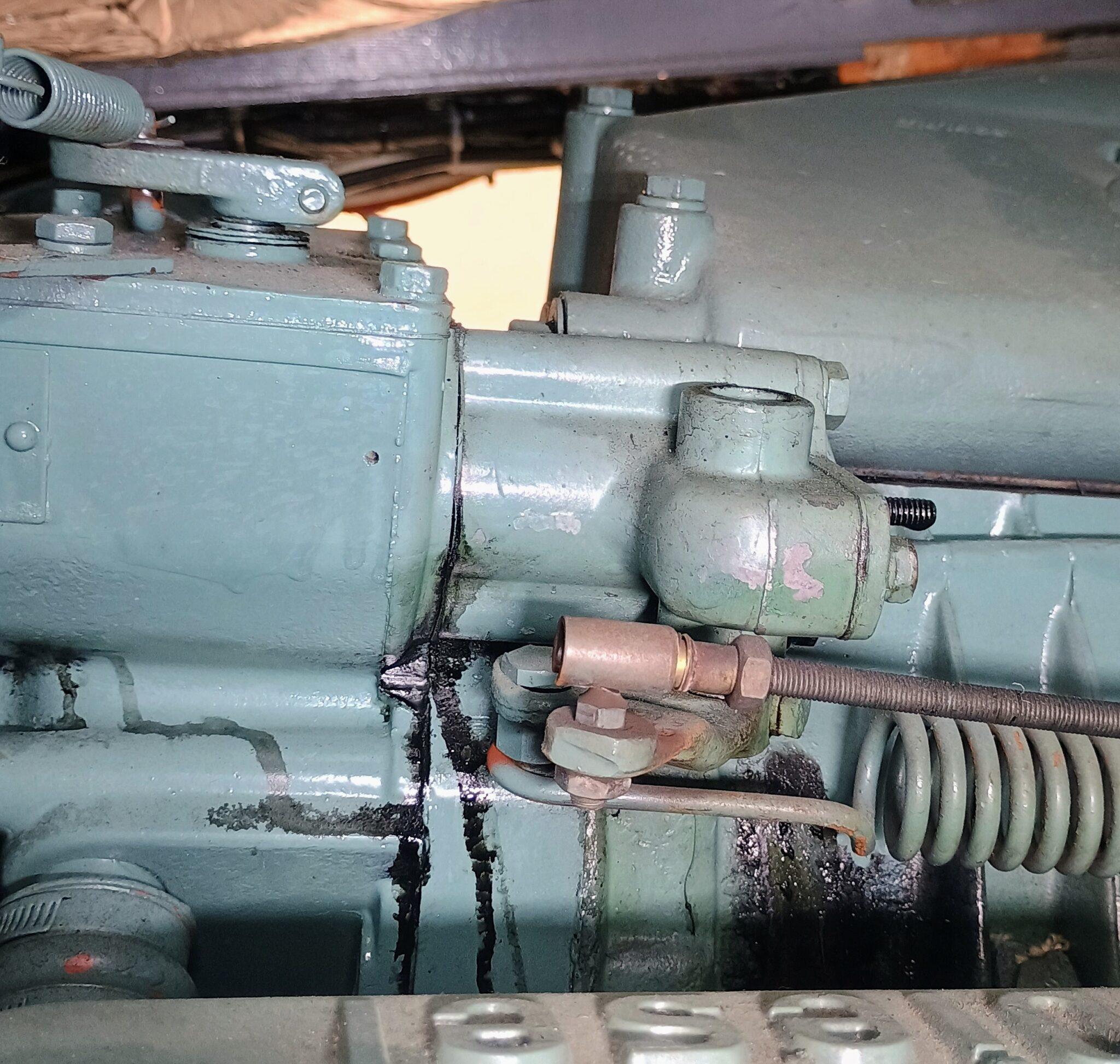
Oil Leaking at starboard side governor
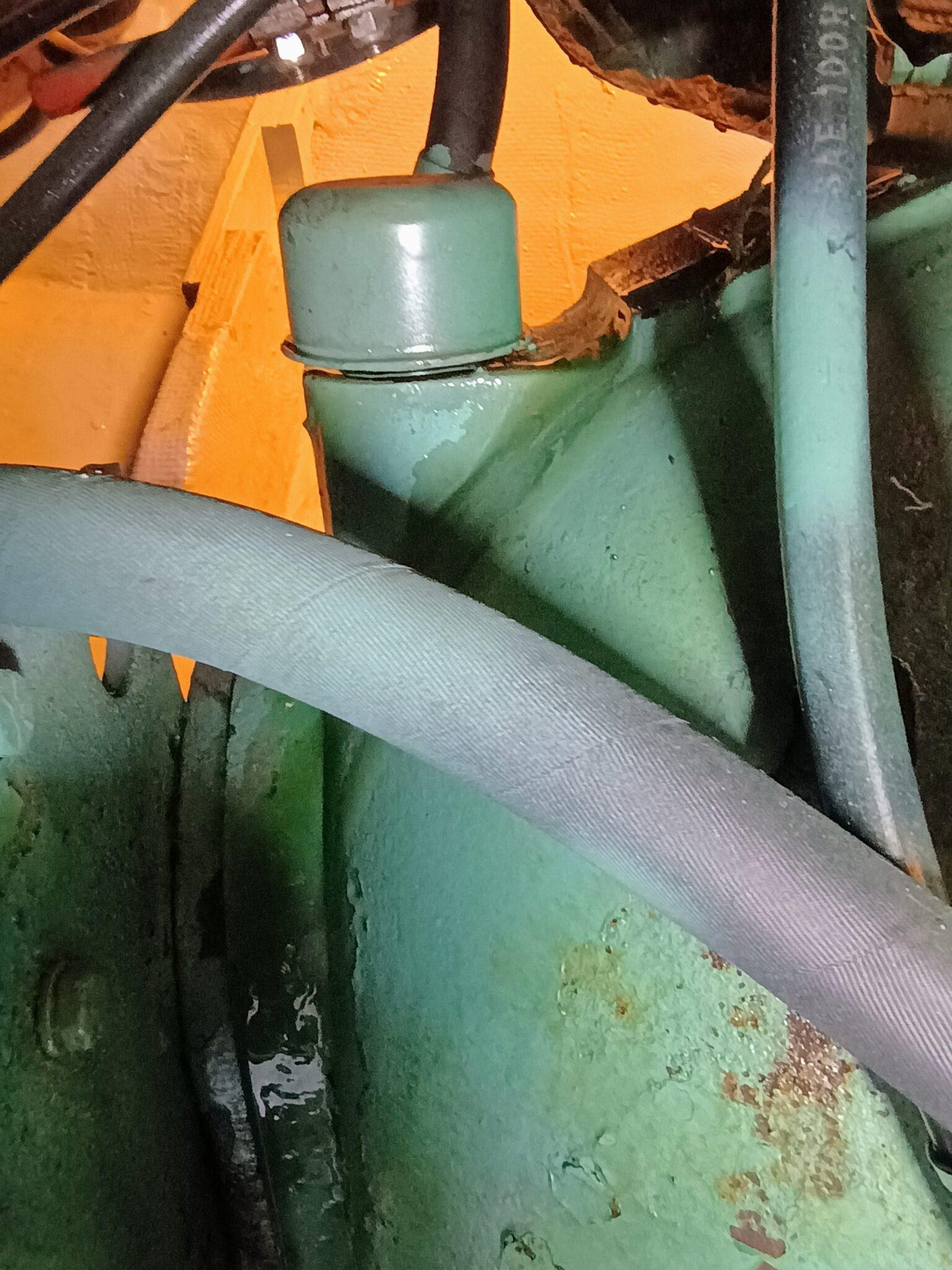
Excessive oil leaking from transmission pump port side, needs to be repaired (seals) or replaced
Detroit Diesel 8V71TA Marine Engine Survey: Comprehensive Inspection, Diagnostics, and Pre-Purchase Evaluation
-
Key specifications and performance features of the 8V71TA
-
The critical importance of a professional survey
-
Common failure points and symptoms to watch
-
A step-by-step survey checklist
-
Cost factors and price ranges
-
Criteria for choosing a qualified surveyor
-
Overhaul and rebuild considerations
-
Fuel efficiency and performance optimization strategies
Detroit Diesel 8V71TA Engine Specifications
The Detroit Diesel 8V71TA is a two-stroke diesel engine with a displacement of 568 cubic inches. It produces between 350 and 500 horsepower, depending on the configuration. The engine is known for its robust design and high power-to-weight ratio, making it suitable for various marine applications.
|
Configuration
|
Measurement
|
Relevance
|
|---|---|---|
|
Length
|
46 in (1,168 mm)
|
Fits standard V-8 engine beds
|
|
Width
|
28 in (711 mm)
|
Clearance for service access
|
|
Height
|
35 in (889 mm)
|
Hood and exhaust space requirements
|
|
Dry Weight
|
2,215 lb (1,005 kg)
|
Hull trimming and balance considerations
|
|
Rotation Options
|
Left- or right-hand
|
Matching propeller shaft orientation
|
Why Is a Marine Engine Survey Crucial for the Detroit Diesel 8V71TA?
-
Risk Reduction – Identifies wear, corrosion, or damage that could lead to failure.
-
Negotiation Leverage – Empowers buyers to adjust offer price for discovered defects.
-
Usage Forecasting – Predicts maintenance needs and remaining service life.
-
Conducts dimensional checks and alignment tests
-
Performs sea trials to record RPM, temperature, pressure, and exhaust smoke
-
Executes compression and blow-by tests for internal wear
-
Samples fluids for lab analysis of contaminants and wear metals
What Are the Common Issues and Failure Points Specific to the Detroit Diesel 8V71TA Marine Engine?
What causes overheating in the 8V71TA and how can it be detected?
How to identify and address smoking exhaust problems?
What are typical oil leaks and fluid contamination signs?
How do turbocharger and blower malfunctions affect engine performance?
What are crankcase pressure issues and their symptoms?
What Does a Comprehensive Detroit Diesel 8V71TA Marine Engine Survey Checklist Include?
A marine survey checklist includes visual inspections of hoses, belts, and engine mounts, as well as monitoring parameters such as RPM, temperatures, and pressures during a sea trial. Diagnostic tests like compression testing and fluid analysis are also essential for a comprehensive engine assessment.
-
Hoses and clamps for cracks or soft spots
-
Belts for fraying, glazing, or tension loss
-
Engine mounts and brackets for corrosion or fatigue
-
Exhaust manifolds and risers for leaks or cracks
-
Electrical connections and wiring harnesses for secure routing
-
RPM ranges (idle to full load) for smooth acceleration
-
Coolant and oil temperatures under load
-
Oil and fuel pressure readings for stability
-
Exhaust smoke color and opacity trends
-
Vibration levels at engine mounts
-
Compression testing each cylinder to assess ring and liner wear
-
Blow-by measurement to gauge piston seal integrity
-
Turbo boost gauge verification for correct manifold pressure
-
Electronic engine management scans (if equipped) to read fault codes
What Are the Best Maintenance Practices to Extend the Life of a Detroit Diesel 8V71TA Engine?
General Service Guidelines for Detroit Diesel V71 Series Engines
Preventive maintenance for Detroit Diesel V71 Series engines includes daily checks of oil and coolant levels, weekly inspections of belts and hoses, and monthly fuel pressure tests. Regular maintenance, such as oil changes and filter replacements, prevents wear and tear on key components, ensuring the engine remains in top condition.
-
Replacing raw water pump impellers every 250 hours
-
Inspecting and cleaning heat exchanger cores annually
-
Checking zinc anodes quarterly to prevent galvanic corrosion
What adjustments improve 8V71TA fuel economy during operation?
-
Calibrating fuel injection timing for optimal combustion
-
Matching propeller pitch to engine torque curves
-
Running at efficient cruise RPM (typically 2,100–2,200 rpm)
-
Using clean high-quality fuel and approved additives to maintain injector health