
Pro cooling-system service for Beta Marine engines by 805 Marine Mechanic — serving Channel Islands Marina, Ventura Harbor & Santa Barbara Harbor.

Beta Marine Engine Cooling System Maintenance performed by the trained, inboard-diesel-only team at 805 Marine Mechanic helps prevent overheating, corrosion, scaling, and cavitation that can sideline your boat at the worst time. We provide dockside service at Channel Islands Marina, Ventura Harbor, and Santa Barbara Harbor — optimizing coolant chemistry, inspecting raw-water components, and documenting every step so your Beta stays dependable between islands and along the Ventura–Santa Barbara coast.
Coolant is a consumable: its protective additives deplete over time just like engine oil. With the right testing and replacement intervals, you’ll reduce gelling and deposit formation, protect against liner cavitation, and maintain freeze/boil protection tailored to local conditions.

Barnacle Buster Descaling Solution
Heat exchanger, aftercooler, transmission lube-oil cooler, and engine lube-oil cooler can be flushed annually during tune-up using a dedicated descaling workflow. Using a marine descaler on the raw-water side removes mineral deposits, marine growth, and corrosion byproducts that choke heat transfer — restoring cooling efficiency with predictable results. Many owners pair a Sea Flush-style setup with descaler to circulate through all raw-water components at once.
Performing an annual raw-water flush with a descaling solution can often extend the effective interval between full cooler removals and bench cleanings, helping align maintenance with seasonal haul-outs. The key is consistency: gentle, regular cleaning prevents the heavy buildup that requires invasive service.
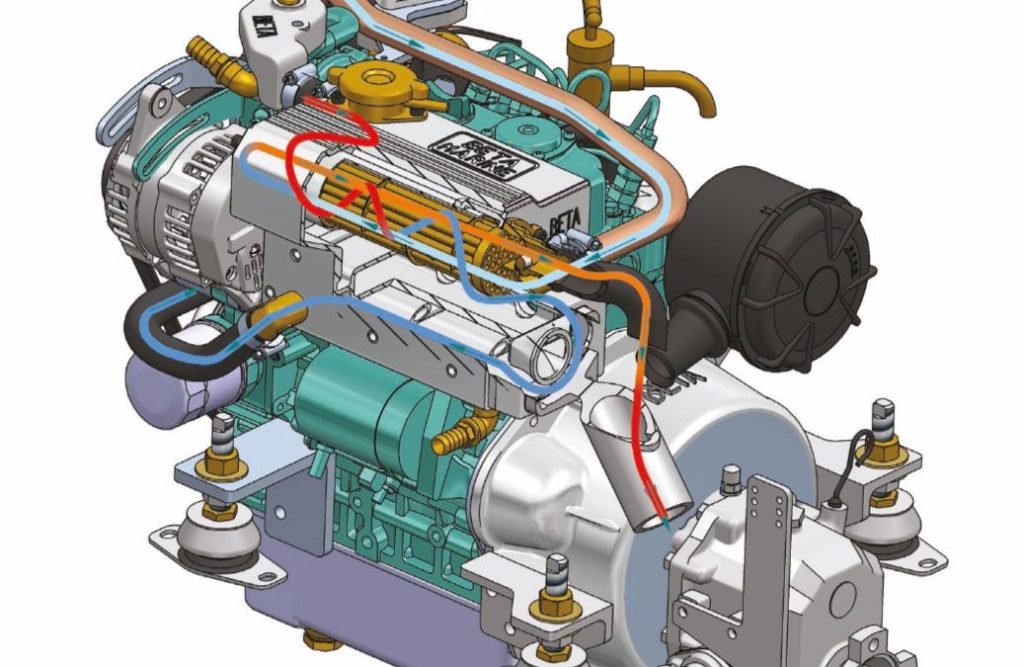
Fresh Water Flushing System
The most effective way to reduce raw-water maintenance is to flush with fresh water after each trip. At 805 Marine Mechanic, we designed and have installed a fresh-water flushing system on a range of vessels for quick, tool-free operation at the dock. Convenience and repeatability are its superpowers — the easier it is to flush, the more consistently it gets done.
In one recent project, dock pressure allowed a single quick-connect to flush two main engines and a generator simultaneously, simplifying turnaround between trips and noticeably reducing salt and scale inside coolers.
Explore installation photos and examples of our fit-and-finish on Facebook:
(2) : Marine Diesel Engine Salt… – Santa Barbara Marine Diesel Mechanic | Facebook
Tip
When using a fresh-water flushing system, consider aluminum sacrificial anodes instead of zinc. In many local conditions, aluminum anodes activate more reliably and wear more completely, providing more consistent protection for raw-water coolers and heat exchangers.

Essential Marine Engine Cooling System Maintenance by 805 Marine Mechanic
Introduction
A healthy cooling system is the backbone of Beta Marine reliability. This guide explains how to prevent overheating, stabilize operating temps, and preserve performance for cruising between Ventura, the Channel Islands, and Santa Barbara. From coolant chemistry to raw-water scaling, we’ll show you what matters, what to check, and when to call a pro.
Understanding Beta Marine Engines
Key Features
- Mechanical simplicity with service-friendly layouts to reduce downtime at the dock
- Efficient heat-exchanger systems sized for coastal cruising and island hops
- Durable components chosen for saltwater exposure and real-world maintenance
Why the Cooling System Matters
- Regulates temperature for tight tolerances, oil stability, and injector performance
- Prevents liner cavitation, corrosion, scaling, and deposit formation that erode power
- Extends engine life and protects your investment under varying sea and load conditions
Maintenance Tasks for Optimal Performance
Routine Visual Inspections
- Check belts, hoses, and clamps for cracks, glazing, or soft spots
- Inspect coolant level and condition; test with strips/refractometer and replace when additives are depleted
- Verify no seepage at heat-exchanger end caps, raw-water pump, or hose junctions
Cleaning & Flushing
- Raw-water side: Perform annual descaling flushes to remove mineral buildup and growth
- Fresh-water side: Maintain proper glycol percentage (per engine manual) and add the correct inhibitor package
- Aftercoolers/oil coolers: Periodic removal and bench cleaning when pressure drop or temps indicate restriction
Regular Component Replacement
- Raw-water impeller (typically annually or by hours/condition), gaskets, and end-cap seals
- Thermostats if temperature regulation drifts or age-out intervals are reached
- Anodes in coolers/heat exchangers at each service — replace when 50% consumed
Leverage Professional Service
Expertise of 805 Marine Mechanic
- Inboard marine diesel specialists — we do not service gasoline or outboards
- Dockside service in Channel Islands Marina, Ventura Harbor, and Santa Barbara Harbor
- Pressure/leak testing, IR temperature profiling, coolant lab analysis, and detailed service logs
Customized Maintenance Plans
- Plans based on hours, duty cycle, and local water conditions (scale potential and biofouling)
- Seasonal pre-trip checklists for Channel crossings and multi-day cruises
Boating Locally
Ventura Coastline
- Plan around afternoon winds and chop; confirm cooling margins before long upwind legs
- Check seawater strainers after kelp-heavy transits
Channel Islands
- Carry spare impellers, belts, and anodes; confirm heat-exchanger spares onboard
- Watch temps after long idle periods or heavy trolling — scale reveals itself under load
Santa Barbara
- Marina silt and eelgrass can spike raw-water restriction — inspect strainers frequently
Schedule Cooling System Service
The Ultimate Beta Marine Cooling System Checklist
- Coolant level & strength: Top off with the specified coolant; do not mix types. Replace when tests indicate depletion.
- Hoses/clamps: Inspect for cracks, soft spots, or salt crust; replace questionable parts proactively.
- Heat exchanger: Check for seepage; pressure-test if temps creep up under load.
- Raw-water impeller: Replace by interval or condition; keep a labeled spare onboard.
- Seawater strainer: Clean after kelp or debris encounters; confirm gasket condition.
- Anodes: Use aluminum in local waters; replace when 50% consumed.
- Aftercooler/oil coolers: Descale annually; bench clean on condition or schedule.
- Temperature audit: Log cruise and WOT temperatures each season to catch trends early.
Service Area & Scheduling
We proudly serve Channel Islands Marina, Ventura Harbor, and Santa Barbara Harbor with mobile, in-slip service windows that minimize downtime and logistics.
Frequently Asked Questions
How often should I descale the raw-water side?
Annually for most local duty cycles. Heavy scale, warm water, or high hours may justify more frequent flushing.
Which coolant should I use in my Beta Marine engine?
Use the coolant type and inhibitor package specified in your engine manual; test strength and replace when additives are depleted.
Can I mix different coolants?
No. Mixing types can cause gelling and deposit formation; flush thoroughly before changing chemistry.
Do you install fresh-water flushing systems?
Yes. We design and install quick-connect systems tailored to your plumbing, often enabling multi-engine/genset flushing at once.