
Marine diesel raw-water descaling, heat-exchanger cleaning, aftercooler flushing, and seawater cooling-system maintenance for Ventura Harbor, Oxnard, Channel Islands Harbor, and Santa Barbara. Start with the Master Marine Diesel Troubleshooting Guide when your vessel develops rising engine temperatures, restricted exhaust water flow, scaling inside coolers, recurring overheating alarms, or reduced offshore performance. 805 Marine Diesel Mechanic specializes in raw-water cooling-system descaling, Barnacle Buster circulation cleaning, impeller inspections, and complete marine diesel cooling-system diagnostics.
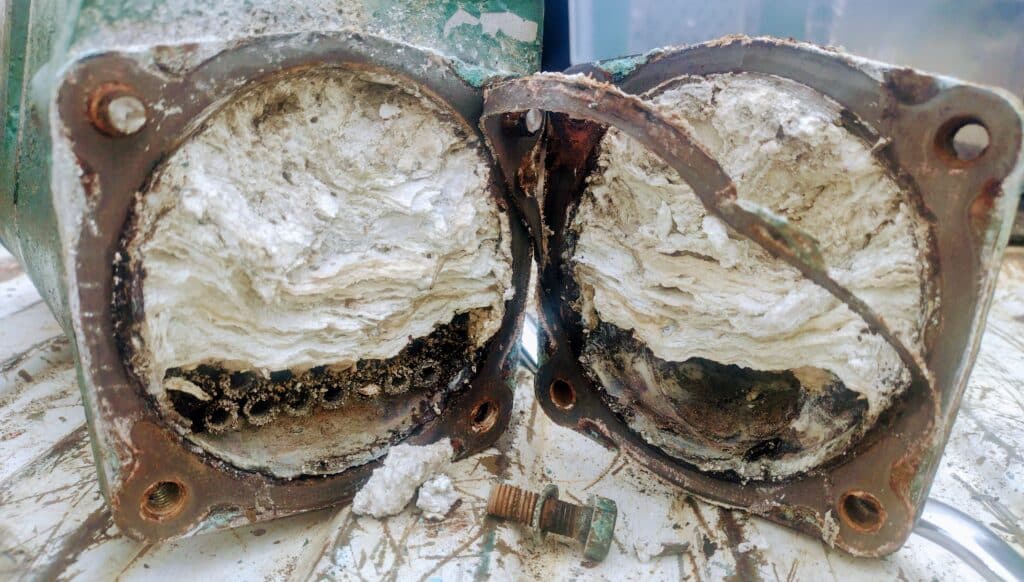
Marine Diesel Raw-Water Descaling by 805 Marine Diesel Mechanic — trained technicians delivering heat-exchanger cleaning, seawater circulation flushing, Barnacle Buster descaling, and dockside cooling-system maintenance across Ventura, Oxnard, Channel Islands Harbor & Santa Barbara.
Contact our cooling-system specialists.
Why Marine Diesel Raw-Water Systems Need Descaling
Marine diesel cooling systems continuously pull seawater through coolers, heat exchangers, aftercoolers, transmission coolers, and exhaust systems. Over time, shell growth, calcium deposits, rust, marine organisms, and mineral scale restrict internal passages.
Even partial restriction can dramatically reduce cooling efficiency and eventually cause overheating under offshore load conditions between Ventura, Santa Barbara, and the Channel Islands.
For overheating troubleshooting support, review the verified Overheating at High RPM page.
What Raw-Water Descaling Removes
- Barnacle growth
- Calcium buildup
- Lime scale
- Salt deposits
- Rust contamination
- Organic marine growth
- Flow restrictions inside coolers
Removing these deposits restores cooling-water flow and improves heat transfer throughout the engine cooling system.
Barnacle Buster Circulation Cleaning
805 Marine Diesel Mechanic uses circulation-based descaling whenever system layout permits. This process allows descaling solution to circulate through seawater passages with minimal component disassembly.
Compared to aggressive acid cleaning methods used decades ago, modern circulation descaling is significantly safer for coolers, seals, O-rings, and soft-metal cooling components.
For additional seawater-system support information, owners often review the verified Marine Engine Fresh Water Flushing System page.
Cooling Components Commonly Serviced
Raw-water descaling commonly includes inspection and cleaning of:
- Main heat exchangers
- Transmission oil coolers
- Engine oil coolers
- Aftercoolers
- Fuel coolers
- Raw-water piping
- Seawater strainers
- Exhaust injection systems
Each restriction point affects total cooling-system efficiency.
For advanced diesel diagnostic support, review the verified Marine Diesel Engine Diagnostics page.
Raw-Water Flow Path Inspection

Proper cooling-system troubleshooting requires tracing the entire seawater path from seacock to exhaust outlet. Restrictions may occur at strainers, impellers, hoses, coolers, elbows, or discharge points.
Our inspections isolate the real restriction instead of simply replacing random components.
Heat Exchanger Before & After Descaling
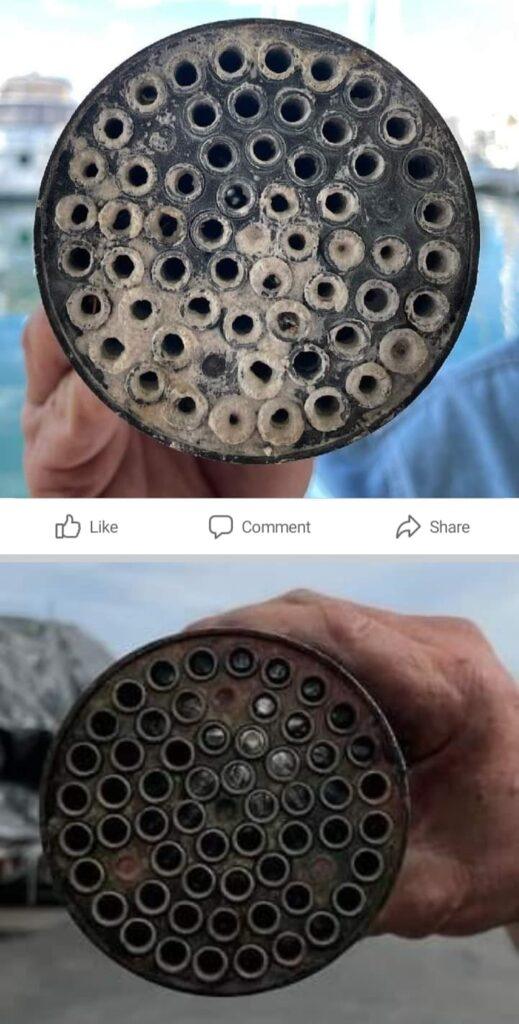
Heavy marine growth and scale dramatically reduce cooling performance. After descaling, internal passages are restored closer to original flow capacity, helping stabilize operating temperatures and reduce engine stress.
Before-and-after documentation helps owners understand actual system condition and plan future maintenance intervals.
For diesel survey and inspection support, review the verified Marine Engine Survey page.
Why Boats That Sit Still Still Need Cooling Maintenance
Saltwater corrosion continues even when the boat is not operating regularly. O-rings dry out, anodes continue sacrificing, scale hardens inside coolers, and hoses slowly deteriorate.
Many severe cooling-system failures occur on lightly used boats because owners assume low hours eliminate maintenance requirements.
For corrosion-prevention support, review the verified Marine Engine Painting page.
Critical Cooling-System Maintenance Items
- Seawater pump impeller replacement
- Coolant-condition testing
- Anode inspection and replacement
- Heat-exchanger service
- Hose inspection
- Clamp inspection
- Belt tension checks
- Strainer cleaning
Many overheating issues begin with small maintenance items that were ignored for too long.
For fuel-and-cooling crossover diagnostic support, review the verified Engine Loses Power Under Load page.
Local Marine Cooling-System Service Coverage
- Ventura Harbor: Raw-water descaling and heat-exchanger service.
- Oxnard: Aftercooler cleaning and seawater-system diagnostics.
- Channel Islands Harbor: Dockside cooling-system maintenance and impeller replacement.
- Santa Barbara Harbor: Offshore overheating diagnostics and descaling support.
Verified Marine Cooling-System Resources
- Marine Engine Fresh Water Flushing System
- Marine Diesel Engine Diagnostics
- Marine Engine Survey
- Marine Engine Painting
- Marine Diesel Troubleshooting Guide
- 805 Marine Diesel Mechanic Contact
- TRAC Ecological Marine Products
- BoatUS
Protect your marine diesel engine with professional raw-water descaling, heat-exchanger cleaning, and offshore cooling-system maintenance from 805 Marine Diesel Mechanic.
Marine Diesel Raw-Water Descaling FAQ
How often should marine diesel raw-water systems be descaled?
Most seawater cooling systems benefit from professional descaling every two years or roughly every 500 operating hours depending on saltwater exposure.
What causes marine diesel overheating?
Common causes include scale buildup, weak impellers, clogged strainers, restricted coolers, collapsed hoses, and insufficient raw-water flow.
Can Barnacle Buster improve cooling performance?
Yes, circulation descaling removes marine growth and mineral deposits that reduce flow and heat transfer.
Do lightly used boats still need cooling-system maintenance?
Yes. Corrosion, scale buildup, and anode deterioration continue even when the boat sits unused.
Can cooling-system descaling be performed dockside?
In many cases, yes. Raw-water circulation cleaning and inspections can often be completed at the slip depending on system access.
What cooling-system components are commonly cleaned?
Heat exchangers, oil coolers, transmission coolers, aftercoolers, strainers, and raw-water piping are commonly serviced.
Why are aftercoolers important?
Aftercoolers reduce intake-air temperatures, improve combustion efficiency, and help maintain proper engine performance under load.
Do you work on gasoline-powered boats?
No. 805 Marine Diesel Mechanic specializes exclusively in inboard marine diesel engines and propulsion systems.
What are early signs of raw-water restriction?
Weak exhaust discharge, rising temperatures, steam, overheating alarms, and reduced offshore performance are common warning signs.
What areas do you service?
805 Marine Diesel Mechanic serves Ventura Harbor, Oxnard, Channel Islands Harbor, and Santa Barbara Harbor with mobile dockside cooling-system support.
2 Responses